


close
Choose Your Site
Global
Social Media
Views: 220 Author: Shengda Publish Time: 2026-07-26 Origin: Site


Content Menu
● Why HPMC Matters in Industrial Formulations
● Main Application Areas of HPMC
● How to Evaluate an HPMC Supplier
● What Makes LANDU a Competitive HPMC Supplier
● Why Buyers Often Overlook the Technical Details
● Key Performance Factors to Consider
● How HPMC Supports Construction Formulations
● How HPMC Supports Daily Chemical Products
● A Practical Sourcing Approach
● Why HPMC Remains a Strategic Material
● FAQ
>> 1. What is HPMC mainly used for?
>> 2. Is construction grade HPMC different from daily chemical grade HPMC?
>> 3. Why is HPMC important in tile adhesive?
>> 4. What should buyers check before choosing an HPMC supplier?
>> 5. Can HPMC be used in personal care products?
Hydroxypropyl Methyl Cellulose, or HPMC, has become an essential ingredient in construction materials and daily chemical formulations. It is widely valued for its ability to improve water retention, viscosity, workability, stability, and overall product performance.
For buyers searching for a trustworthy HPMC supplier, the decision is rarely about price alone. The real difference lies in whether the supplier can provide consistent quality, stable supply, and application support that matches your formulation needs.
HPMC is a water-soluble, non-ionic cellulose ether made from natural cellulose through a chemical modification process. It is commonly used as a thickener, binder, film former, stabilizer, suspending agent, and water-retention agent.
Because of these properties, HPMC is used across a wide range of industries. It helps cement-based products perform better during application, and it improves the texture and stability of personal care and detergent formulations.
In many formulations, small material changes can lead to major differences in end-product performance. HPMC helps control those differences by improving consistency and supporting stable processing.
In construction materials, it helps reduce water loss, improves workability, and supports better adhesion. In personal care products, it helps create smoother textures, more stable viscosity, and better overall product feel.
Construction grade HPMC is widely used in tile adhesives, wall putty, gypsum products, cement mortars, renders, and self-leveling materials. Its main role is to help formulations retain water, remain workable longer, and apply more evenly.
In tile adhesive systems, HPMC supports open time and reduces sagging. In wall putty, it improves spreadability and contributes to a smoother finish. In cement-based mortars, it helps reduce cracking risk caused by premature water loss.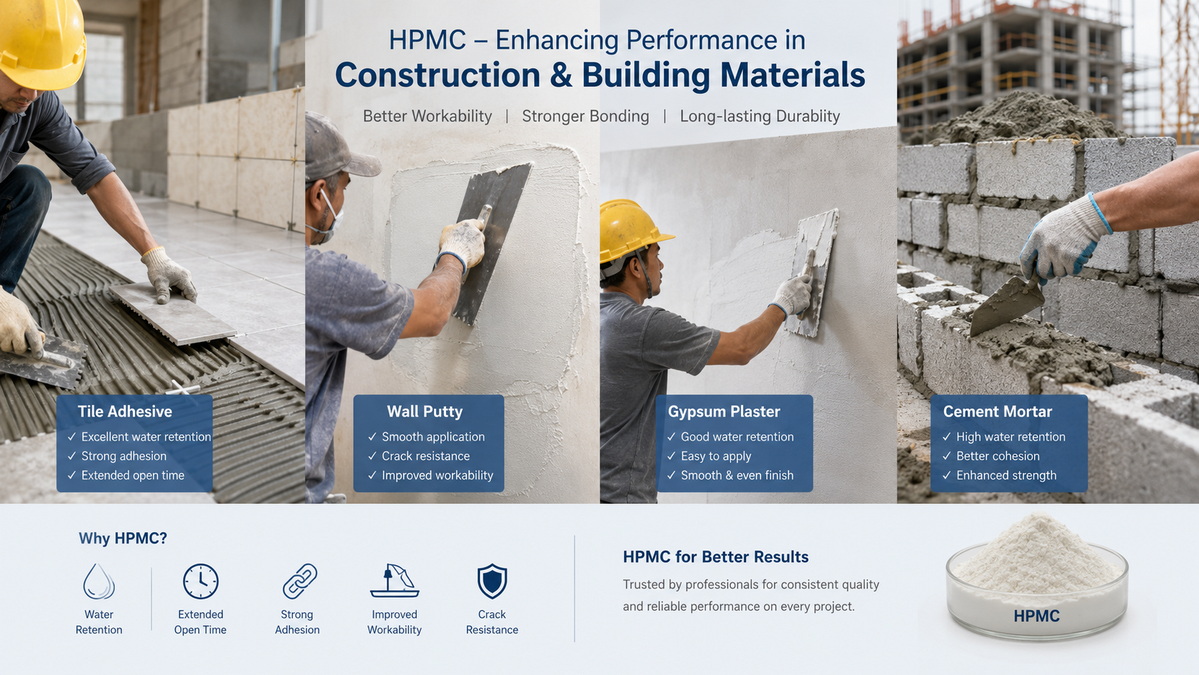
Daily chemical grade HPMC is used in shampoos, facial cleansers, body wash, gels, toothpaste, and other personal care products. In these applications, it works as a thickener and stabilizer while also improving texture and product appearance.
It is especially useful in products that require a clean feel, controlled viscosity, and stable suspension of ingredients. For brands that care about consumer experience, HPMC is often a practical and dependable formulation choice.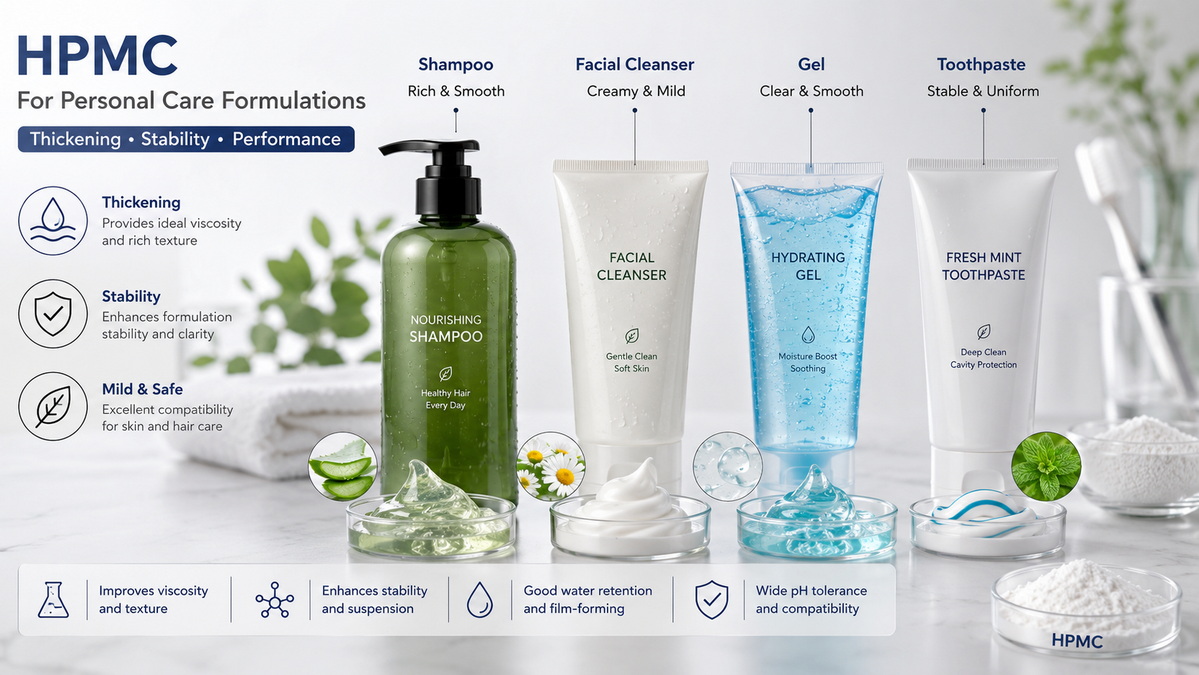
HPMC is also used in coatings, ceramics, adhesives, and various specialty products. Its flexibility makes it a valuable ingredient whenever a formulation needs better thickening, suspension, or film-forming behavior.
This broad usability is one reason HPMC remains one of the most widely adopted cellulose ethers in global markets. It offers performance benefits without adding unnecessary complexity to the formulation process.
Choosing the right supplier requires more than reviewing a product list. Buyers should examine the supplier from several angles before making a sourcing decision.
A supplier with strong production capacity is more likely to support stable supply and consistent order fulfillment. This matters especially for export-focused buyers and manufacturers with repeat purchasing needs.
A reliable supplier should offer multiple viscosity grades and application-specific options. This gives formulators more flexibility when adapting products for different markets or performance targets.
Technical support is critical when a customer needs help matching the right grade to a specific formula. A good supplier should understand how product behavior changes across different systems.
Batch-to-batch stability is one of the most important quality factors in HPMC sourcing. Even small changes in viscosity or dissolution behavior can affect the final product.
For international buyers, packaging, documentation, lead time, and logistics support all matter. Suppliers with export experience are usually better prepared to handle these requirements efficiently.
LANDU positions itself as a professional cellulose ether manufacturer with a strong focus on construction and personal care solutions. Its product portfolio is designed to serve industrial buyers who need both dependable quality and practical formulation support.
One important advantage is scale. LANDU states that it operates three HPMC production bases with an annual capacity of 75,000 tons. For global buyers, this kind of capacity can help reduce supply risk and support long-term procurement planning.
Another strength is application coverage. LANDU's HPMC solutions are presented for both construction materials and daily chemical products, which makes the company relevant to a wider range of B2B customers.
Many buyers compare HPMC products only by viscosity number or unit price. That approach can be misleading because performance depends on more than one specification.
Factors such as substitution level, dissolution behavior, particle characteristics, and final-use environment can all influence formulation results. A product that works well in one system may not perform the same way in another.
That is why serious buyers usually request samples, test the material in their own formula, and compare real performance before placing a bulk order.
When selecting an HPMC grade, the following points deserve close attention:
- Water retention, especially for cement-based products.
- Viscosity control, which affects texture and application behavior.
- Open time, important for tile adhesives and mortars.
- Sag resistance, especially in vertical applications.
- Stability, which matters in personal care and detergent formulations.
- Dissolution behavior, which influences processing efficiency.
Understanding these factors helps buyers choose the right grade and avoid unnecessary reformulation later.
In construction applications, HPMC plays a functional role throughout the mixing and application process. It helps improve the interaction between water, cement, fillers, and other additives.
This leads to better spreadability, improved bonding behavior, and more controlled drying. For contractors and manufacturers, these benefits can translate into easier application and more reliable on-site performance.
HPMC is especially valuable in climates where rapid water loss can cause cracking or poor workability. In such cases, the water-retention effect becomes even more important.
In personal care and detergent formulations, HPMC helps create a smoother user experience. It can improve product thickness, maintain suspension, and support stable appearance over time.
This is useful for products that need to feel elegant, spread easily, and remain visually stable on the shelf. For many brands, these sensory and stability characteristics are just as important as ingredient compatibility.
A structured sourcing process can help buyers reduce risk and improve product outcomes.
1. Define the final application clearly.
2. Specify the performance targets you need.
3. Request the most suitable HPMC grade recommendation.
4. Test samples under real production conditions.
5. Compare performance, not just price.
6. Confirm supply, packaging, and delivery requirements before final approval.
This approach is especially effective for international buyers who need consistent results across multiple production batches.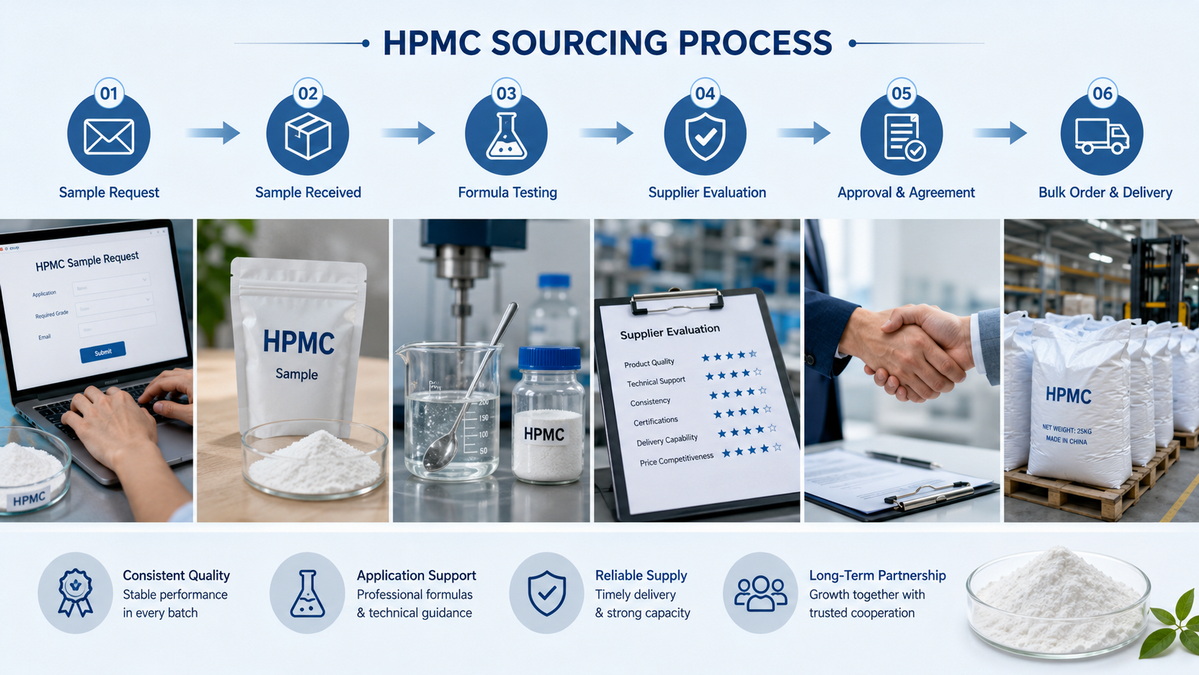
HPMC continues to be an important material because it solves practical formulation problems in a reliable and cost-effective way. It is versatile enough to serve both construction and personal care markets, yet specialized enough to deliver meaningful performance improvements.
For manufacturers, that balance of flexibility and function makes HPMC a strong choice across many product categories. For buyers, it means the right supplier can have a direct impact on product quality and production efficiency.
A good HPMC supplier should offer more than a product sheet and a quote. The best partner should provide stable quality, multiple grade options, responsive support, and a clear understanding of how the material performs in real formulations.
For buyers seeking a dependable Hydroxypropyl Methyl Cellulose manufacturer, LANDU represents a strong option in China's cellulose ether industry. Its production scale, application coverage, and export-oriented service make it well suited to global B2B sourcing needs.
HPMC is mainly used as a thickener, binder, film former, water-retention agent, stabilizer, and suspending agent in construction materials, personal care products, and detergents.
Yes. Construction grade HPMC is designed to improve water retention, workability, and adhesion in cement-based systems, while daily chemical grade HPMC is used to control viscosity, texture, and stability in personal care and detergent products.
HPMC helps tile adhesive retain water, improve open time, reduce sagging, and support smoother application during installation.
Buyers should review production capacity, product range, batch consistency, application support, and export experience before placing an order.
Yes. HPMC is commonly used in shampoos, cleansers, gels, toothpaste, and other personal care products to improve thickening, stability, and texture.
1. LANDU. [Hydroxypropyl Methyl Cellulose Manufacturer]
2. LANDU. [HPMC Factory | Premium Hydroxypropyl Methyl Cellulose]
3. Unilong Industry. [What is hydroxypropyl methylcellulose used for?]
4. BJLB Chem. [Application Scenarios of Hydroxypropyl Methyl Cellulose HPMC]
5. Kima Chemical. [Hydroxypropyl Methylcellulose Information]
6. Kima Chemical. [Practical application and function of hydroxypropyl methyl cellulose]
7. Shengda HPMC. [Top 10 HPMC Manufacturers in China (2026 Updated Guide)]
8. Keyoung Chem. [Top 5 HPMC Suppliers In China: A Practical Buyer's Guide]


