


close
Choose Your Site
Global
Social Media
Views: 245 Author: Shengda Publish Time: 2026-08-25 Origin: Site


Content Menu
>> What Is Hydroxyethyl Cellulose (HEC)?
>> What Is Hydroxypropyl Methyl Cellulose (HPMC)?
● HEC vs HPMC: Main Differences at a Glance
● HEC vs HPMC for Water-Based Paint
>> Why HEC Is Commonly Used in Paint
>> How HPMC Performs in Coatings
>> Paint Formulation Selection Guide
● HEC vs HPMC for Mortar and Tile Adhesive
>> Why HPMC Is Widely Used in Construction Materials
>> Can HEC Replace HPMC in Mortar?
● Key Performance Factors When Choosing HEC or HPMC
● Why the Highest Viscosity Grade Is Not Always Better
● How to Select the Right HEC or HPMC Grade
>> Step 1: Define the Final Application
>> Step 2: Identify the Main Performance Challenge
>> Step 3: Compare Technical Specifications Properly
>> Step 4: Test in the Full Formula
● FAQ
>> Which is better for water-based paint, HEC or HPMC?
>> Which cellulose ether is better for tile adhesive?
>> Can HPMC improve mortar water retention?
>> Does higher viscosity always mean better performance?
>> What information should be provided when selecting HEC or HPMC?
>> Can HEC and HPMC be used together?
Hydroxyethyl Cellulose (HEC) and Hydroxypropyl Methyl Cellulose (HPMC) are two widely used cellulose ethers in modern formulations. Both can improve viscosity, stability, workability, and product consistency, but they perform differently in water-based paints, personal-care products, dry-mix mortar, tile adhesives, and other industrial systems.
When comparing HEC vs HPMC, the best choice depends on the application rather than the material name alone. HEC is often selected for efficient thickening, pigment suspension, and rheology control in water-based systems. HPMC is commonly used where water retention, open time, and workability are critical, especially in cement- and gypsum-based building materials.
For manufacturers, formulators, and distributors, choosing the correct cellulose ether grade can influence production efficiency, storage stability, application quality, and total formulation cost.
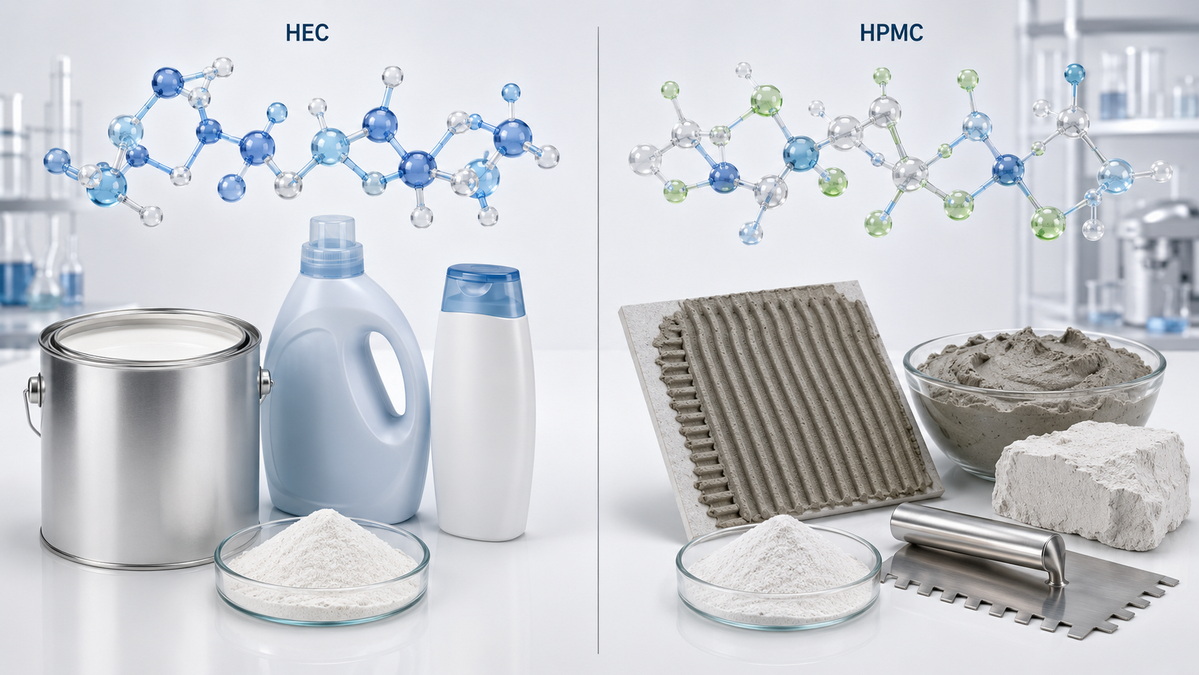
Hydroxyethyl Cellulose, commonly known as HEC, is a non-ionic water-soluble cellulose ether. It is produced by chemically modifying natural cellulose with hydroxyethyl groups.
HEC is primarily used as a thickener, rheology modifier, stabilizer, suspension aid, and protective colloid. It is highly valued in water-based formulations because it can build viscosity efficiently and help maintain a uniform product structure.
Common HEC applications include:
- Water-based architectural paints
- Latex paints
- Texture coatings
- Liquid detergents
- Dishwashing liquids
- Shampoos and body washes
- Hand soaps
- Personal-care gels
- Industrial cleaning products
- Water-based inks
In coatings, HEC can help prevent pigment settling, improve anti-sag performance, and create a more stable viscosity profile during storage. In personal-care products, it can support a smooth texture, controlled flow, and a more appealing consumer experience.
Hydroxypropyl Methyl Cellulose, often abbreviated as HPMC, is another non-ionic cellulose ether. It is also known as hypromellose in some technical and pharmaceutical applications.
HPMC is produced through the chemical modification of cellulose with methoxy and hydroxypropoxy groups. This structure gives it useful water-retention, thickening, film-forming, and rheology-control properties.
HPMC is widely used in:
- Tile adhesives
- Cement mortar
- Wall putty
- Cement render
- Gypsum plaster
- Self-leveling compounds
- External insulation systems
- Skim coats
- Construction coatings
- Pharmaceutical tablets
- Food formulations
- Personal-care products
In construction formulations, HPMC is particularly important because it helps the mixture retain water for longer. This can improve workability, support hydration, extend open time, and provide a more consistent application experience.
| Property | HEC | HPMC |
|---|---|---|
| Full name | Hydroxyethyl Cellulose | Hydroxypropyl Methyl Cellulose |
| Main chemical groups | Hydroxyethyl groups | Methoxy and hydroxypropoxy groups |
| Typical primary function | Thickening and suspension | Water retention and workability |
| Common industries | Paint, coatings, detergents, personal care | Construction, mortar, tile adhesive, pharmaceuticals |
| Water-based paint suitability | Excellent for viscosity and pigment suspension | Useful in selected rheology systems |
| Dry-mix mortar suitability | Limited for mainstream mortar applications | Highly suitable for construction formulations |
| Water retention capability | Moderate, formulation dependent | Strong, especially in cementitious systems |
| Rheology contribution | Strong low-shear viscosity development | Thickening with useful workability control |
| Thermal gel behavior | Generally no practical thermal gelation | Can show thermal gelation characteristics |
| Typical buying focus | Viscosity, dissolution, anti-sag, suspension | Water retention, open time, slip resistance, workability |
The most important difference is application focus. HEC is generally used to control viscosity and stabilize water-based systems. HPMC is generally used to manage water and improve workability in mineral-based construction materials.
However, neither material should be chosen based on a single property. The final result depends on grade selection, viscosity level, dosage, particle size, dissolution behavior, raw material compatibility, production process, and local climate conditions.
Water-based paint needs to remain stable in the container, disperse efficiently during production, resist pigment settling during storage, and apply smoothly by brush, roller, or spray.
HEC is often a preferred cellulose ether for water-based paint because it can build useful low-shear viscosity. Low-shear viscosity is important for pigment suspension, anti-settling behavior, and anti-sag performance after application.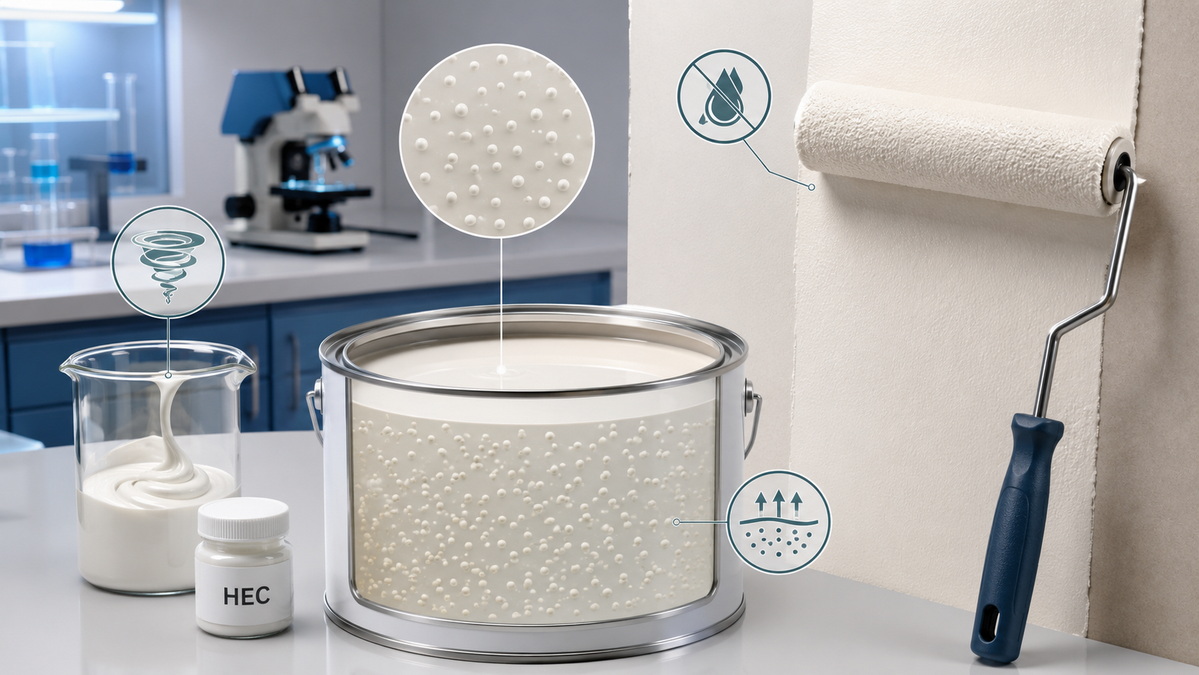
A suitable HEC grade can help paint manufacturers achieve:
- Better pigment and filler suspension
- Reduced sedimentation during storage
- Improved anti-sag behavior on vertical surfaces
- Higher viscosity at low shear
- Better in-can stability
- More controlled paint body
- Improved application consistency
- Reduced risk of uneven texture
For a typical architectural coating, HEC can support a stable internal structure that prevents heavy pigments and fillers from separating. This is especially important for formulations with high pigment volume concentration.
HPMC can also be used in selected water-based coating systems. It may contribute to viscosity development, improved working time, and moisture management during application.
In some formulations, HPMC may be evaluated where a different flow profile, longer open time, or improved application feel is required. It can also be combined with other rheology modifiers to balance leveling, anti-sag, brush drag, and roller performance.
| Paint Requirement | More Suitable Starting Point |
|---|---|
| Pigment suspension | HEC |
| Anti-settling performance | HEC |
| Low-shear viscosity | HEC |
| Anti-sag performance | HEC |
| Longer application time | HPMC or blended rheology system |
| Controlled flow and leveling | HPMC or combined thickener system |
| Water-based latex paint | HEC |
| Texture coating | HEC, depending on filler system |
| Specialized rheology profile | HEC and HPMC laboratory comparison |
The best paint thickener is not always the product with the highest viscosity. A grade that creates excessive viscosity may reduce flow, complicate mixing, increase roller resistance, or create poor leveling.
Dry-mix construction materials have very different requirements from liquid coatings. In tile adhesive, cement render, gypsum plaster, wall putty, and skim coat systems, the formulation must retain enough water to allow proper application and curing.
This is where HPMC is commonly preferred.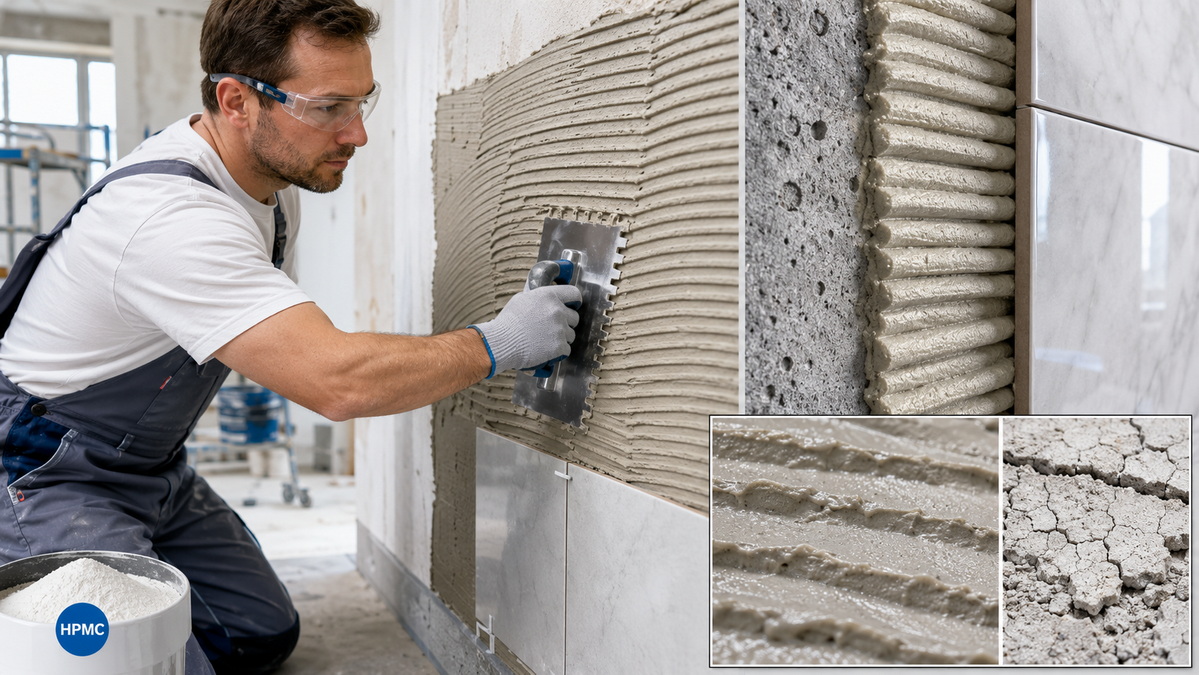
HPMC can improve several key properties in cement- and gypsum-based products:
- Water retention
- Mortar consistency
- Trowelability
- Open time
- Application smoothness
- Resistance to rapid drying
- Adhesion-related performance
- Workability on porous substrates
- Spreadability
- Batch consistency
When dry mortar is mixed with water, porous bricks, concrete, and wall surfaces can absorb water quickly. High temperatures, wind, and low humidity can accelerate water loss further.
If the mortar loses water too quickly, it may become difficult to spread. It may also reduce the time available for adjustment and bonding. HPMC helps slow this water loss, supporting a more workable and stable application window.
In tile adhesive, HPMC can contribute to:
- Better water retention
- Improved open time
- More consistent spreading
- Better slip resistance
- Easier tile adjustment
- Improved adhesion development
- Enhanced application comfort
A tile installer needs enough time to spread adhesive, position the tile, and make adjustments before the adhesive surface begins to dry. The correct HPMC grade helps support this process.
HEC may provide thickening and rheology control in certain systems, but it is not automatically a replacement for HPMC in mainstream cement-based mortar applications.
For construction products, HPMC is usually the more practical starting point when the formula requires water retention, workability, and reliable application behavior.
A proper comparison should include laboratory and field testing of:
1. Water retention
2. Mortar consistency
3. Open time
4. Tile slip resistance
5. Tensile adhesion strength
6. Air content
7. Setting behavior
8. Trowelability
9. Temperature resistance during application
10. Cost per ton of finished dry-mix product
Choosing between HEC and HPMC requires more than comparing product names or viscosity figures. A successful selection process should focus on measurable formulation needs.
Viscosity affects how a product flows, spreads, pumps, mixes, and remains stable during storage.
HEC is often effective for building low-shear viscosity in coatings and liquid formulations. This can be valuable for maintaining pigment suspension and preventing sagging.
HPMC provides thickening but is often selected for its combined effect on water retention and workability, especially in construction materials.
Water retention is particularly important in cement-based and gypsum-based materials. It affects how long the material remains workable after mixing.
HPMC is commonly used to reduce rapid water loss in mortar systems. This can support hydration, improve application behavior, and help maintain a consistent mortar structure.
Different grades may have different hydration and dissolution characteristics. Production teams should consider mixing speed, water temperature, pH, powder addition sequence, and equipment design.
Poor powder addition practices can create lumps or "fish eyes," especially when cellulose ether is added too quickly into water.
A controlled production process can reduce this risk:
1. Prepare the water phase at the required temperature.
2. Start mixing at an appropriate speed.
3. Add the cellulose ether gradually.
4. Avoid dumping large amounts of powder into one area.
5. Allow sufficient hydration time.
6. Adjust pH or add other ingredients according to the formula sequence.
7. Confirm final viscosity after the formula has fully matured.
For industrial buyers, grade consistency is often as important as the initial laboratory result.
A cellulose ether supplier should provide stable quality across batches, supported by clear specifications for:
- Viscosity
- Moisture content
- pH value
- Ash content
- Particle size
- Bulk density
- Gel temperature where applicable
- Dissolution performance
- Recommended application range
This is particularly important for export-focused manufacturers serving customers in different climates, using different local raw materials, equipment, and application methods.
A common mistake is assuming that a higher-viscosity HEC or HPMC grade will always provide better performance. In reality, excessive viscosity can create processing and application problems.
For example, an overly high-viscosity grade may:
- Increase mixing time
- Reduce flow and leveling
- Make pumping more difficult
- Cause heavier brush or roller drag
- Reduce mortar spreadability
- Increase the risk of air entrainment
- Raise the cost of the finished formula
- Create an overly thick product texture
The correct grade should achieve the target performance at the lowest practical dosage while maintaining stable production and acceptable application behavior.
For example, a tile adhesive manufacturer may test three HPMC grades at the same dosage. The highest-viscosity grade may produce excellent water retention but poor spreadability. A medium-viscosity grade may deliver a better overall balance of open time, application feel, tile slip resistance, and cost.
This is why formulation trials are essential before finalizing a grade for mass production.
A structured selection process can reduce trial time and improve formulation reliability.
Start by identifying the exact product category:
- Interior wall paint
- Exterior wall paint
- Texture coating
- Liquid detergent
- Shampoo
- Body wash
- Tile adhesive
- Wall putty
- Cement render
- Gypsum plaster
- Skim coat
- Self-leveling compound
The intended application determines which cellulose ether properties should receive the highest priority.
Define the problem clearly before selecting a grade.
Common challenges include:
- Pigment settling
- Low viscosity
- Poor anti-sag performance
- Inadequate flow and leveling
- Rapid mortar drying
- Short open time
- Poor trowelability
- Weak adhesion
- High tile slip
- Inconsistent batch viscosity
- Difficult powder dispersion
A clearly defined performance target makes material evaluation more efficient.
When comparing HEC or HPMC products, request complete technical information.
Important parameters include:
- Viscosity test concentration
- Viscosity measurement method
- Moisture content
- Particle size
- Ash content
- pH range
- Bulk density
- Dissolution behavior
- Recommended dosage
- Storage conditions
- Application-specific test data
Do not compare viscosity values without checking the test method. A value measured at 1% concentration cannot be directly compared with a value measured at 2% concentration. Temperature, spindle type, rotational speed, hydration time, and solution preparation method can also affect results.
A cellulose ether grade should always be tested in the complete formula.
For paint, this includes:
- Binder type
- Pigment volume concentration
- Dispersant
- Defoamer
- Coalescent
- pH adjustment
- Associative thickener
- Filler system
For dry-mix mortar, this includes:
- Cement type
- Sand grading
- Redispersible polymer powder
- Starch ether
- Hydrophobic agent
- Retarder or accelerator
- Mineral fillers
- Water demand
- Application conditions
The same HPMC or HEC grade may perform differently when one raw material changes. Testing under realistic production conditions provides the most reliable result.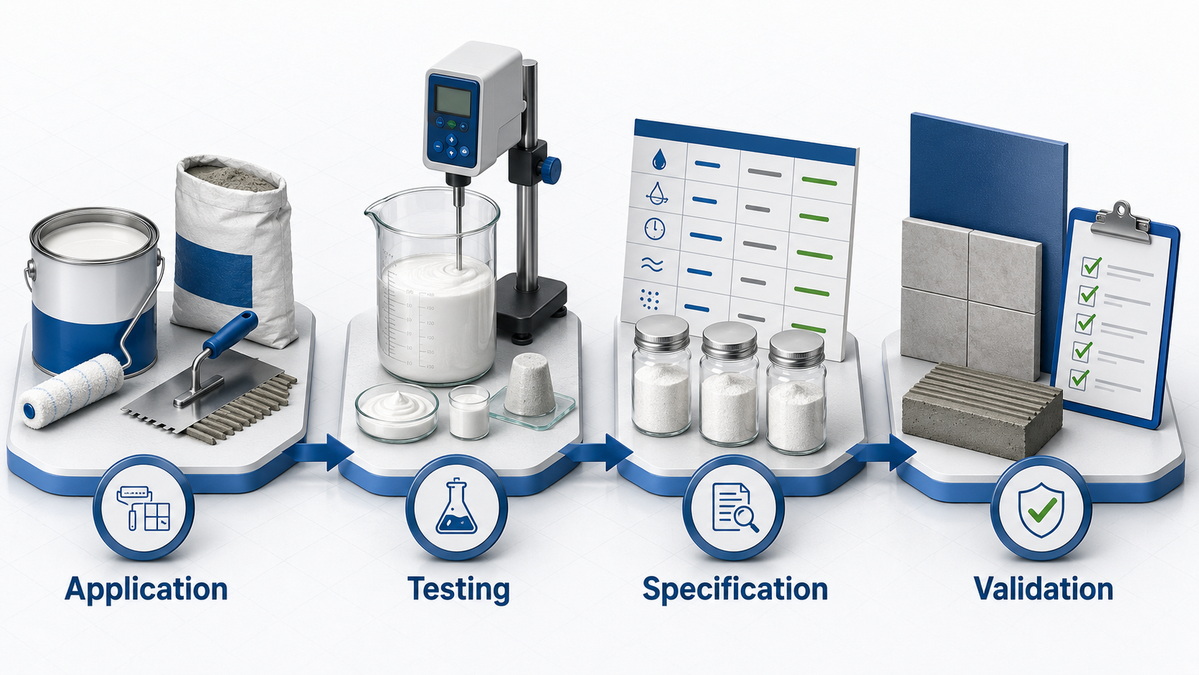
HEC and HPMC are both important cellulose ether solutions, but their strengths are different.
HEC is commonly selected for water-based coatings, detergents, and personal-care products where viscosity build, pigment suspension, anti-sag performance, and product stability are key requirements.
HPMC is commonly selected for tile adhesive, mortar, wall putty, gypsum plaster, and other dry-mix construction materials where water retention, open time, workability, and application consistency are the main priorities.
The right choice depends on the final product, performance target, raw material system, processing method, local climate, and customer expectations. A carefully selected grade can improve not only formula performance but also manufacturing efficiency and long-term product consistency.
Shandong Shengda New Material Co., Ltd. provides construction-grade and daily-chemical-grade HPMC and HEC solutions for customers worldwide. Product selection should be based on application requirements, technical specifications, and formulation testing to achieve stable, efficient, and commercially practical results.
No. HEC and HPMC are both cellulose ethers, but they have different chemical structures and performance characteristics. HEC is hydroxyethyl cellulose, while HPMC is hydroxypropyl methyl cellulose.
HEC is commonly used in water-based paint because it provides efficient thickening, pigment suspension, anti-settling performance, and anti-sag control. HPMC may also be tested in selected systems where working time and moisture management are important.
HPMC is generally more suitable for tile adhesive because it supports water retention, open time, workability, and application consistency in cement-based formulations.
Yes. HPMC is widely used in cement-based and gypsum-based systems to reduce rapid water loss. This helps the mortar remain workable for longer and supports more stable application performance.
No. A higher-viscosity grade may improve certain properties but can also reduce flow, increase mixing difficulty, raise cost, and make application less comfortable. The best grade is the one that meets performance targets at an appropriate dosage.
Useful information includes the product application, formula type, current viscosity, desired performance, dosage range, production equipment, climate conditions, raw materials, and specific issues such as settling, short open time, or poor workability.
In some formulations, HEC and HPMC can be evaluated together with other rheology modifiers. The suitability depends on the target viscosity profile, compatibility, processing sequence, and final application requirements.
1. [PubChem: Hydroxyethyl Cellulose]
2. [PubChem: Hydroxypropyl Methylcellulose]
3. [Water Retention Mechanism of HPMC in Cement Mortar]
4. [Applications in Cementitious Products]
5. [Can HPMC Replace HEC in Paint? A Practical Evaluation]
6. [HEC vs HPMC: Eligiendo la celulosa perfecta para el éxito]


