


close
Choose Your Site
Global
Social Media
Views: 249 Author: Shengda Publish Time: 2026-10-10 Origin: Site


Content Menu
● Indonesia's Position in the Cellulose HEC Market
>> A Growing Market for Specialty Chemical Applications
>> Local Distribution Does Not Necessarily Mean Local Production
● How These Suppliers Were Selected
>> Transparent Supplier Evaluation Criteria
● Five Cellulose HEC Manufacturers and Suppliers to Evaluate
>> 1. Shandong Shengda New Material Co., Ltd.
>>> China-Based Manufacturer for Direct Procurement and Customization Discussions
>>> Core Strengths
>>> Founding Year and Market Positioning
>>> OEM and Customization Scope
>> 2. Ashland
>>> Established Global Manufacturer of Natrosol HEC
>>> Core Strengths
>>> Founding Year and Main Markets
>>> OEM and Application Support Scope
>>> Local Distribution and Formulation-Oriented Support
>>> Core Strengths
>>> Founding Year and Main Markets
>>> Chemical Distribution Option Requiring Local HEC Confirmation
>>> Core Strengths
>>> Operating History and Main Markets
>> 5. Dow Indonesia and CELLOSIZE HEC
>>> Global HEC Portfolio with an Established Indonesian Business Presence
>>> Core Strengths
>>> Founding Year and Main Markets
>>> OEM and Technical Support Scope
● Supplier Comparison: Capacity, MOQ, and Certification Transparency
● Technical Buyer's Guide: Selecting the Right HEC Grade
>> Specify the Application Before Requesting a Price
>> Compare Viscosity Methods, Not Just Values
>> Distinguish HEC from Other Cellulose Derivatives
>> Interpret CE, RoHS, and Sustainability Statements Carefully
● Common Procurement Pitfalls and Practical Controls
>> Substitution Based on a Similar Product Name
>> Samples That Do Not Represent Future Shipments
>> Capacity Claims That Do Not Describe Available Supply
>> Certification Logos Without Supporting Documents
>> A Less-Discussed Risk: Approving Final Viscosity but Ignoring Hydration Behavior
● Factory Verification, Sampling, and Logistics
>> Establish Who Controls Production
>> Use a Staged Qualification Process
>> Verify Import Requirements Before Shipment
● Conclusion: Match the Supplier to the Purchasing Model
>> 1. How Can I Verify Whether a Supplier's ISO Certificate Has Expired or Been Suspended?
>> 2. Can Two HEC Grades with the Same Advertised Viscosity Be Used Interchangeably?
>> 3. Does Purchasing from an Indonesian Distributor Mean the Product Was Manufactured in Indonesia?
>> 4. Are CE and RoHS Documents Sufficient to Qualify HEC for Personal Care Applications?
>> 5. How Can I Prevent a Supplier from Changing the Grade After Sample Approval?
Indonesia offers professional buyers several routes for sourcing Cellulose HEC, from local specialty chemical distributors to international manufacturers and China-based factories supplying the Indonesian market. Selecting the right partner requires more than comparing prices, advertised viscosity values, or company size.
For paint manufacturers, construction chemical producers, personal care brands, and industrial formulators, the purchasing decision should begin with five questions:
- Who actually manufactures the material?
- Does the proposed grade match the intended application?
- Can the supplier demonstrate consistent batch quality?
- Are the documents and certifications verifiable?
- Can the supplier support repeat orders without changing the approved material?
This guide examines five relevant manufacturers and suppliers, explains their different sourcing roles, and provides a practical framework for evaluating technical performance, customization, compliance, and delivery reliability.
It is a procurement shortlist rather than a market-share ranking. Public company information supports the profiles, but current stock, prices, minimum order quantities, certification status, and delivery commitments must be confirmed directly.
Indonesia's manufacturing economy creates demand for materials used in coatings, construction products, personal care formulations, and other water-based systems. HEC participates in this market as a cellulose-derived rheology modifier, helping formulators manage viscosity, suspension, and product consistency.
In June 2025, Indonesia's Ministry of Industry highlighted efforts to develop specialty chemicals for applications including paints, printing inks, ceramics, plastics, and oil and gas. A report quoting the ministry cited US$5.35 billion in first-quarter 2025 exports from the combined chemical, pharmaceutical, and traditional medicine sectors.
That figure illustrates the scale of the broader industrial ecosystem. It is not an HEC export figure and should not be interpreted as evidence of domestic HEC manufacturing capacity.
A 2026 MarketsandMarkets outlook estimates Indonesia's cellulose ether and derivatives market at US$69.2 million, with a projected increase to US$90.1 million by 2031. The estimated compound annual growth rate is 5.4%. These figures cover cellulose ethers and derivatives collectively, rather than HEC alone.
Indonesia's procurement advantage includes access to established chemical distribution networks and international supplier representation.
Jakarta is an important commercial access point, with chemical companies maintaining business operations there. Cilegon also participates in the wider chemical manufacturing landscape. However, a chemical company's Indonesian office or production facility does not automatically establish that it manufactures HEC locally.
For example, Dow identifies its Cilegon operation as a styrene-acrylic emulsion facility. Buyers should therefore distinguish between:
1. HEC manufactured in Indonesia.
2. Imported HEC stocked by an Indonesian distributor.
3. HEC supplied through a local sales office.
4. HEC shipped directly from an overseas manufacturer.
This distinction affects lead times, technical communication, inventory planning, and the documentation needed to establish manufacturing origin.
The companies in this guide were selected based on publicly documented cellulose ether manufacturing capabilities, relevant HEC product portfolios, Indonesian product listings, or an established chemical distribution presence.
The evaluation does not assume that every supplier operates an Indonesian HEC factory.
| Evaluation area | Evidence to request | Purchasing significance |
|---|---|---|
| Manufacturing identity | Legal manufacturer name, factory address, and origin declaration | Establishes who controls production |
| Product suitability | Current technical data sheet and application recommendation | Connects the grade to the intended formulation |
| Quality control | Lot-specific certificate of analysis and release specifications | Supports repeat-order consistency |
| Research and technical support | Grade-selection assistance and a documented sample process | Helps resolve application problems |
| Capacity and availability | HEC-specific allocation, warehouse stock, and delivery commitments | Separates overall company scale from available supply |
| Certification | Full certificates with verifiable scope and status | Prevents reliance on unsupported logos |
| Customization | Written packaging, labeling, and specification options | Defines what the supplier can actually deliver |
| Commercial reliability | MOQ, quotation validity, payment terms, and delivery responsibilities | Makes competing offers comparable |
The most useful supplier is not necessarily the largest. It is the one that can connect its proposed grade, supporting documents, and commercial commitments to the buyer's actual requirements.
Shandong Shengda New Material Co., Ltd. states that it was founded in 2006 and specializes in the research, development, production, and sale of cellulose ethers.
Its published product portfolio includes hydroxyethyl cellulose, hydroxypropyl methylcellulose, and hydroxyethyl methylcellulose. These products should be evaluated separately because belonging to the same broad cellulose ether family does not make them interchangeable.
The company describes a dual-factory production model with a combined annual capacity of 60,000 metric tons. This is a company-stated capacity for its cellulose ether operations overall, not a disclosed HEC-only figure.
Shengda's published positioning emphasizes customized solutions, technical support, and pre-sales and after-sales service. For buyers interested in factory-direct procurement, this creates an opportunity to discuss the application rather than purchase solely against a distributor's stock code.
The company is particularly relevant to evaluate when a purchasing team wants to explore:
- Application-specific grade recommendations.
- Direct technical communication.
- Packaging and labeling requirements.
- A defined sample-to-commercial-order process.
- Repeat-order specifications.
For small and medium-sized brands, direct manufacturer engagement may offer a practical route to balancing technical requirements and purchasing costs. However, affordability, response speed, and order flexibility should be demonstrated through a quotation and sample project—not assumed from promotional language.
- Founded: 2006, according to the company.
- Location: China.
- Market positioning: Domestic and international cellulose ether customers.
- Relevant applications: Construction products, coatings, and daily chemical formulations.
- Sourcing role: Direct manufacturer candidate for buyers serving Indonesia and other markets.
A country-by-country customer breakdown is not publicly established in the reviewed company profile.
The company's stated customized-solution positioning makes it appropriate to discuss grade selection, packaging, and application support.
Nevertheless, private labeling, dedicated production specifications, custom polymer development, and minimum campaign quantities require written confirmation.
For HEC procurement, meaningful customization should identify exactly what changes: the product specification, packaging format, labeling, release testing, or application-support package.
Request the actual HEC manufacturing address, grade-specific production availability, recent lot certificates of analysis, current certifications, and a written customization scope.
Also ask the company to assign a technical contact and explain how it manages specification changes. This provides a practical test of communication efficiency and long-term support.
Ashland's corporate history dates to 1924. Its Natrosol portfolio is an established HEC option for water-based industrial and consumer formulations.
Ashland describes Natrosol hydroxyethylcellulose as a nonionic, water-soluble thickener with broad surfactant compatibility and salt tolerance. These characteristics make the portfolio relevant to buyers evaluating coatings, personal care products, and other aqueous systems.
An Indonesian sourcing connection is documented through IMCD Indonesia's listing of NATROSOL 250 KR, which identifies Ashland as the supplier.
Ashland's principal advantage is its established product family and published technical documentation.
A historical manufacturing announcement identified dedicated HEC facilities in the United States, the Netherlands, and China. The same announcement described a planned 7,000-metric-ton capacity addition.
These details demonstrate manufacturing history and geographic reach, but they should not be presented as a verified current capacity statement.
- Founded: 1924.
- Sourcing role: International HEC manufacturer.
- Relevant markets: Coatings, personal care, and other industrial or consumer formulations.
- Indonesian access: A documented Natrosol product listing through IMCD Indonesia.
Ashland is relevant for branded-grade selection and technical formulation evaluation.
The reviewed information does not establish unrestricted private-label Natrosol supply or bespoke manufacturing for individual Indonesian customers. Buyers requiring those services should request a separate commercial discussion.
Confirm the exact Natrosol grade, manufacturing origin, Indonesian supply route, current product documents, and commercial availability.
Also establish whether the offered product is conventional HEC or hydrophobically modified HEC. Similar product-family names do not guarantee equivalent formulation behavior.
IMCD Indonesia describes itself as a distributor and solutions provider of specialty chemicals and ingredients. Its local catalog includes Ashland's NATROSOL 250 KR, providing a documented Indonesian HEC purchasing channel.
IMCD Group was founded in Rotterdam in 1995. This is the group founding year, not a verified incorporation date for the Indonesian legal entity.
IMCD is relevant to buyers seeking local commercial engagement and specialty-ingredient formulation support.
Its Indonesian catalog also includes Natrosol Plus products described as hydrophobically modified hydroxyethylcellulose. These materials can provide associative thickening mechanisms in addition to the mechanisms associated with conventional HEC.
That distinction can be useful when exploring formulation options, but the products should not be approved as simple replacements without testing.
- Group founded: 1995.
- Indonesian entity founding year: Not verified in this review.
- Sourcing role: Distributor and formulation partner.
- Relevant market: Indonesian specialty chemical and ingredient customers.
IMCD's documented positioning supports discussions about ingredient selection and formulation assistance.
However, formulation support is different from manufacturing a custom HEC polymer. Buyers should distinguish between application development, sourcing an existing grade, and commissioning a new raw-material specification.
Ask which HEC grades are currently stocked, whether samples come from commercial inventory, and what local technical support is available.
Also confirm whether the quotation covers domestic delivery or a product that must first be imported.
Ashland and IMCD should not automatically be counted as independent manufacturing sources. Where IMCD supplies Ashland material, they represent different roles within the same upstream supply chain.
Brenntag Indonesia offers industrial and specialty chemicals throughout Indonesia. Brenntag's US product catalog also includes Natrosol HEC grades such as Natrosol 250 M and Natrosol 250 HHR.
These facts make Brenntag a reasonable company to contact about HEC sourcing. They do not prove that every globally listed grade is available or stocked in Indonesia.
Brenntag's relevance lies in chemical distribution and supply-chain services.
A historical report states that its Indonesian predecessor, PT EAC Indonesia, had operated in chemical distribution since 1995 and became part of Brenntag following the 2010 EAC acquisition.
The report also describes services including blending, formulation, warehousing, logistics, and supply-chain planning. Buyers should reconfirm which services are currently available for their specific project.
- Indonesian predecessor operating history: Dating to 1995.
- Brenntag ownership: From 2010, according to the historical report.
- Sourcing role: Chemical distributor.
- Relevant markets: Industrial and specialty chemical customers.
Distribution, blending, and formulation services may be useful for buyers consolidating multiple chemical purchases.
However, those services do not establish HEC polymer manufacturing or private-label HEC capability.
Obtain a written Indonesian quotation naming the manufacturer, grade, origin, MOQ, stock position, and delivery terms.
If repacking is involved, request clarification on batch identification, packaging integrity, and traceability back to the original manufacturer.
The Dow Chemical Company was founded in 1897. Dow states that it entered the Indonesian market in 1973 and maintains a Jakarta business center and a Cilegon manufacturing operation.
The Cilegon facility produces styrene-acrylic emulsions. Its existence should not be used as evidence that CELLOSIZE HEC is manufactured in Indonesia.
Dow's CELLOSIZE portfolio includes nonionic, water-soluble HEC products for personal care and industrial applications.
Dow provides grade-specific product information that helps buyers build more precise comparisons.
For example, its published CELLOSIZE HEC PCG-10 information identifies a Brookfield viscosity range of 4,400–6,000 mPa·s at a 1% concentration.
This illustrates the importance of reading the concentration and method alongside the number. The specification should not be generalized to other CELLOSIZE products.
- The Dow Chemical Company founded: 1897.
- Indonesian market entry: 1973.
- Sourcing role: Global manufacturer with Indonesian commercial presence.
- Relevant markets: Personal care and industrial applications, including oilfield fluids.
Dow is relevant for commercial-grade selection and technical evaluation.
Private labeling, dedicated manufacturing specifications, and current Indonesian availability require confirmation through the appropriate commercial channel.
Ask Dow Indonesia to identify the suitable sales route, grade availability, production origin, sample access, and expected delivery conditions.
For personal care applications, request documentation applicable to the exact grade and intended end use rather than relying on general portfolio descriptions.
Public data is uneven. Missing information should remain visible rather than being replaced with estimated numbers.
| Supplier | Supply model | Published capacity information | Public HEC MOQ | Certification verification needed | Primary evaluation focus |
|---|---|---|---|---|---|
| Shandong Shengda | China-based manufacturer | Company states 60,000 t/year combined cellulose ether capacity; HEC allocation not disclosed | Not disclosed | Current certificates, site, scope, and status | Direct sourcing, technical communication, and customization |
| Ashland | International manufacturer | Historical 7,000 t/year expansion announcement; current total not verified | Not disclosed | Relevant manufacturing-site documents | Natrosol grade selection and technical consistency |
| IMCD Indonesia | Distributor and formulation partner | HEC manufacturing capacity not applicable | Not disclosed | Local documents and upstream manufacturer certification | Local product access and formulation assistance |
| Brenntag Indonesia | Chemical distributor | HEC manufacturing capacity not applicable | Not disclosed | Local documents and upstream traceability | Local availability and supply-chain services |
| Dow | International manufacturer with Indonesian presence | HEC-specific capacity not verified | Not disclosed | Relevant grade and manufacturing-site documents | CELLOSIZE product fit and commercial supply route |
Request separate MOQ conditions for laboratory samples, pilot orders, routine supply, and customized packaging. These quantities may differ substantially.
HEC is used as a rheology modifier, with functions that can include thickening, suspension, stabilization, binding, and film formation.
However, "HEC powder" is not a sufficient purchasing specification.
A coating manufacturer may prioritize mixing behavior and viscosity development. A personal care formulator may focus on clarity, texture, compatibility, and appropriate quality documentation.
The enquiry should describe:
- Intended application.
- Current reference grade, if available.
- Target viscosity and full test method.
- Formulation constraints.
- Required processing time.
- Packaging and order quantities.
- Destination and delivery requirements.
Viscosity results depend on the test conditions.
Suppliers may report values at different solution concentrations, temperatures, spindle settings, and rotational speeds. Sample preparation and hydration time also need to be controlled.
A complete specification should include:
1. Solution concentration.
2. Concentration basis.
3. Water quality.
4. Mixing procedure.
5. Hydration time.
6. Measurement temperature.
7. Instrument, spindle, and speed.
8. Acceptance range.
Do not compare a value measured at 1% directly with a value measured at 2% and assume the larger number represents a superior product.
HEC, HPMC, HEMC, and hydrophobically modified HEC belong to related material categories but should not be treated as identical.
Hydrophobically modified HEC can provide additional associative thickening behavior. This can change how a formulation responds to other ingredients.
Approve the exact chemistry and grade—not merely the word "cellulose" on a quotation.
CE marking is not a universal certification for chemical raw materials. It applies where relevant European legislation requires it.
RoHS addresses restrictions on hazardous substances in electrical and electronic equipment. A RoHS-related declaration does not establish that an HEC grade is suitable for coatings, construction products, or personal care formulations.
Ask suppliers to explain the requirement behind each compliance statement.
Similarly, distinguish between:
- A certified management system.
- A restricted-substance test report.
- A product-specific biodegradability statement.
- A sourcing or chain-of-custody certification.
- A general environmental marketing claim.
These documents answer different questions and should not be treated as interchangeable.
A supplier may describe a grade as "equivalent" without demonstrating equivalent performance.
Require the exact manufacturer, chemical identity, product code, complete technical specification, and proposed comparison method.
Then test the material in the actual formulation.
Record the sample lot number and retain a sealed reference sample.
Specify that the first commercial delivery must match the approved grade and acceptance criteria. Follow with incoming inspection and a controlled production trial.
A large total cellulose ether capacity does not establish how much of one HEC grade is available within the required delivery window.
Ask about allocated supply, production scheduling, stocked quantities, and the lead time for repeat orders.
A logo is not sufficient verification.
Request the full certificate and check the legal entity, production site, scope, issuing body, accreditation, and current status.
A certificate can be suspended or withdrawn before its printed expiry date.
A fully hydrated laboratory solution may pass the viscosity requirement while the same material performs poorly within the buyer's production mixing window.
This is particularly relevant when comparing grades with different dispersion or surface-treatment behavior.
The practical control is to approve the processing behavior as well as the final viscosity.
Record:
- Powder addition time.
- Dispersion quality.
- Visible lumps.
- Viscosity development during mixing.
- Final viscosity after the agreed equilibration period.
- Finished-product performance after storage.
A proposed replacement should work within the factory process—not only in a carefully prepared laboratory sample.
For direct sourcing, request a live factory walkthrough or an independent audit covering production identification, laboratory equipment, packaging, and batch records.
For distributor sourcing, establish the upstream manufacturer, supply authorization where relevant, repacking arrangements, and original batch traceability.
A distributor can be a reliable partner. The essential requirement is clarity about its role.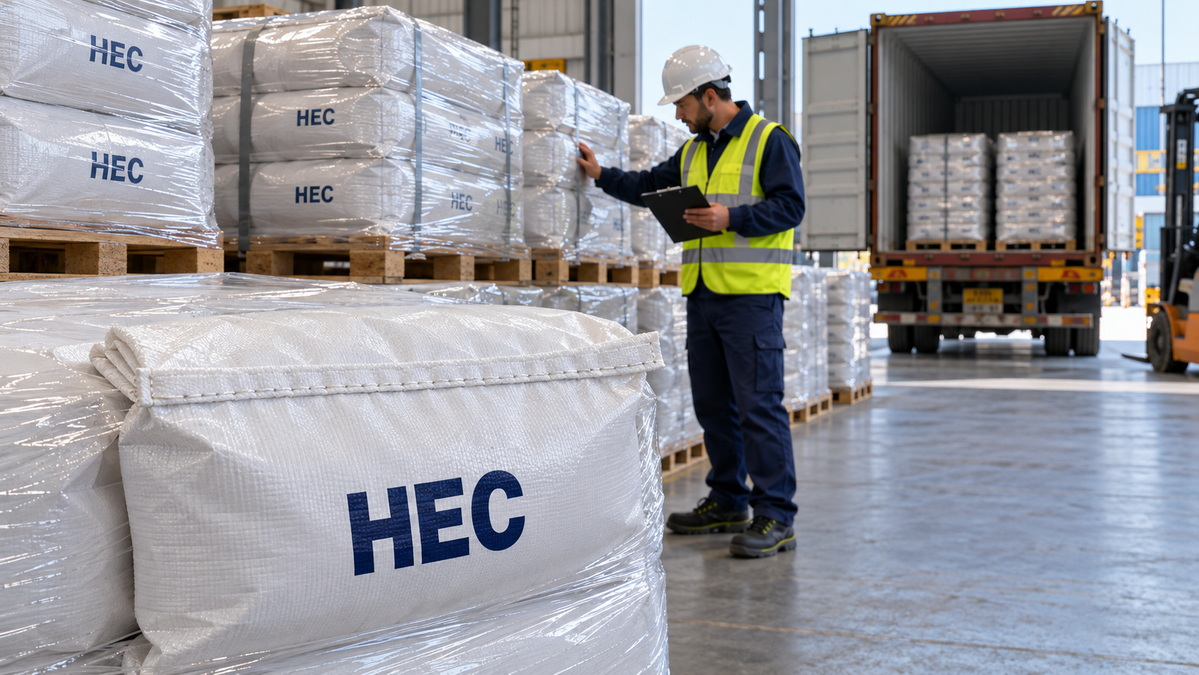
A practical qualification sequence is:
1. Review legal identity and product documents.
2. Screen laboratory samples under one controlled method.
3. Test the actual formulation.
4. Conduct a production-scale pilot.
5. Inspect the initial commercial shipment.
6. Review consistency across repeat orders.
Add a change-notification agreement covering relevant modifications to the manufacturing site, grade, test method, specification, surface treatment, and packaging.
Indonesia announced changes affecting chemical import rules in 2025. Historical announcements should not be treated as a substitute for shipment-specific customs advice.
Before dispatch, the importer and customs broker should confirm the applicable classification, origin documentation, labeling, and any required permissions.
The purchasing agreement should also define:
- Incoterm and destination-charge responsibility.
- Packaging and moisture-protection requirements.
- Inspection procedures.
- Delivery windows.
- Safety-stock expectations.
- Handling of damaged bags and disputed lots.
A useful HEC shortlist combines different supply models rather than assuming that every company operates an Indonesian factory.
Shandong Shengda provides a direct-manufacturer option to evaluate for technical communication, customization, and purchasing flexibility. Ashland and Dow offer established international HEC portfolios. IMCD Indonesia provides a documented Natrosol sourcing channel, while Brenntag Indonesia is a distribution option requiring confirmation of local HEC availability.
The final decision should rest on application performance, document quality, traceability, and repeat-supply commitments.
To begin a technical discussion with Shandong Shengda New Material Co., Ltd., provide your application, reference grade, complete viscosity method, expected volume, packaging requirements, and destination. Request a recommended grade, supporting documents, representative sample, customization scope, and quotation.
A specification-led enquiry gives both parties a clearer starting point and helps turn an initial price comparison into a reliable long-term supply relationship.
Search the company name or exact certificate number in IAF CertSearch. Compare the legal entity, production site, certification scope, current status, issuing body, and accreditation details.
Do not rely solely on the printed expiry date. Suspension or withdrawal can occur before that date.
If the record cannot be resolved, contact the issuing certification body directly before approving or rejecting the supplier.
Not without further evaluation.
First establish whether the concentration, temperature, preparation procedure, instrument, and settings are comparable.
Then compare hydration behavior and performance in the intended formulation. A matching headline viscosity value does not demonstrate equivalent processing or finished-product performance.
No.
Country of sale, warehouse location, and manufacturing origin are separate facts. A distributor may sell imported material under a domestic invoice.
Request the actual manufacturer, production origin, lot identification, and supporting traceability documents.
No.
Neither document establishes that an HEC grade meets the technical and regulatory requirements of a personal care formulation.
Review the exact grade's technical and safety documentation and ask your regulatory team to identify any additional declarations or test results required for the intended product and market.
Create a written approved-material specification covering the manufacturer, production site, product code, viscosity method, hydration procedure, packaging, and acceptance criteria.
Retain the approved sample and require advance notification of relevant changes.
Verify subsequent lots using the same agreed methods. Where processing behavior matters, include hydration and dispersion performance rather than relying only on final viscosity.
- [Shandong Shengda New Material Co., Ltd. — About Us]: Company history, cellulose ether portfolio, stated combined capacity, and service positioning. [shengdahpmc]
- [Ashland — Company History]: Corporate founding background. [ashland]
- [Ashland — Natrosol Hydroxyethylcellulose]: HEC characteristics and application information. [ashland]
- [Ashland — HEC Manufacturing Expansion Announcement]: Historical manufacturing footprint and capacity-expansion information. [investor.ashland]
- [IMCD Indonesia — NATROSOL 250 KR]: Indonesian product-channel evidence. [imcd.co]
- [IMCD Indonesia — Company Website]: Distribution and solutions-provider positioning. [imcd.co]
- [IMCD Group — About Us]: Group history. [imcdgroup]
- [Brenntag Indonesia — Company Website]: Indonesian distribution presence. [brenntag]
- [Brenntag — Natrosol 250 HHR]: US HEC portfolio listing; Indonesian availability requires confirmation. [brenntag]
- [Brenntag's Indonesian Distribution Facility — Historical Report]: Predecessor history and distribution services. [asiamanufacturingnewstoday]
- [Dow — Corporate History Timeline]: Founding history. [corporate.dow]
- [Dow in Indonesia]: Indonesian market entry and local operating profile. [id.dow]
- [Dow — CELLOSIZE HEC for Personal Care]: Applications and grade-specific technical information. [dow]


