


close
Choose Your Site
Global
Social Media
Views: 231 Author: Shengda Publish Time: 2026-08-30 Origin: Site


Content Menu
● Why Clear Detergent Gels Are Difficult to Formulate
● What Is Detergent Grade HEMC?
>> Key Functions of HEMC in Detergents
>> How Carbomer Builds Gel Viscosity
● Detergent Grade HEMC vs Carbomer: Main Differences
● Why Cellulose Ethers Are Gaining Ground in Clear Gels
>> Broad Compatibility With Surfactant Systems
>> Reduced Dependence on Neutralization
>> A Cellulose-Based Ingredient Platform
● Clarity Means More Than Appearance
● When to Choose Detergent Grade HEMC
● A Practical Method for Screening HEMC and Carbomer
>> Recommended Formulation Screening Process
● Expert Insight: Consider a Hybrid Rheology Strategy
● Build Better Clear Gel Detergents With Shengda
>> Is detergent grade HEMC suitable for clear liquid detergents?
>> Does HEMC require neutralization like carbomer?
>> Which produces a clearer gel: HEMC or carbomer?
>> Is HEMC more salt tolerant than carbomer?
>> Can HEMC be used in hand wash and dishwashing liquid?
>> Can HEMC fully replace carbomer?
>> What should be tested before selecting a detergent thickener?
A transparent detergent gel is a multi-component system. It may contain anionic, amphoteric, nonionic, or cationic surfactants. It may also include salt, fragrance, preservatives, dyes, chelating agents, solvents, antibacterial ingredients, and functional additives.
Every ingredient can affect clarity, viscosity, foam, and long-term stability.
The key challenge is creating the right balance. A thickener must build viscosity without making the system hazy, stringy, unstable, difficult to manufacture, or unpleasant to use.
A successful clear gel formulation normally requires:
- High clarity for attractive shelf presentation
- Stable viscosity during production and storage
- Easy pouring or pumping from the selected package
- Shear-thinning behavior for better consumer use
- Salt and surfactant compatibility
- Stable pH performance
- Fragrance and dye compatibility
- Reliable batch-to-batch consistency
- Practical processing at production scale
A formula that looks clear immediately after mixing may still fail later. Viscosity can drop after salt adjustment. Fragrance may create haze. Low temperatures may change flow behavior. Air bubbles may affect the visual appearance after filling.
That is why thickener selection should be based on the complete formulation rather than a simple water-based laboratory test.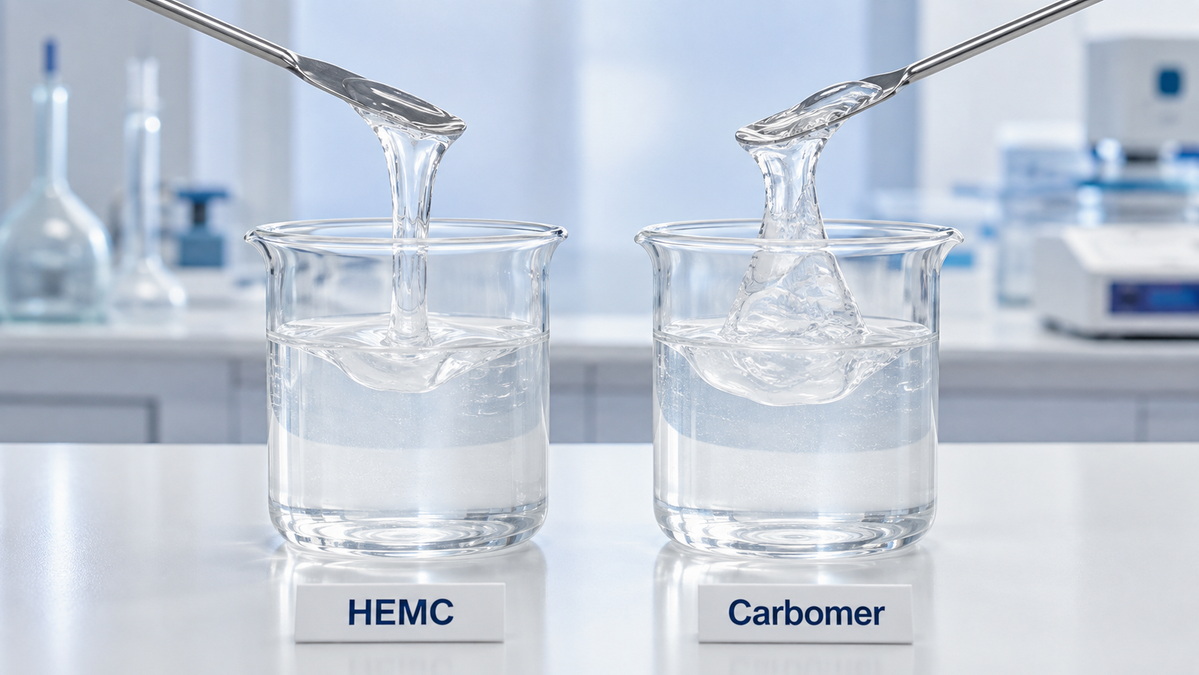
Detergent grade HEMC is a water-soluble, nonionic cellulose ether. It is produced from cellulose through controlled chemical modification with hydroxyethyl and methyl groups.
This structure gives HEMC a useful combination of water solubility, thickening performance, rheology control, and compatibility in many aqueous systems.
In detergent and personal cleansing formulations, HEMC can help create body, control flow, improve viscosity stability, and support an appealing product texture.
Detergent grade HEMC may provide:
- Viscosity development in water-based cleaning products
- Smooth and controlled flow behavior
- Shear-thinning rheology for easy pouring and dispensing
- Compatibility with many surfactant systems
- Water retention and formula stabilization
- Improved handling during manufacturing
- A cellulose-based ingredient option
- Support for clear or translucent product appearance
Because HEMC is nonionic, it does not depend on an ionization process to build viscosity in the same way as carbomer. This can make it attractive for certain surfactant-rich systems.
However, HEMC performance still depends on the selected grade, dosage, hydration conditions, mixing process, electrolyte level, final pH, surfactant ratio, and temperature.
Carbomer is a crosslinked acrylic acid polymer used as a thickener, gelling agent, suspension aid, and rheology modifier.
It is widely used in cosmetic gels, hand sanitizers, skin care products, personal cleansing products, and selected home care applications.
Carbomer is well known for producing highly transparent gels with strong viscosity at relatively low addition levels.
Carbomer usually needs three critical steps:
1. Dispersion
The powder must be dispersed carefully in water to minimize agglomerates.
2. Hydration
The polymer needs time to wet and hydrate fully.
3. Neutralization
A suitable neutralizer is added to raise pH and activate viscosity development.
Before neutralization, carbomer polymer chains remain relatively compact. After neutralization, the polymer chains expand. This creates a three-dimensional network that traps water and builds gel viscosity.
The process can deliver impressive results. Yet it can also be sensitive to ingredient order, pH control, electrolyte concentration, surfactant selection, and neutralizer choice.
| Performance Factor | Detergent Grade HEMC | Carbomer |
|---|---|---|
| Polymer type | Nonionic cellulose ether | Crosslinked acrylic acid polymer |
| Main thickening mechanism | Hydration and polymer-chain interaction | Polymer swelling after neutralization |
| Need for neutralization | Usually not the main viscosity activation step | Commonly required for high viscosity |
| Surfactant-system compatibility | Often favorable in mixed surfactant systems | Depends strongly on selected grade and formula design |
| Salt sensitivity | Can offer useful tolerance depending on grade and system | Conventional grades may be sensitive to electrolytes |
| Clarity potential | Can support clear to translucent gels | Often delivers very high transparency |
| Rheology profile | Smooth, practical, shear-thinning flow | Short, rich, gel-like flow profile |
| Processing needs | Controlled dispersion and hydration | Dispersion, hydration, and precise neutralization |
| Ingredient positioning | Cellulose-based and nonionic | Synthetic acrylic polymer |
| Common applications | Detergents, hand wash, dish soap, household cleaners | Clear gels, personal care gels, selected home care products |
The most important lesson is simple: high transparency alone is not enough.
A visually clear gel may still become unstable after fragrance addition, temperature cycling, salt adjustment, or long-term storage. The best thickener is the one that delivers reliable performance across the entire finished formula.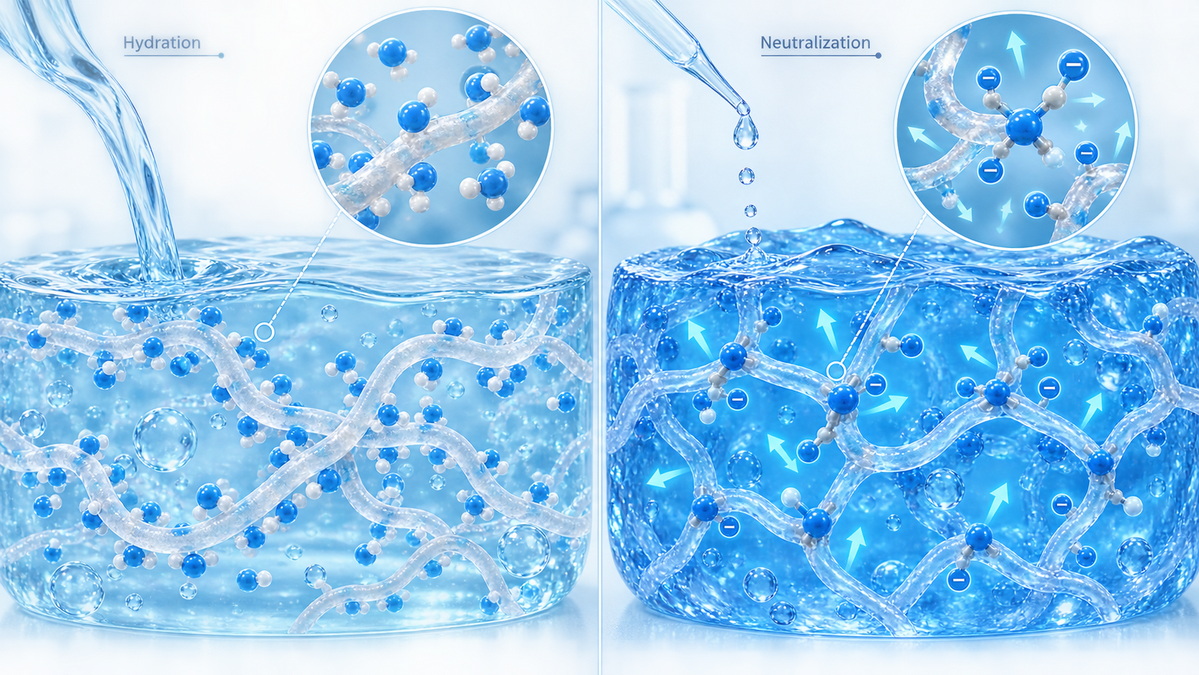
Cellulose ethers are receiving more attention because formulation priorities are changing.
Manufacturers need clear gels that perform reliably across more complex surfactant systems. They also want stable processing, flexible ingredient compatibility, predictable scale-up, and more options for cellulose-based product development.
Modern liquid detergents often use more than one surfactant.
A typical formulation may include:
- Anionic surfactants for cleaning performance
- Amphoteric surfactants for foam and mildness
- Nonionic surfactants for grease removal
- Solubilizers for fragrance stability
- Salt for viscosity adjustment
- Preservatives and chelating agents for product protection
A nonionic thickener such as HEMC can be useful because it generally introduces fewer charge-related interactions into the system.
This does not mean every HEMC grade is suitable for every detergent. High electrolyte levels, aggressive surfactant packages, high active-matter concentrations, and some solvents can affect its performance.
Still, detergent grade HEMC provides a strong starting point for formulators building surfactant-rich clear gels.
Carbomer systems can require careful neutralization. A small change in pH, neutralizer type, or addition sequence may influence viscosity, clarity, and final gel texture.
HEMC does not rely on neutralization as the main trigger for viscosity development.
This can provide practical advantages during formulation and production:
- Fewer pH-driven viscosity fluctuations
- More flexible manufacturing procedures
- Lower risk of neutralizer overuse
- Simpler viscosity adjustment approaches
- More direct viscosity development during hydration
- Potentially easier scale-up from laboratory to factory
The final pH remains important for product quality, preservation, safety, consumer preference, and compatibility with other ingredients. The difference is that HEMC does not usually need pH adjustment to unlock its core thickening function.
Cellulose is one of the world's most abundant natural polymers. Cellulose ethers are manufactured through controlled modification to achieve water solubility and performance in industrial formulations.
For detergent brands, this can support product-development discussions around:
- Cellulose-based thickening systems
- Nature-derived raw-material origins
- Nonionic polymer selection
- Balanced ingredient stories
- More diversified rheology-modifier options
Finished-product claims should always be reviewed according to the grade, sourcing route, local regulations, certification requirements, and available evidence.
A clear gel is not only a visual result. It is a performance result.
Formulators should evaluate clarity together with viscosity, flow, stability, fragrance compatibility, packaging behavior, and temperature resistance.
| Evaluation Area | What to Assess | Why It Matters |
|---|---|---|
| Visual clarity | Haze, transparency, bubbles, color shift | Supports premium shelf appearance |
| Viscosity | Initial and aged viscosity | Indicates storage consistency |
| Rheology | Pourability, pumping, stringiness | Influences consumer experience |
| Salt tolerance | Viscosity after electrolyte addition | Reflects actual detergent conditions |
| Surfactant compatibility | Stability after surfactant blending | Reduces formulation risk |
| Fragrance compatibility | Clarity after fragrance addition | Prevents haze and separation |
| Temperature stability | Performance after hot and cold storage | Supports shipping reliability |
| Freeze-thaw resistance | Appearance after temperature cycling | Reduces seasonal failure risk |
| Packaging behavior | Dispensing from pumps, caps, and bottles | Protects end-user satisfaction |
A clear gel is not automatically a stable gel.
A commercial detergent must remain visually appealing and easy to use from the first day of production until the last use by the consumer.
Detergent grade HEMC may be the right choice when the product needs smooth viscosity, convenient processing, and compatibility with a complex surfactant base.
Consider HEMC when:
- Your formula contains mixed surfactants
- You want a nonionic cellulose ether thickener
- You need a smooth, pourable gel texture
- You want to reduce dependence on neutralization
- You are developing hand wash or liquid soap
- You are formulating dishwashing liquid
- You are creating household surface-cleaning gels
- You need to evaluate performance in salt-containing systems
- You want a cellulose-based thickening option
- You need flexible rheology control for different package formats
HEMC can be especially useful where a product requires viscosity without an overly rigid gel structure.
For example, a hand wash may need enough viscosity to appear premium in a pump bottle. At the same time, it must dispense easily, spread well between the hands, rinse cleanly, and maintain foam performance.
A properly selected detergent grade HEMC can help balance these requirements.
Carbomer may be the better choice when the main objective is high clarity and a strong gel structure.
Consider carbomer when:
- Your primary target is very high transparency
- Your formula can support controlled neutralization
- You need high viscosity at a low addition level
- You need a rich, short-flow gel texture
- Your electrolyte level is manageable
- You have a reliable pH-control process
- Your production team is familiar with carbomer hydration and neutralization
- Your product requires a high-yield gel structure
Carbomer can be highly effective in premium clear gels. However, formulators should select the grade carefully because different carbomer types can show different behavior in salt-containing or surfactant-heavy systems.
One of the most common formulation errors is testing a thickener only in deionized water.
That can show basic thickening ability. It does not show real performance in the finished detergent formula.
A stronger approach is to test detergent grade HEMC and carbomer in a representative surfactant base as early as possible.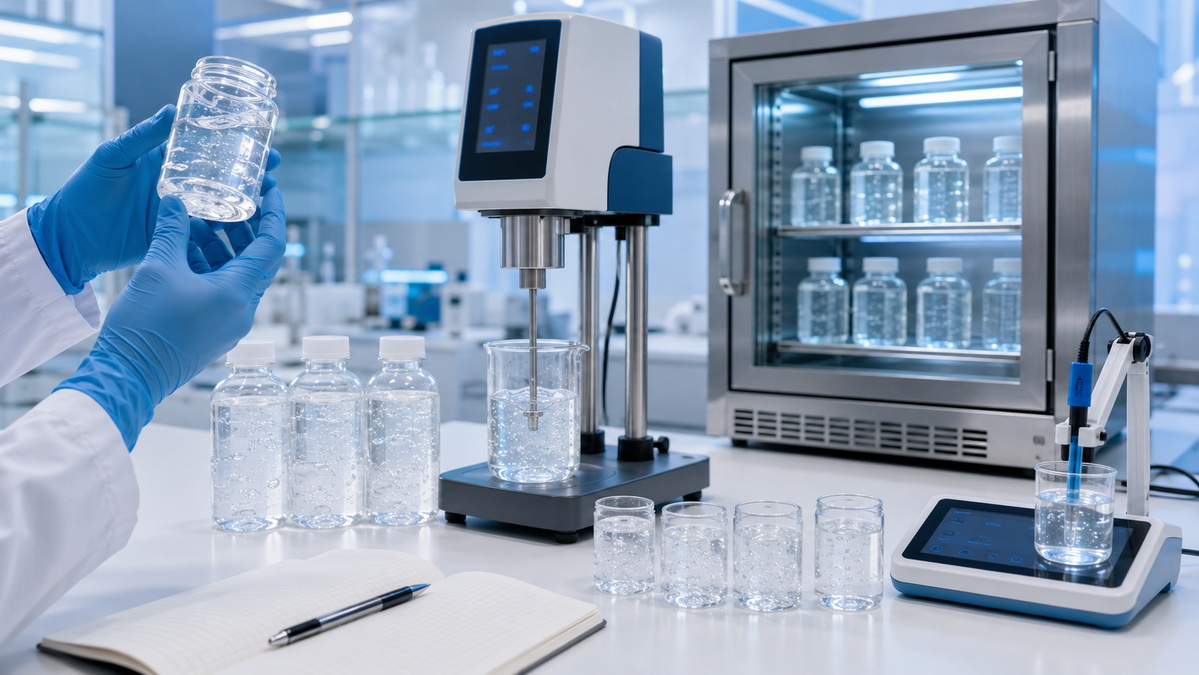
1. Define the product target
Identify the required viscosity, pH, clarity, foam, fragrance level, package type, and storage conditions.
2. Prepare a realistic surfactant base
Include surfactants, salts, preservatives, chelating agents, solvents, and other key ingredients.
3. Test multiple thickener dosages
Create a dosage-response curve instead of testing one concentration only.
4. Control the mixing sequence
Record mixing speed, temperature, hydration time, addition order, and pH adjustment conditions.
5. Measure after complete hydration
Do not rely only on immediate viscosity readings. Allow sufficient time for the system to stabilize.
6. Add fragrance and color before final evaluation
Fragrance and dyes can change clarity, solubility, and viscosity.
7. Run stability testing
Test room-temperature storage, elevated-temperature storage, freeze-thaw cycling, and centrifugation when appropriate.
8. Validate at pilot scale
Production equipment may introduce different shear conditions, hydration behavior, and air entrainment.
In some formulations, the best result does not come from using only one thickener.
A hybrid rheology system may combine a cellulose ether with another compatible thickener to improve flow, build viscosity, adjust yield value, or support suspension.
For example, HEMC may provide smooth body and practical flow in a surfactant-rich formula. A second rheology modifier may then refine gel structure or improve particle suspension.
This approach can create more balanced performance. However, it requires disciplined testing.
Adding multiple thickeners without a defined purpose can increase cost, create haze, complicate processing, or cause unexpected rheological behavior.
The best question is not, "Which thickener is stronger?"
The more useful question is: Which thickening system provides the required clarity, viscosity, processing stability, consumer experience, and cost control in this exact detergent formula?
Shandong Shengda New Material Co., Ltd. focuses on the research, development, production, and supply of HPMC, HEMC, HEC, and related cellulose ether products for global customers.
For detergent manufacturers, formulators, distributors, and private-label brands, thickener selection can affect both product quality and manufacturing efficiency. The right cellulose ether grade can help reduce reformulation cycles, improve processing consistency, and create a clear gel product with stable, consumer-friendly rheology.
Contact Shandong Shengda New Material Co., Ltd. to discuss detergent grade HEMC samples, technical guidance, and cellulose ether solutions for your clear detergent gel formulation.

Yes. A properly selected detergent grade HEMC can be used in clear liquid detergents, hand washes, dishwashing liquids, and household cleaning gels. Final clarity depends on the formula, including surfactants, salt, fragrance, dosage, processing conditions, and storage stability.
No. HEMC generally does not rely on neutralization as its main thickening mechanism. Carbomer usually requires neutralization to expand its polymer network and create high gel viscosity.
Carbomer is widely selected for highly transparent gels when the formula is optimized. HEMC can also support clear or translucent formulations. The final result depends on the specific formulation, including surfactants, electrolytes, fragrance, pH, and processing conditions.
It depends on the HEMC grade, carbomer grade, salt type, salt concentration, and surfactant system. Conventional carbomer grades may be more sensitive to electrolytes. Some specialty carbomer grades are designed for improved electrolyte tolerance. Both should be tested in the intended detergent base.
Yes. Detergent grade HEMC can be used in hand wash, liquid soap, dishwashing liquid, household surface cleaners, and other water-based surfactant formulations that require controlled viscosity and improved flow behavior.
In some formulations, yes. HEMC can be a suitable alternative where nonionic behavior, surfactant compatibility, smooth flow, and simplified processing are priorities. In applications requiring ultra-high clarity or a strong high-yield gel structure, carbomer or a hybrid thickening system may be more appropriate.
Evaluate clarity, viscosity, rheology, pH stability, salt tolerance, surfactant compatibility, fragrance compatibility, foam performance, temperature stability, freeze-thaw stability, and packaging behavior. Pilot-scale validation is also recommended before commercial production.
1. Ashland. [Natrosol™ Hydroxyethylcellulose for Home, Industrial and Institutional Care].
2. Ashland. [Hair Care: Natrosol™ Hydroxyethylcellulose].
3. Lubrizol. [Carbopol® Polymer Excipients].
4. Lubrizol. [Carbopol® Ultrez 20 Polymer].
5. Lubrizol. [Carbopol® ETD 2020 Polymer].
6. ScienceDirect. [Factors Affecting the Rheological Behaviour of Carbomer Dispersions in Hydroalcoholic Medium: Towards the Optimization of Hand Sanitiser Gel Formulations].
7. Google Patents. [Modified Nonionic Cellulose Ethers, US4228277A].
8. Celotech. [Cellulose Ether for Home Care and Detergent Thickener].


