


close
Choose Your Site
Global
Social Media
Views: 260 Author: Shengda Publish Time: 2026-08-06 Origin: Site


Content Menu
>> Why These Differences Matter
● Fragrance Retention in Body Wash
● HPMC vs HEMC for Fragrance Retention
>> Which One Retains Fragrance Better?
● Key Differences in Formulation Behavior
>> 1. Clarity
>> 2. Texture
● What Influences Fragrance Retention Most
>> Packaging
● Industry Trend in Body Wash Formulation
● FAQ
>> 1. Is HPMC or HEMC better for body wash fragrance retention?
>> 2. Can cellulose ether improve body wash scent stability?
>> 3. Which one is better for clear body wash?
>> 4. Which one gives a richer texture?
>> 5. Does fragrance type matter?
>> 6. Should fragrance be added before or after thickening?
When formulating a body wash, fragrance retention is often treated as a secondary concern. In reality, it is one of the most important factors shaping how consumers perceive product quality, freshness, and overall satisfaction.
For body wash brands, the choice between HPMC and HEMC can influence more than viscosity. It can affect fragrance stability, sensory feel, flow behavior, product appearance, and the way scent is released during use. Although both are cellulose ethers used in daily chemical formulations, they do not always perform the same way in a shower gel system.
This article compares daily chemical grade HPMC vs HEMC from a practical formulation perspective, with special attention to fragrance retention in body washes.
HPMC stands for Hydroxypropyl Methyl Cellulose. It is a non-ionic cellulose ether used in personal care products for thickening, stabilizing, and improving texture. In body wash formulas, HPMC is often valued for its smooth viscosity, good compatibility with surfactants, and ability to support clear or semi-clear systems.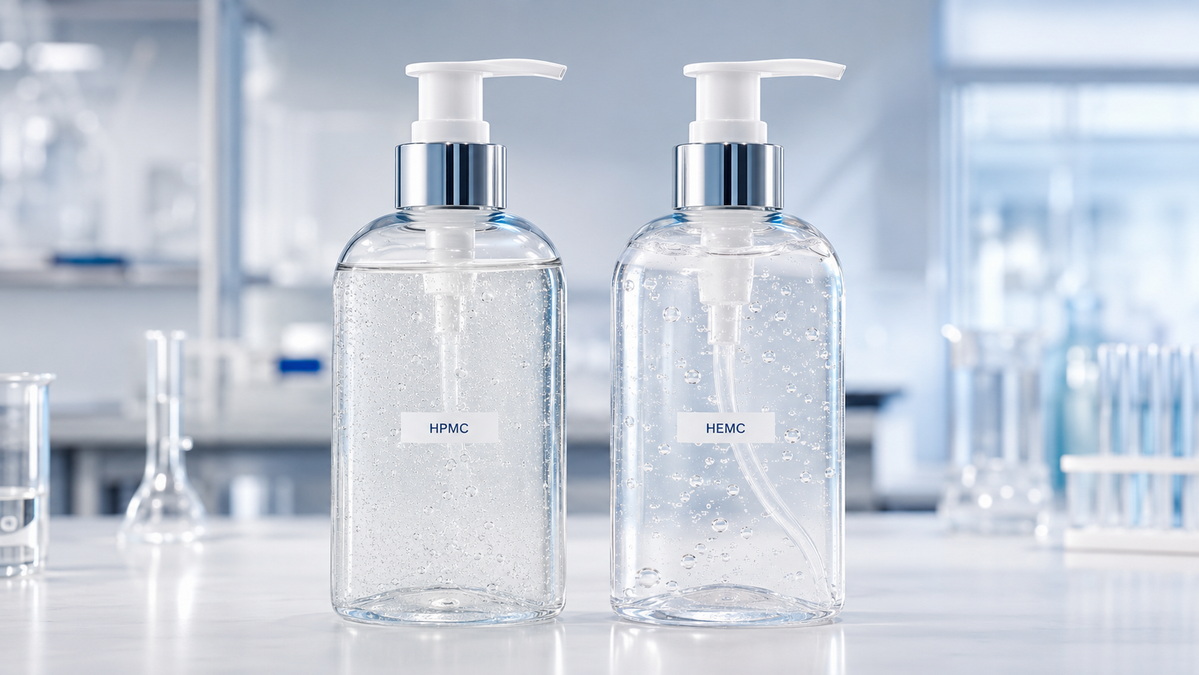
HEMC stands for Hydroxyethyl Methyl Cellulose. It is also a non-ionic cellulose ether, but its molecular structure gives it slightly different hydration and rheological behavior. In body wash formulations, HEMC is often selected when the formulator wants stronger water retention, a fuller body, and a more cushioned texture.
Although both ingredients belong to the same cellulose ether family, the final user experience can differ noticeably. A formula built with HPMC may feel cleaner, lighter, and more transparent, while a formula built with HEMC may feel richer and more structured. These differences matter because fragrance retention is closely connected to the way the product holds water, disperses perfume, and maintains formula uniformity over time.
Fragrance retention refers to how well a body wash preserves its scent during production, storage, and consumer use. It includes both the stability of the fragrance inside the bottle and the way the scent is perceived on skin after washing.
In a body wash system, fragrance loss can happen for several reasons:
- Volatile top notes may evaporate during manufacturing.
- Poor solubilization may cause scent separation.
- Low viscosity may allow fragrance to migrate more easily.
- Incompatible surfactants may weaken the fragrance structure.
- Heat exposure during shipping may alter the scent profile.
A cellulose ether cannot solve every fragrance problem, but it can support a more stable formula structure. By improving viscosity and helping the aqueous phase remain uniform, HPMC and HEMC can contribute to better fragrance consistency.
HPMC is often a strong choice for body wash formulas that prioritize clarity, smooth flow, and elegant sensory performance. In fragrance retention, HPMC can help maintain a stable system by supporting viscosity and reducing the risk of separation.
In transparent or lightly opalescent shower gels, HPMC is especially attractive because it can help create a clean visual appearance while still delivering good body. For fragrance systems that are not overly heavy or complex, HPMC often provides a balanced result.
HEMC is often preferred when the formula needs stronger structure, better water retention, or a fuller texture. In some body wash systems, this stronger internal structure may help the fragrance remain more evenly distributed over time.
HEMC can be a good option for richer sensory positioning, especially in formulations where the brand wants a more premium, cushiony feel. If the goal is to create a body wash that feels denser and holds its shape more strongly, HEMC may offer advantages.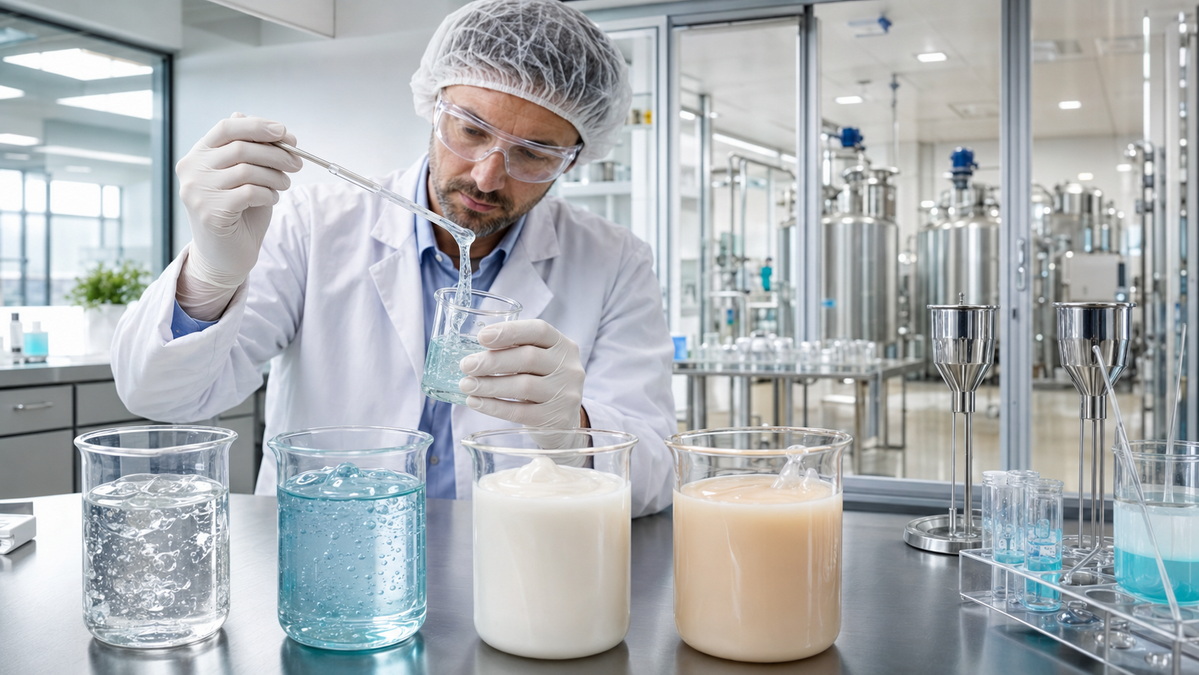
There is no universal winner. The better ingredient depends on the formula design.
If the product is a clear body wash with a light, fresh fragrance, HPMC is often the more practical choice.
If the product is a richer body wash with stronger structure and a more pronounced sensory profile, HEMC may offer better overall fragrance support.
The most important point is that fragrance retention is not determined by the thickener alone. It depends on the full formulation, including surfactants, fragrance type, solubilizers, salt level, pH, and packaging.
HPMC is often easier to use in transparent or semi-transparent body wash systems. HEMC can also work in clear systems, but the result depends more strongly on grade selection and the full formula.
HPMC usually gives a smooth, clean, and elegant texture. HEMC often creates a fuller and slightly more structured feel.
HEMC is often associated with stronger water retention, which can be useful in formula stability and sensory balance. HPMC also performs well, but its behavior may be preferred in lighter systems.
Both ingredients can support fragrance stability indirectly by improving formula consistency. HEMC may be advantageous in more structured systems, while HPMC may work better where clarity and clean release are more important.
A body wash must smell pleasant both in the bottle and on skin. HPMC often supports a lighter, more immediate sensory impression. HEMC may create a slower, fuller release depending on the overall system.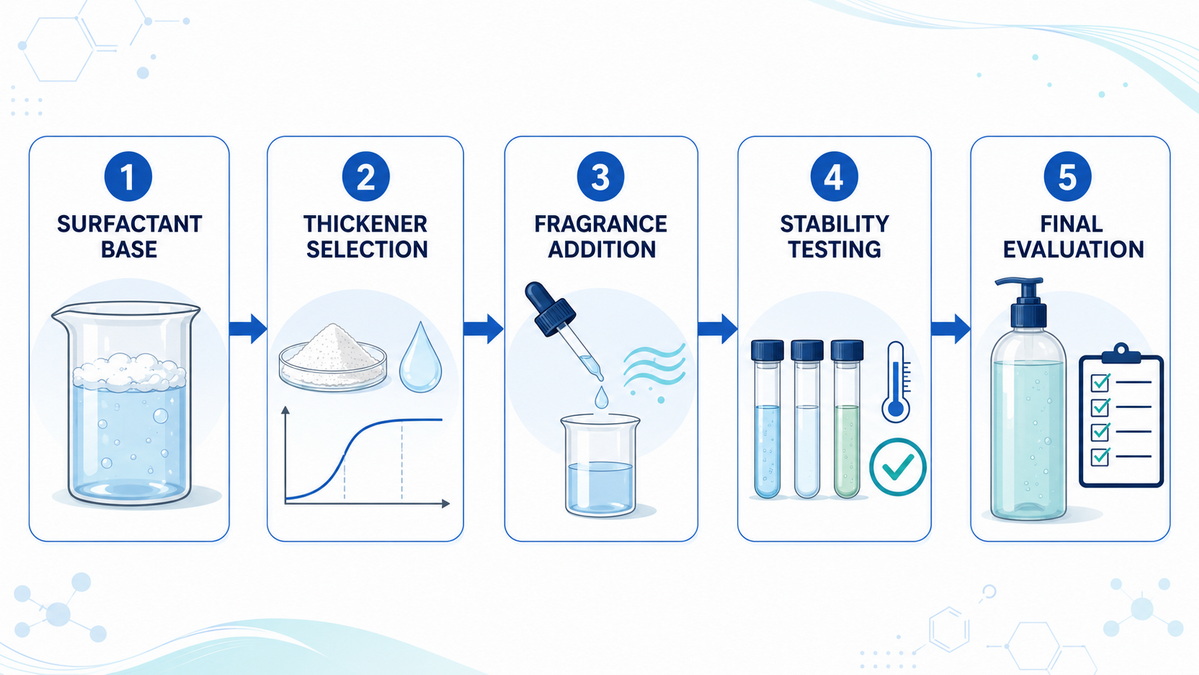
| Feature | HPMC | HEMC |
|---|---|---|
| Texture | Smooth, clean, elegant | Full, rich, structured |
| Clarity potential | Often very good | Grade-dependent, good in suitable systems |
| Water retention | Good | Often stronger |
| Fragrance retention support | Good | Good to very good in structured formulas |
| Sensory feel | Light and refined | Cushioned and premium |
| Best use case | Clear or semi-clear body wash | Richer body wash with stronger body |
Even a well-chosen cellulose ether will not perform well if the rest of the formula is unstable. The following factors are often just as important as the thickener itself.
Mild surfactant systems behave differently from sulfate-based systems. The fragrance response of the formula can change depending on whether the base is built around APG, amphoteric surfactants, or traditional cleansing systems.
Fresh citrus, floral, woody, gourmand, and essential oil blends all behave differently. Some fragrance families are inherently more volatile and require better structural support.
If the fragrance is not properly solubilized, the perfume may separate or lose intensity more quickly, regardless of whether the formula uses HPMC or HEMC.
Fragrance should usually be added under controlled conditions. Excess heat, poor mixing, or late-stage incompatibility can damage the final scent profile.
Bottle design, closure type, and headspace can affect how fragrance is perceived over time. A product that smells strong in the factory may behave differently after transport and shelf storage.
HPMC is often the better option when the body wash needs:
- High clarity or a premium transparent look.
- Smooth and clean texture.
- Stable viscosity with balanced flow.
- A lighter sensory impression.
- Good compatibility with mild cleansing systems.
For brands targeting a fresh, elegant, and modern shower gel profile, HPMC is often a reliable starting point.
HEMC is often the better option when the body wash needs:
- Stronger water retention.
- A richer and more cushioned texture.
- Fuller product body.
- More pronounced structural support.
- A formula that leans toward a premium, dense sensory style.
For brands that want a body wash with a more luxurious feel, HEMC can be a strong candidate.
Modern body wash development is moving toward milder systems, skin-friendly profiles, and better sensory performance. Consumers increasingly expect products that are not only effective, but also pleasant in texture, stable in storage, and consistent in fragrance experience.
This has increased interest in cellulose ethers that can support both formula performance and user comfort. HPMC and HEMC are both relevant in this space because they help formulators build stable and attractive daily chemical products without relying on harsh structuring methods.
For fragrance retention in body wash, both HPMC and HEMC are valuable cellulose ethers, but they serve different formulation goals. HPMC is often the better choice for clear, smooth, elegant systems, while HEMC is often better suited to richer, more structured formulas.
The most effective formulation strategy is to test both grades against the same performance target and choose the one that best supports the product's texture, fragrance stability, and consumer experience. In body wash development, the best result usually comes from matching the ingredient to the full formula design rather than selecting by category alone.
Neither is always better. HPMC often works well in clear, elegant systems, while HEMC may perform better in richer and more structured formulas.
Yes. It helps support viscosity and formula uniformity, which can reduce fragrance separation and improve consistency.
HPMC is often the preferred choice for transparent or semi-transparent body wash products.
HEMC usually gives a fuller, more cushioned texture.
Yes. Different fragrance families behave differently, and some need stronger formula support than others.
In most cases, fragrance is added after the base has been properly hydrated and stabilized, under controlled processing conditions.
1. Google Patents. Body wash composition. [https://patents.google.com/patent/WO2018044575A1/en]
2. HPMC.com. HPMC in Personal Care: Benefits and Applications. [https://www.hpmc.com/company-news/hpmc-in-personal-care:-benefits-and-applications.html]
3. Meska Joinway. HPMC in Personal Care: Functions, Benefits, and Formulation Applications. [https://www.meskajoinway.com/technical-blogs/hpmc-in-personal-care/]
4. DataM Intelligence. Cellulose Ethers Market Size, Share, Growth Report 2024-2031. [https://www.datamintelligence.com/research-report/cellulose-ethers-market]
5. Grand View Research. Cellulose Esters and Ethers Market Size Report, 2030. [https://www.grandviewresearch.com/industry-analysis/cellulose-ester-market]


