


close
Choose Your Site
Global
Social Media
Views: 280 Author: Shengda Publish Time: 2026-07-30 Origin: Site


Content Menu
● Why Texture Matters in Shampoo
● HPMC vs HEC in Shampoo Formulation
● How to Achieve the Perfect Stringy Texture
>> 1. Select the Right Polymer Grade
>> 2. Balance Surfactants Carefully
>> 5. Test During Real Processing Conditions
● Practical Formulation Scenarios
● A Lab Approach for Better Results
● Industry Perspective on Consumer Preference
● Sustainability and Product Positioning
● FAQ
>> 1. Which is better for shampoo, HPMC or HEC?
>> 2. Why does shampoo need a stringy texture?
>> 3. Can HPMC and HEC be used together?
>> 4. Is HEC suitable for sulfate-free shampoo?
>> 5. Does HPMC make shampoo cloudy?
>> 6. What should be tested before finalizing the formula?
In shampoo development, texture is never just a matter of appearance. It influences how the product pours, how it feels in the hand, how easily it spreads through the hair, and how consumers judge its quality. A shampoo with the right "stringy" texture often feels more concentrated, more luxurious, and more professionally formulated.
This is why cellulose ethers such as Hydroxypropyl Methyl Cellulose (HPMC) and Hydroxyethyl Cellulose (HEC) are so widely used in daily chemical products. Both are non-ionic polymers derived from natural cellulose, and both can contribute to viscosity control and product stability. Yet they are not interchangeable. Their performance in shampoo depends on the target texture, surfactant system, clarity requirement, and overall brand positioning.
For formulators, the real challenge is not simply thickening a shampoo. It is achieving a balanced rheological profile that delivers a smooth, controlled, and visually appealing ribbon-like flow without making the product sticky, cloudy, or difficult to dispense.
Consumers often judge shampoo quality within seconds of seeing or using the product. If the shampoo pours too thin, it may feel weak or underpowered. If it is too thick, it may feel heavy, difficult to spread, or overly processed. The ideal texture sits somewhere in the middle: smooth, elastic, and controlled.
A good stringy texture can create several practical and sensory advantages:
- It improves the perception of richness and concentration.
- It helps control dispensing from the bottle.
- It can support a premium sensory profile.
- It helps maintain suspension stability in complex formulations.
- It enhances the overall user experience during pouring and application.
Texture also affects how the product behaves during rinsing. A well-designed shampoo should provide enough body to feel substantial, but not so much that it becomes difficult to distribute or rinse cleanly.
HPMC and HEC are both cellulose ethers, meaning they are chemically modified derivatives of cellulose. Their modification changes solubility, hydration behavior, and viscosity-building performance in water-based systems.
HPMC, or Hydroxypropyl Methyl Cellulose, is valued for its ability to create structured viscosity, water retention, and a fuller sensory profile. In shampoo systems, it can contribute to a more substantial, ribbon-like texture that feels richer and more elastic.
HEC, or Hydroxyethyl Cellulose, is also widely used in personal care. It is known for good compatibility with surfactants, smooth thickening behavior, and strong suitability for clear or translucent formulas. In shampoo, HEC often provides a clean flow, soft texture, and elegant pour.
Although both materials are non-ionic and compatible with many personal care ingredients, they behave differently in the finished product. That difference is exactly what makes them useful.
When comparing HPMC and HEC for shampoo, the most important question is not which one is "better" in general. The correct question is which one better supports the desired product experience.
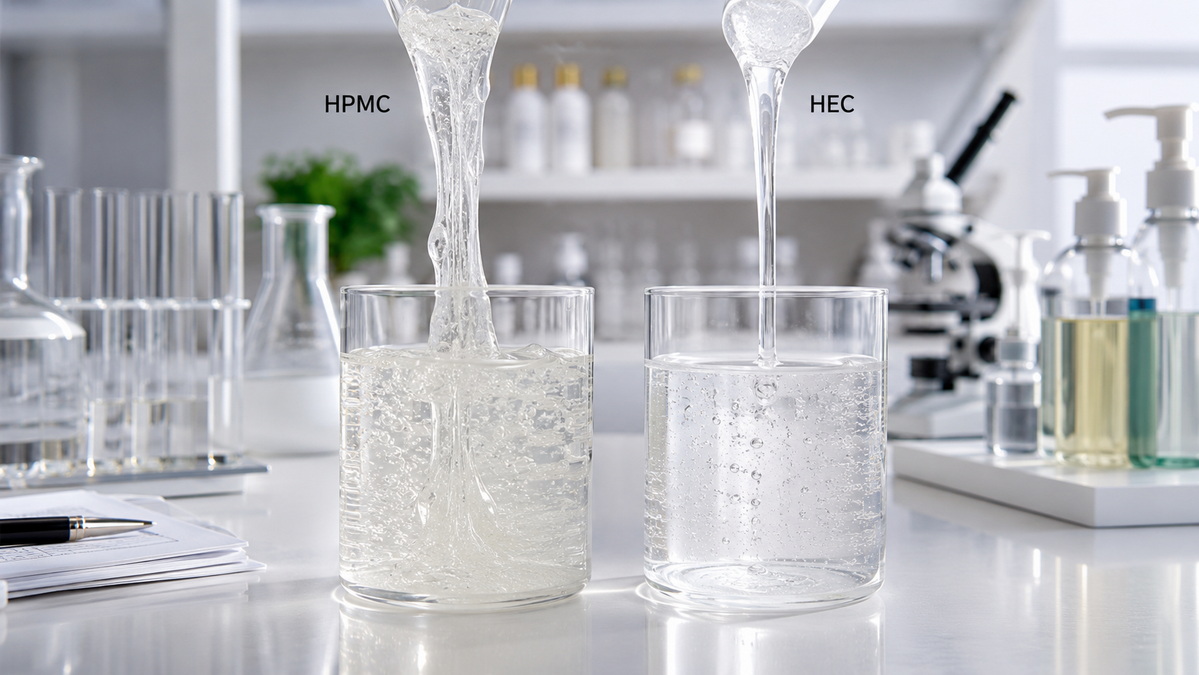
HPMC is often selected when the formula needs a more structured and pronounced texture. It can help create a fuller body, improve the sensation of richness, and support a more visible stringy pour. This makes it attractive for premium shampoos, specialty hair-care products, and formulas where the texture itself is part of the brand identity.
HPMC may also help create a more luxurious hand feel. For brands aiming to position shampoo as rich, nourishing, or salon-inspired, this sensory profile can be highly valuable.
HEC is frequently preferred in clear shampoos, mild cleansing systems, and products where transparency matters. It tends to produce a smoother and lighter viscosity profile, which is useful when the goal is elegance rather than heaviness.
HEC also tends to work well in systems that require broad surfactant compatibility. For many daily chemical formulations, this makes it a practical and dependable choice. It is especially useful in products where the formula needs to remain visually clean while still offering good thickening and stable flow.
| Property | HPMC | HEC |
|---|---|---|
| Texture style | Fuller, more structured, more elastic | Smooth, clean, and elegant |
| Stringy appearance | Stronger ribbon-like effect | Softer ribbon-like effect |
| Clarity | May be less ideal for crystal-clear systems | Often preferred for clear or translucent shampoo |
| Sensory feel | Richer and more premium | Lighter and more refined |
| Surfactant compatibility | Good, but may require more formulation control | Strong compatibility in many systems |
| Best use | Premium, textured, body-rich shampoo | Clear, mild, and smooth shampoo |
This comparison shows that HPMC and HEC support different product goals. In practice, the decision often depends on whether the brand wants stronger texture structure or cleaner sensory elegance.
A perfect stringy texture is not created by polymer choice alone. It is the result of a complete formulation strategy. The shampoo base, surfactant system, pH, salt level, active ingredients, and processing conditions all influence the final outcome.
Different grades of HPMC and HEC can produce very different results. Viscosity range, hydration rate, and substitution pattern all matter. A grade that performs well in one shampoo may not give the same result in another.
Surfactants influence both clarity and rheology. Some systems support a stronger stringy effect, while others create a thinner or more fluid result. The interaction between the polymer and surfactant base should always be tested carefully.
Salt can increase viscosity in some systems, but too much can destabilize the formula or reduce product clarity. The right level of salt can help fine-tune the flow behavior and improve the final pouring effect.
Both HPMC and HEC perform better when the pH remains within a suitable range for the full formula. Extreme pH conditions may affect hydration, stability, or compatibility with other ingredients.
A formula that looks good in the lab may behave differently during scale-up. Temperature, mixing speed, and hydration order all influence final texture. For this reason, formulation testing should always reflect actual production conditions as closely as possible.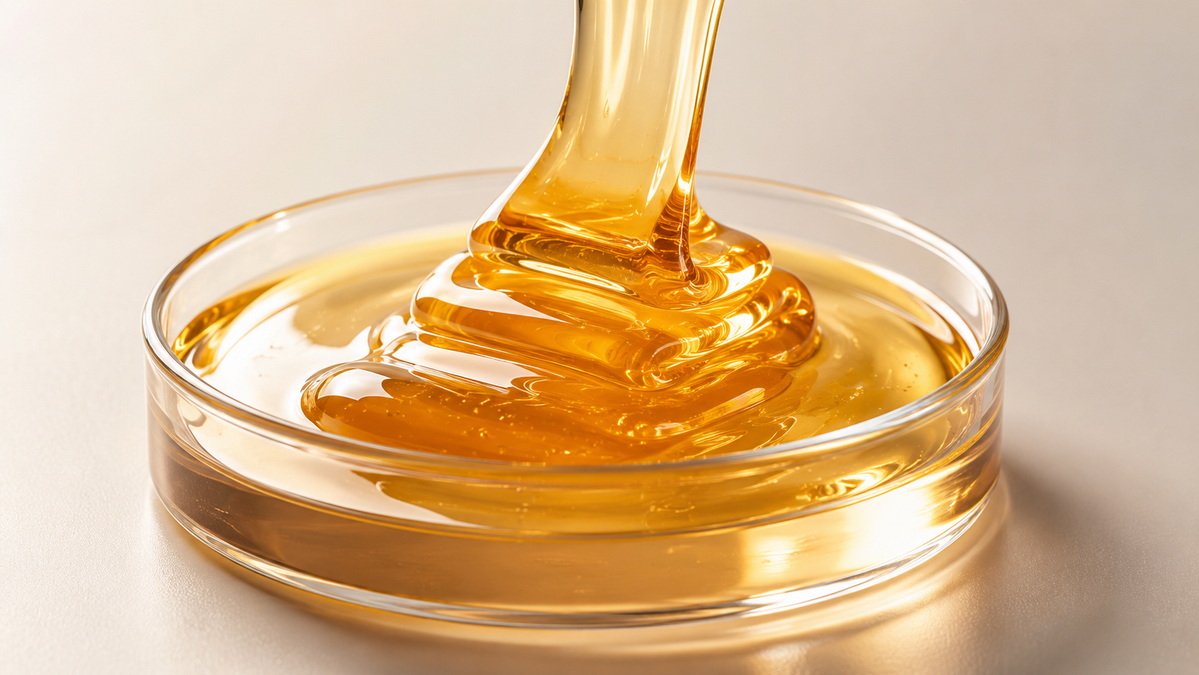
Different shampoo concepts call for different texture solutions.
For a clear everyday shampoo, HEC is often the stronger candidate. It helps maintain transparency while creating a smooth, consumer-friendly flow. This is especially useful for modern minimal formulas and gentle cleansing systems.
For a more luxurious or richer shampoo, HPMC can be a better fit. It adds body, enhances the visual stringiness, and supports a fuller feel during pouring and application.
In mild or sulfate-free systems, HEC is often chosen first because of its compatibility and balanced sensory profile. However, HPMC can also be useful when the goal is to make the formula feel denser and more substantial.
In some cases, formulators combine HPMC and HEC to achieve a more balanced result. This can help create a shampoo that is both smooth and structured, giving the formula a more customized texture profile.
A strong formulation process usually includes side-by-side testing. Rather than choosing a polymer by assumption, formulators should compare texture, clarity, viscosity, and user feel directly.
A practical test workflow may include:
1. Prepare identical shampoo bases.
2. Add HPMC to one batch and HEC to another.
3. Keep surfactants, salt, fragrance, and water level identical.
4. Compare pouring behavior, ribbon length, thickness, and clarity.
5. Record both technical measurements and sensory impressions.
This kind of method makes it easier to identify which polymer truly supports the product concept. It also reduces the risk of late-stage reformulation.
From an industry point of view, shampoo texture is closely linked to perceived value. Consumers often assume that a thicker, more controlled flow means better quality. At the same time, modern users also want formulas that feel clean, easy to rinse, and not overly heavy.
That means the ideal texture is not simply the thickest one available. It is the one that matches the product promise. A clear, light shampoo should not feel overbuilt. A premium conditioning shampoo should not feel thin or watery. The polymer choice helps define that balance.
For this reason, HEC and HPMC continue to play important roles in the personal care market. They give formulators the tools to shape both the functional and sensory identity of the shampoo.
Today's shampoo brands often want more than performance. They also want a formulation story that supports natural origin, responsible sourcing, and modern product values. Cellulose ethers fit well into that direction because they are derived from cellulose and are widely accepted in personal care applications.
HEC is often associated with light, elegant, and transparent formulas. HPMC is often used in richer systems where texture and body matter more. Together, they help brands develop products that feel modern without losing formulation control.
For export-focused brands, this is especially important. Different markets may prioritize different sensory and presentation styles, but the demand for stable, attractive, and credible formulas is universal.
Daily chemical grade HPMC and HEC are both valuable ingredients in shampoo formulation, but they solve different problems. HEC is often the better choice when the goal is clarity, smooth flow, and mild sensory appeal. HPMC is often better when the formula needs more body, stronger stringiness, and a richer premium feel.
The best decision depends on the brand concept, the surfactant system, and the end-user experience. When used correctly, either polymer can help create a shampoo that looks attractive, pours beautifully, and performs reliably. In many cases, the most successful result comes from thoughtful testing rather than assumption.
For formulators seeking the perfect stringy texture, the right approach is simple: define the sensory goal first, then match the cellulose ether to that goal with precision.
Choosing between HPMC and HEC is ultimately a matter of formulation intent. If the goal is to create a shampoo that feels rich, structured, and visually luxurious, HPMC is often the stronger option. If the goal is a clean, smooth, and transparent product, HEC is often the better fit.
The perfect stringy texture comes from understanding how the full system works together. With the right polymer, the right balance, and the right testing approach, shampoo can deliver both technical performance and an impressive consumer experience.
Ready to develop a better shampoo texture? Start with a small comparative trial between HPMC and HEC, and let the formula guide the final choice.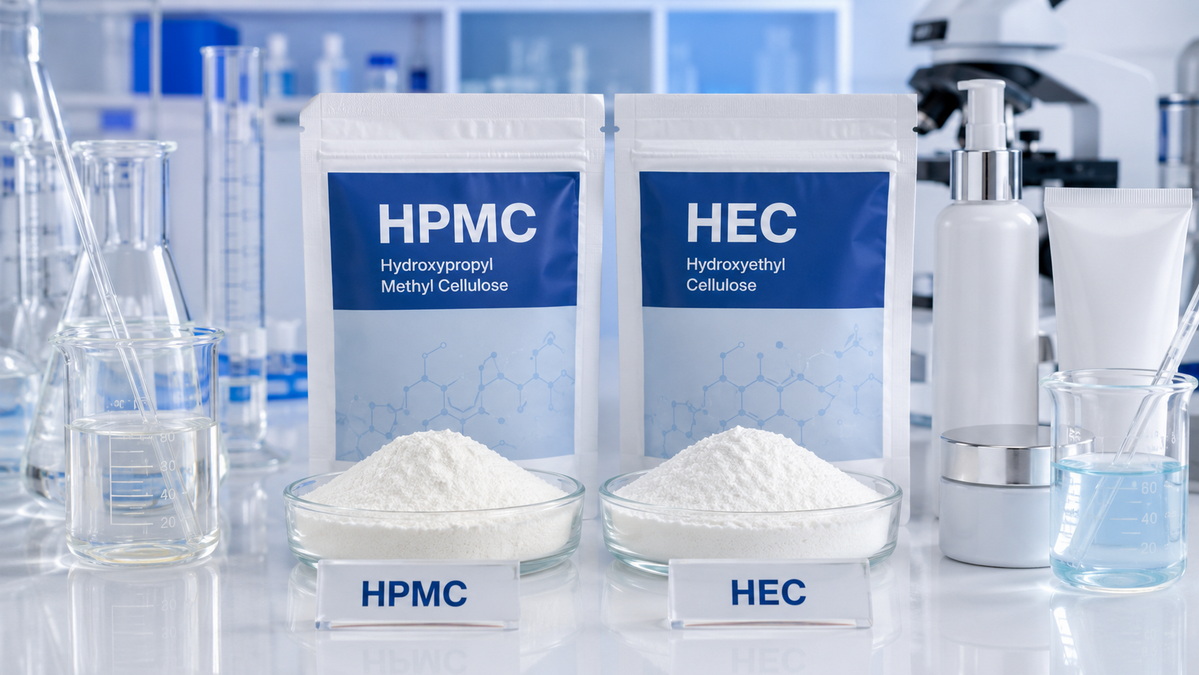
Neither is universally better. HEC is usually preferred for clear and smooth shampoos, while HPMC is better for richer and more structured textures.
A stringy texture often signals a more premium and concentrated product. It also helps control dispensing and improves the sensory experience.
Yes. In some formulations, blending them helps balance body, clarity, and flow behavior.
Yes. HEC is commonly used in mild and sulfate-free systems because of its compatibility and elegant flow profile.
It can in some systems, depending on the formula. If high clarity is important, HEC may be the more suitable option.
Formulators should test viscosity, clarity, pour behavior, surfactant compatibility, pH stability, and sensory feel.
1. TENESSY. Cellulose Ether in Daily Chemical-HPMC/HEC Manufacturer.
[https://tenessy.com/applications/daily-chemical-solution/]
2. SHENGDA HPMC. HPMC Vs. HEC in Personal Care: Which Polymer Provides The Best "Pseudo-Plastic" Flow for High-Viscosity Shampoos?
3. Zhiwei Chemical. Daily Chemical Grade HPMC: Specifications and Uses.
[https://zhiweichem.com/daily-chemical/daily-chemical-grade-hpmc/]
4. HPMC.com. HEC, Hydroxyethyl Cellulose Powder, HEC In Home Care.
[https://www.hpmc.com/hec/hec.html]
5. Rio Lee. Hydroxyethyl Cellulose in Personal Care Applications.
[https://www.linkedin.com/pulse/hydroxyethyl-cellulose-personal-care-applications-rio-lee-ttugc]
6. Seppic. Choosing the right thickening agent for shampoo formulation.
[https://www.seppic.com/article/thickening-agent-shampoo]
7. Stable Micro Systems. Measure the texture of cosmetics and skincare products.
[https://www.stablemicrosystems.com/applications/cosmetics-and-skincare/]
8. European Commission. Cosmetic Ingredient Database.
[https://single-market-economy.ec.europa.eu/sectors/cosmetics/cosmetic-ingredient-database_en]


