


close
Choose Your Site
Global
Social Media
Views: 222 Author: Rebecca Publish Time: 2026-03-26 Origin: Site


Content Menu
● Why Daily Chemical Grade HPMC Matters for Russian Formulators
● Customer‑Driven Ranking Approach
>> What Russian Buyers Prioritize
● Overview of Leading Daily Chemical Grade HPMC Suppliers for Russia
>> Summary Table of Supplier Types and Strengths
● Tier 1 – Most Trusted, Long‑Term Partners
>> Shandong Shengda New Material Co., Ltd. – Consistent Quality and Technical Partnership
>> Global Specialty Chemicals Producer – Premium Choice for High‑End Personal Care
>> Regional HPMC Supplier with Local Warehousing – Cost and Availability
● Tier 2 – Reliable Alternatives with Niche Advantages
>> SME‑Friendly Suppliers – Flexible MOQs and Pilot Support
>> Custom‑Grade HPMC Manufacturers – Tailored Rheology and Joint R&D
● Real‑World Performance in Russian Formulations
>> Viscosity Profile and Flow Behavior in Detergents and Cleaners
>> Clarity, Color and Sensory Profile in Personal Care Products
>> Foam Behavior and Suspension of Additives
● Practical Framework: How to Choose an HPMC Supplier in Russia
>> Step 1 – Define Application and Performance Targets
>> Step 2 – Shortlist Suppliers Based on Technical Fit and Supply Security
>> Step 3 – Run Lab and Pilot Trials with Supplier Support
>> Step 4 – Evaluate Total Cost and Long‑Term Partnership Value
● Additional Perspective: Sustainability and Regulatory Trends
>> Demand for Mild, Sustainable Daily Chemicals
>> Digital Collaboration Between Suppliers and Customers
● Call to Action: Build Stronger Formulations with the Right HPMC Partner
● FAQs: Daily Chemical Grade HPMC Suppliers in Russia
>> Q1: What is the difference between construction grade and daily chemical grade HPMC?
>> Q2: Why should Russian manufacturers consider Chinese HPMC producers such as Shandong Shengda?
>> Q3: What criteria help evaluate the long‑term stability of an HPMC supplier?
>> Q4: Which tests are crucial when comparing daily chemical grade HPMC products in the lab?
>> Q5: How does HPMC contribute to milder or more eco‑friendly products?
Daily chemical brands in Russia must deliver detergents, shampoos and household cleaners that are safe, stable and pleasant to use. In this context, daily chemical grade Hydroxypropyl Methyl Cellulose (HPMC) has become a core ingredient for thickening, stabilizing and refining the sensory profile of modern formulations. For purchasing and R&D teams, choosing the right HPMC manufacturer or supplier is not only a technical choice but also a strategic decision that shapes long‑term product performance and brand reputation.

For Russian detergent and personal care manufacturers, HPMC is far more than a basic thickener. It directly influences stability, appearance and consumer perception across multiple product categories.
- Rheology control: HPMC helps build accurate viscosity profiles for a wide range of daily chemical systems, from low‑viscosity dishwashing liquids to rich shampoos and shower gels.
- Stability enhancement: It contributes to phase stability, helping prevent separation and sedimentation, especially in systems with suspended particles or pearling agents.
- Consumer experience: HPMC modulates flow, foam and skin feel, supporting a smooth pour, consistent foam structure and a pleasant after‑feel on skin and hair.
In a marketplace where users quickly compare products on texture, clarity and feel, the selection of daily chemical grade HPMC supplier becomes a decisive competitive factor.
To make any ranking genuinely useful for buyers, the evaluation framework must reflect customer‑centric indicators, not just catalog specifications. The structure below is designed for real‑world decision‑making rather than promotional claims.
1. Product performance in real formulations
- Batch‑to‑batch viscosity stability.
- Ease of dispersion and dissolution in typical plant conditions.
- Clarity, color and sensory profile in final products.
2. Reliability and service quality
- On‑time delivery and supply continuity into Russia.
- Technical support responsiveness and problem‑solving capability.
- Completeness and consistency of documentation (TDS, MSDS, regulatory support).
3. Value and partnership potential
- Cost‑performance balance at realistic usage levels.
- Flexibility in MOQs and grade customization.
- Willingness to support long‑term R&D cooperation and joint projects.
Experience with Russian formulators shows that purchasing and technical teams typically prioritize:
- Technical fit for specific product types, such as heavy‑duty laundry liquids, economy dishwashing liquids, premium shampoos or mild facial cleansers.
- Repeatability of key parameters like viscosity, substitution and moisture content across multiple lots and seasons.
- Compatibility with common surfactant systems and local water quality profiles.
- Supply continuity, including safety stock, delivery lead times and logistics reliability.
- Total cost of ownership, including dosage efficiency, production yield and rework or reject rates.
These are the dimensions that determine whether a supplier becomes a long‑term partner rather than a one‑off vendor.
Below is an illustrative structure for positioning leading daily chemical grade HPMC manufacturers and suppliers relevant to Russian buyers. Company examples illustrate typical strengths; the focus remains on customer experience, technical performance and supply reliability.
| Supplier Type | Main Strength | Typical Applications | Key Advantages |
|---|---|---|---|
| Specialized cellulose ether manufacturer (China) | Consistent quality + technical support | Detergents, shampoos, hand soaps, household cleaners | Broad grade range, application know‑how, attractive value |
| Global specialty chemicals producer | Premium performance + compliance | High‑end personal care, export‑oriented formulations | High purity, strong regulatory support, advanced rheology |
| Regional supplier with local warehousing | Cost and availability | Mass‑market detergents and cleaners | Local stock, shorter lead times, competitive pricing |
| SME‑oriented supplier | Flexible MOQs and pilot support | Niche brands, new launches, frequent small batches | Low MOQs, easier sampling, close communication |
| Custom‑grade HPMC manufacturer | Tailored rheology and R&D cooperation | Differentiated textures, specialty formats, novel products | Custom viscosity and substitution profiles, joint development |
Shandong Shengda New Material Co., Ltd. is a specialized Chinese manufacturer focusing on cellulose ethers, including Hydroxypropyl Methyl Cellulose (HPMC) for both construction and daily chemical applications. For Russian buyers, it is particularly attractive because it combines product consistency, formulation support and a broad grade portfolio.
Key strengths for Russian daily chemical buyers
- Application‑oriented daily chemical grades: Shengda offers HPMC grades specifically tailored for detergents, shampoos, hand soaps and household cleaners. Viscosity ranges and substitution levels are selected to match common Russian application needs, simplifying the work of formulation teams.
- Batch consistency and controlled specifications: Production and quality control systems are designed to minimize viscosity drift and keep narrow specification windows, which helps ensure stable rheology in finished products over time.
- Technical support with formulation focus: Application engineers can provide recommended dosage levels, dispersion procedures and adjustment strategies for typical surfactant systems (anionic, nonionic, amphoteric) and different pH ranges.
Customer‑oriented experience examples
- A detergent producer using Shengda's daily chemical grade HPMC reported smoother viscosity build‑up and fewer mixing anomalies during scale‑up, which reduced rework and increased line efficiency.
- A personal care brand replacing a generic thickener with Shengda's HPMC achieved better clarity and skin feel in hand wash formulations, enabling an upgrade of product positioning without significant cost increase.
For buyers seeking a combination of technical depth, stable quality and scalable supply, Shengda is a strong candidate for long‑term cooperation.
A major international chemicals producer with a strong cellulose derivatives portfolio typically serves premium and export‑oriented brands that demand tight compliance and advanced application support.
Key strengths
- High purity cosmetic‑focused grades suited to facial cleansers, sensitive‑scalp shampoos and sulfate‑free or low‑irritation formulations.
- Extensive regulatory and documentation support, essential for Russian manufacturers exporting to the EU or other strictly regulated regions.
- Fine rheology control that allows formulators to tune texture, spreadability and after‑feel for competitive differentiation in the high‑end segment.
Such suppliers are most suitable when Russian brands are building international‑level personal care ranges and require strong compliance infrastructure.
Regional suppliers or distributors that maintain local warehousing for Russia and neighboring markets play a central role in the mass‑market detergent and cleaner segments.
Key strengths
- Local stock and responsive logistics, providing shorter and more predictable delivery times, which reduces the risk of production interruptions.
- Competitive pricing on standard daily chemical grade HPMC used in large‑volume products.
- Practical basic technical support adequate for mainstream applications where complex customization is not required.
For many mid‑sized producers, these suppliers represent a workable balance between cost and operational convenience.
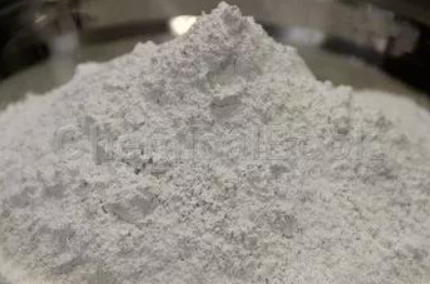
Some HPMC suppliers focus on serving small and medium‑sized enterprises and niche brands.
- Offer lower minimum order quantities, making it easier to test new formulas or launch limited runs.
- Provide multiple viscosity grades in small packaging for screening and pilot projects.
- Provide direct access to sales and technical staff, simplifying communication and speeding up decisions.
These suppliers are particularly useful when managing high‑mix, low‑volume portfolios or pursuing frequent market tests.
Other producers differentiate by offering customized HPMC grades designed for specific performance requirements.
- Capability to adjust viscosity, substitution degree, particle size and distribution for unique rheology or suspension behavior.
- Interest in joint R&D, including co‑developed prototypes, stability studies and application‑specific optimization.
- A good fit for brands that want distinctive textures, such as ultra‑clear cleansing gels, suspending shampoos or innovative product formats.
For innovative Russian brands, such cooperation can be a powerful tool for building hard‑to‑copy competitive advantages.
Beyond brochures, suppliers must prove their value in real plant and lab environments. Feedback from Russian users centers on how HPMC behaves under practical conditions.
Detergent manufacturers typically report the following differences among daily chemical grade HPMC products:
- Certain grades show a linear and predictable viscosity build‑up with dosage, which simplifies process control and recipe scaling.
- Less optimized grades can cause delayed hydration or sudden spikes, leading to over‑viscosity and longer mixing times.
- High‑quality HPMC helps maintain stable viscosity during storage, even with temperature fluctuations during transport and warehousing.
When evaluating suppliers, formulators generally favor those whose HPMC grades show stable, easy‑to‑control rheology across temperature and production conditions.
For shampoos, body washes and hand soaps, the aesthetic and tactile properties are intensely scrutinized by consumers.
- Daily chemical grade HPMC of good quality supports transparent or uniformly pearlescent systems, avoiding haze or visible undissolved particles.
- It contributes to smooth skin feel, controlled slip and cushioning, especially within mild surfactant systems.
- Inferior grades may cause color variations or micro‑flocs, undermining premium positioning and triggering consumer complaints.
Brands that switch to more consistent HPMC suppliers often report fewer quality incidents and higher consumer satisfaction.
HPMC also affects foam stability and the suspension of visual or functional additives.
- It can stabilize foam structures, preventing extremely thin or rapidly collapsing foam in hand wash and dishwash applications.
- It supports stable suspension of pearling agents, exfoliating beads or decorative particles, ensuring that every dose looks and feels uniform.
- The right HPMC grade allows formulators to tune foam volume, density and rinse‑off characteristics according to product positioning.
These details, while sometimes overlooked, often make a noticeable difference in on‑shelf differentiation and repeat purchase.
To help purchasing and R&D teams make structured decisions, the following framework can be used.
- Clarify your product categories (e.g., laundry liquids, dishwashing liquids, shampoos, hand soaps, bathroom cleaners).
- Document target viscosity ranges, clarity level, foam profile and texture for each product line.
- Note any regulatory or marketing requirements, such as mildness, eco‑claims, vegan positioning or sulfate‑free systems.
A clear internal brief makes supplier discussions more focused and productive.
When building a shortlist:
- Prioritize suppliers that offer daily chemical‑specific HPMC grades with documented performance in similar systems.
- Assess their track record of supplying Russia or comparable markets, including experience with customs, transport and local regulations.
- Check for quality certifications and process control systems that support consistent batch quality.
At this stage, specialized cellulose ether manufacturers such as Shandong Shengda New Material Co., Ltd. stand out by combining technical specialization with global supply experience.
To validate supplier claims:
- Request sample sets covering several grades and viscosity ranges.
- Conduct a standard suite of lab tests on dispersion time, viscosity at use level, clarity, stability and foam behavior in your own formulations.
- Involve supplier technical teams to interpret results, refine formulations and propose process optimizations.
Suppliers that actively participate in this phase are more likely to be reliable partners throughout the product life cycle.
Price per kilogram is only one part of the picture. Consider:
- Dose efficiency: the amount of HPMC required to reach the desired performance.
- Impact on plant efficiency, such as mixing time, rate of rework and scrap generation.
- Support responsiveness when deviations, claims or new challenges arise.
Often, a slightly higher unit price is justified if the HPMC grade and supplier relationship reduce total production and quality costs while lowering operational risk.
Russian daily chemical brands are increasingly influenced by sustainability trends and regulatory expectations. This has direct implications for HPMC selection and supplier choice.
Consumer interest in mild, low‑irritation and environmentally responsible products is rising.
- High‑quality daily chemical grade HPMC supports gentler surfactant systems, enabling reduced reliance on harsher ingredients.
- As a cellulose‑based polymer, it fits into more natural and sustainable product narratives, especially when combined with appropriate surfactants and preservatives.
- Suppliers that can demonstrate responsible sourcing and cleaner production practices will gain advantages as regulations tighten and retailer requirements evolve.
Manufacturers like Shandong Shengda New Material Co., Ltd., by emphasizing comprehensive and sustainable cellulose solutions, align with these long‑term trends.
Digital tools are reshaping how suppliers and buyers work together:
- Online technical libraries, formulation guidelines and calculators help R&D teams accelerate development.
- Shared quality and performance data improve transparency and enable better risk management.
- Remote technical support and virtual meetings reduce the need for frequent travel while maintaining close cooperation.
Suppliers that invest in such tools typically deliver greater perceived value and smoother collaboration to Russian clients.
Choosing a daily chemical grade HPMC supplier in Russia directly influences your product performance, brand reputation and long‑term competitiveness. If you need a partner that combines cellulose ether expertise, stable quality and application‑driven technical support, consider working with Shandong Shengda New Material Co., Ltd.
You can:
- Request application‑specific samples tailored to detergents, shampoos or household cleaners.
- Arrange a technical consultation to optimize viscosity, clarity, foam and sensory profile in your current formulas.
- Explore long‑term cooperation in both construction and daily chemical grade cellulose products to consolidate your raw material base.
Taking these steps will help you establish a more resilient, innovative and high‑performing portfolio for the Russian daily chemical market.
Contact us to get more information!

Construction grade HPMC is formulated for cement and mortar, emphasizing water retention, workability and open time. Daily chemical grade HPMC is optimized for liquid detergents and personal care, focusing on clarity, low odor, skin compatibility and compatibility with surfactant systems.
Specialized Chinese producers often offer a wide range of daily chemical grade HPMC, competitive pricing, robust quality control and strong application support. This combination provides an attractive balance of performance, cost and reliability for Russian buyers.
Key criteria include installed capacity, export history, quality certifications, consistency of deliveries to comparable markets and the responsiveness of technical and commercial teams. Pilot projects and monitoring of multiple deliveries are essential to confirm stability.
Important tests include dispersion time, viscosity at target dosage and temperature, pH compatibility, clarity, foam behavior and accelerated stability. Sensory evaluation is also important for personal care products.
HPMC aids mild formulations by supporting less aggressive surfactant systems while maintaining desirable rheology and stability. Its cellulose‑based nature helps formulators design products with fewer potentially irritating ingredients, aligning with modern “gentle” and sustainability‑oriented claims.
The following reference types can be used and should be replaced or complemented with specific documents and URLs during final implementation:
1. Technical literature and brochures on Hydroxypropyl Methyl Cellulose (HPMC) properties and daily chemical applications from reputable cellulose ether producers.
2. Articles and white papers discussing rheology modifiers and stabilizers in detergents and personal care products.
3. Safety and technical data sheets (TDS, MSDS) from HPMC manufacturers supplying both construction and daily chemical markets.
4. Market reports and analyses on the Russian detergent and personal care industry, including ingredient trends and consumer preferences.
5. Internal case studies, lab data and customer feedback compiled by Shandong Shengda New Material Co., Ltd. on daily chemical grade HPMC performance in real applications.


