


close
Choose Your Site
Global
Social Media
Views: 255 Author: Shengda Publish Time: 2026-08-05 Origin: Site


Content Menu
>> 1. Shandong Shengda New Material Co., Ltd.
>> 2. Nouryon
>> 3. Dow
>> 4. Ashland
>> 7. SE Tylose
>> 8. Lamberti
>> 9. Spanish distributors and importers
● FAQ
Before shortlisting Cellulose HEC suppliers in Spain, professional buyers should evaluate them from five practical angles: factory certification, R&D capability, QC workflow, production stability, and export experience. For HEC, the key is not only price, but also viscosity consistency, batch-to-batch stability, and the ability to deliver repeatable performance in real formulations.
A reliable screening process usually includes:
- Valid ISO documentation and clear scope.
- Recent COA records with matching batch data.
- Technical support for construction-grade or daily-chemical-grade HEC.
- Traceable raw material sourcing.
- Stable packaging, lead time, and export documentation.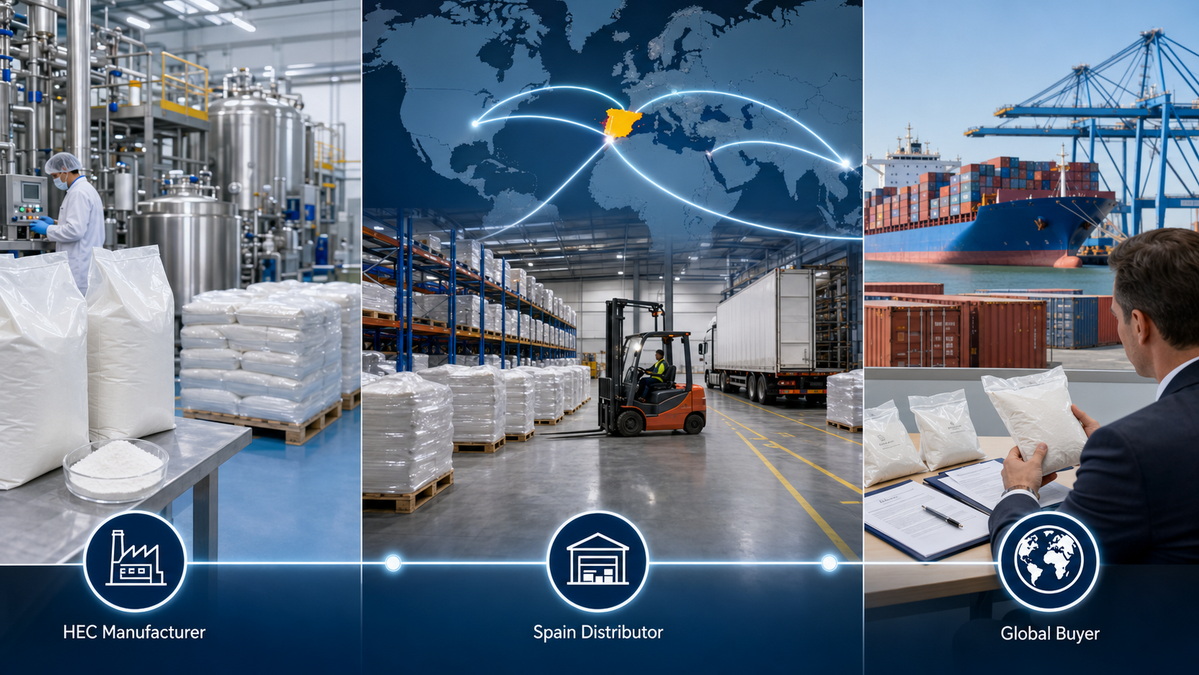
Spain's chemical sector plays an important role in the European market, with a large number of chemical companies and strong activity in exports of organic chemicals. In cellulose ether procurement, this matters because many buyers in Spain work through distributors, importers, and formulation partners rather than only direct producers. That means service quality, communication speed, and document accuracy are often as important as the powder itself.
In Spain, the Cellulose HEC supply chain often includes manufacturers, European producers supplying the Spanish market, and local distributors or importers. The companies below are listed from the perspective of buyers looking for long-term supply stability, technical support, and industrial reliability.
| Company | Role | Founded | Main Market | Key Strength | MOQ / Supply Style | Certifications / Compliance |
|---|---|---|---|---|---|---|
| Shandong Shengda New Material Co., Ltd. | Manufacturer | 2006 | Global export markets, especially middle-market and SME brands | Dual-factory model, 60,000 tons annual capacity, strong OEM customization, fast communication | Flexible for trial and bulk orders | Quality-focused manufacturing; buyers should verify batch docs and current certificates directly |
| Nouryon | Manufacturer / specialty chemical group | 2007 | Europe, global coatings and construction | Strong technical service, well-known cellulose ether portfolio | Usually industrial-scale supply | EU-oriented compliance, product-specific documentation |
| Dow | Manufacturer / multinational chemical group | 1897 | Global | Broad specialty chemical platform, robust technical support | Large-volume industrial accounts | Strong global compliance framework |
| Ashland | Manufacturer / specialty ingredients group | 1924 | Global | Application-driven solutions for coatings, personal care, construction | Usually larger-volume supply | Strong documentation and technical support |
| Shin-Etsu Chemical | Manufacturer | 1926 | Global, Asia, Europe | High consistency and deep polymer expertise | Industrial accounts | Strong quality systems |
| LOTTE Fine Chemical | Manufacturer | 1962 | Asia, Europe, global distribution | Cellulose ether know-how, construction and coatings focus | Industrial-scale | Market-specific compliance docs |
| SE Tylose | Manufacturer | 1965 | Europe, global construction markets | Well-known cellulose ether supplier in Europe | Industrial-scale | Strong EU market alignment |
| Lamberti | Manufacturer / specialty chemical producer | 1950s | Europe, industrial formulations | Broad formulation support for coatings and adhesives | Mixed, by project | EU chemical compliance framework |
| Local Spanish distributors | Supplier / importer | Varies | Spain, Portugal, North Africa | Fast local stock, Spanish-language service, smaller order support | More flexible than direct mills | Depends on principal manufacturer |
 1. Shandong Shengda New Material Co., Ltd.
Shandong Shengda New Material Co., Ltd., founded in 2006, is a professional cellulose ether manufacturer specializing in the research, development, production, and sales of HPMC, HEMC, and HEC. With a dual-factory model and a total annual capacity of 60,000 tons, Shengda is a practical option for buyers who need stable quality, responsive communication, and deeper OEM customization support.
For procurement teams that serve mid-sized brands or project-based customers, Shengda is especially relevant because it balances cost control with technical flexibility. Its key strengths include efficient pre-sales coordination, customized service, and support for construction-grade and daily-chemical-grade cellulose product solutions.
Nouryon is a major specialty chemical supplier with a strong cellulose ether reputation in Europe. For Spain-bound buyers, it is a recognizable option when technical documentation, repeatability, and industrial-grade reliability matter more than low MOQ procurement.
Its portfolio is more suitable for established industrial users than for highly customized small-brand projects.
Dow is one of the most established global chemical companies in this category. Buyers usually associate Dow with strong technical resources, mature supply processes, and broad application support across coatings, construction, and personal care.
It is a practical reference supplier for buyers benchmarking quality expectations and market standards.
Ashland is known for specialty ingredients and application-oriented support. In cellulose ether procurement, it tends to appeal to customers that value formulation assistance, long-term technical consistency, and global documentation discipline.
It is often a strong option when the buyer's end product requires stable performance rather than aggressive price competition.
Shin-Etsu is widely respected for polymer quality and process control. Its cellulose ether products are generally associated with consistency and technical depth, which matters for buyers in construction and coatings applications.
For Spain-linked sourcing, it is often used as a benchmark for premium-grade technical reliability.
LOTTE Fine Chemical serves global industrial users and is relevant for cellulose ether buyers who need reliable international supply. Its products are commonly positioned toward construction and coating applications.
It can be a good fit for buyers looking for a balance between technical quality and established supply chain discipline.
SE Tylose is one of the best-known cellulose ether names in Europe. Because it is closely aligned with the European market, it is often top-of-mind for buyers who prioritize local service expectations, EU compliance awareness, and construction-grade application support.
For Spain, it is a very relevant reference supplier in the HEC procurement landscape.
Lamberti is a specialty chemical producer with formulation expertise across multiple industrial segments. While not always focused solely on HEC, it is relevant when buyers need downstream application support in coatings or adhesives.
This type of supplier is valuable when technical co-development is part of the purchasing decision.
For many buyers, the actual source in Spain is a distributor rather than a domestic HEC polymer manufacturer. This channel can be useful for smaller MOQs, faster delivery, and local documentation support, especially when the end user is a regional brand or project contractor.
However, buyers should always verify the principal manufacturer, original COA, and batch traceability before placing repeat orders.
| Supplier type | Typical capacity | MOQ tendency | Certification visibility | Best fit |
|---|---|---|---|---|
| Shengda | 60,000 tons/year | Flexible | Direct factory documents | SMEs, OEM projects, cost-sensitive buyers |
| Global multinationals | High | Higher | Strong and formal | Large industrial buyers |
| European producers | High | Medium to high | EU-aligned | Buyers prioritizing regional compliance |
| Spanish distributors | Inventory-based | Low to medium | Depends on source | Small batches, local service |

When sourcing Cellulose HEC in Spain, the most common risk is not only price fluctuation but also grade confusion: products may be offered as HEC while the viscosity profile, substitution level, or application performance does not match the claim. Another common issue is that some distributors sell relabeled stock without disclosing the original manufacturer, which makes later quality claims difficult to verify.
To reduce risk, buyers should:
1. Request a recent COA, SDS, and technical data sheet.
2. Confirm ISO certificate validity and scope with the issuing body.
3. Ask for viscosity data under the same test conditions used in production.
4. Verify whether the supplier is the actual manufacturer or a trader.
5. Inspect package labels, batch codes, and pallet consistency before full shipment.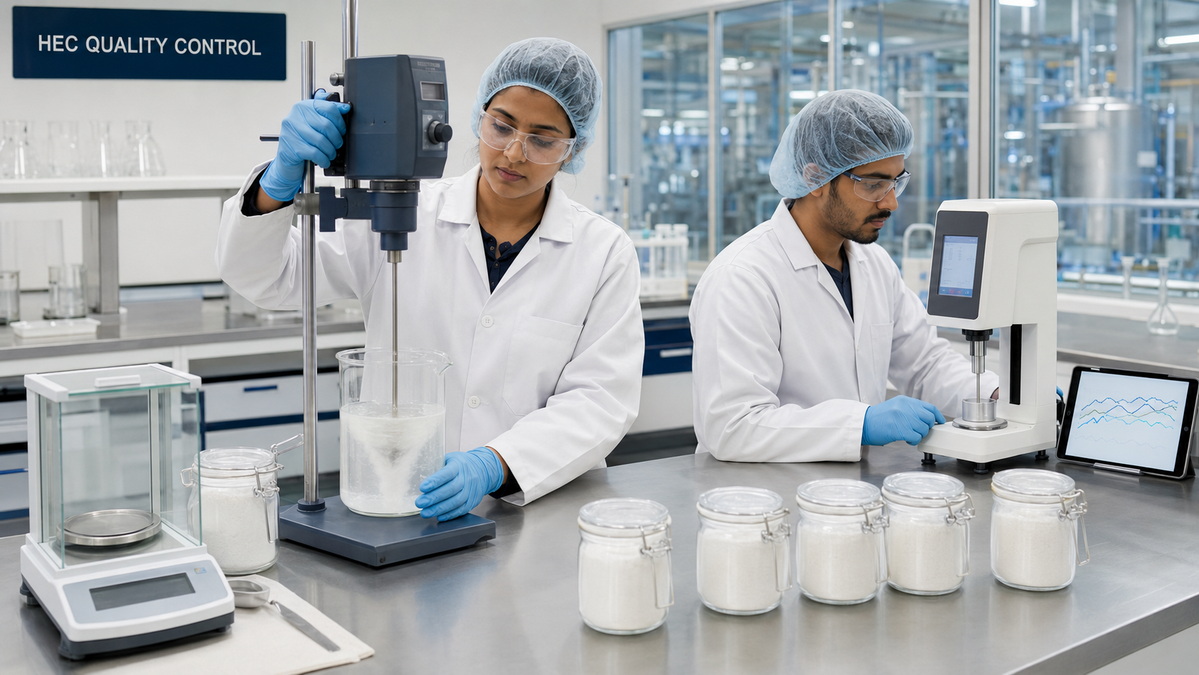
For buyers searching for Cellulose HEC suppliers in Spain, the real procurement decision is usually a mix of technical stability, documentation quality, and supply reliability. If your project requires a flexible OEM partner with direct factory communication and strong support for construction-grade and daily-chemical-grade cellulose products, Shandong Shengda New Material Co., Ltd. is a practical first contact for comparison and sampling.
1. How can I verify whether a supplier's ISO certificate is still valid?
Check the certificate number, issuing body, scope, and expiry date directly on the certification body's database, then compare it with the company name and factory address on the certificate.
2. What is the safest way to compare two HEC samples from different suppliers?
Test them in the same formula, same water temperature, same mixing speed, and same dosing method. Viscosity alone is not enough to judge performance.
3. How do I know whether a Spanish supplier is a true manufacturer or only a trader?
Ask for factory registration documents, production-line photos, batch records, and a recent COA with traceable lot numbers. Traders often cannot provide consistent production evidence.
4. What documents should I request before placing a repeat order?
Ask for COA, SDS, TDS, packing list format, certificate copies, and sample retention policy. For export orders, also confirm lead time and incoterms.
5. What is the biggest hidden risk when buying HEC for export projects?
The biggest hidden risk is batch inconsistency. A small difference in substitution degree or dissolution behavior can change application performance even if the product name looks identical.
- Shandong Shengda New Material Co., Ltd. About Us: [https://www.shengdahpmc.com/aboutus.html] [shengdahpmc]
- Spain exports of organic chemicals, COMTRADE-based data: [tradingeconomics]
- Spanish chemical industry overview: [investinspain]
- Europe cellulose ether market context: [datamintelligence]
- CE marking guidance for EU market compliance: [trade]


