


close
Choose Your Site
Global
Social Media
Views: 253 Author: Shengda Publish Time: 2026-11-16 Origin: Site


Content Menu
● How Manufacturers Were Selected
● Why Source Hydroxyethyl Methyl Cellulose from China?
>> An Established Manufacturing Ecosystem
>> What Recent Market Research Indicates
● HEMC Technical Fundamentals Buyers Should Understand
>> HEMC and MHEC: Different Abbreviations, Same Product Family
>> Viscosity Numbers Need a Test Method
>> Application Grade Matters More Than a Universal Quality Label
>> Treat Compliance Claims Precisely
● The Top 10 Hydroxyethyl Methyl Cellulose Manufacturers in China
>> 1. Shandong Shengda New Material Co., Ltd.
>> 2. Shandong Head Group Co., Ltd.
>> 3. Shandong LANDU New Material Co., Ltd.
>> 4. Kingmax Cellulose Co., Ltd.
>> 6. Shandong ETON New Materials Co., Ltd.
>> 7. Tianpu Chemicals Company Limited
>> 8. Hebei Landcel Cellulose Tech Co., Ltd.
>> 9. Zhejiang Yisheng New Material Co., Ltd.
>> 10. Ningjin Wanqiang Biotechnology Co., Ltd.
● Manufacturer Comparison: Capacity, MOQ, and Certification
● Buyer's Guide: How to Qualify a Chinese HEMC Supplier
>> 1. Verify the Manufacturing and Contracting Entities
>> 2. Use a Written Sample Qualification Plan
>> 3. Define Customization Before Discussing Price
>> 4. Compare Total Formulation Cost
>> 5. Confirm Packaging and Logistics in Writing
● Common HEMC Purchasing Traps—and How to Avoid Them
>> Comparing Viscosity Labels Instead of Equivalent Measurements
>> Accepting Portfolio Capacity as Dedicated HEMC Capacity
>> Treating Modification as Either Automatically Good or Automatically Fraudulent
>> Accepting Environmental Language Without Evidence
● The Overlooked Safeguard: Approve the Product's Manufacturing Identity
● Conclusion: Select the Partner That Fits Your Qualification Requirements
>> 2. Can I replace HPMC with HEMC at the same dosage and viscosity?
>> 3. How can I detect substitution or undeclared modification if the viscosity still passes?
>> 4. Does a "REACH certificate" prove that the HEMC shipment is compliant in the EU?
>> 5. What should I do if an approved sample performs well but the first commercial shipment fails?
Choosing a Hydroxyethyl Methyl Cellulose manufacturer in China requires more than comparing prices and viscosity numbers. For professional procurement teams, the more important questions concern batch consistency, application performance, manufacturing traceability, regulatory documentation, and the supplier's ability to support a formulation over several years.
China offers a substantial cellulose ether manufacturing base. World Bank WITS data, sourced from UN Comtrade, show that China exported approximately 210,298 metric tons of "other cellulose ethers, in primary forms" under HS 391239 in 2025, with a reported value of approximately US$552.6 million. This category includes more than HEMC, so these figures demonstrate the scale of the wider export industry—not HEMC-only production or sales.
For buyers, that scale creates choice. It also makes supplier qualification essential: a large advertised production capacity does not automatically establish suitable HEMC availability, dependable delivery, or compatibility with a particular cement, gypsum, coating, or detergent formulation.
This guide compares ten manufacturers with publicly documented HEMC offerings and explains how to evaluate them before placing a commercial order.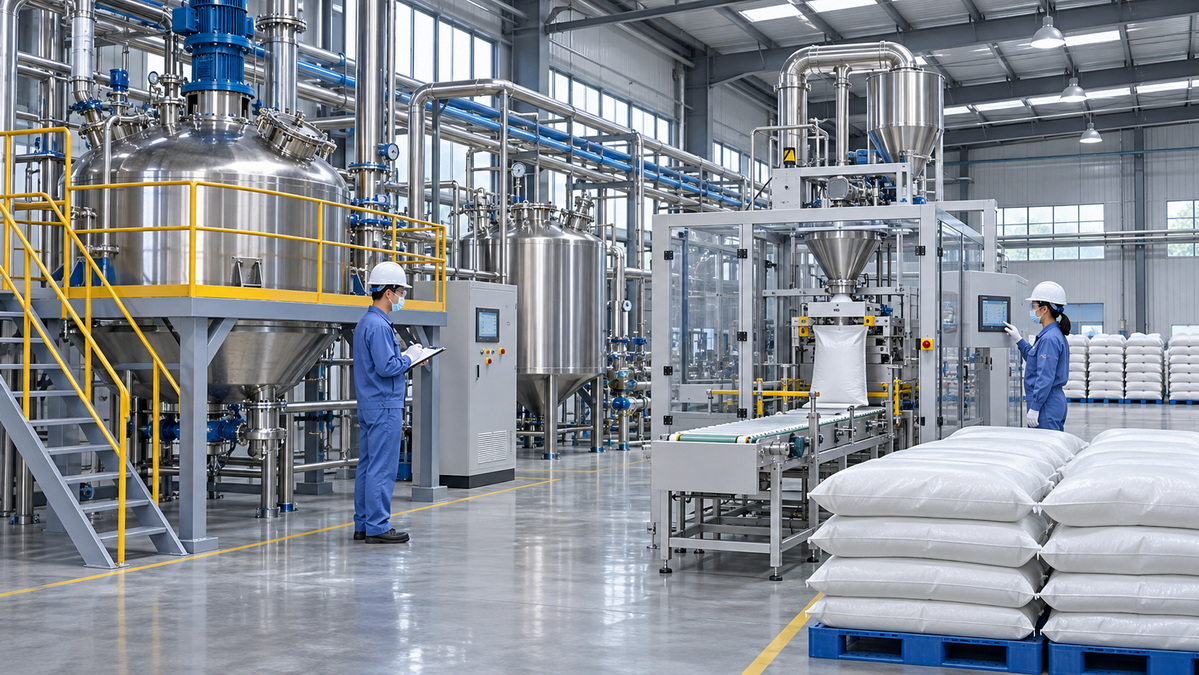
This is a procurement shortlist, not an independently audited ranking by revenue, production volume, or product quality. The companies were selected using publicly available company information, product documentation, trade-show profiles, and market sources.
The article was prepared for Shandong Shengda New Material Co., Ltd., which appears first. Its position should not be interpreted as an independently verified first-place ranking.
A practical supplier assessment should examine the following areas:
| Evaluation area | Evidence buyers should request | Why it matters |
|---|---|---|
| Manufacturing identity | Business license, production address, plant ownership or operating relationship | Establishes who actually manufactures the material |
| Quality management | Current management-system certificates with matching legal entity and site scope | Helps assess whether documented controls cover the supplying factory |
| Research and application support | Application laboratory capabilities, trial reports, formulation recommendations | Indicates whether the supplier can solve performance problems |
| Quality control | Agreed test methods, batch certificates of analysis, retained samples | Makes batch-to-batch comparison meaningful |
| Supply reliability | Grade-specific available capacity, production schedule, delivery history | Separates advertised capacity from realistic order availability |
| Customization | Written technical specification, packaging options, change-control procedure | Protects private-label and application-specific projects |
| Compliance | Destination-appropriate safety and regulatory documentation | Reduces import and downstream compliance risks |
Certification claims in this article are attributed to the relevant public sources. Current certificate validity, factory scope, and product-specific compliance require direct verification.
The manufacturers reviewed here illustrate the importance of Shandong and Hebei as cellulose ether sourcing locations. Shandong includes businesses such as Shengda, Head, LANDU, and ETON, while Hebei includes Kingmax, Landcel, and Wanqiang. Zhejiang and the Jiangsu–Sichuan production network represented by Tianpu provide additional options.
For procurement teams, this concentration creates opportunities to compare several manufacturing models: large integrated suppliers, construction-focused specialists, and companies offering application development alongside a broader additive portfolio.
The July 2026 MarketsandMarkets report, *China Cellulose Ether & Derivatives Market (2026–2031)*, identifies construction, pharmaceuticals, personal care, and adhesives as important demand areas. It also highlights domestic manufacturing capabilities and investment in product development as factors supporting the industry. These observations concern the broader cellulose ether market rather than HEMC alone.
Market forecasts can provide context, but supplier selection should ultimately depend on the performance of a specific grade in the buyer's formulation.
Hydroxyethyl Methyl Cellulose is commonly abbreviated as HEMC. Methyl Hydroxyethyl Cellulose, or MHEC, is another widely used name for the same cellulose ether family. Manufacturers offer different grades within that family for applications including tile adhesives, wall putty, coatings, and detergents.
However, identical abbreviations do not establish equivalent products. Buyers should compare the complete specification and application results rather than assuming that two HEMC grades are interchangeable.
One manufacturer's product table illustrates the problem clearly: LANDU lists its EM200 grade at 185,000–215,000 using an NDJ 2% method, but at 65,000–80,000 in a separate Brookfield column. These figures are presented for the same grade under different measurement conditions.
A purchasing specification should therefore define:
- Solution concentration and preparation procedure.
- Measurement temperature.
- Instrument model.
- Spindle and rotational speed, where applicable.
- Hydration or conditioning time.
- Reporting units and acceptable range.
"200,000 viscosity" is not a complete procurement specification.
For construction applications, HEMC is used to support water retention, consistency, workability, and related mortar performance. Manufacturers also offer grades intended for coatings and detergents, where thickening and suspension stability become relevant.
Evaluate the finished formulation, not just the polymer solution:
| Application | Recommended qualification priorities |
|---|---|
| Cement-based tile adhesive | Water retention, workability, slip, open-time performance, adhesion |
| Wall putty and skim coat | Spreading, consistency, sag, surface finish |
| Gypsum plaster | Workability, setting behavior, water retention |
| Paints and coatings | Dispersion, viscosity development, suspension and storage stability |
| Detergents and daily chemicals | Dissolution behavior, formulation compatibility, appearance and storage stability |
These are recommended evaluation areas, not claims that every listed manufacturer has independently demonstrated equivalent performance.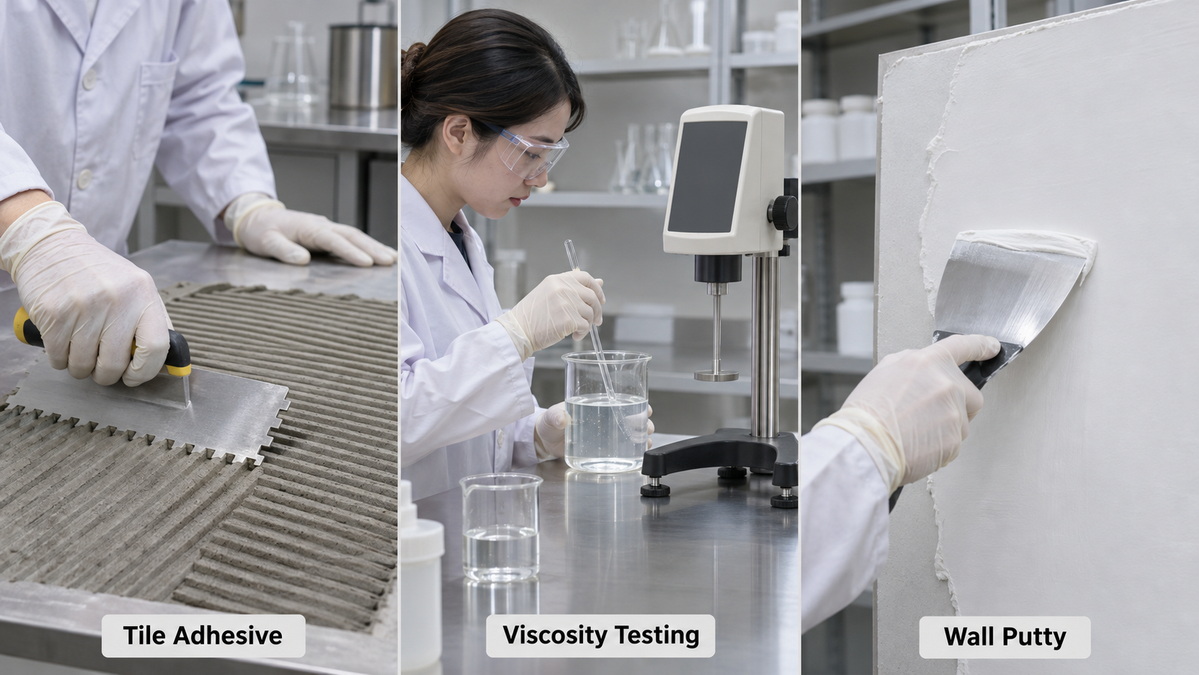
REACH is a regulatory framework, not a general-purpose product quality certificate. ECHA states that substances meeting the REACH definition of a polymer are exempt from polymer registration, although monomers and other substances used in manufacture may have registration obligations. EU importers or an appointed only representative may hold relevant responsibilities.
Likewise, RoHS concerns hazardous-substance restrictions in electrical and electronic equipment. It should not be treated as a universal certification requirement for construction-grade HEMC. Buyers should ask suppliers to explain the legal relevance and scope of any CE or RoHS claim rather than accepting a logo as evidence of chemical performance.
Shandong Shengda reports that it was founded in 2006 and specializes in the research, development, production, and sale of cellulose ethers, including HPMC, HEMC, and HEC. Its company introduction describes a dual-factory model with a combined annual production capacity of 60,000 tons. This is a company-reported total, not a verified HEMC-only capacity figure.
Its public positioning emphasizes customized solutions, technical support, and pre-sales and after-sales service. That makes Shengda a relevant candidate for small and medium-sized brands seeking a manufacturer willing to discuss application requirements rather than offer only a standard product quotation.
- Establishment: 2006, according to the company.
- Market orientation: Domestic and international cellulose ether customers.
- Core strengths: Multi-product manufacturing, a dual-factory structure, and stated customer-specific technical support.
- OEM/ODM discussion scope: Application-specific grade selection, target-performance development, private-label packaging, and documentation requirements should be included in the initial inquiry. Public information supports customized solutions, but detailed OEM terms require confirmation.
Shengda is appropriately evaluated as a potential value-oriented development partner—not simply as the lowest-price option. Buyers should measure its flexibility and communication efficiency through a structured trial: submit a formulation brief, request a written grade recommendation, and assess the quality and speed of technical feedback.
The main qualification gaps are HEMC-specific available capacity, current certificate details, custom-order MOQ, and commercial evidence of performance consistency. These should be resolved before making comparative cost or service claims.
Shandong Head traces its origins to 1992. Its public company history describes a long-established cellulose ether business, international distribution, and a portfolio that includes MHEC. The same public material contains capacity figures associated with different development stages, making date and scope particularly important.
- Establishment: 1992.
- Market orientation: International markets including the Americas, Europe, Africa, and Australia.
- Core strengths: Operating history, broad cellulose ether experience, and an established export network.
- OEM/ODM discussion scope: Technical grade selection and application support are relevant inquiry areas; private-label rights, exclusive grades, and customer-owned specifications require direct agreement.
Head is a suitable candidate for buyers prioritizing established corporate infrastructure and long-term supply relationships.
Before approving supply, request a current statement of commissioned capacity, the producing site, and the HEMC grades available from that site. Do not combine historical capacity, expansion targets, and actual output into a single number.
LANDU's public corporate profile dates its establishment to 2008. Its LANDERCOLL HEMC portfolio includes grades for construction, detergents, and coatings, with published viscosity ranges and application descriptions.
- Establishment: 2008, according to its corporate profile.
- Market orientation: The company reports exports to more than 60 countries.
- Core strengths: Published grade differentiation, application development, and a broader construction-additive portfolio.
- OEM/ODM scope: Its HEMC page explicitly advertises OEM branding, customized packaging, formulation development, and specific modified grades.
LANDU offers comparatively detailed public information about customization and sample support.
Its capacity claims require careful reconciliation. The current HEMC page states 75,000 tons annually across three factories, while another company profile gives separate product-line capacities. Buyers should request a dated breakdown that distinguishes HEMC from HPMC, HEC, and other products.
Kingmax's company profile identifies its location in Jinzhou, Hebei, and describes a construction-material-grade cellulose ether project initiated in 2020. It reports 30,000 tons of annual industrial-grade cellulose ether capacity and a product range including HEMC, HPMC, HEC, and MC. A November 2026 industry press release gives 2003 as its establishment year.
- Establishment: 2003, as reported in the industry press release.
- Market orientation: Construction, daily chemical, and coating applications; reported exports include Asia, Africa, Europe, and the Americas.
- Core strengths: Industrial-grade focus and reported automated process control.
- OEM/ODM discussion scope: Application-specific grade selection and supply arrangements should be explored; custom formulations and private-label terms need written confirmation.
Kingmax is worth evaluating for construction-grade procurement where process control and recurring supply are priorities.
Ask whether the proposed grade comes from an operating production line, and separate existing capacity from any project design capacity.
Kima Chemical publicly lists HEMC/MHEC alongside HPMC, HEC, CMC, and other products. Its company websites report a total annual cellulose ether capacity of 20,000 tons and describe supply to domestic and international customers.
- Establishment: Not confirmed in the reviewed primary company information. A marketplace account registration date should not be substituted for a legal founding date.
- Market orientation: Construction, coatings, personal care, and other industrial sectors.
- Core strengths: Broad cellulose ether coverage and stated batch-consistency controls.
- OEM/ODM discussion scope: Grade matching, viscosity selection, packaging, and application support should be confirmed during qualification; detailed bespoke-manufacturing terms are not established by the reviewed pages.
Kima may suit buyers consolidating several cellulose ether purchases with one supplier.
Request the manufacturing address, contracting entity, and grade-level production details. A broad commercial portfolio does not establish that every product is manufactured at the same site.
ETON's CHINACOAT exhibitor profile states that it was established in 2004 and lists HEMC, HPMC, HES, and HPS among its products. Its corporate profile reports approximately 40,000 tons of annual production across its portfolio.
- Establishment: 2004.
- Market orientation: Construction materials, coatings, ceramics, daily chemicals, and other applications.
- Core strengths: Cellulose ether production combined with starch-ether-related offerings.
- OEM/ODM discussion scope: Combined additive selection and formulation support are relevant discussion areas; exclusive formulations and private-label services need confirmation.
ETON is a useful candidate when buyers want to evaluate cellulose ethers alongside complementary additives.
Its exhibitor profile includes ISO 9001 and REACH claims. Buyers should verify the management-system certificate independently and request a product-specific explanation of the applicable REACH position rather than repeat the profile's wording as a blanket product certification.
Tianpu operates production sites in Zhangjiagang and Luzhou and describes a Shanghai technology center providing customized research, technical support, and troubleshooting. Its homepage reports total annual capacity of 24,000 tons.
Its history records a methyl cellulose ether production milestone in 1999, a second site in 2002, and cooperation with Hercules in 2007 to establish an HEMC production line. These are operating milestones, not necessarily the incorporation date of the current legal entity.
- Establishment: Current legal incorporation date requires confirmation; published operating history extends to 1999.
- Market orientation: Global industrial customers, including construction, coatings, and household-related sectors.
- Core strengths: Documented HEMC production history and an application-support infrastructure.
- OEM/ODM scope: Customized development and technical troubleshooting are publicly described; private-label arrangements require separate negotiation.
Tianpu merits consideration for projects where technical development is central to the purchasing decision.
Confirm whether the offered HEMC is an unmodified grade or an application-modified product, and identify which specification governs commercial supply.
Landcel's website identifies HEMC among its cellulose ether products and reports an annual production-line capacity of 40,000 tons. A third-party company directory lists 2018 as its establishment year.
- Establishment: 2018 according to a third-party directory; verify against the business license.
- Market orientation: Construction, coatings, detergents, and other industrial applications.
- Core strengths: A broad non-ionic cellulose ether offering and construction-market focus.
- OEM/ODM discussion scope: Application-specific selection, packaging, and customer specifications should be negotiated directly; the reviewed information does not establish detailed contractual customization terms.
Landcel provides another Hebei-based option for buyers seeking alternative sourcing relationships.
Confirm the proportion of reported capacity relevant to HEMC and obtain certificates of analysis from recent commercial batches, not only a general product brochure.
Zhejiang Yisheng is located in the Shangyu Economic and Technological Development Zone in the Hangzhou Bay area. Its company introduction reports 15,000 tons of annual cellulose ether capacity and lists HEC, HEMC, and HPMC.
- Establishment: Not stated in the reviewed company introduction.
- Market orientation: Global customers in coatings, dry-powder mortar, cosmetics, personal care, oilfield, and other sectors.
- Core strengths: A multi-application cellulose ether portfolio and stated product-testing capabilities.
- OEM/ODM discussion scope: Grade selection and application requirements are relevant inquiry areas; private labeling, exclusive grades, and development ownership require confirmation.
Yisheng offers an additional regional option for buyers comparing East China manufacturers with Shandong- and Hebei-based suppliers.
Its sustainability and certification statements are general. Request identifiable certificates and measurable environmental information before using those statements in procurement scoring or downstream marketing.
Ningjin Wanqiang's company page describes a Hebei production facility of approximately 40,000 square meters, automated production lines, DCS controls, and reported annual capacity of 25,000 tons. Its stated portfolio includes HEMC, HPMC, and HEC.
- Establishment: An exact legal founding year is not stated on the reviewed page.
- Market orientation: Distributors and industrial end users worldwide.
- Core strengths: Stated production automation, quality inspection, and application-laboratory support.
- OEM/ODM scope: The company describes customized product solutions; private-label packaging and contractual development details require confirmation.
Wanqiang is a candidate for construction-oriented buyers seeking application support alongside cellulose ether supply.
Its page also references a "Zhicheng" laboratory. Buyers should clarify the relationship between the laboratory, manufacturing entity, and contracting company, including which organization controls testing and releases each batch.
The figures below are supplier-reported portfolio or facility capacities, not independently verified HEMC-only output. "Not verified" means the reviewed evidence did not establish a current, sufficiently specific figure or certificate—not that the supplier lacks one.
| Manufacturer | Reported annual capacity and scope | Public MOQ information | Certification or compliance evidence |
|---|---|---|---|
| Shandong Shengda | 60,000 tons across two factories; overall portfolio | Not verified; request standard and custom-grade MOQs | Current identifiable certificates not verified |
| Shandong Head | Public material contains 47,000- and 75,000-ton figures associated with different stages; confirm current scope | Not verified | Verify current certificates for the supplying entity and site |
| LANDU | 75,000 tons across three factories stated on its HEMC page; product-line allocation requires confirmation | Recommends at least one pallet for ocean shipment, approximately 500–1,000 kg depending on product; not a universal custom-grade MOQ | Public ISO 9001 and REACH claims; verify scope and applicability |
| Kingmax | 30,000 tons of industrial-grade cellulose ethers reported | Not verified | Current certificate details require verification |
| Kima Chemical | 20,000 tons total cellulose ethers reported | Not verified | Current certificate details require verification |
| ETON | Approximately 40,000 tons across its reported portfolio | Not verified | Exhibitor profile states ISO 9001 and REACH; verify independently |
| Tianpu | 24,000 tons total reported on homepage | Not verified | Current certificate details require verification |
| Landcel | 40,000 tons annual production-line capacity reported | Not verified | Current certificate details require verification |
| Zhejiang Yisheng | 15,000 tons total cellulose ethers reported | Not verified | General certification statements; specific current certificates not established |
| Ningjin Wanqiang | 25,000 tons annual capacity reported | Not verified | Public quality, environmental, and occupational-management certificate references; validate entity and status |
For a meaningful capacity comparison, ask every supplier the same question: "How much of the exact approved HEMC grade can you allocate to us per month, from which factory, and with what confirmed lead time?"
Request the business license, factory address, seller's legal name, and the identity appearing on the certificate of analysis.
If the exporter and manufacturer differ, document the relationship. The objective is not to reject every trading or export entity; it is to establish responsibility for manufacturing, quality release, payment, and corrective action.
A remote or on-site audit should follow the material through production, testing, packaging, storage, and dispatch rather than rely only on a showroom presentation.
A recommended qualification sequence is:
1. Submit your application, formulation constraints, destination market, and performance targets.
2. Agree on the candidate grade and complete measurement methods.
3. Test the sample against your current approved material.
4. Repeat testing with additional production batches.
5. Run a pilot under realistic manufacturing conditions.
6. Approve a written commercial specification and retained reference sample.
7. Apply the same acceptance criteria to the first shipment.
For construction products, use your actual cement, gypsum, fillers, and additive package wherever practical. For detergents and coatings, test the complete formulation rather than a water-only solution.
The purpose is to qualify a reproducible product–formulation combination, not merely an attractive laboratory sample.
In cellulose ether procurement, "OEM" can mean very different things: changing the bag design, selecting an existing grade, modifying an application package, or developing a customer-specific specification.
Ask suppliers to distinguish:
- Existing grades sold under private labeling.
- Modified grades based on an established formulation.
- Newly developed products.
- Exclusive versus non-exclusive supply.
- Ownership of development data.
- Minimum production campaign size.
- Requalification requirements after a change.
This is particularly important for smaller brands: flexibility is useful only when the agreed product remains commercially reproducible.
A lower price per ton does not necessarily produce a lower-cost finished product.
Use the following purchasing calculation:
HEMC cost per ton of finished product=HEMC price per kg×approved dosage in kg per ton
Then consider freight, qualification work, rejected material, production disruption, and complaint exposure.
Do not assume a cheaper grade requires a higher dosage—or that an expensive grade permits a lower one. Establish both through controlled trials.
LANDU's public HEMC information, for example, lists 25 kg bags and advises sealed storage in a cool, dry environment. Packaging and storage requirements should nevertheless be confirmed for the exact product purchased.
Before shipment, agree on:
- Bag construction, moisture protection, and markings.
- Pallet configuration and handling requirements.
- Container cleanliness and loading inspection.
- Batch identification and document matching.
- Incoterm, shipment window, and document-release timing.
- Destination classification and any transport requirements stated in the SDS.
Avoid treating a standard bag weight as the supplier's MOQ, or assuming a container can carry a fixed quantity without confirming the actual packaging and loading plan.
Different measurement conditions can produce substantially different viscosity values for the same grade, as the LANDU product table demonstrates.
Prevention: require matched methods and compare the resulting formulation performance.
Several reviewed manufacturers publish total cellulose ether capacity, while some include multiple factories or products. These figures do not establish immediately available output of a particular HEMC grade.
Prevention: obtain a grade-specific allocation and production commitment.
Tianpu lists functional modified cellulose products, while LANDU offers specific modified grades for customer formulations. Modification can therefore be a legitimate product-development route.
The purchasing risk is undisclosed substitution or a formulation change that invalidates your approval.
Prevention: define whether you are buying an unmodified cellulose ether or a formulated product, agree on relevant composition boundaries, and require notification before material changes.
A renewable cellulose starting material does not, by itself, substantiate every claim about manufacturing impact.
For sustainability-sensitive procurement, request measurable information: environmental permits, wastewater controls, energy reporting, sourcing documentation, and any relevant product-level assessment. Treat missing evidence as an information gap rather than filling it with assumptions.
A useful purchasing safeguard is to connect the approved sample to a defined manufacturer, production site, grade, and test method.
This matters because qualification can otherwise become ambiguous. If the seller supplies a similar-looking material from another factory, or changes an application package while preserving the same commercial grade name, a buyer may discover the difference only after production problems occur.
Include a change-control provision such as:
> Material supplied under this approval must conform to the agreed specification and originate from the approved manufacturing site. Changes to the production site, product identity, intentional modification package, or agreed test methods require written notification and buyer review before shipment.
Support that clause with retained samples and batch traceability.
The objective is not to prevent legitimate process improvement. It is to ensure that a purchasing approval continues to refer to the product actually being delivered.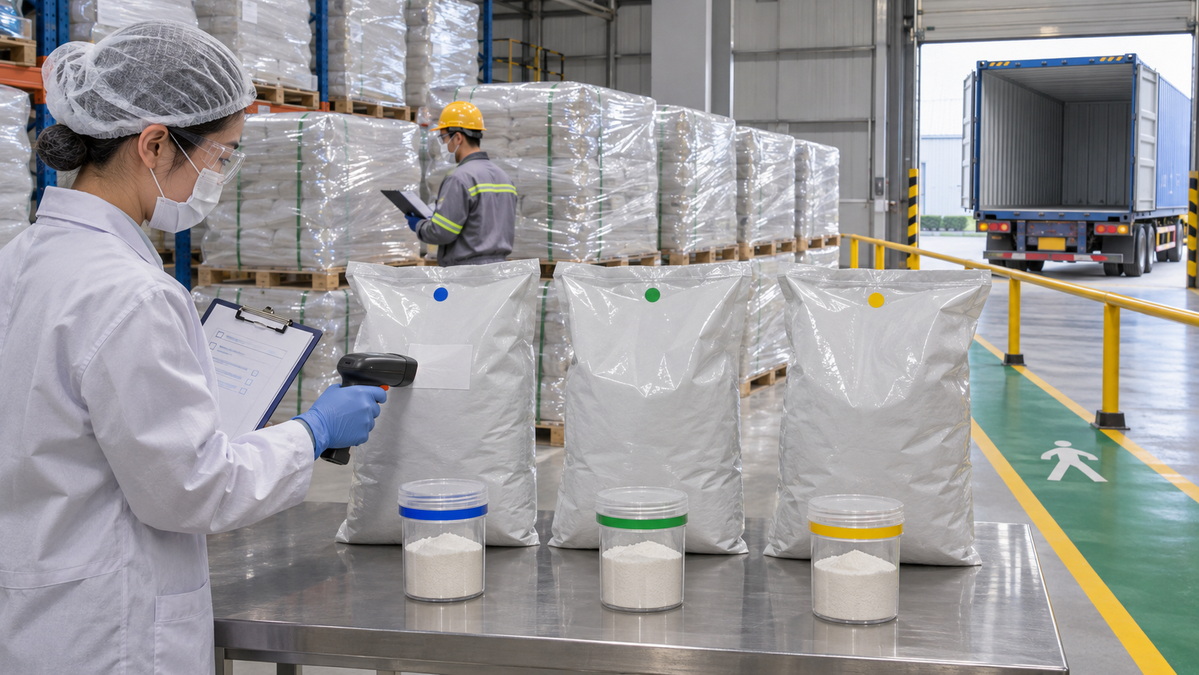
The ten manufacturers above offer different combinations of operating history, product breadth, application support, and reported production scale. Public information is useful for building a shortlist, but it does not replace a plant-level and grade-level assessment.
Shandong Shengda is a relevant starting point for buyers seeking a value-oriented cellulose ether partner with stated customization and technical-support capabilities. Its published dual-factory model and broad product portfolio justify consideration, while HEMC-specific capacity, certificate validity, commercial MOQ, and response performance should be verified through the same qualification process applied to other suppliers.
To begin a focused evaluation with Shandong Shengda, submit your application, target performance, current test method, destination market, estimated annual demand, and packaging requirements. Request a recommended HEMC grade, sample plan, technical data sheet, safety data sheet, recent batch analysis, and written customization proposal before discussing a long-term supply agreement.
Search the exact certificate number or company name in IAF CertSearch. Review the status, legal entity, site, scope, standard, certification body, and accreditation details. The platform provides certificate-status checking and monitoring information.
Compare those details with the manufacturing site supplying your HEMC. If a record is missing or inconsistent, request confirmation directly from the issuing certification body. A certificate image with an apparently valid expiry date should not be your only evidence.
Do not approve the substitution on those two attributes alone. Manufacturers present HEMC as an alternative for some HPMC applications, but also distinguish grades by water retention, workability, and other performance characteristics.
Use matched test methods, then compare both materials in the complete formulation at the intended dosage. Establish acceptance limits for relevant finished-product properties before approving the change.
Begin with a purchasing specification that defines product identity and whether intentional modification is permitted. Review several batch certificates and retain both approved and shipment samples.
If results suggest a discrepancy, use an independent laboratory to design an appropriate identity and composition investigation. Do not rely on viscosity alone: commercially available modified cellulose ether grades demonstrate that application performance and composition cannot be reduced to one viscosity number.
The contract should distinguish an agreed modified grade from an undisclosed change.
No single generic certificate should be treated as sufficient proof. ECHA states that polymers meeting the relevant definition are exempt from registration, while obligations may apply to monomers or other substances. EU importers or an appointed only representative may have compliance responsibilities.
Request a written statement identifying the supplied substance or mixture, the applicable exemption or registration position, the responsible EU party where relevant, and supporting safety documentation.
Quarantine the affected batch and compare it with the retained approval sample under identical conditions. Check preparation, measurement method, batch documents, packaging condition, and the raw materials used in your finished formulation.
Require the supplier to investigate traceability and provide a documented corrective-action response. Your supply agreement should define retesting, independent laboratory involvement, acceptance limits, and remedies.
For customer-specific grades, resolve these procedures before ordering—not after a failed shipment. Manufacturers publicly offering modified grades and formulation development make it especially important to document exactly what was approved.
1. World Bank, World Integrated Trade Solution (WITS). *Other Cellulose Ethers, in Primary Forms, NES: Exports by Country, 2025*. Trade data for HS 391239, a broader category than HEMC alone. [wits.worldbank]
2. MarketsandMarkets. *China Cellulose Ether & Derivatives Market: 2026–2031*. Market research covering the wider cellulose ether and derivatives industry. [marketsandmarkets]
3. European Chemicals Agency (ECHA). *Understanding REACH*. Official guidance on the EU regulatory framework for chemicals. [echa.europa]
4. European Chemicals Agency (ECHA). *Does My Substance Need to Be Registered?* Official guidance on registration obligations, including provisions concerning polymers and monomers. [echa.europa]
5. IAF CertSearch. *Find and Verify Any Certificate in Seconds*. Guidance on checking accredited management-system certificate status, organizational identity, and certification scope. [iafcertsearch]
6. Shandong Shengda New Material Co., Ltd. *About Us*. Company-reported manufacturing background, product portfolio, production capacity, and technical services. [shengdahpmc]
7. Shandong Head. *Who We Are*. Corporate history, international operations, and cellulose ether manufacturing information. [sdheadusa]
8. Shandong LANDU New Material Co., Ltd. *MHEC | HEMC Manufacturer | Hydroxyethyl Methyl Cellulose*. Product specifications, application information, customization services, and packaging guidance. [landu-china]
9. Kingmax Cellulose Co., Ltd. *About Us*. Company-reported manufacturing facilities, product range, and industrial-grade cellulose ether capacity. [kingmaxhpmc]
10. Kima Chemical Co., Ltd. *Company and Product Overview*. Cellulose ether portfolio and company-reported annual production capacity. [kimachemical]
11. CHINACOAT. *Shandong ETON New Materials Co., Ltd.: Exhibitor Profile, 2024*. Exhibitor-provided company background, product categories, and certification statements. [chinacoat]
12. Tianpu Chemicals Company Limited. *Company Profile*. Manufacturing history, production locations, and cellulose ether development milestones. [m.en.tianpuchemical]
13. Hebei Landcel Cellulose Tech Co., Ltd. *Company and Product Overview*. Product portfolio and company-reported manufacturing capacity. [landcel]
14. Zhejiang Yisheng New Material Co., Ltd. *About Us*. Company location, cellulose ether products, application sectors, and reported production capacity. [hecmanufacturer]
15. Ningjin Wanqiang Biotechnology Co., Ltd. *Company Profile*. Company-reported production facilities, quality-control capabilities, and customization services. [global-hpmc]


