


close
Choose Your Site
Global
Social Media
Views: 259 Author: Shengda Publish Time: 2026-09-09 Origin: Site


Content Menu
● Why Streak-Free Drying Requires More Than a Thickener
● HPMC vs HEMC: Core Differences for Car Wash Shampoos
● Understanding HPMC in Automotive Shampoo Formulas
>> Smooth and Premium Flow Behavior
>> Formula Stability and Suspension Support
>> Film Formation and Surface Feel
● Understanding HEMC in Automotive Shampoo Formulas
>> Strong Viscosity Development
>> Water Retention and Rheology Control
>> Compatibility in Complex Systems
● How HPMC and HEMC Affect Rinseability
● Why Water Hardness Matters for Streak-Free Results
● Choosing HPMC or HEMC by Product Type
● Practical Formulation Steps for Better Drying Performance
>> Step 1: Create Matched Formula Prototypes
>> Step 2: Measure Physical Properties
>> Step 3: Test Rinsing on Automotive Panels
>> Step 4: Test Under Real Conditions
● Expert Guidance for Product Development
● FAQ
>> What is the main difference between HPMC and HEMC in car wash shampoo?
>> Can HPMC make a car shampoo streak-free?
>> Can HEMC cause residue on car paint?
>> Which cellulose ether is better for a clear car wash shampoo?
>> How can a car shampoo reduce hard-water spots?
>> Can HPMC and HEMC be used in foam cannon car shampoos?
>> What should be tested before launching a car wash shampoo?
Selecting the right cellulose ether is an important part of developing a high-performance car wash shampoo. Hydroxypropyl Methyl Cellulose (HPMC) and Hydroxyethyl Methyl Cellulose (HEMC) can both improve viscosity, flow control, foam stability, product appearance, and storage stability in automotive cleaning products.
However, when the goal is streak-free drying, formulators should look beyond viscosity alone. A car shampoo can look thick, luxurious, and foam-rich in the bottle while still leaving residues, water spots, or drying streaks on paintwork if the total formula is not properly balanced.
In practical product development, HPMC is often selected for smooth flow, refined texture, clear or translucent product concepts, and controlled rinse behavior. HEMC is frequently used where stronger viscosity development, stable rheology, water retention, and broader formulation robustness are required.
The most successful car wash shampoos combine the right cellulose ether grade with compatible surfactants, chelating agents, low-residue additives, proper dilution guidance, and a drying strategy designed for local water conditions.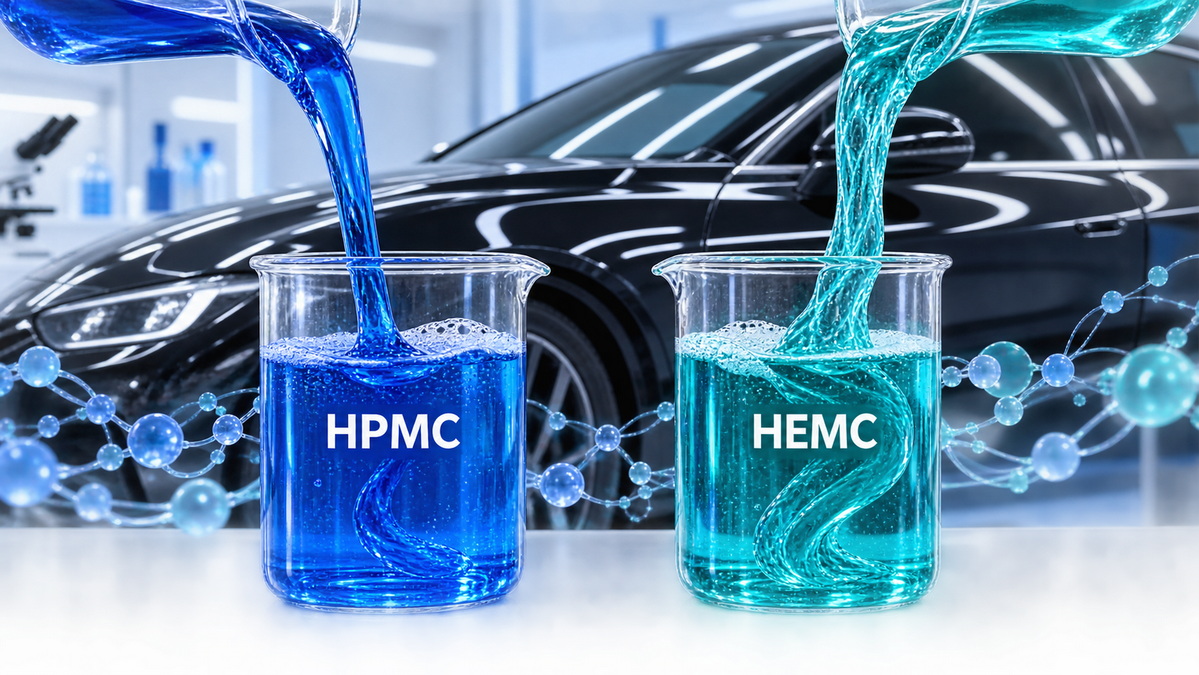
Consumers usually expect a premium car shampoo to deliver several benefits at once. It should remove dirt, create rich foam, lubricate the washing surface, rinse cleanly, and leave paintwork looking glossy rather than dull or streaky.
These expectations are connected, but they are not created by one ingredient alone.
A streak-free finish depends on how the complete system performs from the moment the shampoo is diluted until the vehicle is rinsed and dried. Important factors include:
- Surfactant selection and concentration
- Cellulose ether type and dosage
- Water hardness
- Chelating-agent performance
- Foam quality and foam release
- Rinse behavior
- Polymer and wax residue
- Vehicle surface temperature
- Drying speed
- Use of microfiber towels, air blowers, or rinse aids
Hard water is one of the main causes of visible water spots. When rinse water contains calcium and magnesium minerals, those minerals can remain on the painted surface after the water evaporates. The result may be white spotting, haze, streaks, or dull marks, especially on dark-colored paint, glass, chrome, and glossy plastic trim.
For this reason, a cellulose ether should not be positioned as a stand-alone water-spot solution. Instead, HPMC or HEMC should be selected to improve the shampoo's physical properties and user experience while supporting clean, efficient rinsing.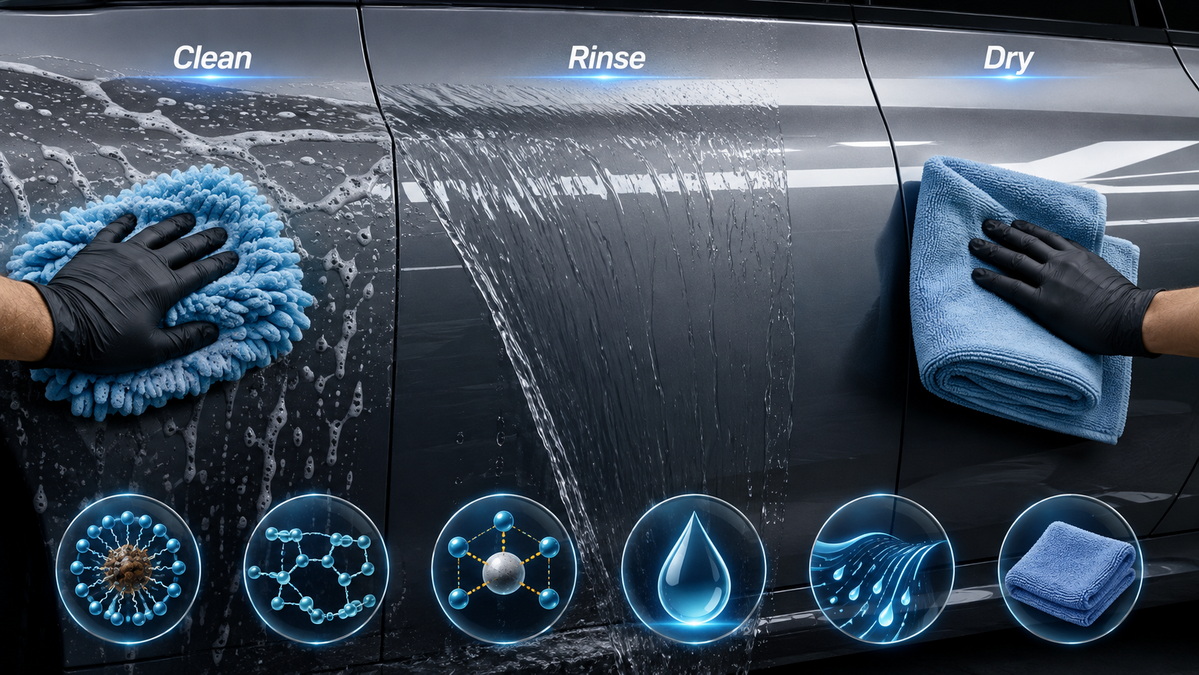
HPMC and HEMC are both nonionic cellulose ethers. They are water-soluble polymers commonly used to control viscosity, improve rheology, stabilize liquid systems, and support suspension in many daily chemical products.
Their nonionic character can be valuable in car wash shampoo formulations because it allows them to work with a wide variety of surfactant systems. However, the final result depends on the specific cellulose ether grade, its substitution level, molecular weight, solution viscosity, hydration properties, and interaction with other raw materials.
| Performance Factor | HPMC for Car Wash Shampoos | HEMC for Car Wash Shampoos | Formulation Consideration |
|---|---|---|---|
| Main role | Thickener, rheology modifier, stabilizer, film-forming aid | Thickener, rheology modifier, water-retention and stability aid | Both improve product body and flow behavior |
| Product appearance | Often suitable for smooth, refined, clear, or translucent concepts | Can create stable and rich liquid texture | Transparency depends on the complete formula |
| Flow profile | Smooth, structured, and consumer-friendly flow | Strong body with controlled rheology | Match the grade to packaging and dispensing method |
| Shear-thinning behavior | Thick in the bottle and easier to pour during use | Can also provide easy flow under shear | Useful for squeeze bottles, pumps, and dosing caps |
| Foam support | Helps maintain a consistent formulation structure | Helps improve the overall body of foam-rich systems | Actual foam performance depends primarily on surfactants |
| Film-forming tendency | May create a light protective or lubricating film | Generally focused more on thickening and stability | Excessive film formation can cause residue |
| Best starting application | Premium, smooth-rinsing, clear or elegant shampoo systems | High-viscosity, concentrated, or robust surfactant systems | Laboratory screening is necessary before scale-up |
| Streak-free contribution | Indirect support through uniformity and rinse quality | Indirect support through controlled viscosity and application | Chelants and rinse aids remain critical |
The key point is simple: HPMC and HEMC can help create a better shampoo, but neither ingredient alone determines whether a vehicle dries without streaks.
HPMC is a versatile cellulose ether that can contribute to a smooth and premium product profile. In car wash shampoos, it is often considered when formulators want controlled viscosity without creating an overly heavy or sticky gel texture.
A carefully selected HPMC grade can help a liquid car shampoo look more substantial while remaining easy to pour, dilute, and rinse.
Consumers often judge car shampoo quality before they even use it. A shampoo that is too thin may appear weak or diluted. A shampoo that is too thick may be difficult to pour, difficult to dilute, or challenging to use with foam guns and dosing equipment.
HPMC can support a balanced flow profile. It can help create a product that appears rich in the bottle but becomes easier to move when shaken, poured, or mixed with water.
This behavior is especially useful for:
- Premium hand-wash car shampoos
- pH-neutral maintenance shampoos
- Ceramic-coating-safe wash products
- Clear or lightly colored car-care liquids
- Concentrated retail car shampoos
- Wash-and-wax products requiring controlled structure
Car wash shampoos may contain fragrance oils, dyes, pearlescent agents, wax emulsions, silicone dispersions, gloss additives, or polymeric protectants. These ingredients can separate, settle, or create haze if the liquid structure is not properly balanced.
HPMC can help improve the consistency of the formula and support a more uniform appearance during storage. However, the formulator should always test compatibility with fragrance, preservatives, surfactants, solvents, waxes, and silicone-based ingredients.
A stable-looking product is important, but stability should also be measured through elevated-temperature storage, freeze-thaw testing, centrifuge testing, and real production trials.
HPMC may provide a mild film-forming effect in a shampoo system. When properly balanced, this can contribute to smoother application, better wash-mitt glide, and a more refined user experience.
However, too much film-forming material can create problems.
If the formula is overdosed, poorly hydrated, or incompatible with the surfactant package, the result may include:
- Difficult rinsing
- Smear marks on glass
- Reduced water sheeting
- Visible haze on dark paint
- Residue on chrome and mirrors
- Increased streaking after air drying
For this reason, HPMC should be optimized for clean rinse performance, not simply maximum viscosity.
HEMC is another useful cellulose ether for automotive cleaning products. It is often selected for formulas that require strong viscosity build, smooth rheology, water retention, and reliable physical stability.
In many surfactant-rich systems, HEMC can help formulators build product body while maintaining good flow under use conditions.
HEMC can be an effective option when a car shampoo needs a rich, dense, gel-like texture. This may be especially useful for concentrated products, professional wash products, or retail shampoos designed to communicate high active content and premium quality.
A strong viscosity profile can improve:
- Product appearance on store shelves
- Consumer perception of concentration
- Controlled dosing from a bottle
- Pump or squeeze-bottle performance
- Fragrance and color uniformity
- Suspension of compatible additives
- Consistency across storage periods
However, viscosity should never be increased without considering rinsability. A shampoo that is too viscous may be difficult to dissolve in wash water, may reduce foam release, or may leave more residue if consumers use too much product.
HEMC can contribute to water retention and a controlled flow profile. In automotive shampoo applications, this may support more uniform application and help the liquid maintain a stable structure during storage.
This can be useful in formulations designed for:
- Bucket washing
- Foam cannon applications
- Touchless wash concentrates
- Truck wash products
- Wash-and-wax shampoos
- High-foaming automotive detergents
- Products sold in hot or cold climates
The right HEMC grade may help the shampoo remain stable when exposed to temperature changes during shipping or storage. Still, every formula should be tested under realistic conditions because surfactants, salts, solvents, and fragrance systems can affect the polymer's behavior.
HEMC can be a practical choice for complex car shampoo formulas containing mixed surfactants. Automotive shampoos may use anionic surfactants for cleaning power, amphoteric surfactants for foam stabilization and mildness, nonionic surfactants for wetting, and specialty additives for gloss or protection.
In these systems, HEMC can help provide structure. Yet compatibility must be confirmed through laboratory testing. A grade that performs well in one surfactant package may behave differently in another due to changes in salt level, pH, fragrance loading, hydrotropes, solvents, and active-matter concentration.
Rinseability is one of the most important performance indicators in a car shampoo. A formula may have excellent foam and viscosity but still disappoint users if it leaves a slippery, hazy, sticky, or streaky layer after rinsing.
Both HPMC and HEMC can influence rinseability because they change the way the liquid behaves in water and on the vehicle surface.
A properly designed cellulose-ether system should help the shampoo:
- Disperse evenly in wash water
- Stay stable during use
- Provide controlled lubrication
- Release soil effectively
- Rinse away without leaving visible residue
- Avoid excessive smearing on paint and glass
- Support a clean drying appearance
The risk of streaking can increase when the cellulose ether is used at too high a concentration or when the polymer is not fully hydrated before other ingredients are added.
Common formulation mistakes include:
- Adding cellulose ether too quickly into water
- Creating polymer agglomerates or "fish eyes"
- Adding salt before full hydration
- Using excessive thickener to create a premium appearance
- Combining incompatible fragrance oils and polymers
- Using a surfactant balance that does not rinse easily
- Adding too much wax, silicone, or gloss enhancer
- Ignoring hard-water effects during product testing
A well-designed formula should be visually inspected after rinsing and drying on black painted panels, clear-coated metal panels, glass, chrome, plastic trim, and coated surfaces.
Water hardness can have a larger effect on drying performance than the difference between HPMC and HEMC.
Hard water contains dissolved minerals, mainly calcium and magnesium. During car washing, these minerals may interact with surfactants, reduce foam efficiency, create deposits, and leave visible marks after water evaporates.
This is especially challenging when vehicles are washed:
- In direct sunlight
- On hot body panels
- In dry and windy conditions
- With high-mineral well water
- With insufficient rinsing
- Without prompt drying
- With excessive shampoo dosage
- On black or dark-colored vehicles
For car shampoo brands that want to improve drying appearance, the formula should include a full hard-water strategy.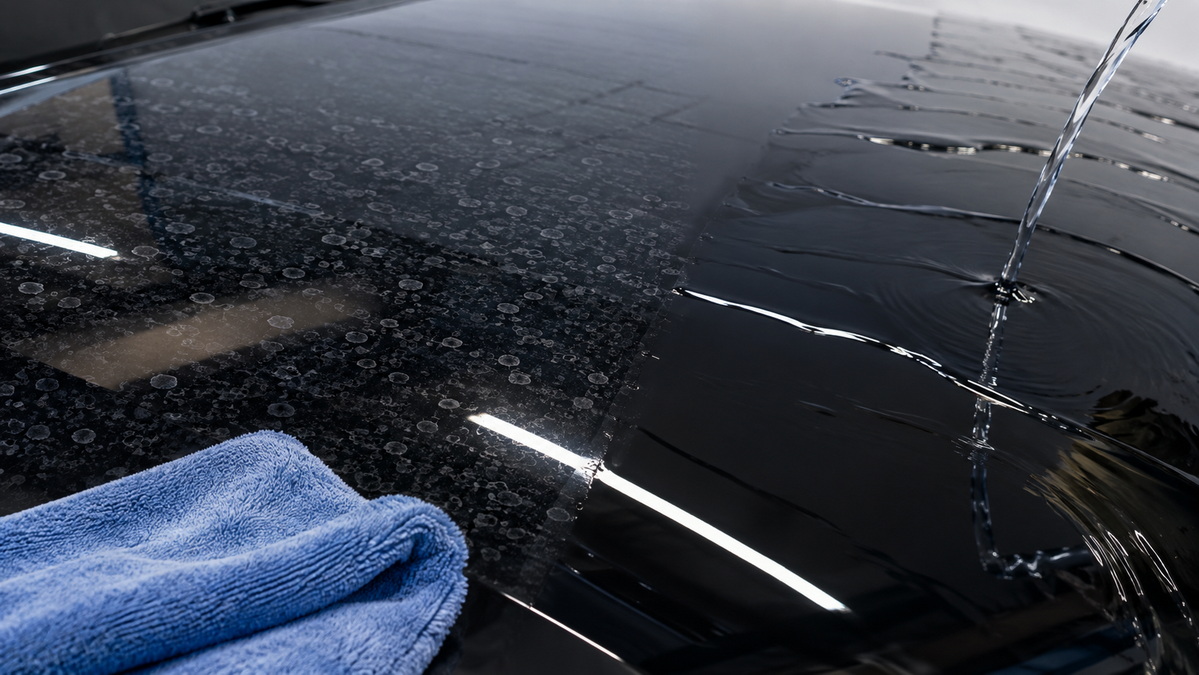
Chelating agents bind metal ions such as calcium and magnesium. This can help reduce mineral interference, improve detergent efficiency, and lower the risk of hard-water deposits.
Common options may include:
- Sodium citrate
- GLDA
- MGDA
- EDTA, where appropriate
- Phosphonate-based chelants, depending on local requirements
- Polymer dispersants designed for mineral control
The best option depends on target-market regulations, environmental goals, biodegradability requirements, formula pH, cost targets, and compatibility with other ingredients.
Water sheeting means that rinse water spreads and drains more evenly across the vehicle surface instead of forming many separate droplets. Better sheeting can reduce the number of droplets that evaporate and leave mineral spots.
A practical premium wash system may include:
1. A cellulose-ether-thickened shampoo for cleaning and lubrication.
2. A compatible surfactant system for fast soil removal and easy rinsing.
3. A chelating package for hard-water control.
4. A low-residue rinse aid or drying aid.
5. Clear consumer instructions for rinsing and drying.
For professional car wash operations, softened, reverse-osmosis, or deionized water can further improve final appearance, especially during the last rinse.
The best cellulose ether depends on the intended product format and performance claim.
| Car Wash Product Type | Recommended Starting Option | Main Reason | Additional Requirement |
|---|---|---|---|
| Clear premium car shampoo | HPMC | Smooth flow and refined appearance | Confirm clarity, rinseability, and fragrance compatibility |
| Concentrated gel shampoo | HEMC | Strong viscosity development and structured rheology | Test dilution speed and foam release |
| Foam cannon shampoo | Low-dose HPMC or HEMC | Controlled flow without restricting equipment performance | Test through actual foam cannon nozzles |
| pH-neutral maintenance wash | HPMC | Suitable for smooth, premium consumer experience | Validate compatibility with ceramic coatings and sealants |
| Wash-and-wax shampoo | HPMC or HEMC | Depends on wax-emulsion and silicone compatibility | Test for streaking on black paint and glass |
| Hard-water-focused shampoo | HPMC or HEMC based on target viscosity | Cellulose ether is secondary to mineral-control chemistry | Use chelants and low-residue rinse strategy |
| Heavy-duty truck wash | HEMC | Useful for stronger body in robust cleaning systems | Confirm compatibility with alkaline components |
The most effective development process is to compare HPMC and HEMC under the same conditions. This makes it easier to identify whether differences come from the cellulose ether or from unrelated changes in the formula.
Prepare several prototype batches with the same surfactant package, fragrance, preservative, chelant, pH level, and water quality.
Only change:
- The cellulose ether type
- The cellulose ether grade
- The cellulose ether dosage
For example, a development team may compare one HPMC grade and one HEMC grade at low, medium, and high use levels.
This creates a clear understanding of how each material affects viscosity, foam, clarity, rinsing, and drying.
Each prototype should be evaluated for:
- Viscosity at a defined temperature
- pH stability
- Density
- Product clarity
- Foam volume
- Foam stability
- Freeze-thaw resistance
- Centrifuge stability
- High-temperature storage stability
- Low-temperature storage stability
- Pumpability
- Pourability
- Dilution speed in water
A shampoo that performs well in a laboratory beaker may still fail in a consumer bottle or foam cannon. Packaging and real-use testing are essential.
Rinse testing should be conducted on multiple surfaces, not only on one painted panel.
Recommended test surfaces include:
- Black painted metal panels
- White painted metal panels
- Clear-coated panels
- Automotive glass
- Chrome trim
- Plastic trim
- Ceramic-coated panels
- Wax-protected panels
Use both soft water and hard water for the test. Observe the surface after natural drying and after microfiber drying.
Evaluate:
- Water spots
- White mineral residue
- Streaks
- Smear marks
- Surface haze
- Foam residue
- Gloss level
- Water-break pattern
- Surface slipperiness
- Re-deposition of soil
A car shampoo should also be tested outside the laboratory.
Real-world testing should include:
- Indoor washing
- Outdoor washing
- Hot-panel washing
- High-humidity conditions
- Direct-sunlight conditions
- Professional detailer evaluation
- Consumer-use evaluation
- Foam cannon use
- Bucket wash use
- Overdosing simulation
Dark vehicles should always be included because drying defects are much easier to see on black, dark blue, charcoal gray, and deep metallic finishes.
In automotive-care formulation, a high viscosity number should never be treated as the final measure of product quality. The best car shampoo is not necessarily the thickest shampoo.
A successful formula should achieve a balanced combination of:
- Effective cleaning
- Stable and attractive viscosity
- Fast dilution
- Rich but controlled foam
- Good wash-mitt lubrication
- Low surface residue
- Easy rinsing
- Hard-water tolerance
- Reliable drying appearance
- Compatibility with modern paint protection systems
HPMC is often a strong candidate for brands developing clear, premium, smooth-rinsing products. It may help create a refined shampoo texture without requiring excessive thickness.
HEMC is often a strong candidate for brands that need stronger body, stable rheology, and robust performance in more complex surfactant-rich systems.
For many global automotive-care brands, the most effective strategy is to evaluate both materials in parallel and select the grade that delivers the best balance of appearance, processing, stability, foam, rinsing, and drying performance.
HPMC and HEMC are both valuable cellulose ether options for car wash shampoos. Their primary role is to improve viscosity, rheology, stability, suspension, and user experience.
HPMC is commonly suitable for smooth-flowing, premium, clear, and controlled-rinse automotive shampoos. HEMC can be an effective choice for concentrated, high-viscosity, and surfactant-rich car wash systems that require stable body and reliable processing performance.
For streak-free drying, cellulose ether selection should be combined with a complete formula strategy that includes proper surfactant balance, effective chelation, controlled polymer dosage, easy rinsing, water sheeting, and good drying practice.
Shandong Shengda New Material Co., Ltd. provides building-grade and daily-chemical-grade cellulose ether solutions, including HPMC and HEMC, to support the development of stable, high-quality, and performance-focused automotive cleaning products for global markets.
HPMC is often used to create a smooth, refined, and controlled-flow shampoo with good rinse behavior. HEMC is commonly selected when stronger viscosity development, robust rheology, and stable performance in surfactant-rich systems are required. The final selection should be based on real formulation testing.
HPMC can help improve shampoo consistency, flow, and rinsability, but it cannot independently make a product streak-free. Streak-free drying depends heavily on water hardness, chelating agents, surfactant selection, rinse aid performance, drying conditions, and proper use.
HEMC can cause visible residue only if it is overdosed, not fully hydrated, poorly compatible with the formula, or not rinsed properly. When the grade and dosage are optimized, HEMC can support stable viscosity without causing unwanted surface residue.
HPMC is often a suitable starting choice for clear or translucent car shampoo systems because it can support smooth flow and a refined product appearance. However, the final clarity depends on the full formula, including surfactants, fragrance, dyes, salts, solvents, and additives.
A car shampoo can reduce hard-water spotting by using chelating agents that control calcium and magnesium ions, supporting water sheeting, reducing residue, improving rinsability, and providing clear instructions for prompt drying. A final rinse with softened or deionized water can provide additional improvement.
Yes. Both HPMC and HEMC can be used in foam cannon car wash products when the viscosity is carefully balanced. Excessive viscosity may affect dilution, nozzle flow, and foam generation, so testing with the actual foam cannon and pressure washer is necessary.
A complete testing program should include viscosity, pH, density, foam, clarity, storage stability, freeze-thaw stability, centrifuge stability, pumpability, dilution speed, hard-water compatibility, rinseability, streaking, spotting, and real-world performance on different automotive surfaces.
1. Ashland. "Benecel™ Hydroxypropyl Methylcellulose." Information on HPMC grades and uses in personal and home-care products.
2. Shandong Shengda New Material Co., Ltd. "What Are the Main Ingredients of Shampoo and How Cellulose Ethers Improve Your Formula?"
3. Safic-Alcan. "Rheology Modifiers: Leave-On vs Rinse-Off Explained."
[https://www.safic-alcan.com/en-fr/industry-articles/rheology-modifier-leave-on-rinse-off/]
4. Google Patents. "Car Wash Composition for Hard Water."
[https://patents.google.com/patent/CA2525216A1/en]
5. Sky Blue Chemical. "The Complete Guide to Car Wash Chemicals: Types, Uses & Formulation Basics."
[https://www.skybluechemical.com/articles/complete-guide-car-wash-chemicals]
6. Killer Brands. "The Impact of Hard Water on Car Washing and How to Mitigate It."
7. OMICS International. "Car Wash Shampoo Formulations."
[https://www.omicsonline.org/open-access/car-wash-shampoo-formulations-121738.html]
8. Celotech. "What Is Cellulose Ether? Properties, Types & Production."


