


close
Choose Your Site
Global
Social Media
Views: 287 Author: Shengda Publish Time: 2026-08-26 Origin: Site


Content Menu
● What Is Hydroxypropyl Methyl Cellulose?
● Why HPMC Selection Matters for Manufacturers
● HPMC, HEMC, and HEC: Key Differences
● How HPMC Improves Dry-Mix Mortar Performance
>> Water Retention in Cement-Based Products
>> Open Time for Tile Adhesive
>> Workability and Trowel Feel
>> Anti-Sag and Vertical Slip Resistance
● Selecting HPMC for Tile Adhesive
>> Define Your Target Tile Adhesive Performance
>> Understand Viscosity Test Conditions
>> Optimize Dosage Through Testing
● HPMC for Wall Putty, Skim Coat, and Cement Render
● HPMC and HEMC for Gypsum-Based Products
● HEC for Detergents and Daily Chemical Products
● How to Evaluate an HPMC Supplier
● Why Work with Shandong Shengda New Material Co., Ltd.
● Build Better Formulations with the Right Cellulose Ether
>> What is HPMC used for in tile adhesive?
>> What is the difference between HPMC and HEMC?
>> What is the difference between HPMC and HEC?
>> How much HPMC should be added to tile adhesive?
>> Can high-viscosity HPMC always provide better water retention?
>> How can manufacturers compare HPMC viscosity values?
>> Can HEC be used in liquid detergent?
Choosing an HPMC supplier involves far more than comparing price, viscosity, or packaging. For tile adhesive, wall putty, cement render, gypsum plaster, self-leveling compounds, detergents, and personal-care formulations, Hydroxypropyl Methyl Cellulose (HPMC) must deliver reliable performance in real production conditions.
Shandong Shengda New Material Co., Ltd. specializes in the research, development, manufacturing, and supply of HPMC, Hydroxyethyl Methyl Cellulose (HEMC), and Hydroxyethyl Cellulose (HEC). We provide construction-grade and daily-chemical-grade cellulose ether solutions for customers worldwide.
The right cellulose ether can improve water retention, workability, thickening efficiency, open time, anti-sag performance, stability, and user experience. The wrong grade can lead to inconsistent batches, poor spreading, excessive dosage, unstable viscosity, reduced bonding performance, or unnecessary formulation cost.
This guide explains how manufacturers can select HPMC, HEMC, and HEC based on the practical requirements of their finished products.
Hydroxypropyl Methyl Cellulose, commonly known as HPMC, is a non-ionic, water-soluble cellulose ether. It is produced by modifying natural cellulose to create a functional polymer with thickening, binding, water-retention, film-forming, and stabilizing properties.
In construction materials, HPMC is widely used to improve the performance of cement-based and gypsum-based dry-mix products. It helps the mixture retain water, improves workability, supports smooth spreading, and provides a more consistent application experience.
In daily chemical formulations, HPMC can help control viscosity, stabilize liquid systems, improve texture, support suspension, and create a better product appearance.
HPMC is not simply an additive. In many formulations, it is a key factor that affects how the final product mixes, flows, spreads, performs, and feels during use.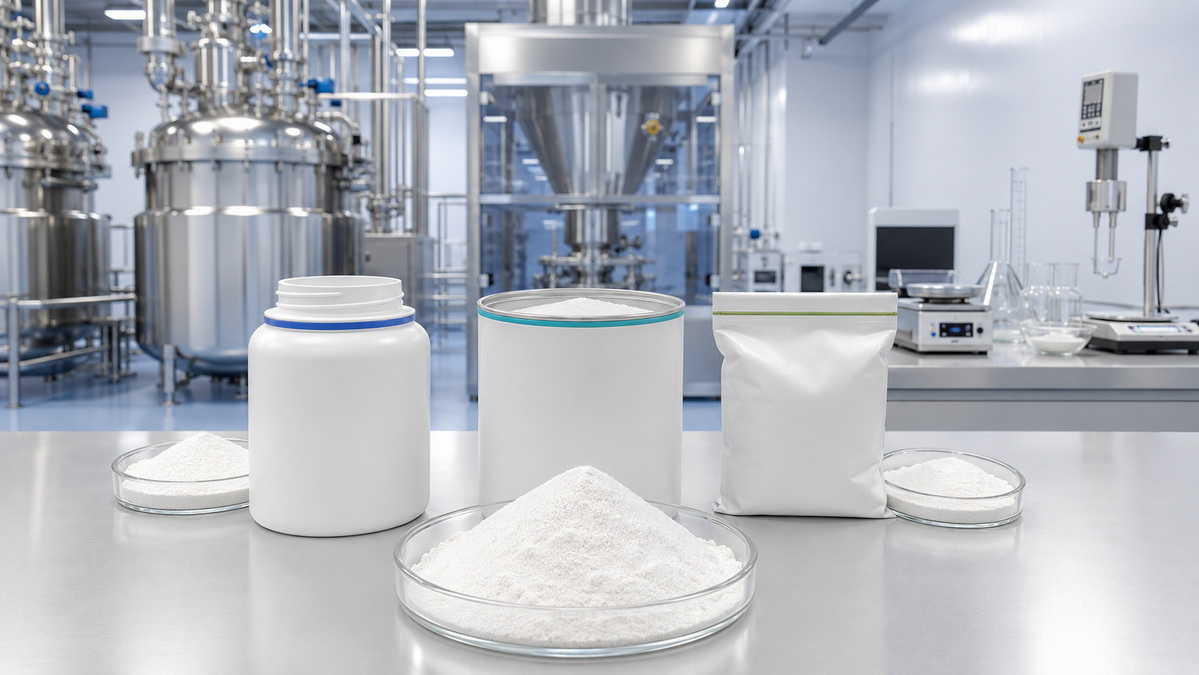
Every formulation has its own technical requirements. A high-viscosity HPMC grade may work well for one tile adhesive formula but create excessive thickness in another. A grade designed for wall putty may not provide the best performance in a liquid detergent.
The most suitable HPMC grade depends on the interaction between the cellulose ether and the complete formulation.
Important selection factors include:
- Cement type and cement dosage
- Sand particle size and filler composition
- Redispersible polymer powder content
- Water-to-powder ratio
- Mixing equipment and processing time
- Application temperature and humidity
- Required open time
- Water-retention target
- Slip-resistance requirement
- Surface absorption of the substrate
- Desired viscosity and workability
- Storage stability requirements
A successful formulation does not depend on one technical number. It depends on the balance between all important performance indicators.
HPMC, HEMC, and HEC are all cellulose ethers, but they offer different performance profiles. Selecting the appropriate material begins with understanding the final application.
| Cellulose Ether | Main Functional Properties | Typical Applications | Important Considerations |
|---|---|---|---|
| HPMC | Water retention, thickening, workability, cohesion, film formation | Tile adhesive, wall putty, cement plaster, EIFS, gypsum products, self-leveling mortar | Balance between water retention, viscosity, open time, and application feel |
| HEMC | Water retention, rheology control, workability, temperature resistance | Tile adhesive, cement render, skim coat, exterior insulation systems | Suitable for construction applications requiring robust and stable performance |
| HEC | Thickening, flow control, suspension, stability | Detergents, liquid soap, water-based coatings, personal-care products | Selection should consider surfactant system, pH, salt level, and viscosity target |
For construction-grade products, HPMC and HEMC are commonly selected for their ability to improve water retention and application performance.
For daily chemical and water-based liquid systems, HEC is often selected for thickening and stability. However, HPMC and HEMC may also be suitable depending on the formula, processing method, and desired product characteristics.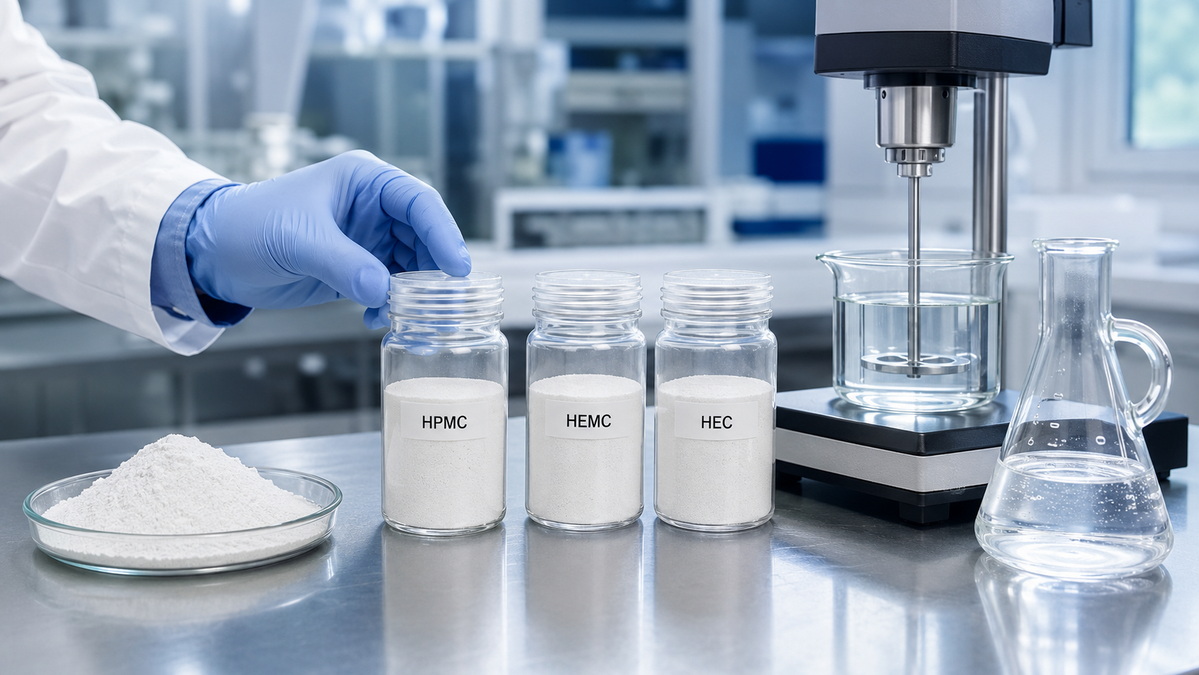
HPMC is widely used in dry-mix mortar because it supports both fresh-state workability and final application quality.
Cement-based mortar requires sufficient water for hydration. When a fresh mortar is applied to a highly absorbent substrate, water can be absorbed quickly into the wall or floor surface. High temperature, low humidity, and wind can increase water loss even further.
HPMC helps retain water within the mortar system. This improves the availability of water during the working period and can support more consistent cement hydration.
Better water retention can contribute to:
- Improved mortar workability
- Easier trowel application
- Reduced risk of rapid surface drying
- Better consistency during application
- More stable product performance on absorbent substrates
- Improved handling time for installers
The ideal water-retention performance must be evaluated in the complete formula. Cement, sand, fillers, polymers, additives, temperature, and substrate conditions all influence the final result.
Open time is especially important for tile adhesive. It refers to the period after adhesive application during which the tile can still be placed and bonded effectively.
A suitable HPMC grade can help keep the adhesive surface workable for longer. This gives installers more time to position tiles, adjust alignment, and work across larger application areas.
Open time should be tested using the complete tile adhesive formula. It can be affected by ambient conditions, substrate absorption, adhesive thickness, trowel notch size, cement reactivity, filler composition, and polymer content.
For large-format tiles or demanding installation environments, open time becomes even more important. A consistent cellulose ether grade can help manufacturers create a more predictable installation experience.
Workability is one of the most noticeable product characteristics for installers. A well-formulated mortar should mix smoothly, spread easily, hold its shape, and provide a controlled feel under the trowel.
HPMC can help create:
- Smooth spreading behavior
- Better cohesion
- Improved wetting of the substrate
- More stable mortar texture
- Reduced drag during application
- Improved handling consistency
- Better ridge formation in tile adhesive
Different products require different rheological profiles. A skim coat may need a light, creamy, easy-spreading texture. A vertical tile adhesive may need stronger anti-sag behavior. A self-leveling compound needs controlled viscosity while still maintaining sufficient flow.
This is why selecting HPMC based only on viscosity is not enough.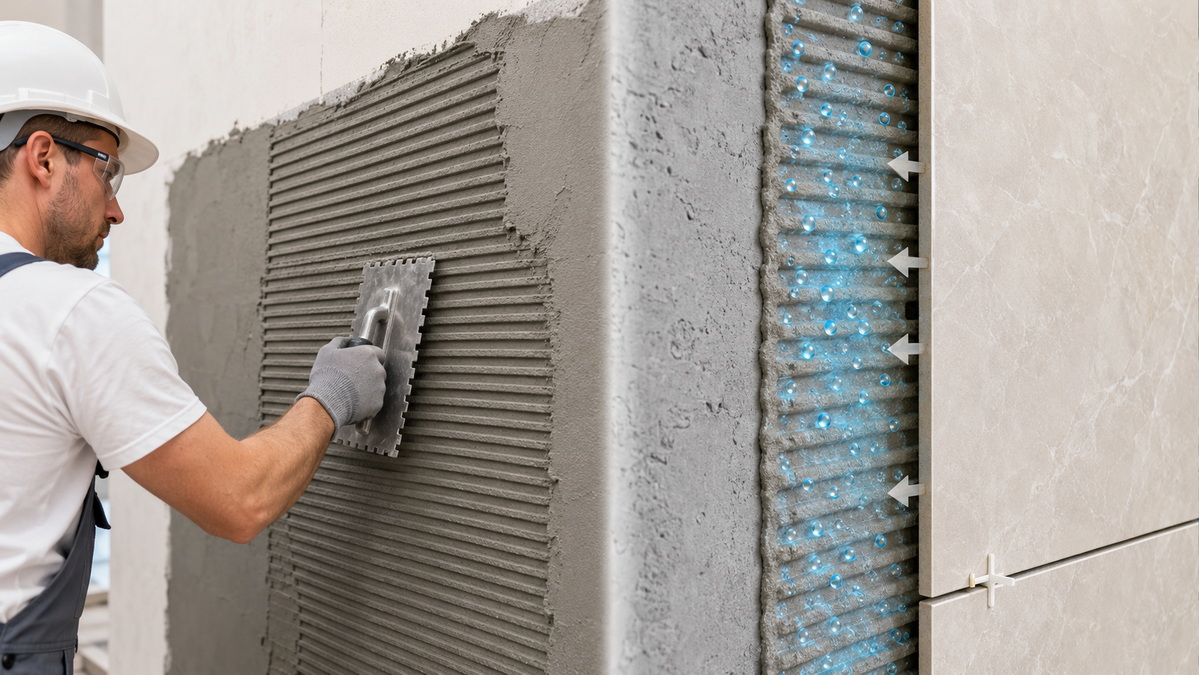
Tile adhesive and other vertical construction products need to remain stable after application. If the adhesive is too fluid or lacks cohesive structure, tiles may slide downward before curing.
The right HPMC or HEMC grade can support anti-sag performance by improving the internal structure of the fresh mortar. This can help tiles remain in their intended position during installation.
Anti-sag performance should always be evaluated together with workability. A product that resists sagging but is too difficult to spread may not deliver a good installer experience.
Tile adhesive is one of the most demanding applications for construction-grade HPMC. The cellulose ether must support water retention, workability, open time, slip resistance, and bonding conditions without creating excessive viscosity or poor mixing behavior.
Before selecting an HPMC grade, define the requirements of the finished adhesive.
Key questions include:
- Is the product intended for wall or floor installation?
- Will it be used with ceramic tile, porcelain tile, natural stone, or large-format tile?
- Does the product need standard or enhanced bonding performance?
- Is extended open time required?
- Will the adhesive be used in hot, dry, humid, or variable climates?
- What is the target consistency after mixing?
- Is low vertical slip required?
- What are the local cement, sand, and filler characteristics?
A clear performance brief helps suppliers recommend more suitable grades and makes laboratory evaluation more efficient.
Viscosity is important, but viscosity numbers must always be interpreted carefully.
Different suppliers may measure viscosity using different methods, concentrations, temperatures, spindles, and rotational speeds. For example, one supplier may report a value based on a 2% solution, while another may use a different concentration or measurement instrument.
When comparing HPMC grades, confirm:
- Test concentration
- Test temperature
- Measurement equipment
- Spindle type
- Rotational speed
- Solution preparation method
- Testing time after dissolution
Without these details, two viscosity values may appear similar but represent different actual performance levels.
Adding more HPMC does not always create a better product. Higher dosage may improve water retention but may also increase viscosity too much, reduce flow, make mixing more difficult, or increase production cost.
A practical dosage optimization process includes:
1. Establish a stable base formulation.
2. Select two to four suitable HPMC or HEMC grades.
3. Test each grade at several dosage levels.
4. Measure water retention, consistency, open time, slip resistance, and adhesion.
5. Compare results under the same testing conditions.
6. Select the lowest dosage that provides stable target performance.
This approach helps manufacturers achieve a balanced formula and avoid over-formulation.
Wall putty, skim coat, and cement render require a different balance of performance than tile adhesive. The product must be easy to mix, easy to spread, smooth after application, and stable during the working period.
For these applications, the right cellulose ether can improve:
- Water retention
- Spreadability
- Smoothness
- Creamy texture
- Cohesion
- Resistance to rapid drying
- Surface finish
- Application consistency
A wall putty product that feels too dry may be difficult to spread. A product that is too thick may require more effort from the installer. A formula with poor water retention may dry too quickly on absorbent walls.
The most effective grade is one that supports a smooth application experience while maintaining sufficient water retention and formula stability.
Gypsum plaster, gypsum skim coat, joint compound, and gypsum-based adhesive products require careful control of working time, consistency, water retention, and surface quality.
HPMC and HEMC can help improve:
- Mixing behavior
- Water retention
- Spreadability
- Smooth finishing
- Working time
- Surface appearance
- Application consistency
Gypsum systems behave differently from cement systems. A cellulose ether grade that performs well in cement mortar should not be assumed to provide the same result in gypsum products.
Manufacturers should test cellulose ether grades using their actual gypsum source, retarders, fillers, polymers, and production method.
Hydroxyethyl Cellulose is commonly used in water-based daily chemical products as a thickener and rheology modifier. It can help formulate products with suitable viscosity, smooth flow, suspension stability, and attractive appearance.
Typical applications include:
- Liquid detergents
- Hand soap
- Dishwashing liquid
- Household cleaning products
- Water-based personal-care products
- Water-based coatings
- Industrial cleaning solutions
The best HEC grade depends on the formula composition. Surfactant type, salt concentration, pH level, fragrance, preservative, colorant, and processing method can all influence final viscosity and stability.
For transparent liquid products, formulation teams should also evaluate clarity, dissolution speed, air bubble release, and compatibility with other raw materials.
A successful laboratory trial is important, but it is only one part of supplier qualification. Long-term supply reliability depends on quality consistency, communication, documentation, technical understanding, and commercial support.
A dependable HPMC supplier should provide clear and complete product information.
Ask for documents that help your technical and purchasing teams assess the product.
These may include:
- Technical Data Sheet
- Safety Data Sheet
- Certificate of Analysis
- Product specification sheet
- Packaging details
- Shelf-life information
- Storage recommendations
- Batch traceability information
The documentation should clearly state relevant specifications and testing methods.
For a manufacturer, batch consistency is often more important than a single excellent sample result. If viscosity, moisture, particle size, or application performance changes significantly from batch to batch, production stability may be affected.
A qualified supplier should have defined quality-control procedures and be able to provide batch-level documentation.
Important quality indicators may include:
- Viscosity
- Moisture content
- Ash content
- Particle size
- pH value
- Bulk density
- Gel temperature
- Water retention
- Appearance
- Purity-related specifications
The exact indicators should match the target application.
A cellulose ether supplier should understand that product performance is created by the complete formula. Technical support should focus on the customer's actual issue rather than offering only a standard grade list.
Useful technical communication may include:
- Grade-selection recommendations
- Sample comparison plans
- Dosage guidance
- Mixing-process suggestions
- Troubleshooting for low water retention
- Troubleshooting for poor workability
- Advice on viscosity control
- Suggestions for improving open time or anti-sag behavior
This level of support helps formulation teams move from trial-and-error testing toward more systematic product development.
For international customers, supply capability includes more than manufacturing capacity. It also includes stable packaging, export documentation, shipment coordination, and responsive communication.
A supplier should be able to support customers with:
- Export-grade packaging
- Clear labeling
- Stable palletization
- Container-loading support
- Product documentation
- Batch identification
- Timely communication
- Consistent lead-time management
Shandong Shengda New Material Co., Ltd. provides cellulose ether solutions for construction materials and daily chemical applications. Our product range includes HPMC, HEMC, and HEC designed to support the formulation needs of customers in global markets.
We understand that every customer works with different cement sources, sands, fillers, polymers, surfactants, production equipment, and climate conditions. For this reason, grade selection should begin with the final application and required performance—not with a single general recommendation.
Our team supports customers throughout the material-evaluation process by helping them identify suitable cellulose ether options for their product category and technical objectives.
Key product applications include:
- Tile adhesive
- Wall putty
- Skim coat
- Cement render
- EIFS systems
- Waterproof mortar
- Gypsum plaster
- Self-leveling compounds
- Liquid detergent
- Hand soap
- Water-based cleaning products
- Water-based coatings
We believe long-term value comes from stable quality, practical technical communication, and material solutions that help customers build more reliable finished products.
HPMC, HEMC, and HEC play an important role in modern construction materials and daily chemical formulations. They can help manufacturers improve water retention, rheology, consistency, spreading performance, stability, and product usability.
The right cellulose ether should be selected through structured evaluation. Define the product requirement, understand the testing method, compare candidate grades, optimize dosage, and evaluate supplier consistency before commercial production.
For tile adhesive and dry-mix mortar, focus on the balance between water retention, workability, open time, anti-sag behavior, and bonding performance.
For detergents and other liquid products, focus on viscosity development, clarity, flow behavior, stability, and compatibility with the full formula.
A carefully selected cellulose ether can help turn a standard formulation into a more stable, efficient, and user-friendly finished product.
Selecting an HPMC supplier requires careful evaluation of product quality, formulation compatibility, technical documentation, batch consistency, and application support.
For construction materials, HPMC and HEMC can improve water retention, open time, workability, cohesion, and anti-sag behavior. For daily chemical products, HEC can provide effective thickening, viscosity control, and stability.
Shandong Shengda New Material Co., Ltd. supplies HPMC, HEMC, and HEC solutions for global customers in the dry-mix mortar, building materials, detergent, and daily chemical industries. By selecting the right cellulose ether grade and validating it in the final formula, manufacturers can create more stable, efficient, and dependable products.
HPMC is used in tile adhesive to improve water retention, workability, open time, cohesion, and application consistency. It can also support anti-sag performance when combined with a well-balanced adhesive formula.
HPMC and HEMC are both non-ionic cellulose ethers used in construction materials. HPMC is widely used for water retention, thickening, and workability control. HEMC is also used in mortar systems and may be selected for applications requiring stable rheology and strong workability under different environmental conditions.
HPMC is commonly used in dry-mix mortar, tile adhesive, gypsum products, and cement-based systems because of its water-retention and workability benefits. HEC is commonly used in water-based liquid products, including detergents, hand soap, coatings, and personal-care formulations, mainly for thickening and viscosity control.
The correct dosage depends on the complete formulation. Tile adhesive manufacturers should test several dosage levels using the same cement, sand, fillers, polymer powder, water ratio, and mixing procedure. The best dosage is usually the lowest level that achieves stable water retention, workability, open time, slip resistance, and adhesion performance.
Not always. Higher viscosity may improve water retention in some formulations, but it can also make the mortar too thick, reduce flow, increase mixing difficulty, and affect application feel. The most suitable grade should be selected through testing in the finished formulation.
HPMC should be stored in a cool, dry, and well-ventilated place. The material should remain sealed in its original packaging and protected from moisture, humidity, direct sunlight, and contamination.
Manufacturers should compare viscosity values only after confirming the same test conditions. Important factors include solution concentration, test temperature, instrument type, spindle, rotational speed, solution preparation method, and testing time.
Yes. HEC can be used in liquid detergent formulations to help adjust viscosity, improve flow control, and support product stability. The selected grade should be tested with the complete surfactant system, salt level, pH range, fragrance, preservatives, and other formulation ingredients.
1. Shandong LANDU New Material Co., Ltd. "HPMC Supplier | Pick the Best Hydroxypropyl Methyl Cellulose."
[https://landu-china.com/en/hpmc-supplier-best-hydroxypropyl-methyl-cellulose/]
2. Wang, et al. "Water Retention Mechanism of HPMC in Cement Mortar." *Materials*, 2020.
[https://pmc.ncbi.nlm.nih.gov/articles/PMC7372461/]
3. Burdock, G. A. "Safety Assessment of Hydroxypropyl Methylcellulose as a Food Ingredient." *Food and Chemical Toxicology*, 2007.
[https://pubmed.ncbi.nlm.nih.gov/17723258/]
4. ChemPoint. "Safety Data Sheet: METHOCEL™ 240 Hydroxypropyl Methylcellulose."
[https://www.chempoint.com/products/download?grade=42980&type=msds]
5. Celix HPMC. "How to Choose HPMC for Tile Adhesive: The Ultimate Buyer's Guide."
[https://www.celixhpmc.com/14386-how-to-choose-hpmc-for-tile-adhesive-the-ultimate-buyers-guide.html]


