


close
Choose Your Site
Global
Social Media
Views: 230 Author: Shengda Publish Time: 2026-07-20 Origin: Site


Content Menu
>> Stability
>> Cosmetics and Personal Care
● Practical Considerations for Formulation
● FAQ
>> 2. Is HPMC soluble in water?
>> 3. Why is HPMC important in construction?
>> 4. Can HPMC be used in cosmetics?
>> 6. How do I choose the right HPMC grade?
Hydroxypropyl Methyl Cellulose, commonly known as HPMC, is one of the most widely used cellulose ethers in modern formulations. It is valued for its ability to retain water, thicken liquids, form films, stabilize systems, and improve overall application performance.
For manufacturers and formulators, HPMC is not just a raw material. It is a functional ingredient that can improve workability, product consistency, and end-use quality in many industries.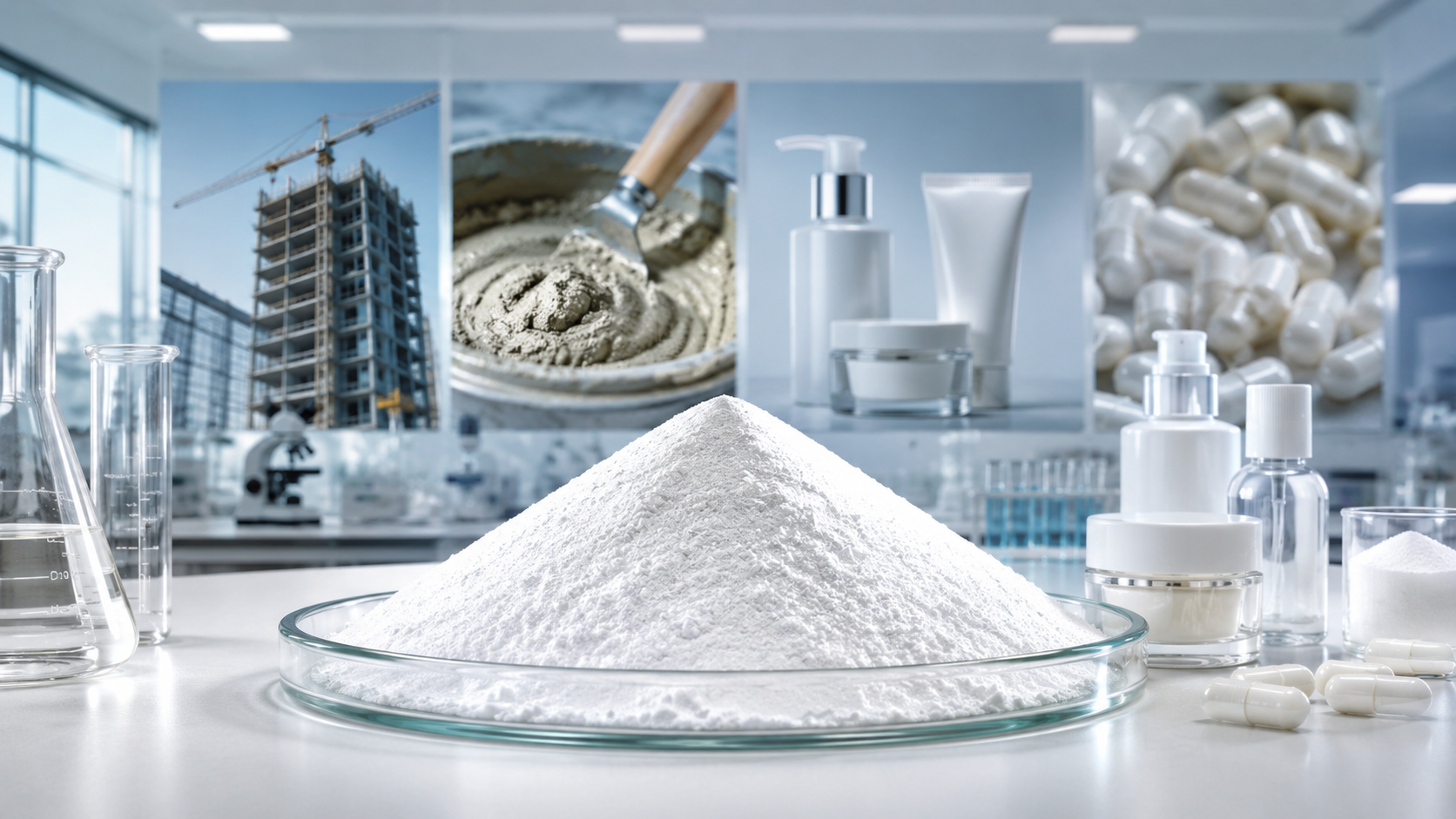
HPMC is a non-ionic cellulose derivative made from natural cellulose through chemical modification. It is usually a white or off-white powder that disperses in cold water and forms a colloidal solution with useful functional properties.
Because of its balanced structure, HPMC can serve as a thickener, stabilizer, film former, binder, emulsifier, and water-retaining agent. This flexibility is one reason it is used in such a broad range of products.
HPMC is especially well known for its water-retention ability. In construction materials, this helps keep moisture in the system longer, supports cement hydration, improves workability, and reduces early drying problems.
This property is important in tile adhesive, wall putty, gypsum plaster, and mortar systems. It helps improve open time, bonding performance, and application stability on absorbent surfaces.
HPMC can increase viscosity efficiently, even at relatively low dosage levels. This makes it useful in systems where the formula must stay stable, resist sagging, or maintain a smooth texture during use.
Thickening performance depends on grade, molecular structure, and formulation conditions. Different viscosities are selected for different applications, from light coatings to high-body construction systems.
HPMC can form clear, flexible, and durable films after drying. This makes it useful in tablet coating, cosmetics, coatings, and other applications where a smooth surface and uniform protective layer are needed.
Film formation also supports improved appearance, better surface protection, and more controlled release behavior in pharmaceutical systems.
One of the unique features of HPMC is its thermal gelation behavior. In solution, it can form a gel as temperature rises and then return to a solution upon cooling.
This reversible behavior is useful in temperature-sensitive formulations and controlled-release applications. It gives formulators more control over product behavior during processing and use.
HPMC is non-ionic, which helps it perform reliably across many formulation environments. It generally offers good compatibility with other ingredients and stable performance in a wide pH range.
This stability is especially valuable in industrial products where ingredients, process conditions, and storage environments may vary. It helps improve consistency from batch to batch.
HPMC works because its cellulose backbone has been modified with hydroxypropyl and methyl groups. These changes affect how the molecule interacts with water, how it thickens liquids, and how it behaves when heated or dried.
The exact performance of HPMC depends on the selected grade. Higher-viscosity grades often provide stronger water retention and body, while lower-viscosity grades may be preferred where faster dissolution or lighter texture is needed.
Construction is one of the most important application areas for HPMC. It is widely used in tile adhesives, wall putty, cement plasters, gypsum-based systems, self-leveling compounds, and EIFS/ETICS products.
In these systems, HPMC improves water retention, workability, open time, and sag resistance. These benefits help contractors apply materials more efficiently and improve the final performance of the finished surface. 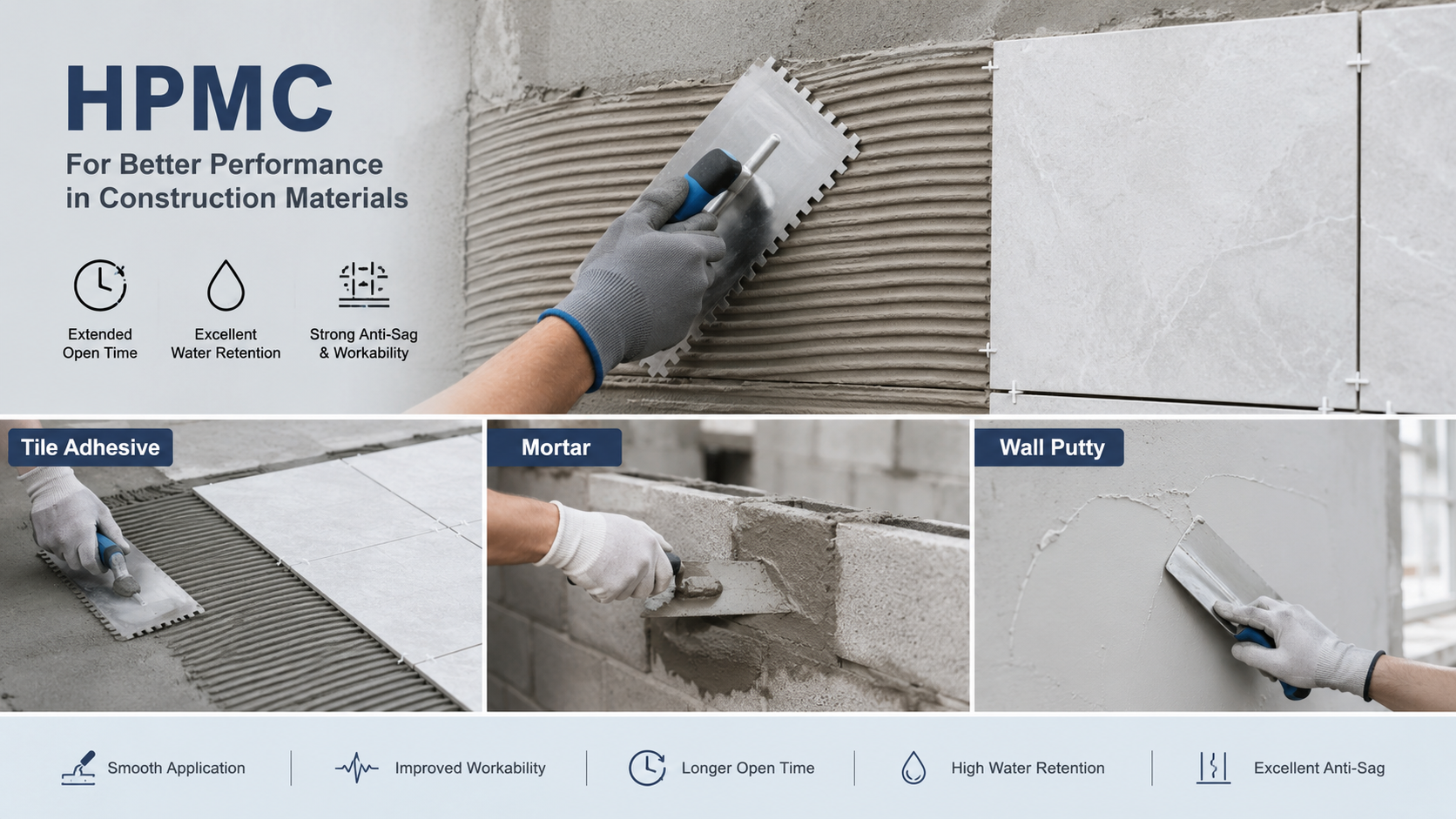
HPMC is a major excipient in pharmaceutical products. It is used as a binder, film-coating agent, gelling agent, and encapsulating material.
Its broad use in oral dosage forms reflects its versatility and reliable performance. It is especially valued in tablet coating and controlled-release systems, where uniformity and stability are essential.
In cosmetics, HPMC acts as a thickener, stabilizer, film former, and texture enhancer. It is commonly used in lotions, creams, shampoos, and other personal care products.
Its role is to improve product feel, help maintain consistency, and support stable emulsions or dispersions. This makes it useful in both daily-care and specialty formulations. 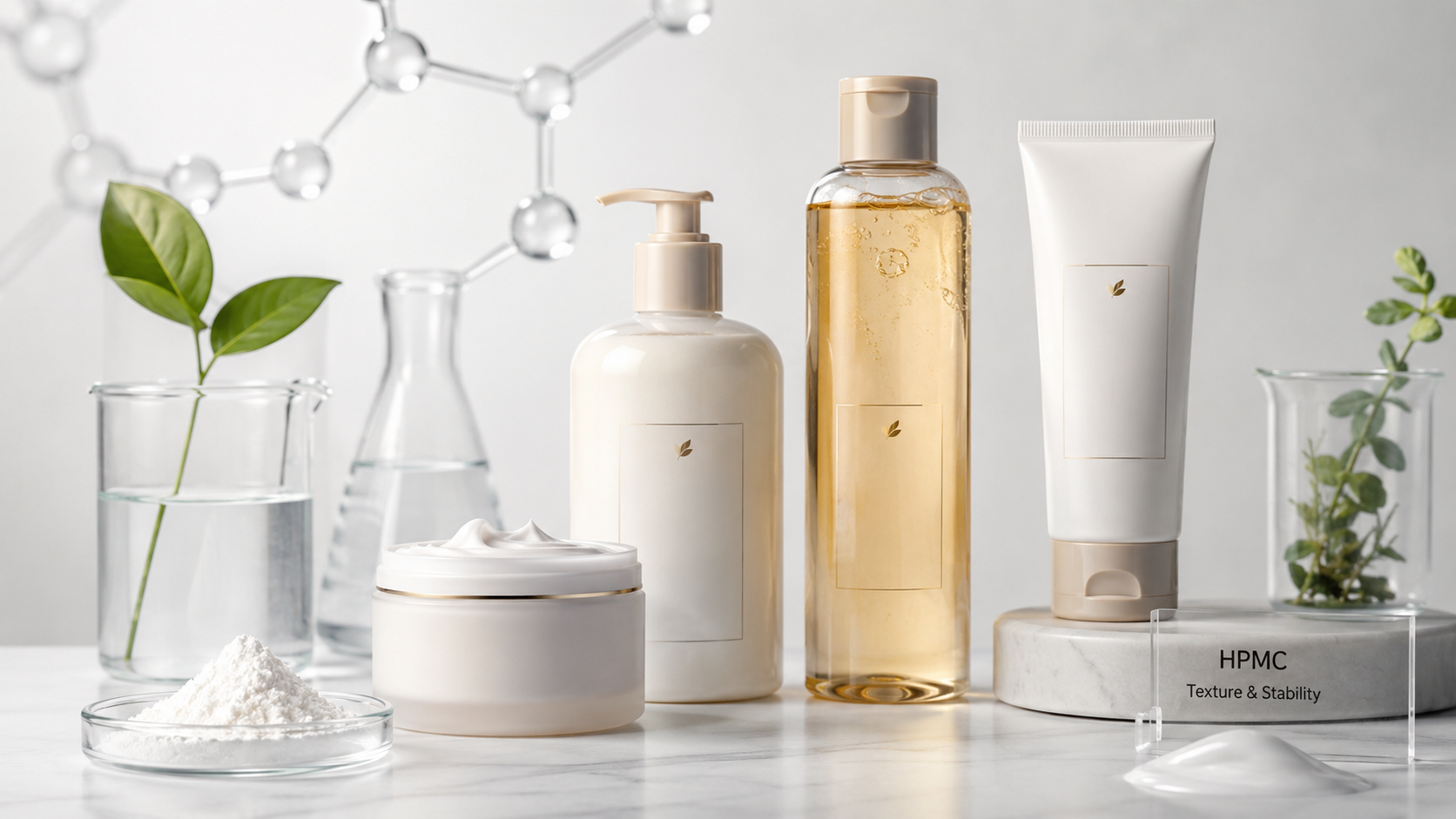
HPMC is also used in food and specialty formulations where thickening, stabilizing, and film-forming effects are needed.
Outside of these sectors, it can also be found in coatings, inks, ceramics, paper products, and PVC-related processes. This broad industrial use reflects the material's adaptability.
Choosing the right HPMC grade is essential for achieving the desired result. Important selection factors include viscosity, gel temperature, particle size, substitution level, and hydration behavior.
| Application | Main priority | Typical result |
|---|---|---|
| Tile adhesive | Water retention and anti-sag performance | Better open time and easier application |
| Wall putty | Smooth workability and body | Improved surface finish |
| Tablet coating | Film quality and stability | Uniform coating and better handling |
| Cosmetics | Texture and suspension | Better sensory feel and stability |

HPMC does more than thicken a formula. It can influence dispersion, application behavior, drying profile, and finished-product feel. That is why trial testing is often necessary before full-scale production.
For construction materials, performance should be checked under real job-site conditions. For cosmetics or pharmaceutical systems, compatibility with other ingredients should be tested carefully before final approval.
HPMC remains popular because it combines multiple functions in one ingredient. A single grade can improve water retention, viscosity, film formation, and stability at the same time.
This multifunctional behavior helps manufacturers simplify formulation design and improve consistency. It also supports use in a wide variety of products without requiring major changes to existing systems.
HPMC is a highly versatile cellulose ether with proven value in construction, pharmaceuticals, cosmetics, food, and other industrial fields. Its combination of water retention, thickening, film formation, thermal gelation, and stability makes it a dependable ingredient for modern formulations.
For buyers and formulators, the key is matching the right grade to the right application. When the grade is selected correctly, HPMC can improve performance, support processing, and strengthen the final product.
HPMC is used as a thickener, water-retaining agent, film former, stabilizer, and binder in construction, pharmaceuticals, cosmetics, food, and industrial products.
HPMC is dispersible in cold water and forms a colloidal solution. Its behavior in hot water can vary by grade and temperature conditions.
It improves water retention, workability, open time, and sag resistance, which are critical for tile adhesive, mortar, plaster, and wall putty systems.
Yes. HPMC is used in cosmetics and personal care products as a thickener, stabilizer, and film former.
HPMC is widely used in pharmaceutical, food, and cosmetic applications and is generally recognized as a functional polymer with strong safety acceptance in regulated uses.
Choose based on viscosity, gel temperature, substitution level, hydration speed, and the specific end-use requirements of your formulation.
1. Kima Chemical. "Properties of HPMC (Hydroxypropyl Methyl Cellulose)." https://www.kimacellulose.com/properties-of-hpmc-hydroxypropyl-methyl-cellulose.html [pmc.ncbi.nlm.nih]
2. Kima Chemical. "Characteristics and applications of hydroxypropyl methylcellulose." https://www.kimacellulose.com/characteristics-and-applications-of-hydroxypropyl-methylcellulose.html [kimacellulose]
3. Celotech Chemicals. "Overviews of HPMC." https://www.celotech.com/technology/overviews-of-hpmc/ [celotech]
4. Celotech Chemicals. "Hydroxypropyl Methyl Cellulose Technical Data Sheet." https://www.cellulosechina.com/wp-content/uploads/2014/06/Hydroxypropyl-Methyl-Cellulose-Technical-Data-Sheet.pdf [cellulosechina]
5. PMC. "Hydroxypropyl Methylcellulose—A Key Excipient in Pharmaceutical..." https://pmc.ncbi.nlm.nih.gov/articles/PMC12196896/ [pmc.ncbi.nlm.nih]
6. PMC. "Water Retention Mechanism of HPMC in Cement Mortar." https://pmc.ncbi.nlm.nih.gov/articles/PMC7372461/ [pmc.ncbi.nlm.nih]
7. HPMC.com. "HPMC for Mortar." https://www.hpmc.com/uses-of-hpmc/hpmc-for-mortar.html [hpmc]
8. IJIRT. "Hydroxypropyl Methylcellulose (HPMC): As A Multitasking Excipient." https://ijirt.org/publishedpaper/IJIRT174250_PAPER.pdf [ijirt]
9. Scientific review on HPMC food ingredient safety. https://www.sciencedirect.com/science/article/abs/pii/S027869150700261X [sciencedirect]
10. HPMC food additive safety overview. https://www.ihpmc.com/news/safety-of-hpmc-in-food-additives/ [ihpmc]
11. Sidley Chemical. "Hydroxypropyl Methylcellulose." https://sidleychem.com/product-details/hydroxypropyl-methylcellulose/ [sidleychem]


