


close
Choose Your Site
Global
Social Media
Views: 225 Author: Shengda Publish Time: 2026-08-23 Origin: Site


Content Menu
● What Is Hydroxypropyl Methyl Cellulose?
>> Key Functional Benefits of HPMC
● HPMC, HEMC, and HEC Product Solutions
● Construction-Grade HPMC for Dry-Mix Mortar
>> HPMC for Wall Putty and Skim Coat
>> HPMC for Gypsum Plaster and Gypsum Mortar
● Surface-Treated and Non-Surface-Treated HPMC
● How to Select the Right HPMC Grade
>> 2. Identify the Main Performance Target
>> 3. Review the Formulation System
>> 4. Conduct Controlled Trials
>> 5. Confirm Commercial Supply Requirements
● Quality Control and Product Consistency
>> Documentation to Request Before Ordering
● Storage and Handling of Cellulose Ether
● Working With Shandong Shengda New Material
● FAQ
>> What is HPMC used for in construction materials?
>> How do I choose HPMC for tile adhesive?
>> What is the difference between HPMC and HEMC?
>> What is HEC mainly used for?
>> Can HPMC be added directly to cold water?
>> Why is viscosity not enough when choosing HPMC?
Hydroxypropyl Methyl Cellulose, commonly known as HPMC or hypromellose, is a non-ionic cellulose ether derived from cellulose. Through chemical modification, cellulose gains useful properties for water-based, cement-based, gypsum-based, and selected liquid formulation systems.
HPMC is valued because one ingredient can support several important functions in a formulation. Depending on the grade and application, it can improve water retention, adjust viscosity, improve cohesion, extend working time, and support a more uniform application experience.
In cement-based systems, HPMC can help retain water long enough to support cement hydration. It can also influence mortar rheology, helping formulators improve the balance between spreadability, stability, and anti-sag performance.
- Water retention for cementitious and gypsum-based products
- Thickening for liquid and semi-liquid systems
- Workability improvement for easier mixing and application
- Open-time extension for tile adhesives and similar mortars
- Cohesion enhancement to reduce segregation in fresh mixtures
- Film-forming support in selected coatings and home-care formulations
- Suspension support for particles, pigments, and other formulation components
- Rheology control to create the desired flow and handling behavior
The performance of HPMC depends on more than viscosity. Substitution level, particle size, dissolution behavior, surface treatment, formulation ingredients, water ratio, climate, and mixing process can all influence the final result.
Shandong Shengda New Material provides a focused cellulose ether portfolio for construction materials and daily chemical formulations.
| Product | Full Name | Main Functional Role | Typical Applications |
|---|---|---|---|
| HPMC | Hydroxypropyl Methyl Cellulose | Water retention, thickening, workability, film formation | Tile adhesive, wall putty, skim coat, gypsum plaster, cement render, detergent |
| HEMC | Hydroxyethyl Methyl Cellulose | Rheology control, water retention, formulation stability | Cement mortar, gypsum systems, EIFS/ETICS, tile adhesive |
| HEC | Hydroxyethyl Cellulose | Thickening, suspension, viscosity control | Water-based paint, coatings, detergents, home-care products |
Each product family has its own performance profile. The right choice should be based on the intended application and the specific challenges of the formulation.
For example, a tile adhesive manufacturer may prioritize water retention, open time, and slip resistance. A wall putty producer may focus on smoothness, consistency, sanding behavior, and ease of application. A detergent or coating manufacturer may require stable viscosity, good dispersion, and reliable thickening performance.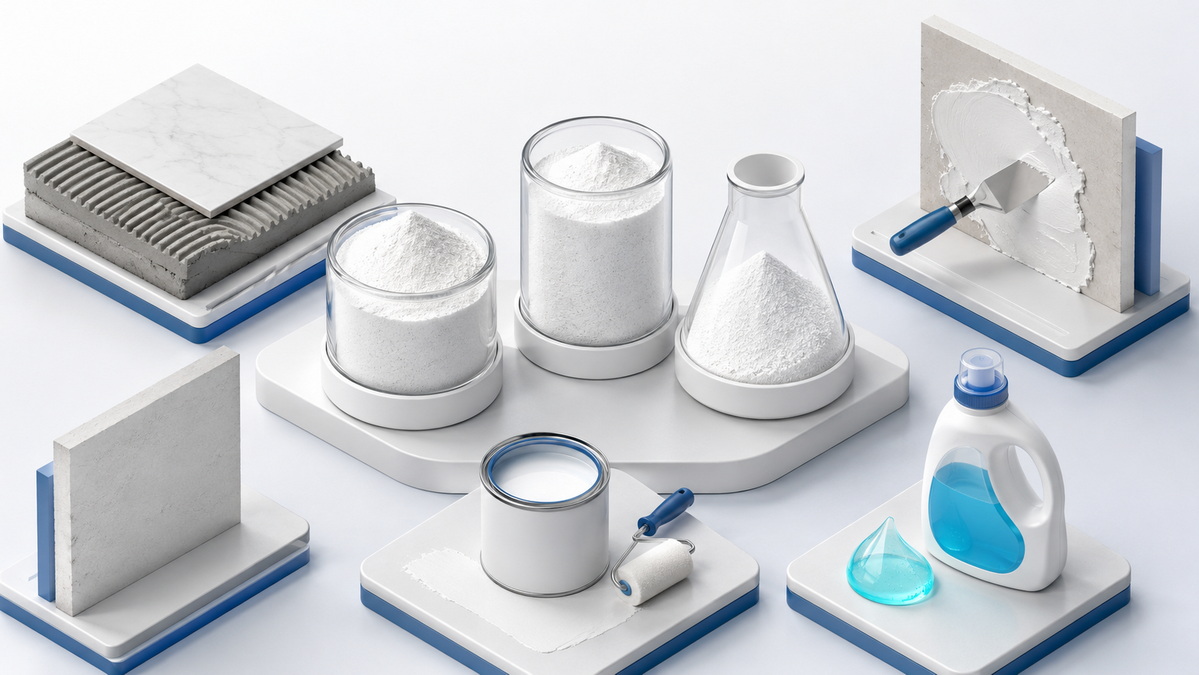
Construction-grade HPMC is widely used in dry-mix mortar formulations because it improves fresh mortar behavior and helps create a more consistent installation experience.
However, construction applications vary significantly. Tile adhesive, wall putty, skim coat, cement render, gypsum plaster, and self-leveling compound all require different balances of water retention, viscosity, workability, cohesion, and setting behavior.
A suitable HPMC grade should therefore be selected according to the formulation rather than a generic product category alone.
Tile adhesive is one of the most demanding applications for HPMC. The material needs to spread smoothly, remain workable during installation, hold water effectively, and provide stable performance after curing.
In a well-designed tile adhesive formulation, HPMC can help improve:
- Water retention
- Open time
- Trowelability
- Workability
- Adhesive cohesion
- Slip resistance
- Pot life
- Resistance to premature drying
The correct HPMC grade can help ensure that cement hydration is not interrupted by excessive water loss. This is especially important in hot, dry, or highly absorbent site conditions.
A tile adhesive formula should be evaluated under practical conditions, including different temperatures, water addition levels, mixing durations, and substrate types. Small changes in sand grading, cement type, filler composition, polymer dosage, or additive package can change the required cellulose ether performance.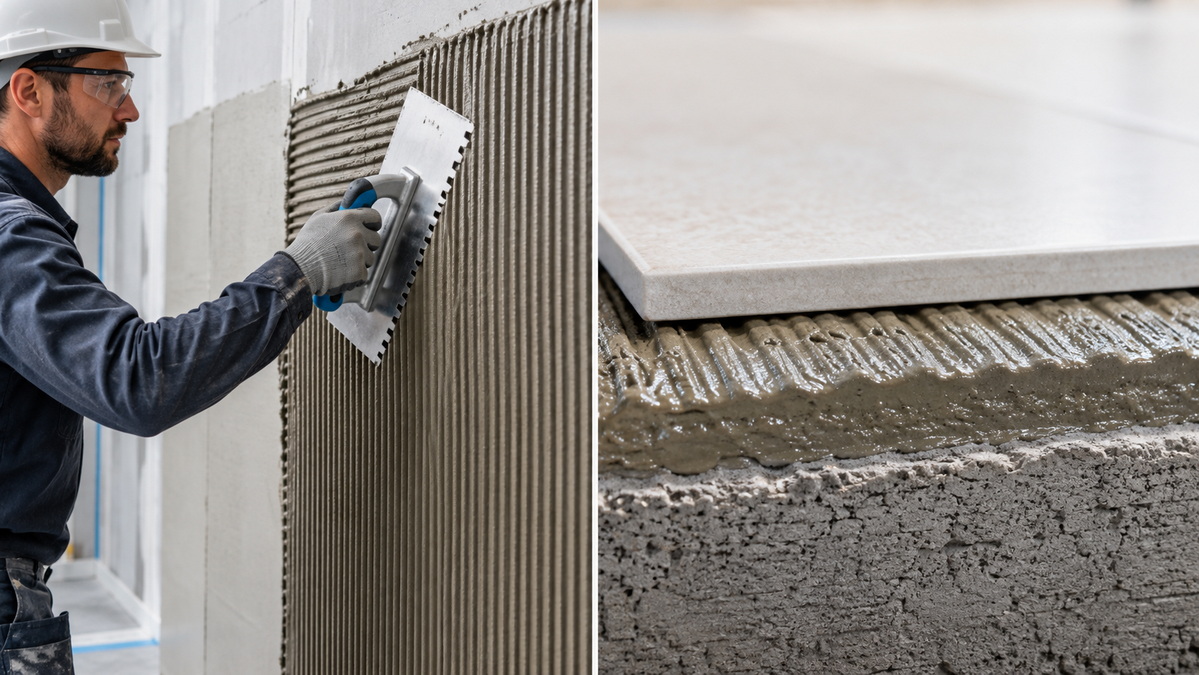
Wall putty and skim coat products require a different formulation balance. The material should spread smoothly, adhere well to the substrate, remain workable, and create a uniform surface after application.
HPMC can contribute to:
- Better water retention
- Improved paste consistency
- More uniform spreading
- Enhanced cohesion
- Reduced cracking risk caused by rapid water loss
- Improved application feel
- Better finish quality
A grade with insufficient viscosity may not provide the required body or water retention. At the same time, excessively high viscosity may make the product feel too sticky or heavy during application.
The ideal HPMC grade should match the filler system, cement content, water demand, target layer thickness, and desired finish quality.
Gypsum-based formulations can benefit from carefully selected HPMC grades. The cellulose ether should support application performance while remaining compatible with gypsum, setting modifiers, lightweight fillers, and other additives.
For gypsum plaster and gypsum mortar, formulators often consider:
- Water retention
- Smooth application
- Consistent workability
- Anti-sag behavior
- Setting-time compatibility
- Surface quality
- Pumping or spraying performance
A formulation should be tested in its final production environment whenever possible. Laboratory results are valuable, but on-site conditions such as humidity, temperature, water quality, equipment type, and worker application habits can affect the final performance.
Surface treatment is an important consideration when selecting HPMC. It influences how the material disperses and hydrates in water.
Surface-treated HPMC is designed to delay dissolution in cold water. This can help the powder disperse before it begins to hydrate fully. When used correctly, it may reduce the risk of lump formation and improve the processing experience in selected liquid systems.
Non-surface-treated HPMC has a different hydration profile. When added directly to cold water, it may swell quickly and form lumps if the mixing procedure is not controlled. It can often be dispersed more effectively in hot water or when incorporated through a dry-blending process.
| Selection Factor | Surface-Treated HPMC | Non-Surface-Treated HPMC |
|---|---|---|
| Cold-water behavior | Delayed dissolution supports controlled dispersion | May hydrate rapidly and form lumps if directly added |
| Typical processing need | Controlled addition in liquid systems | Dry blending or specific dispersion procedures |
| Formulation focus | Improved dispersibility and mixing control | Mortar performance and dry-mix compatibility |
| Key evaluation point | Mixing sequence and agitation conditions | Hydration behavior and end-use performance |
For dry-mix mortar applications, HPMC is typically blended with cement, sand, fillers, and other additives before water is introduced. In this situation, the customer should prioritize the final mortar performance rather than selecting a grade based only on direct water-dissolution behavior.
Choosing the right cellulose ether begins with a clear definition of the desired outcome. Instead of asking only for a certain viscosity, formulators should first identify the performance issue they need to solve.
Clarify the final product category:
- Tile adhesive
- Wall putty
- Skim coat
- Cement render
- Gypsum plaster
- Self-leveling mortar
- EIFS or ETICS mortar
- Water-based coating
- Detergent
- Personal-care formulation
Each application has different technical requirements.
Describe the problem in practical terms. Common examples include:
- Low water retention
- Short open time
- Poor trowelability
- Excessive stickiness
- Weak cohesion
- Insufficient anti-sag performance
- High water demand
- Unstable viscosity
- Poor suspension
- Difficult mixing
- Lump formation during processing
Clear problem identification helps narrow the range of suitable grades.
The cellulose ether must work with the rest of the formula. Important variables include cement type, gypsum type, sand grading, calcium carbonate level, redispersible polymer powder dosage, starch ether, retarders, accelerators, surfactants, pigments, and water ratio.
Two formulations with the same HPMC viscosity requirement may still need different grades because their material systems are different.
A reliable trial should compare a control formula with one adjusted variable at a time. This allows the formulator to identify what is actually causing the performance improvement or issue.
Key test areas may include:
- Mixing time
- Water demand
- Workability
- Open time
- Water retention
- Adhesion
- Slip resistance
- Pot life
- Surface appearance
- Cured strength
- Storage stability
Before moving from sample testing to regular production, confirm the grade-specific specification, packaging, storage conditions, batch consistency expectations, order volume, lead time, and documentation requirements.
A successful HPMC selection is not based on one number. It is based on how the grade performs in the complete formulation under realistic production and application conditions.
For industrial buyers, consistency is essential. A sample may perform well in the laboratory, but long-term supply reliability depends on stable production controls, material traceability, testing procedures, and communication.
Shandong Shengda New Material supports customers with cellulose ether products designed for stable and repeatable formulation performance. The company's production capability includes manufacturing bases, laboratory testing resources, automated production and packaging systems, and warehousing support.
Key quality parameters may include:
- Viscosity range
- Moisture content
- Ash content
- Particle-size distribution
- Bulk density
- pH value
- Gel temperature
- Substitution level
- Appearance
- Packaging integrity
Customers should always review the specification for the exact grade being purchased. Requirements can differ between construction-grade products, coatings-grade products, detergent-grade products, and more specialized applications.
For responsible purchasing and internal quality management, customers should request:
- Technical Data Sheet
- Safety Data Sheet
- Certificate of Analysis
- Product specification sheet
- Packaging details
- Batch identification information
- Storage guidance
- Shelf-life information
- Application recommendations
- Relevant compliance documentation for the target market
The appropriate documentation depends on the final use of the product. A cellulose ether grade intended for dry-mix mortar should not automatically be considered appropriate for food, personal care, or pharmaceutical use without the necessary qualification and documentation.
Correct storage helps preserve powder quality, flowability, and moisture control.
HPMC, HEMC, and HEC products should be stored in a dry, cool, and well-ventilated environment. Packaging should remain sealed until use, and materials should be protected from moisture, direct sunlight, excessive heat, and sources of ignition.
Recommended storage practices include:
- Keep bags sealed and intact
- Store products off the floor
- Avoid humid environments
- Protect materials from water exposure
- Use inventory according to the first-in, first-out principle
- Follow grade-specific storage instructions
- Keep the working area clean to reduce contamination risk
When handling cellulose ether powders, use appropriate workplace safety practices and follow the Safety Data Sheet for the specific product grade.
Shandong Shengda New Material provides cellulose ether solutions for customers who need dependable performance in construction materials and home-care formulations.
Our technical approach begins with understanding the customer's application. Rather than offering a generic recommendation, we assess the product type, performance target, formulation framework, mixing method, and production conditions.
This allows us to support customers in selecting suitable HPMC, HEMC, or HEC grades for their specific needs.
Whether you are developing a tile adhesive, upgrading a wall putty formula, improving gypsum plaster workability, stabilizing a coating, or optimizing a detergent thickening system, the right cellulose ether can make a measurable difference.
Share your product application and performance requirements with our team to receive a suitable cellulose ether recommendation, product documentation, sample information, and technical support.
HPMC, HEMC, and HEC are important formulation tools for manufacturers of construction materials, coatings, detergents, and other water-based products. Their value lies not only in thickening but also in their ability to improve water retention, rheology, workability, cohesion, and product stability.
Shandong Shengda New Material combines cellulose ether manufacturing capability with application-focused product support. By matching the right grade to the right formulation, customers can improve production consistency, application performance, and the long-term reliability of their finished products.
Contact Shandong Shengda New Material to discuss your formulation needs and identify the right HPMC, HEMC, or HEC solution for your market.
HPMC is used in tile adhesives, wall putties, skim coats, cement renders, gypsum plasters, and other dry-mix mortar products. It can improve water retention, workability, cohesion, open time, and application behavior.
Start by defining the required water retention, open time, trowelability, anti-slip performance, adhesion, and workability. Then evaluate the cement type, sand grading, fillers, polymer content, climate conditions, and mixing process. Sample testing in the actual formula is essential.
HPMC and HEMC are both non-ionic cellulose ethers used in construction materials. Their chemical substitution differs, which can affect water retention, rheology, temperature response, and compatibility. The best option depends on the formula and target performance.
HEC is commonly used as a thickener and rheology modifier in water-based paints, coatings, detergents, and selected personal-care formulations. It can support viscosity control, suspension, and stable application properties.
The answer depends on the grade and mixing procedure. Surface-treated HPMC is designed for delayed dissolution in cold water and may disperse more easily. Non-surface-treated HPMC can swell quickly and may form lumps if directly added to cold water without proper mixing control.
Viscosity is important, but the final performance also depends on substitution level, particle size, surface treatment, dissolution behavior, dosage, cement system, fillers, polymers, water ratio, mixing conditions, and climate. Two products with similar viscosity can behave differently in the same formula.
HPMC should be stored in sealed packaging in a cool, dry, and well-ventilated location. Keep it away from moisture, direct sunlight, heat sources, and ignition sources. Always follow the storage guidance for the specific product grade.
1. [LANDU — HPMC Factory | Premium Hydroxypropyl Methyl Cellulose]
2. [National Center for Biotechnology Information — Water Retention Mechanism of HPMC in Cement Mortar]
4. [U.S. Food and Drug Administration — Food Substances: Hydroxypropyl Methylcellulose]


