


close
Choose Your Site
Global
Social Media
Views: 222 Author: Rebecca Publish Time: 2026-03-25 Origin: Site


Content Menu
● Why Daily Chemical Grade HPMC Matters for Polish Personal Care and Home Care Brands
● How This HPMC Supplier Ranking and Analysis Was Built
>> Data sources and buyer feedback approach
● Key Evaluation Dimensions for Daily Chemical Grade HPMC Suppliers in Poland
● What Polish Daily Chemical Manufacturers Really Care About in Practice
>> Quality and consistency in real production lines
>> Local warehousing and delivery experience
>> Technical service and problem-solving stories
● Ranking of Top Daily Chemical Grade HPMC Manufacturers and Suppliers in Poland
>> Tier 1 – Leading Daily Chemical Grade HPMC Partners in Poland
>>> 1. AGREMA Poland Sp. z o.o. (Local Distributor and Solution Provider)
>>> 2. Global Cellulose Ether Brands with Presence in Poland (via Distributors)
>>> 3. Shandong Shengda New Material Co., Ltd. (Chinese Producer with Global Daily Chemical Focus)
>> Tier 2 – Competitive Regional Players and Specialized Suppliers
● Comparison Framework: Key Factors for Buyer Evaluation
● Practical Checklist for Testing Daily Chemical Grade HPMC
● Emerging Trends in Daily Chemical Grade HPMC Use in Europe
● How Overseas Brands Can Work with Polish HPMC Suppliers and Chinese Producers Together
● How to Choose the Right Daily Chemical Grade HPMC Supplier in Poland
● Call to Action: Partner with Shandong Shengda for Daily Chemical Grade HPMC
● Frequently Asked Questions (FAQ)
>> Q1: What is the main difference between construction-grade and daily chemical grade HPMC?
>> Q2: Can the same HPMC grade be used across shampoo, shower gel and hand soap?
>> Q3: How important is local warehousing in Poland for HPMC supply?
>> Q4: Why should I consider both Polish distributors and Chinese producers such as Shandong Shengda?
>> Q5: How long does it usually take to qualify a new daily chemical grade HPMC supplier?
Shandong Shengda New Material Co., Ltd. is a China-based Hydroxypropyl Methyl Cellulose (HPMC) manufacturer focused on research, development, production and global supply of both construction-grade and daily chemical-grade cellulose ethers. From the perspective of a long-term industry participant, this article provides an in-depth, experience-based guide to the top daily chemical grade HPMC manufacturers and suppliers in Poland, how real buyers evaluate them, and how overseas brands can cooperate with them effectively. We combine hands-on factory feedback, typical use cases and practical checklists to help daily chemical formulators and purchasing managers make better supplier decisions.

Daily chemical grade HPMC is widely used as a thickener, rheology modifier, stabilizer and film-former in shampoos, shower gels, hand soaps, facial cleansers, dishwashing liquids and other personal and home care products. Its performance directly influences:
- Final product viscosity and flow behavior in the bottle.
- Foam quality, richness and stability in surfactant systems.
- Transparency or opacity of clear gels and liquid soaps.
- Stability during storage and transportation under varying temperatures.
For Polish manufacturers serving both local and EU markets, the choice of daily chemical grade HPMC supplier in Poland is not just about price. It is about consistent quality, regulatory compliance (REACH, CLP, cosmetics-related requirements), and the ability to support continuous innovation in increasingly sustainable, skin-friendly formulations.
To make this ranking and evaluation practical and credible, the analysis is based on:
1. Feedback from daily chemical factories and OEMs in Poland and other European countries supplying personal care and home care products.
2. Formulation engineer interviews, focusing on rheology control, compatibility with anionic and amphoteric surfactants, and batch-to-batch consistency in production.
3. Publicly available information from manufacturers and distributors, including product portfolios, certifications, application notes and technical bulletins.
4. The long-term experience of Shandong Shengda New Material in cooperating with European distributors and end users for daily chemical grade HPMC, including real project cases.
While exact numerical ratings are generalized to protect confidential customer data, the evaluation logic and decision criteria reflect how real buyers in Europe actually make purchasing decisions.
To rank and compare top HPMC manufacturers and suppliers in Poland, six primary dimensions are used, derived directly from buyer concerns:
1. Product quality and batch consistency
- Viscosity stability within narrow tolerance ranges.
- Purity, ash content, residual solvents and low levels of impurities.
- Performance in typical daily chemical formulations such as SLES/CAPB systems.
2. Regulatory compliance and documentation
- Availability of complete TDS, SDS and COA.
- Compliance with EU REACH and CLP requirements for raw materials.
- Support for cosmetic product safety assessments and technical files.
3. Local supply chain reliability
- Stock availability in Poland or nearby EU warehouses.
- Average lead time, emergency delivery capability and shortage history.
4. Technical support and application expertise
- Ability to troubleshoot formulation issues such as lumping, delayed thickening or syneresis.
- Suggestions on HPMC grade selection, dosage, hydration procedures and process conditions.
5. Price and total cost of ownership
- Unit price competitiveness versus equivalent grades.
- Logistics costs, customs, inventory risk and minimum order quantities.
6. Sustainability and brand reputation
- Environmental performance of manufacturing, waste management and energy use.
- Market reputation among Polish and European customers, participation in industry events and technical publications.
On real shampoo or hand soap filling lines, viscosity drift between batches can cause serious operational problems: non-uniform filling levels, variable pump performance and changes in perceived product quality. Buyers in Poland often highlight that they prefer suppliers whose daily chemical grade HPMC:
- Shows predictable viscosity build-up over time after hydration.
- Maintains a stable viscosity profile during storage at both room and elevated temperatures.
- Does not introduce haze, gel particles or abnormal odor into the formulation.
A medium-sized personal care OEM serving private label customers in Central Europe reported that after switching from a generic industrial HPMC to a tailored daily chemical grade, the complaint rate related to viscosity variation and product separation dropped significantly. This illustrates how appropriate grade selection and consistent quality can directly support brand reputation and production efficiency.
For local brands and contract manufacturers in Poland, supply interruptions can be more damaging than a slightly higher raw material price. Many buyers emphasize:
- The importance of local or regional warehouses operated either by Polish distributors or Europe-wide chemical traders.
- The need to keep at least one to two months of safety stock for key HPMC grades commonly used in shower gels and liquid soaps.
- The value of suppliers who provide realistic lead-time forecasts and proactive communication in case of upstream disruptions.
Shandong Shengda New Material often cooperates with European partners who maintain buffer stock for popular viscosity grades such as 40,000–80,000 mPa·s daily chemical types, which significantly reduces risk for brand owners and OEMs.
Real users repeatedly mention that they value suppliers who can solve problems, not just sell powder. Typical issues where suppliers' technical teams add value include:
- Optimizing HPMC hydration processes to avoid lumping and ensure quick, uniform dissolution.
- Adjusting viscosity grade and dosage to achieve desired flow and sensory feel while controlling cost.
- Balancing transparency, foam stability and salt tolerance in surfactant-based systems.
In one case, a Polish company developing a transparent hand wash struggled with clouding and low viscosity when salt was added. After technical consultation and trialing a higher substitution daily chemical grade HPMC from a specialized manufacturer, they achieved a clearer product with stable viscosity and better foam quality, without increasing surfactant concentration.
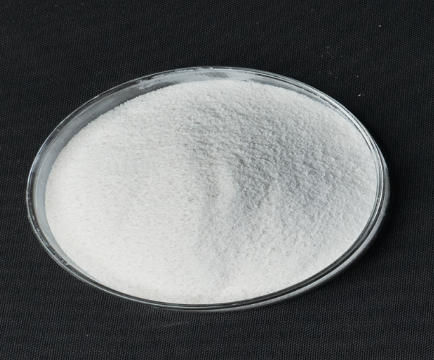
The following overview presents leading daily chemical HPMC suppliers active in the Polish market. Some are manufacturers, others are distributors or solution integrators. The goal is to provide purchasing and R&D teams with a realistic landscape for decision-making.
AGREMA Poland is a recognized chemical distributor supplying Hydroxypropyl Methyl Cellulose and related additives to coatings, construction and daily chemical industries. From a buyer's perspective, its strengths include:
- Local warehousing and logistics coverage within Poland, which shortens lead times and supports timely deliveries.
- A portfolio including daily chemical-suitable cellulose ethers sourced from reputable global producers.
- Strong understanding of European regulatory requirements and documentation needs.
Typical buyer feedback highlights reliable delivery, responsive communication and a good balance between price and service. For daily chemical producers seeking fast local support and moderate order sizes, AGREMA is often considered a practical option.
Several global cellulose ether manufacturers supply Poland through regional distributors. For daily chemical grade HPMC, they generally offer:
- Highly consistent quality, strict manufacturing controls and long-established personal-care-oriented product lines.
- Extensive technical documentation, including application notes for shampoos, facial cleansers and skin-care gels.
- Established processes for compliance with European chemical and cosmetic regulations.
Real users typically appreciate their technical robustness, long-term stability and high reliability, while also noting that pricing can be at the higher end of the market. These suppliers are especially suitable for:
- Multinational brands operating plants in Poland.
- High-end personal care products with tight quality standards and documentation requirements.
Although Shandong Shengda is based in China, it is increasingly active in the European market, including cooperation with Polish distributors for daily chemical grade HPMC. From an international buyer's point of view, Shengda's advantages are:
- A broad grade matrix covering both construction and daily chemical grades, allowing cross-industry customers to consolidate sourcing.
- In-house R&D and manufacturing capabilities that enable customized viscosity ranges, substitution levels and particle size distributions for specific daily chemical applications.
- The ability to provide cost-effective yet performance-oriented solutions when combined with local EU warehousing.
Polish and European buyers collaborating with Shengda through local partners report that the combination of competitive pricing plus technical support from the original manufacturer allows them to improve margins while keeping quality and compliance under control.
This tier consists of regional distributors and niche suppliers who may not be as widely known but can deliver good value, especially for certain product segments or smaller batch sizes. Their typical characteristics include:
- Focus on specific application niches such as natural cosmetics, sulfate-free washes or eco-labeled products.
- Flexible minimum order quantities and customized packaging options.
- Technical support targeted to a narrower but deeper application field.
For emerging brands and niche formulators, collaboration with such suppliers often results in more personalized service and faster formulation iterations, especially when they combine HPMC with other functional ingredients such as mild surfactants, natural thickeners or humectants.
The structure below can be used as a practical comparison framework when evaluating daily chemical grade HPMC suppliers active in Poland. It is designed for internal use by purchasing and R&D teams:
| Factor | Local Polish Distributor | Global Brand Manufacturer | Shandong Shengda (via EU Partner) |
|---|---|---|---|
| Quality consistency | High | Very high | High–very high (grade dependent) |
| Daily chemical specialization | Medium | High | High |
| Regulatory support | High | Very high | High (with EU partner support) |
| Local stock in Poland | Yes (common grades) | Via distributors | Via EU warehouse/partner |
| Technical service | Good | Excellent | Strong manufacturer support |
| Price level | Medium | High | Competitive |
| Suitable customer size | Small–medium | Medium–large | Medium–large, OEM and brands |
Using a structured table like this helps purchasing teams clearly see trade-offs between price, performance, service and risk, instead of focusing only on unit price.
To go beyond general advice, the following step-by-step operational checklist reflects how many Polish and European formulators trial a new daily chemical grade HPMC supplier:
1. Document review phase
- Request TDS, SDS, COA and any specific daily chemical application notes.
- Confirm compliance with REACH and applicable cosmetic regulations.
- Check recommended dosage ranges and hydration instructions.
2. Lab-scale rheology and stability tests
- Prepare a standard SLES/CAPB-based shampoo or hand soap formula using the new HPMC.
- Measure viscosity at multiple shear rates using suitable instruments.
- Evaluate clarity, color, foam volume and foam stability.
- Perform accelerated stability tests at elevated temperatures and freeze–thaw cycles where appropriate.
3. Pilot or small production trial
- Run the formulation on actual mixing and filling equipment to detect process issues such as foaming during mixing, air entrainment or pumping difficulty.
- Compare line speed, filling accuracy and operator feedback with existing HPMC grades.
4. Economic and risk assessment
- Calculate cost per finished product unit considering HPMC dosage and unit price.
- Assess supply risk: stock levels, lead times, alternative grades and dual-sourcing options.
By following this structured process, buyers can convert subjective impressions into measurable performance data, which supports consistent, defensible supplier decisions.
To add forward-looking value beyond traditional supplier lists, it is important to understand how HPMC usage is evolving in European daily chemical markets:
- Shift toward sulfate-free and mild systems
As brands move from SLES to milder surfactants such as glucosides or sulfosuccinates, HPMC must be re-optimized to maintain viscosity and foam feel. This encourages closer cooperation between suppliers and formulators.
- Clean-label and sustainability focus
Consumers increasingly associate ingredients with perceived naturalness and safety. Suppliers that can provide HPMC grades with low residuals, transparent sourcing and strong environmental performance gain an advantage in tenders and brand selections.
- Multi-functionality and sensorial tuning
Formulators are using HPMC not only for thickening but also for enhancing slip, smoothness and cushion in rinse-off and leave-on products. Tailored grades with defined particle size distribution and substitution patterns are becoming more popular.
- Remote technical and documentation support
Leading suppliers offer detailed formulation guides, structured documentation packages and remote technical consultations, helping Polish formulators accelerate development and regulatory submissions.
Shandong Shengda New Material, as a cellulose ether specialist, is aligning its daily chemical grade HPMC development with these trends by expanding grade ranges, refining specifications and supporting customers through detailed application guidance and long-term cooperation.
For global brands and contract manufacturers, a hybrid sourcing strategy often brings the best balance of risk, cost and performance:
- Use Polish or European distributors for critical, just-in-time volumes and day-to-day technical support.
- Partner with producers such as Shandong Shengda New Material for strategic volumes, cost optimization and customized grades.
This approach allows companies to:
- Improve negotiation leverage and business continuity in case of supply disruptions.
- Access a wide portfolio of daily chemical grade HPMC options, tailored to different product tiers from mass-market to premium.
- Shorten innovation cycles, because producers can design new grades and distributors can implement them rapidly in local trials.
For Shandong Shengda, collaborating with Polish and European partners means supporting them with solid technical data, consistent quality and sustainable production practices, while relying on local experts for warehousing and last-mile service.
To translate the above insights into a practical decision process, daily chemical manufacturers can follow these steps:
1. Clarify product positioning
- Mass-market products: prioritize cost-effectiveness, stable supply and reliable quality.
- Premium or sensitive-skin products: prioritize high purity, strong technical support and comprehensive documentation.
2. Define risk tolerance and supply strategy
- If production continuity is critical, establish at least two qualified suppliers, for example a local distributor and a global or Chinese producer.
- If flexibility is key, focus on partners able to offer multiple grades and rapid development support.
3. Score suppliers using a weighted matrix
- Assign weights to each criterion, such as 30% quality, 20% logistics, 20% technical support, 15% compliance and 15% cost.
- Score each candidate supplier on a 1–5 scale for every criterion and calculate a weighted total.
4. Run structured trials before long-term contracts
- Avoid relying only on small office samples.
- Carry out at least one pilot production run and monitor performance, quality and service over several months.
By following this structured approach, purchasing and R&D teams can make evidence-based, experience-backed decisions that support long-term product stability and business growth.
If your company is looking to optimize daily chemical grade HPMC sourcing for the Polish or wider European market, Shandong Shengda New Material Co., Ltd. is ready to:
- Provide tailored daily chemical grade HPMC solutions with stable quality and competitive pricing.
- Support you and your local distributors with detailed technical data, formulation guidance and long-term cooperation models.
- Operate within a sustainable and responsible production framework, aligned with modern environmental and regulatory expectations.
You are welcome to contact Shandong Shengda to discuss cooperation models with Polish or European partners, sample requests, product documentation or joint development projects for your next-generation personal care and home care formulations.
Contact us to get more information!
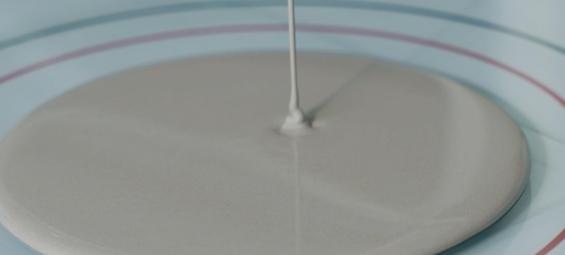
Daily chemical grade HPMC is produced and controlled with a focus on purity, odor, microbiological quality and performance in surfactant systems, while construction-grade focuses more on water retention, workability and adhesion in cement or gypsum-based products.
In many cases, yes, but the optimal viscosity grade and dosage can differ depending on desired thickness, clarity and foam feel, so it is advisable to fine-tune formulas with technical support and controlled trials.
Local or regional warehousing significantly reduces lead times and production interruption risk, especially for high-volume daily chemical factories that cannot afford line stoppages or long import lead times.
Combining local distributors and producers allows you to balance security of supply, technical support, cost optimization and access to a broader portfolio of daily chemical grade HPMC solutions, which is useful in a dynamic market environment.
The process typically takes from several weeks to a few months, covering document review, lab trials, pilot production and performance monitoring, but a structured checklist can significantly accelerate this timeline while controlling risk.
1. AGREMA Poland Sp. z o.o. – Hydroxypropyl methyl-cellulose (HPMC) product information:
https://www.agrema.pl/en/oferta/p120-hydroxypropyl-methyl-cellulose-hpmc/
2. General overview of daily chemical grade HPMC performance and applications (industry technical articles and application notes, accessed 2024–2026).
3. Public product and technical documentation of major global cellulose ether manufacturers active in Europe (official company websites and technical bulletins, accessed 2024–2026).
4. Internal application experience and project summaries from Shandong Shengda New Material Co., Ltd. on daily chemical grade HPMC use in European personal and home care formulations.
5. Feedback and informal interviews with European OEMs and private label daily chemical manufacturers conducted through trade shows and distributor networks between 2023 and 2025.


