


close
Choose Your Site
Global
Social Media
Views: 212 Author: Shengda Publish Time: 2026-08-29 Origin: Site


Content Menu
● How to Select a Reliable Cellulose HEC Supplier
● Top Cellulose HEC Manufacturers and Suppliers in India
>> 1. Shandong Shengda New Material Co., Ltd.
>>> Core Strengths
>>> OEM and Customization Support
>>> Recommended Verification Points
>>> Core Strengths
>>> Recommended Verification Points
>> 3. Madhu Hydrocolloids Pvt. Ltd.
>>> Core Strengths
>>> Recommended Verification Points
>>> Core Strengths
>>> Recommended Verification Points
>> 5. Prachin Pharmachem Pvt. Ltd.
>>> Core Strengths
>>> Recommended Verification Points
>>> Core Strengths
>>> Recommended Verification Points
>>> Core Strengths
>>> Recommended Verification Points
>>> Core Strengths
>>> Recommended Verification Points
● Understanding Cellulose HEC Specifications
>> HEC Requirements by Application
● Buyer's Guide for HEC Procurement
>> Define Your Application Clearly
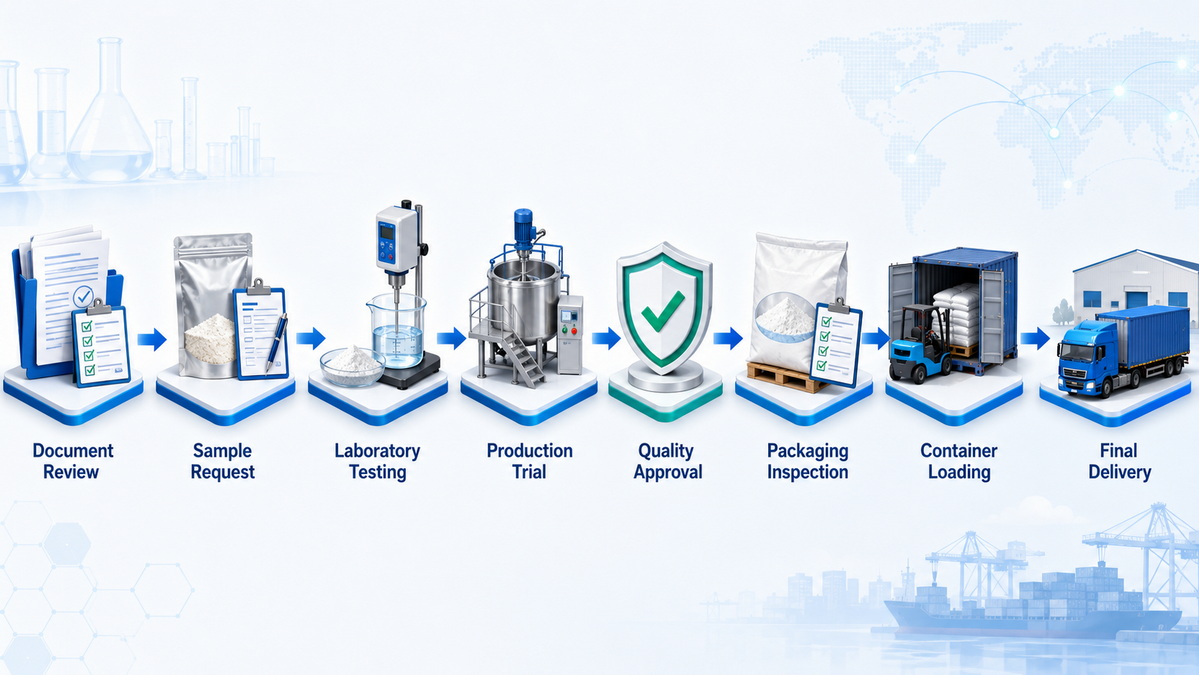
>> Request a Complete Qualification Package
>> Test Samples Using Real Production Conditions
>> Verify Quality Certificates Properly
>> Manage Logistics and Storage
● Common Risks When Buying HEC
>> Same Viscosity, Different Performance
>> Unknown Manufacturer Identity
>> Sample and Bulk Product Differences
>> Overstated Compliance Claims
● An Important Industry Insight
● FAQ
>> 1. How can I verify whether an HEC supplier's ISO certificate has expired?
>> 2. Is locally supplied HEC in India always better than imported HEC?
>> 3. What information should be included in an HEC sample request?
>> 4. Can one HEC grade be used for paints, construction chemicals, and personal-care products?
>> 5. How can I reduce batch-to-batch quality variation?
India is an important consumption, formulation, and distribution market for Hydroxyethyl Cellulose (HEC). Demand is supported by architectural coatings, construction chemicals, personal-care products, detergents, oilfield fluids, and specialty industrial formulations.
However, professional buyers should carefully distinguish between local HEC manufacturers, India-based distributors, specialty chemical suppliers, and overseas cellulose ether producers serving the Indian market. These business models differ significantly in traceability, production control, price structure, available documentation, technical support, and delivery lead time.
For long-term procurement, the right supplier is rarely the one offering only the lowest price per kilogram. A dependable partner should provide stable batch quality, transparent technical documentation, controlled viscosity performance, flexible packaging, predictable lead times, and responsive support during product qualification.
India's broader chemical sector gives buyers access to an extensive network of chemical importers, distributors, formulators, pharmaceutical suppliers, and industrial material providers. Gujarat, Maharashtra, Delhi NCR, and Tamil Nadu are especially important commercial and industrial regions for chemical procurement, formulation, warehousing, and domestic distribution.

Selecting a Hydroxyethyl Cellulose supplier should begin with production capability and quality consistency rather than product brochures alone.
A reliable supplier should be assessed across the following areas:
- Manufacturing role: Determine whether the company is a primary HEC producer, a cellulose ether manufacturer, a distributor, a repacker, or a trader.
- Product relevance: Confirm whether the company supplies HEC suitable for your application, such as paints, coatings, personal care, construction chemicals, oilfield fluids, or specialty industrial products.
- Quality management: Review the availability of batch-specific COA documents, technical data sheets, safety data sheets, quality certificates, retention sample procedures, and incoming-material controls.
- Technical capability: Evaluate viscosity grade options, hydration performance, dissolution speed, particle size, pH stability, water retention, thickening efficiency, and compatibility with other formulation ingredients.
- Supply continuity: Ask about monthly capacity, raw-material supply, inventory planning, production scheduling, shipment lead time, and export handling experience.
- Commercial flexibility: Compare MOQ, packaging options, private-label support, payment terms, shipping terms, and order scaling capability.
- Documentation readiness: Check whether the supplier can provide the product and compliance documents required for the destination market and final application.
For construction chemicals, paints, coatings, and industrial formulations, buyers should focus on performance consistency. For personal-care, food-related, pharmaceutical, or sensitive consumer applications, documentation, microbiological control, traceability, and grade-specific regulatory support become even more important.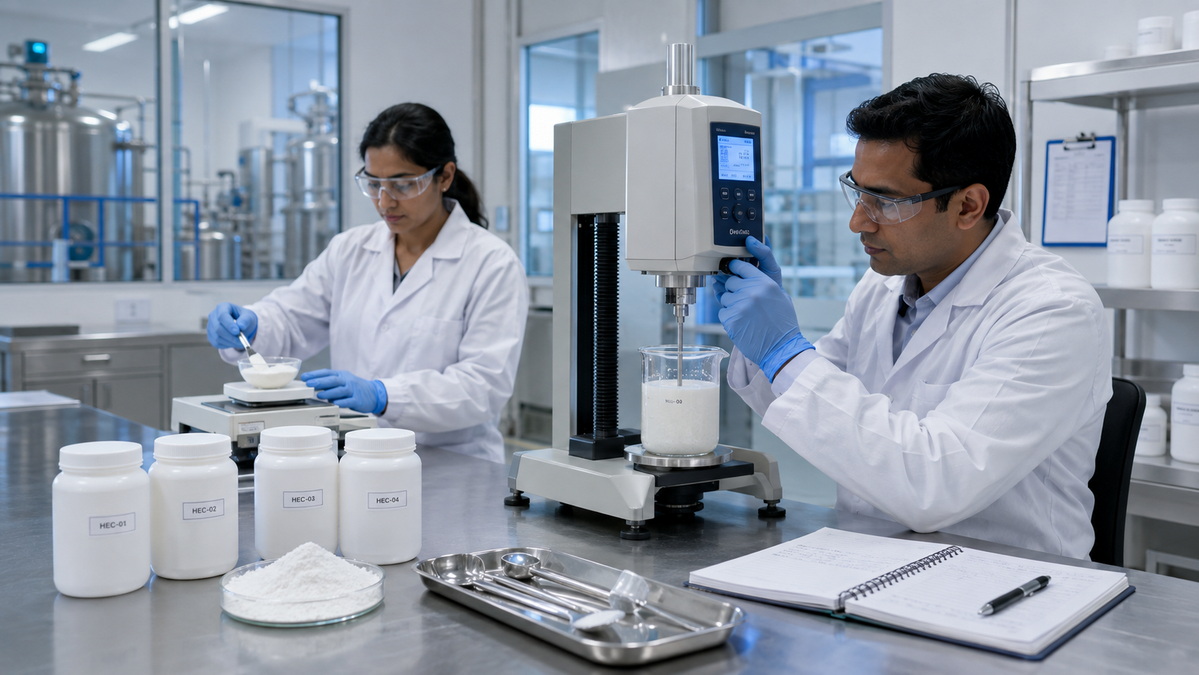
The following companies represent different supply models available to buyers in India. Some are direct manufacturers with export capability, while others are local suppliers, distributors, or specialty chemical companies supporting domestic purchasers.
| Supplier | Supply Model | Main Product Focus | Typical Buyer Profile | MOQ Flexibility | Key Documents to Request |
|---|---|---|---|---|---|
| Shandong Shengda New Material Co., Ltd. | Direct cellulose ether manufacturer | HEC, HPMC, HEMC | Importers, coatings brands, construction chemical producers, OEM distributors | Flexible according to grade and order volume | COA, TDS, SDS, quality certificates, packing specification |
| Anmol Chemicals | Specialty chemical manufacturer and supplier | Compendial and specialty HEC grades | Pharmaceutical, cosmetic, laboratory, and regulated-product buyers | Quotation-based | Grade certificates, specifications, COA, regulatory documents |
| Madhu Hydrocolloids Pvt. Ltd. | India-based supplier | Hydrocolloids and cellulose ether products | Domestic industrial and formulation buyers | Quotation-based | COA, product origin declaration, batch information |
| A. B. Enterprises | Chemical supplier and distributor | Industrial and specialty chemicals | Domestic buyers requiring multi-product procurement | Quotation-based | Original producer COA, SDS, storage and repacking details |
| Prachin Pharmachem Pvt. Ltd. | Specialty chemical supplier | Pharmaceutical and industrial raw materials | Pharma-adjacent, personal-care, and specialty chemical buyers | Quotation-based | Grade-specific technical and compliance documents |
| Universal Mine Chem | Industrial chemical supplier | Industrial additives and related materials | Coatings, construction, and industrial-formulation users | Quotation-based | Viscosity specifications, COA, TDS |
| Pioma Chemicals | Distributor and product supplier | Hydrocel HEC and formulation ingredients | Local formulators and personal-care product manufacturers | Quotation-based | INCI information, CAS number, COA, SDS |
| Deepak Cellulose | Cellulose ether supplier | HEC for coatings, cosmetics, and oilfield fluids | Application-focused industrial users | Quotation-based | Application TDS, viscosity range, performance data |
Capacity, MOQ, certifications, and available product grades should always be confirmed in writing before placing a purchase order. These factors can vary by product grade, intended application, packaging size, destination, and annual purchasing volume.
Shandong Shengda New Material Co., Ltd. is a cellulose ether manufacturer founded in 2006. The company focuses on the research, development, production, and supply of Hydroxyethyl Cellulose (HEC), Hydroxypropyl Methyl Cellulose (HPMC), and Hydroxyethyl Methyl Cellulose (HEMC).
The company operates a dual-factory production model with a stated total annual cellulose ether capacity of 60,000 tonnes. Its product portfolio supports applications including paints and coatings, tile adhesive, wall putty, gypsum and plaster products, daily chemicals, and other water-based formulations.
For Indian buyers, Shandong Shengda is particularly relevant when the goal is to establish a direct manufacturer relationship rather than relying only on a local trading channel. This model can be useful for importers, regional distributors, private-label sellers, construction chemical manufacturers, paint producers, and daily-chemical brands that require broader grade selection and closer technical communication.
- Focused product portfolio covering HEC, HPMC, and HEMC.
- Stated annual cellulose ether capacity of 60,000 tonnes across a dual-factory production structure.
- Experience supporting construction, coatings, and daily-chemical applications.
- Flexible communication for small and medium-sized brands developing new formulations.
- Ability to discuss customized viscosity ranges, packaging specifications, labeling, and shipment requirements.
- Suitable for buyers seeking long-term supply planning rather than one-time spot purchasing.
For importers and private-label distributors, customization should involve more than printing a logo on a bag. A complete project may include grade selection, viscosity specification, packaging size, private-label artwork, bag printing, pallet configuration, shipping marks, batch coding, documentation language, and export packaging requirements.
For buyers launching a regional chemical brand or supplying downstream formulation customers, this flexibility can reduce procurement complexity and improve brand consistency.
Before approving a supplier, buyers should request current product-specific documents, including a recent COA, TDS, SDS, viscosity test method, moisture range, pH range, ash content, particle-size information, packaging specification, production lead time, and sample batch details.
Anmol Chemicals is an Indian specialty chemical manufacturer and supplier with a long operating history. It supplies Hydroxyethyl Cellulose for specialty and regulated applications, including grades associated with IP, BP, EP, USP/NF, JP, and FCC requirements.
The company is especially relevant for buyers serving pharmaceutical, nutraceutical, laboratory, food-related, cosmetic, and regulated personal-care applications.
- Specialty chemical supply experience.
- Potential access to compendial and regulated-grade HEC products.
- Suitable for buyers that require documentation-focused procurement.
- Relevant for customers that need technical specifications beyond conventional industrial HEC.
Buyers should confirm the exact grade, production site, specification limits, microbiological profile, heavy-metal limits, residual solvent information where applicable, regulatory documentation, and current certificate validity.
A compendial designation should not be treated as a substitute for application-level qualification. The buyer should still conduct internal testing and document review before commercial approval.
Madhu Hydrocolloids Pvt. Ltd. is an India-based supplier associated with hydrocolloid and cellulose ether products. The company may be suitable for buyers seeking domestic supply channels, regional stock availability, or simplified local procurement.
For customers that prioritize domestic invoicing, smaller trial quantities, and local logistics support, this type of supplier can provide a practical alternative to direct import sourcing.
- India-based sourcing and distribution support.
- Potentially suitable for small-to-medium industrial orders.
- Relevant for buyers requiring local commercial communication.
- Can be useful for domestic replenishment and mixed hydrocolloid purchases.
Buyers should clarify whether the company manufactures the offered HEC, imports it directly, distributes a branded product, or sources it through another trading channel. This information affects product traceability, factory access, technical accountability, lead time, and price stability.
A. B. Enterprises is a Mumbai-based chemical supplier and distributor serving industrial and specialty chemical purchasers. Its location in Mumbai gives it access to a major commercial and logistics center for imported chemicals, domestic distribution, and multi-product purchasing.
This supplier may be relevant for buyers seeking locally available materials, domestic supply support, and consolidated purchasing of multiple industrial chemicals.
- Established commercial presence in India's specialty chemical market.
- Potential convenience for buyers requiring domestic supply.
- Suitable for customers purchasing HEC together with other industrial raw materials.
- Mumbai location can support import handling and national distribution.
Request the original manufacturer's name, country of origin, producer-issued COA, shelf-life remaining, repacking conditions, storage controls, and traceability between the original manufacturer's batch number and the supplier's invoice.
Prachin Pharmachem Pvt. Ltd. is an India-based specialty chemical supplier operating in Ahmedabad, Gujarat. Ahmedabad is part of a major chemical, pharmaceutical, and formulation ecosystem, making the region relevant for buyers in personal care, pharmaceutical-adjacent products, and specialty industrial applications.
The company may be a practical supply option for customers seeking local support, specialty chemical sourcing, and product documentation suitable for controlled applications.
- Location within Gujarat's chemical and pharmaceutical cluster.
- Suitable for specialty product procurement and formulation-stage trials.
- Relevant for buyers seeking domestic supply relationships.
- Potentially useful for customers requiring local technical coordination.
Buyers should confirm whether the offered HEC is intended for industrial, cosmetic, pharmaceutical, or food-related use. The term "HEC" alone is not a complete specification for a regulated application.
Universal Mine Chem is a Vadodara-based industrial chemical supplier. Vadodara is located in Gujarat's major industrial belt and has strong connections to chemical processing, petrochemical production, industrial manufacturing, and downstream formulation sectors.
The company may be relevant to buyers sourcing industrial additives for coatings, construction products, water-based systems, and general manufacturing applications.
- Gujarat-based industrial supply presence.
- Potentially suitable for domestic industrial procurement.
- Relevant for coatings, construction chemicals, and technical formulations.
- Can provide a local procurement route for standard HEC requirements.
Buyers should request the exact viscosity test method for every quoted grade. A viscosity figure is not fully comparable unless the supplier provides the testing concentration, water type, temperature, spindle, and rotation speed.
Pioma Chemicals supplies Hydrocel Hydroxyethyl Cellulose for Indian formulators. HEC is a non-ionic, water-soluble cellulose derivative commonly used for thickening, stabilizing, suspending, and modifying the flow behavior of water-based systems.
This supplier may be suitable for buyers in personal care, coatings, household cleaning products, and other formulation-driven sectors.
- Product-specific HEC offering under the Hydrocel designation.
- Suitable for local formulators requiring accessible supply.
- Potential fit for small-to-mid volume qualification orders.
- Relevant for water-based formulations requiring thickening and stabilization.
Ask for the original manufacturer, country of origin, lot-specific COA, grade equivalency information, viscosity test method, microbiological status, shelf life, and recommended incorporation process.
Deepak Cellulose offers cellulose ether products including Hydroxyethyl Cellulose for paints, coatings, cosmetics, and oil drilling fluids. Its application-oriented product positioning makes it relevant for buyers who want to evaluate HEC based on finished-product performance.
For example, a paint producer may require improved viscosity control, pigment suspension, flow, leveling, and storage stability. A cosmetic producer may instead prioritize clarity, texture, emulsion stability, and compatibility with surfactants or preservatives.
- Application-oriented HEC offering.
- Relevant for paints, coatings, cosmetics, and oilfield-related products.
- Suitable for buyers comparing HEC grades by formulation performance.
- Can be considered by manufacturers with application-specific requirements.
For paint and coating applications, ask for data relating to viscosity behavior, pigment compatibility, storage stability, flow, leveling, and anti-sagging performance. For personal-care products, request information on clarity, odor, microbial control, surfactant compatibility, and recommended dosage.
Hydroxyethyl Cellulose is a non-ionic, water-soluble cellulose ether made by chemically modifying cellulose with hydroxyethyl groups. It is widely used to control viscosity, improve stability, retain water, suspend solids, enhance texture, and modify the flow behavior of water-based systems.
However, two HEC grades with a similar stated viscosity may perform differently in a customer's formula.
A reliable HEC purchasing specification should include more than a basic phrase such as "HEC 100,000 cps" or "high-viscosity HEC."
The specification should normally cover:
- Viscosity range.
- Full viscosity test method.
- Test concentration.
- Water quality used in testing.
- Test temperature.
- Spindle and rotation speed.
- Moisture content.
- pH range.
- Particle-size distribution.
- Hydration and dissolution characteristics.
- Surface-treatment requirement.
- Ash content.
- Insoluble matter.
- Microbiological limits where applicable.
- Packing requirements.
- Shelf life and storage requirements.
- Batch-to-batch acceptance limits.
| Application | Main HEC Performance Requirement | Common Purchasing Risk |
|---|---|---|
| Architectural paints | Thickening, pigment suspension, anti-sagging, flow, leveling | Different test methods create misleading viscosity comparisons |
| Water-based coatings | Storage stability, rheology control, film appearance | Inconsistent grades can change coating viscosity and appearance |
| Shampoo and body wash | Clarity, texture, surfactant compatibility, salt response | Poor compatibility can reduce clarity or cause instability |
| Creams and lotions | Emulsion stability, texture, suspension | Hydration behavior can affect sensory feel and viscosity development |
| Construction chemicals | Water retention, workability, open time | HEC may not perform the same as HPMC or HEMC in cement-based systems |
| Oilfield fluids | Thickening, suspension, temperature and salt tolerance | Standard grades may not perform under actual field conditions |
Before contacting suppliers, prepare a technical purchasing brief that includes:
- Final application.
- Existing HEC grade or reference product.
- Desired viscosity range.
- Annual and monthly demand.
- Required documentation.
- Target pack size.
- Destination market.
- Required shipping term.
- Preferred port or delivery location.
- Expected lead time.
- Required safety-stock level.
- Target price structure.
A supplier cannot recommend the most suitable grade without understanding the application. A paint-grade HEC may not be appropriate for a transparent personal-care gel, and a personal-care grade may not be commercially efficient for a standard construction formulation.
A professional supplier should be able to provide:
- Technical Data Sheet.
- Safety Data Sheet.
- Batch-specific Certificate of Analysis.
- Product specification sheet.
- Manufacturer identity and factory location.
- Country-of-origin declaration.
- Quality certificate copies.
- Sample batch number.
- Packaging photos.
- Pallet-loading plan.
- Shelf-life declaration.
- Storage recommendation.
- Regulatory declarations required for the intended application.
For sensitive applications, buyers may also request allergen declarations, animal-origin statements, GMO statements, heavy-metal data, microbiological limits, and change-control policies.
A common mistake is approving a supplier after only a small laboratory beaker test.
A stronger process includes:
1. Requesting samples linked to a traceable production batch.
2. Checking the sample against the supplier's COA.
3. Testing the material in the real manufacturing process.
4. Comparing it with the approved reference grade.
5. Evaluating viscosity after 24 hours and extended storage.
6. Testing behavior at expected high and low temperatures.
7. Checking compatibility with other formulation ingredients.
8. Retaining an approved sample as a reference standard.
For coatings, assess pigment suspension, flow, leveling, viscosity stability, and film appearance. For personal-care formulations, test clarity, foam, texture, odor, pH stability, preservative compatibility, and product appearance over time.
Do not rely only on certificate logos displayed on a website or product brochure.
Check the following:
- Certificate number.
- Legal company name.
- Manufacturing-site address.
- Scope of certification.
- Issue date.
- Expiry date.
- Certification body.
- Accreditation mark.
- Coverage of the actual production site.
A quality certificate may be valid but only cover a sales office, warehouse, or another factory. For large or recurring orders, buyers should independently validate the certification through the issuing organization.
HEC is sensitive to moisture. Poor packaging, damaged bags, and unsuitable warehouse conditions can cause agglomeration, reduced dispersibility, and inconsistent final-product performance.
Buyers should define:
- Moisture-resistant inner packaging.
- Outer bag material and strength.
- Maximum bag weight.
- Pallet type and pallet wrapping.
- Corner protection.
- Batch and production-date marking.
- Container cleanliness and dryness.
- Desiccant requirement where needed.
- Loading photos before container sealing.
- Transit insurance responsibility.
- Warehouse temperature and humidity control.
For Indian import projects, buyers should also verify customs documentation, HS classification, import requirements, product labeling, local taxes, and destination-port handling before shipment.
Two suppliers may quote the same viscosity range, yet their products can behave differently because of different test conditions, substitution levels, particle sizes, hydration profiles, or production controls.
To avoid this issue, require the complete viscosity test method and compare samples in your actual formula.
Some suppliers may sell HEC as a manufacturer while functioning as traders, distributors, or repackers. This does not automatically mean the product is unsuitable, but it can reduce transparency and complicate technical problem-solving.
To reduce risk, ask directly whether the supplier is the primary manufacturer of the quoted HEC grade. If not, request the original producer's name, country of origin, and producer-issued documentation.
A supplier may provide a strong-performing sample but later ship a different batch, production site, or specification range.
To prevent this, include the approved grade, sample batch reference, test method, product specification, and acceptance limits in the purchase order or quality agreement.
A supplier may use general quality language without having application-specific evidence. A product may be suitable for industrial coatings but not suitable for pharmaceutical, cosmetic, or food-related use.
To prevent confusion, request documentation tied directly to the intended application and destination market.
HEC may form fish-eyes, agglomerates, or uneven viscosity if the grade is not matched with the customer's mixing process. This problem is often discovered only after production begins.
To avoid it, ask for the recommended addition sequence, mixing speed, water temperature range, dispersion method, hydration time, and processing recommendations before approving a supplier.
One of the most expensive procurement errors is choosing HEC only by headline viscosity and price.
Hydration behavior can matter more than a small difference in unit cost. Two HEC grades may both meet the stated viscosity requirement but behave very differently during mixing. One may disperse smoothly and develop viscosity predictably. Another may hydrate too quickly, form clumps, require longer mixing, or create inconsistent results in high-solids, surfactant-rich, pigment-heavy, or temperature-sensitive systems.
Before final commercial approval, ask the supplier for a complete incorporation procedure and validate it using your real production equipment. This practical step can prevent reformulation costs, production downtime, rejected batches, and customer complaints.
India provides buyers with access to a broad network of chemical distributors, specialty suppliers, formulators, and import channels. At the same time, direct relationships with experienced cellulose ether manufacturers can offer stronger control over product selection, customization, technical communication, and long-term supply stability.
For buyers requiring HEC together with HPMC and HEMC, Shandong Shengda New Material Co., Ltd. is a suitable manufacturer to evaluate. Its product portfolio, stated large-scale cellulose ether capacity, flexible communication model, and support for customized packaging and formulation-focused requirements can be particularly useful for small and medium-sized brands, distributors, construction chemical producers, and coatings manufacturers.
A successful HEC sourcing program should be built around documented specifications, transparent producer identity, application-level sample testing, verified quality documentation, and clear commercial agreements. Selecting a supply partner based on reproducible performance and reliable communication helps protect both production continuity and product quality.
Request the full certificate and review the certificate number, legal entity name, factory address, certification scope, issue date, expiry date, and certification body. The certificate should cover the actual manufacturing site producing the material. For large orders, confirm validity through the certification body's verification system.
Not always. Local supply can offer easier invoicing, shorter domestic delivery, and simplified replenishment. Direct imports from a manufacturer may offer broader grade selection, stronger customization, more direct technical support, and better long-term supply planning. The best model depends on purchase volume, urgency, product sensitivity, and available inventory.
Include the final application, required viscosity range, current reference grade, target dosage, desired packaging, annual usage estimate, country of destination, required documentation, and testing requirements. Ask for a lot-specific COA, TDS, SDS, sample batch number, and recommended incorporation procedure.
In some cases, a grade may work across more than one application, but this should not be assumed. Paint, construction, and personal-care formulations have different requirements for hydration, rheology, clarity, microbial control, compatibility, texture, and documentation. Application-specific qualification is recommended.
Use a written quality agreement that defines the product grade, viscosity method, test concentration, moisture limit, pH range, particle-size expectations, packaging, labeling, COA requirements, and change-notification process. Retain an approved reference sample and test each incoming lot against agreed acceptance criteria.
- Shandong Shengda New Material Co., Ltd. — [About Us]
- Invest India — [How India's New Trade Agreements Can Redefine Its Chemical Sector]
- CHEMEXCIL — [Basic Chemicals, Cosmetics & Dyes Export Promotion Council]
- Anmol Chemicals — [Hydroxyethyl Cellulose Manufacturer and Supplier]
- TradeIndia — [Hydroxyethyl Cellulose Manufacturers and Suppliers]
- Deepak Cellulose — [Cellulose Ether Product Information]


