

close
Choose Your Site
Global
Social Media
Views: 222 Author: Shengda Publish Time: 2026-06-07 Origin: Site


Content Menu
● Why HPMC Quality Matters for Your Projects
● About Shandong Shengda New Material (Author & Factory Experience)
● What Is HPMC and How Does It Work?
>> HPMC in Simple Technical Terms
● Key Applications: Construction‑Grade vs Daily‑Chemical‑Grade HPMC
● Why Work Directly with a Chinese HPMC Factory?
● Typical Technical Specifications of Premium HPMC
● How Shengda Supports Construction‑Grade HPMC Users
● How Shengda Serves Daily‑Chemical‑Grade HPMC Users
● Practical Selection Guide: Choosing the Right HPMC Grade
>> Step‑by‑Step Approach for Construction Formulators
>> Step‑by‑Step Approach for Daily Chemical Formulators
● Sustainability and Compliance Considerations
● Clear Call to Action for Global Buyers
● Frequently Asked Questions (FAQ)
As a B2B content strategist working with construction material buyers and daily chemical formulators, I've seen one pattern again and again: HPMC quality directly determines workability, consistency, and long‑term performance of your final product. When the cellulose ether is unstable, tile adhesives slump, putty cracks, and shampoos lose viscosity in storage. [hpmcfactory]
Hydroxypropyl Methyl Cellulose (HPMC) is a non‑ionic cellulose ether derived from refined wood pulp that acts as a water‑retention agent, thickener, and rheology modifier in cement‑based mortars, gypsum products, detergents, and personal care formulations. For serious manufacturers, the question is no longer "Should we use HPMC?" but "Which factory can guarantee consistent performance batch after batch?" [alibaba]
Writing this article, I am drawing on real project feedback from international buyers who source directly from Shandong Shengda New Material Co., Ltd., a specialized cellulose ether manufacturer based in Jinan, Shandong, China. Established in 2003, with factory roots dating back to 1988, Shengda focuses on research, development, production, and global technical service for HPMC and redispersible polymer powder (RDP). [linkedin]
The company operates an 80,000 m² production base with modern equipment and an annual capacity around 60,000 tons, exporting roughly 16,000 tons of cellulose ether and RDP to more than 20 countries, including Russia, India, Malaysia, Spain, Egypt, Turkey, South Africa, Brazil, and Mexico. Shengda has achieved ISO 9001 and ISO 14001 certifications, reflecting strong quality and environmental management systems demanded by global construction and daily chemical brands. [tradeindia]

Hydroxypropyl Methyl Cellulose (HPMC, CAS 9004‑65‑3) is a chemically modified cellulose ether where some of the hydroxyl groups in cellulose are substituted with methoxy and hydroxypropoxy groups. This modification makes the polymer water‑soluble, film‑forming, and surface‑active while remaining non‑ionic, which is crucial for compatibility with cement, gypsum, and surfactants. [hpmc]
In water, HPMC swells and dissolves to form a clear or slightly opalescent solution with controlled viscosity, typically graded between 400 and 200,000 mPa·s (2% solution, 20°C) for different applications. Viscosity and substitution level directly influence thickening power, water retention, and open time in construction mortars or detergency and foam stability in daily chemical products. [alibaba]
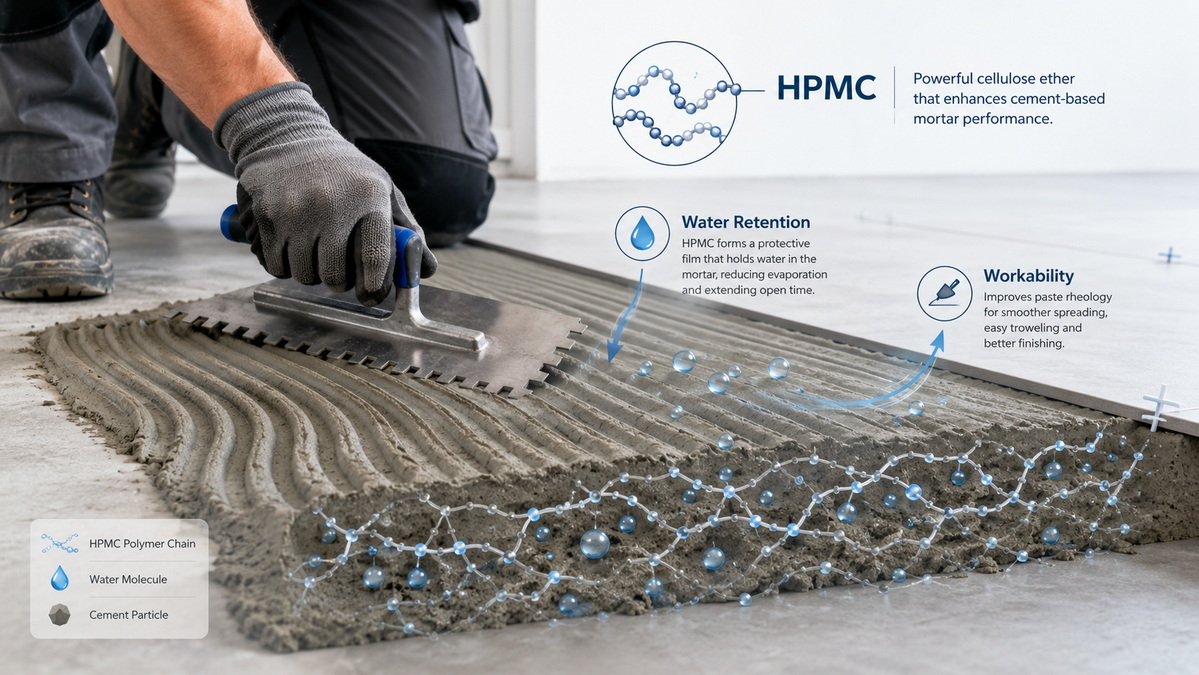
- Water retention: Reduces water loss in cement and gypsum systems, preventing early drying and shrinkage cracking. [hpmc]
- Workability & lubricity: Improves trowel feel, pumpability, and anti‑sag performance of mortars and renders. [alibaba]
- Thickening & rheology control: Provides consistent viscosity and shear‑thinning behavior for mortars, detergents, shampoos, and creams. [actabiotechnology]
- Adhesion & cohesion: Enhances bonding strength to substrates and internal cohesion of mixtures, reducing segregation. [hpmc]
- Film formation: Forms flexible films that contribute to surface strength and resistance to powdering in some systems. [actabiotechnology]
In construction materials, HPMC is now standard in most dry‑mix formulations. Typical use cases include: [hpmcfactory]
- Tile adhesives and tile grouts
- Cement renders, plasters, and skim coats
- External insulation and finish systems (EIFS)
- Self‑leveling compounds
- Gypsum‑based plasters and puttie
For tile adhesives, a premium grade like an HPMC with viscosity around 180,000–220,000 mPa·s can provide excellent anti‑slip, extended open time, and high bonding strength even under hot climate conditions. In EIFS and external wall putty, optimized water retention helps avoid surface cracking, hollowing, and powdering, especially in fast‑drying environments. [alibaba]
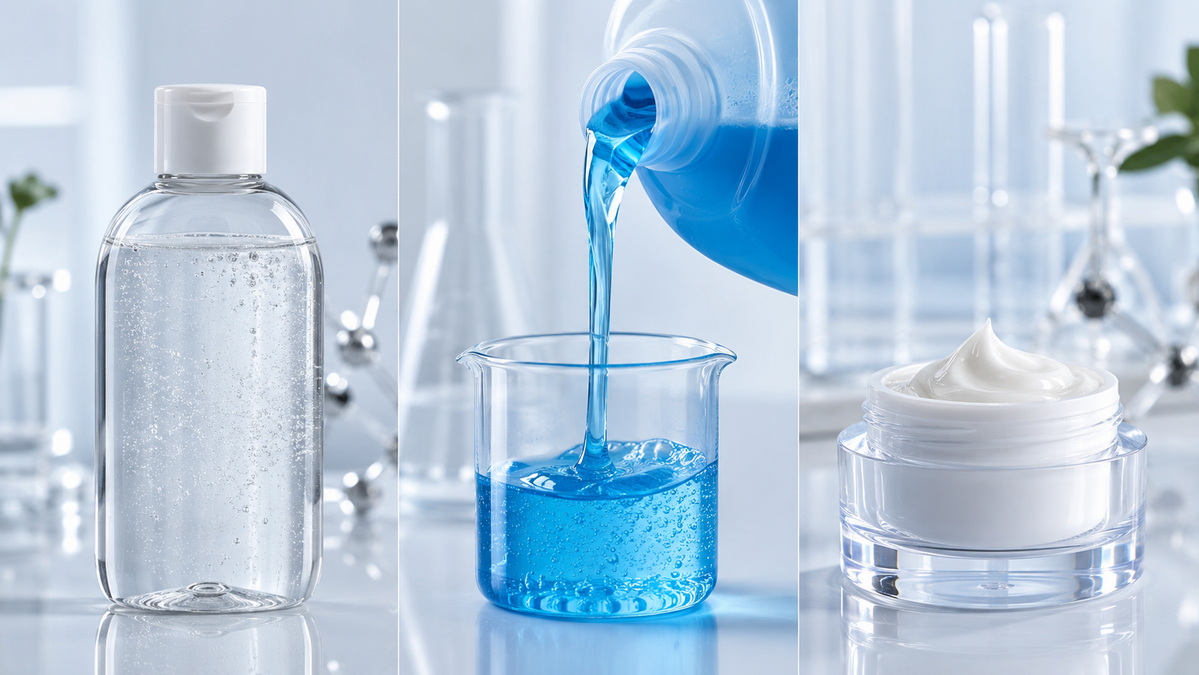
Daily‑chemical‑grade HPMC is designed for detergents, liquid soaps, shampoos, body washes, creams, and other personal care products. In these systems, HPMC functions as: [hpmcfactory]
- A viscosity builder for transparent or opaque liquids
- A suspending agent for actives and pigments
- A foam stabilizer in surfactant systems
- A film former for conditioning effects
Because HPMC is derived from renewable cellulose and is biodegradable under aerobic conditions, it aligns well with global trends toward sustainable and "greener" formulations in home and personal care. [actabiotechnology]
From a buyer's point of view, sourcing directly from a specialized HPMC factory in China can significantly improve cost‑performance, but only when the partner has the right process control, R&D capability, and export experience. [tradeindia]
Shandong Shengda stands out in three areas that matter most to technical buyers:
1. Stable quality at industrial scale
With an annual output of 60,000 tons and multiple automated lines, Shengda can maintain consistent quality across large volumes and recurring orders. [tradeindia]
2. Flexible viscosity and application customization
The product line covers medium and high‑grade construction and daily‑chemical HPMC with adjustable viscosity from around 400 to 200,000 CPS, allowing precise matching with tile adhesive, skim coat, or detergent needs. [linkedin]
3. Mature global export service
The company exports to more than 20 countries and regions and has a dedicated foreign trade team, which helps reduce communication friction on specifications, documentation, and logistics. [tradeindia]
The table below summarizes typical parameters you should review when evaluating a premium HPMC product from any factory.
| Parameter | Typical Range / Note |
|---|---|
| Appearance | Free‑flowing white or off‑white powder (hpmcfactory) |
| Moisture content | Usually ≤5% for stable storage (alibaba) |
| pH (1–2% solution) | Approx. 5.0–8.0, non‑ionic (alibaba) |
| Viscosity range | 400–200,000 mPa·s (2% solution, 20°C) (alibaba) |
| Degree of substitution | Optimized for solubility and film strength (alibaba) |
| Ash content | Typically ≤5% depending on grade (alibaba) |
| Particle size | Often 80 mesh for fast dispersion (alibaba) |
| Solubility | Soluble in cold water, insoluble in most organics (alibaba) |
For higher‑end tile adhesives, formulations often favor higher viscosity, lower ash, and tighter moisture control to ensure consistent open time and sag resistance. [hpmc]
From the perspective of a formulation engineer or dry‑mix plant manager, the real value is not just in the product spec sheet, but in how the supplier supports your daily production. Buyers report higher satisfaction when they receive: [linkedin]
- Application‑specific grade recommendations for tile adhesives, skim coats, EIFS, and gypsum. [hpmcfactory
- Guidance on dosage ranges in different cementitious systems to achieve target water retention and workability. [hpmcfactory]
- Support in troubleshooting issues like sagging, low open time, or cracking by adjusting viscosity grade or combination with RDP. [youtube]
Shengda's positioning as a building‑materials‑focused cellulose ether supplier means their technical team can discuss factors like cement type, filler gradation, and climate, not just "price per ton." [linkedin]
Daily chemical manufacturers, especially in emerging markets, often face the challenge of balancing clarity, viscosity stability, and cost in detergents and shampoos. A reliable HPMC partner helps by: [linkedin]
- Providing low‑salt, low‑impurity grades that minimize color and odor. [actabiotechnology]
- Suggesting process parameters for cold‑water dispersion, hydration, and pH adjustment to avoid lumping and ensure fast viscosity build. [linkedin]
- Recommending compatible surfactant systems where non‑ionic HPMC will perform predictably. [linkedin]
Because Shengda also ships daily‑chemical grades, buyers can standardize procurement of cellulose ether across construction and home‑care product lines. [linkedin]
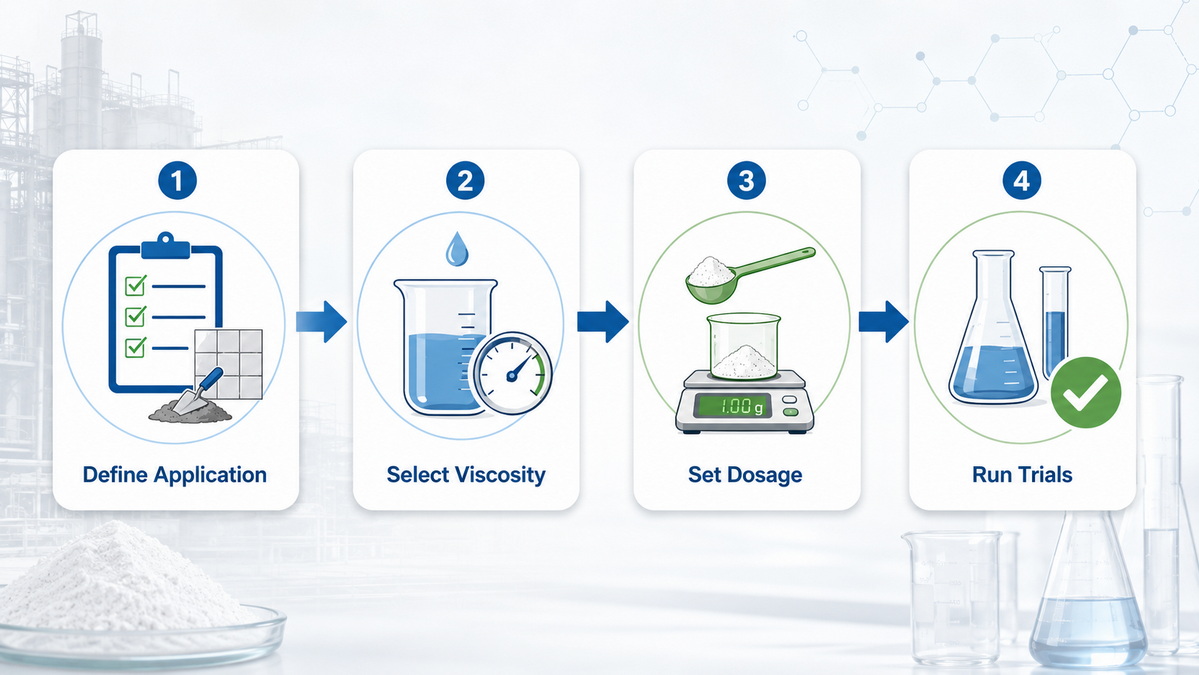
1. Define your target application and performance
For example, a C1 tile adhesive for indoor use versus a high‑performance deformable adhesive under EN or ISO standards will require different viscosity and water retention levels. [alibaba]
2. Choose viscosity band and substitution level
- Lower viscosity: better wetting, easier pumping, suitable for self‑leveling. [alibaba]
- Higher viscosity: improved sag resistance and open time, ideal for vertical tile adhesives and putties. [hpmc]
3. Optimize dosage
Start within the supplier's recommended range (often around 0.2–0.7% by weight in cement‑based mortars) and adjust based on workability and mechanical test results. [hpmc]
4. Run side‑by‑side lab and field trials
Compare workability, open time, water retention, slip, and compressive strength using the same cement, sand, and fillers to isolate HPMC effects. [youtube]
1. Decide on target viscosity and clarity for your liquid detergent or shampoo base. [actabiotechnology]
2. Select cosmetic‑grade HPMC with appropriate viscosity and purity profile. [actabiotechnology]
3. Disperse in cold water under agitation, then allow full hydration before adding surfactants and electrolytes. [linkedin]
4. Fine‑tune pH, salt level, and co‑thickeners to stabilize viscosity across temperature ranges. [linkedin]
Modern buyers increasingly ask not just "Does it work?" but also "Is it sustainable and compliant with green building or eco‑label standards?" HPMC is derived from renewable cellulose and is biodegradable in aerobic environments, supporting green building certifications such as LEED and BREEAM when used in compliant systems. [nopio]
Factories like Shengda that maintain ISO 14001 environmental management certification and efficient process controls help downstream manufacturers meet their own sustainability and regulatory commitments. Combined with consistent quality and traceability, this builds trust with specifiers and brand owners in Europe, the Middle East, Southeast Asia, and Latin America. [sdshengda.en.made-in-china]
If you are evaluating HPMC suppliers for construction or daily chemical applications, engaging early with a technical team saves months of formulation trial‑and‑error. [youtube]
You can contact Shandong Shengda New Material to:
- Request grade recommendations and sample packs tailored to your tile adhesive, EIFS, putty, gypsum, detergent, or shampoo formulation. [shengdahpmc]
- Discuss custom viscosity or packaging requirements for OEM projects. [linkedin]
- Arrange online technical support or factory audit to evaluate long‑term partnership potential. [tradeindia]
To move your project forward, reach out via the official website or sales channels and share your current formulation challenges, target standards, and annual volume so the team can propose a practical, cost‑effective HPMC solution. [shengdahpmc]
HPMC dosage in cement‑based tile adhesives usually falls in the 0.2–0.7% range by total dry weight, depending on viscosity grade, cement type, and target open time. [alibaba]
2. Can the same HPMC grade be used for tile adhesive and wall putty?
In many cases a single high‑performance grade can serve both tile adhesive and wall putty, but optimized grades with slightly different viscosity and water retention profiles often deliver better performance and cost balance. [hpmc]
3. Is HPMC safe for use in daily chemical and personal care products?
Yes, HPMC is a non‑ionic cellulose ether widely used as a thickener and film former in foods and personal care; it is considered non‑toxic and is derived from renewable cellulose, but standard dust‑control PPE is still recommended during handling. [actabiotechnology]
4. How does temperature affect HPMC performance in mortars?
High ambient temperature and low humidity increase water evaporation, making water retention more critical; higher viscosity and slightly higher dosage are often required in hot climates to maintain open time and prevent cracking. [alibaba]
5. What certifications should I look for in an HPMC factory?
For industrial buyers, ISO 9001 quality management and ISO 14001 environmental management are baseline indicators, along with demonstrated export experience and stable annual output capacity. [sdshengda.en.made-in-china]
1. Google Search Central – Creating helpful, reliable, people‑first content (E‑E‑A‑T guidelines). [developers.google]
2. HubSpot – E‑E‑A‑T compliance and showcasing expertise. [blog.hubspot]
3. IO Digital – Google E‑E‑A‑T: creating content that puts people first. [iodigital]
4. Backlinko – SEO best practices for manufacturers' pages (titles, headings, CTAs). [backlinko]
5. MarketVeep & HawkSEM – SEO guides for manufacturing companies and industrial marketing. [hawksem]
6. Nopio – Industrial SEO: ranking strategies for manufacturing companies. [nopio]
7. Shandong Shengda New Material Co., Ltd. – Company introduction and product scope (HPMC, RDP, cellulose ether). [sdshengda.en.made-in-china]
8. HPMC Factory and MATECEL – Technical overviews of HPMC applications in construction and personal care. [hpmcfactory]
9. Alibaba HPMC Premium 9900‑200K – Example of high‑viscosity construction‑grade HPMC specifications and features. [alibaba]
10. Acta Biotechnology – HPMC technical profile and food/personal care uses. [actabiotechnology]
11. LinkedIn & industry blogs – Best practices for technical and chemical content creation. [youtube]
12. Hashmeta, Sana Commerce, Red27Creative – SEO for manufacturers and industrial companies. [sana-commerce]


