


close
Choose Your Site
Global
Social Media
Views: 238 Author: Shengda Publish Time: 2026-09-13 Origin: Site


Content Menu
● Why Toothpaste Rheology Matters
>> Main Functions of HPMC in Toothpaste
>> Main Functions of HEMC in Toothpaste
● HPMC vs HEMC: Key Differences in Toothpaste
● How HPMC Improves Toothpaste Ribbon Stand-Up
>> Benefits of HPMC for Ribbon Appearance
● How HEMC Supports Smooth Toothpaste Extrusion
>> Benefits of HEMC for Extrusion Control
● Ribbon Stand-Up and Extrusion Need Different Properties
● Practical Tests for HPMC and HEMC Toothpaste Formulations
>> 3. Tube Extrusion Force Testing
● How to Select the Right Cellulose Ether Grade
>> Evaluate Manufacturing Performance
● Common Formulation Challenges
>> Toothpaste Ribbon Collapses Too Quickly
>> Toothpaste Is Difficult to Squeeze
>> Toothpaste Shows Liquid Separation
>> Toothpaste Produces Long Strings at the Tube Nozzle
>> What is the difference between HPMC and HEMC in toothpaste?
>> Is HPMC suitable for toothpaste ribbon stand-up?
>> Can HEMC improve toothpaste extrusion?
>> Why is toothpaste viscosity alone not enough for formulation selection?
>> Can HPMC and HEMC be used together in toothpaste?
>> What causes toothpaste to become hard to squeeze after storage?
>> How should a manufacturer compare HPMC and HEMC grades?
HPMC and HEMC are non-ionic cellulose ethers used to control toothpaste viscosity, stability, extrusion behavior, and ribbon appearance. This article compares their roles in toothpaste formulations and explains how manufacturers can select the right cellulose ether to achieve a stable paste, clean tube extrusion, effective abrasive suspension, and attractive ribbon stand-up on the toothbrush.
A successful toothpaste must do more than clean teeth. It must look stable in the tube, extrude smoothly under gentle pressure, form a clean ribbon on the toothbrush, and remain uniform throughout its shelf life.
For toothpaste manufacturers, these requirements create a complex formulation challenge. A paste that is too thin may slump, separate, or release liquid. A paste that is too thick may be difficult to fill, difficult to squeeze from the tube, and unpleasant during brushing. The binder system plays a central role in balancing these performance demands.
Hydroxypropyl Methyl Cellulose, commonly known as HPMC, and Hydroxyethyl Methyl Cellulose, commonly known as HEMC, are two cellulose ether options that can help formulators control toothpaste rheology. Both materials can contribute thickening, suspension, water retention, and structural stability. However, HPMC and HEMC do not behave exactly the same way in every toothpaste system.
Understanding the difference between HPMC vs HEMC in toothpaste helps manufacturers make better decisions during product development. The right cellulose ether can improve ribbon stand-up, reduce extrusion problems, support abrasive suspension, and create a more consistent consumer experience.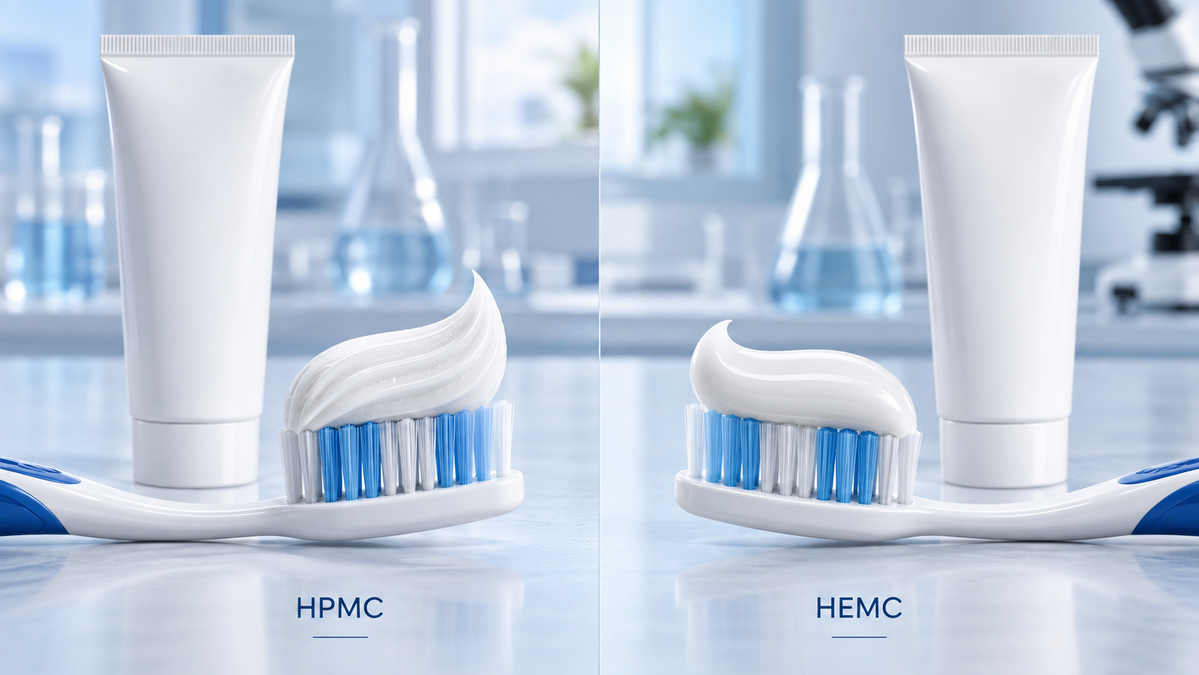
Toothpaste is a highly structured consumer product. It commonly contains water, humectants, abrasives, surfactants, flavor oils, sweeteners, colors, preservatives, active ingredients, and rheology modifiers.
Each ingredient affects the overall behavior of the paste. However, the binder system is especially important because it helps control how the product performs at rest and under pressure.
At rest, toothpaste should remain stable inside the tube. It should resist phase separation, prevent abrasive settling, and maintain a consistent texture. When a consumer squeezes the tube, the paste should flow smoothly through the nozzle. Once it reaches the toothbrush, it should form a neat ribbon instead of spreading into a flat, watery mass.
This type of behavior is often described as shear-thinning or pseudoplastic flow.
In simple terms:
- The toothpaste should be structured and stable when it is not moving.
- The toothpaste should become easier to flow when squeezed, pumped, filled, or brushed.
- The toothpaste should regain enough structure after extrusion to hold its ribbon shape.
A well-designed toothpaste is not simply "thick." It has the right balance of viscosity, yield behavior, elasticity, and flow response.
HPMC is a non-ionic cellulose ether made from cellulose. It is modified with methoxy and hydroxypropyl groups, giving it useful water-soluble and rheology-control properties.
In toothpaste formulations, HPMC can act as a thickener, stabilizer, binder, and suspension aid. It helps create a structured aqueous phase that supports abrasive particles and other dispersed ingredients.
HPMC is often selected when a toothpaste requires a substantial body, controlled extrusion, and good ribbon stand-up. Depending on the grade and dosage, it can help build a paste that remains stable in storage while still flowing under the pressure created by squeezing the tube.
HPMC may contribute to several important toothpaste properties:
- Improved viscosity control
- Better abrasive suspension
- Reduced risk of phase separation
- More defined toothpaste ribbon shape
- Controlled extrusion from tubes
- Improved body and creaminess
- Enhanced stability during storage
- More consistent product appearance
HPMC can be especially useful in opaque cream toothpaste systems, whitening toothpaste, herbal toothpaste, and other abrasive-containing oral-care formulations where structural stability is important.
However, the performance of HPMC depends heavily on the selected grade, concentration, hydration process, and interaction with other ingredients.
HEMC is another non-ionic cellulose ether. It is also known in some markets as MHEC, which refers to methyl hydroxyethyl cellulose. HEMC contains methoxy and hydroxyethyl groups.
Like HPMC, HEMC can contribute thickening, water retention, suspension, and rheology control. It can help toothpaste manufacturers achieve a stable and smooth paste structure.
HEMC may be evaluated when a formulation requires a particular balance between viscosity, flow, texture, and manufacturing performance. In some toothpaste systems, it can help create a smooth extrusion profile while maintaining enough body to support ribbon stand-up.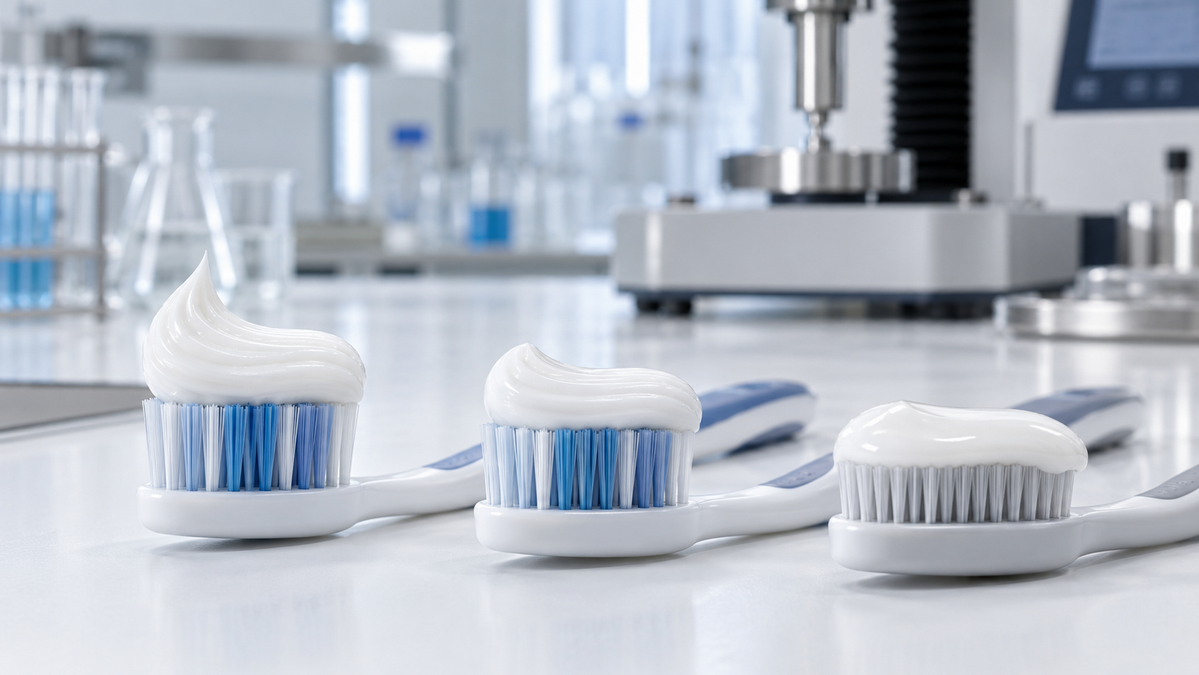
An appropriate HEMC grade may help support:
- Smooth toothpaste texture
- Controlled thickening
- Consistent flow during tube extrusion
- Better dispersion stability
- Improved resistance to liquid migration
- Support for abrasive suspension
- More stable appearance during storage
- Balanced processing behavior during mixing and filling
As with HPMC, HEMC should be selected according to the specific toothpaste formulation. A grade designed for construction materials should not automatically be considered suitable for oral-care applications. Manufacturers should verify product specifications, quality controls, microbiological requirements, and documentation before using any cellulose ether in toothpaste development.
Although HPMC and HEMC belong to the same broad family of cellulose ethers, they differ in chemical substitution and functional performance.
HPMC contains hydroxypropyl groups, while HEMC contains hydroxyethyl groups. This difference can influence hydration speed, viscosity development, temperature response, internal paste structure, and interaction with the rest of the toothpaste formula.
| Performance Factor | HPMC in Toothpaste | HEMC in Toothpaste |
|---|---|---|
| Chemical structure | Methoxy and hydroxypropyl groups | Methoxy and hydroxyethyl groups |
| Main role | Thickening, binding, suspension, structural control | Thickening, binding, suspension, smooth flow control |
| Ribbon stand-up | Often useful for stronger ribbon definition | Can support ribbon structure depending on grade |
| Extrusion behavior | Can provide controlled shear-thinning performance | Can provide smooth and balanced tube flow |
| Toothpaste body | Often supports a creamy, structured paste | Can support a smooth and stable paste texture |
| Abrasive suspension | Can help stabilize abrasive-containing systems | Can help stabilize suspended ingredients |
| Processing behavior | Requires controlled hydration and dosage optimization | Requires controlled hydration and dosage optimization |
| Final selection | Best confirmed by full formulation testing | Best confirmed by full formulation testing |
The table provides a general comparison, but individual grades may behave differently. A low-viscosity HPMC grade may perform differently from a high-viscosity HPMC grade. The same is true for HEMC.
For this reason, product developers should compare several candidate grades under the same formulation conditions.
Ribbon stand-up refers to the ability of toothpaste to maintain a defined shape after it is squeezed onto a toothbrush.
Consumers often associate a neat, stable toothpaste ribbon with product quality. A ribbon that immediately collapses, spreads, or releases liquid may create a negative impression, even if the toothpaste still performs adequately during brushing.
HPMC can help improve ribbon stand-up by increasing the internal structure of the toothpaste. It can provide resistance to flow when the paste is at rest. This helps the toothpaste remain in a strip-like form after it leaves the tube.
A properly selected HPMC grade may help toothpaste achieve:
- A clean and continuous ribbon
- Reduced slumping on the toothbrush
- Better visual body
- More stable paste structure
- Improved consistency between early and late tube use
- Better resistance to liquid separation
- More uniform distribution of abrasives and pigments
The goal is not to create the stiffest possible toothpaste. Excessively high structure can lead to poor tube extrusion, difficult filling, or an overly dense texture.
A successful HPMC toothpaste formulation should have enough low-shear strength to stand up on the brush while maintaining acceptable flow under pressure.
Tube extrusion is a major part of the consumer experience. People expect toothpaste to dispense smoothly with predictable force.
When a toothpaste requires too much squeezing pressure, consumers may perceive the product as difficult to use. When it flows too easily, it may discharge too quickly, lose its shape, or create a messy ribbon.
HEMC can be evaluated as a rheology modifier when a smoother extrusion profile is required. Depending on the grade and formula, it can support controlled movement through the tube nozzle while maintaining sufficient structural integrity.
A suitable HEMC grade may help with:
- Smooth toothpaste flow from the tube
- More even extrusion force
- Reduced sudden bursts during dispensing
- Improved paste uniformity
- Balanced body and spreadability
- Controlled texture during brushing
- Better manufacturing handling in some systems
The performance of HEMC should be assessed in the final toothpaste packaging. A formula that flows well during laboratory testing may behave differently in a commercial tube due to nozzle size, shoulder design, package material, air content, and storage conditions.
Ribbon stand-up and extrusion are related, but they are not the same.
Ribbon stand-up requires a toothpaste to have enough internal structure to resist collapse after leaving the tube. Extrusion requires the paste to flow under pressure without excessive resistance.
The challenge is to build a toothpaste that behaves differently under different conditions.
| Toothpaste Condition | Desired Behavior |
|---|---|
| Inside the tube during storage | Stable, uniform, resistant to separation |
| During filling and pumping | Smooth flow with manageable processing viscosity |
| During tube squeezing | Controlled extrusion with moderate force |
| Immediately after extrusion | Defined ribbon with limited slump |
| During brushing | Easy spreading and pleasant mouthfeel |
This is why a single viscosity reading is not enough to predict toothpaste performance.
Two formulas may show similar viscosity values under one test condition but behave very differently in a real toothpaste tube. One may form a strong ribbon but require excessive force to dispense. Another may extrude easily but collapse on the brush.
The most useful development method is to measure both low-shear and high-shear behavior, then confirm performance through practical extrusion and ribbon tests.
A structured testing program helps manufacturers compare HPMC and HEMC more accurately.
Viscosity testing provides information about the toothpaste's resistance to flow. It should be measured under conditions relevant to production and use.
Useful measurements may include:
- Low-shear viscosity
- High-shear viscosity
- Viscosity after aging
- Viscosity at different temperatures
- Viscosity after surfactant addition
- Viscosity after filling into final packaging
A strong toothpaste formula should remain stable without becoming too difficult to process or squeeze.
Yield stress refers to the force required to initiate flow. In toothpaste, sufficient yield stress can help prevent settling, phase separation, and ribbon collapse.
A toothpaste with very low yield stress may spread too quickly after extrusion. A toothpaste with very high yield stress may be difficult to pump, fill, and dispense.
The ideal target depends on the intended product style.
Extrusion-force testing measures how much pressure is needed to dispense toothpaste from the final tube.
This test is valuable because it reflects real consumer use. It can reveal problems that are not visible in a basic viscosity measurement.
A good toothpaste should show:
- Smooth and repeatable extrusion
- No sudden surge of product
- No hard plug at the nozzle
- Limited stringing or tailing
- Comfortable squeezing force
- Consistent performance after storage
A ribbon stand-up test evaluates how the toothpaste behaves after being deposited on a toothbrush.
The test can be performed by applying a controlled amount of toothpaste to a standard toothbrush and observing the ribbon profile over time.
Key observations include:
- Ribbon height
- Ribbon width
- Degree of slump
- Surface smoothness
- Tail formation
- Stability after one minute
- Stability after several minutes
This simple visual test can provide highly useful product-development insights.
Toothpaste should be evaluated under different storage conditions. Stability testing may include room-temperature storage, elevated-temperature storage, low-temperature storage, and temperature cycling.
Important observations include:
- Changes in viscosity
- Changes in extrusion force
- Liquid separation
- Abrasive settling
- Color changes
- Odor changes
- Surface drying
- Packaging interaction
- Ribbon stand-up after aging
Selecting HPMC or HEMC should begin with the desired consumer experience and manufacturing conditions.
A toothpaste manufacturer should first define what the product needs to achieve.
Consider the following questions:
- Is the product a cream toothpaste, gel toothpaste, or gel-paste?
- Does the formula contain high levels of calcium carbonate or hydrated silica?
- Is a strong ribbon appearance important for brand positioning?
- Does the toothpaste need to extrude from a standard tube, pump tube, or specialty package?
- Is the target consumer looking for a rich, dense texture or a lighter, smoother texture?
- Will the product be sold in hot, cold, humid, or variable climates?
- Does the formula contain fluoride, botanical extracts, whitening agents, pigments, or specialty actives?
- What production equipment and filling speed will be used?
These questions help define the required rheology profile before selecting a specific cellulose ether grade.
The most reliable approach is to create matched toothpaste prototypes.
Use the same formula base for each test. Keep the abrasive system, humectant ratio, surfactant package, water content, mixing method, and packaging consistent.
Then compare:
- HPMC at low, medium, and high dosage
- HEMC at low, medium, and high dosage
- Different viscosity grades
- Different hydration methods
- Fresh samples and aged samples
This approach makes it easier to understand whether the differences come from the cellulose ether rather than from other formulation variables.
Laboratory performance is important, but manufacturing behavior is equally important.
A cellulose ether should be evaluated for:
- Powder dispersion
- Wetting performance
- Hydration time
- Mixing efficiency
- Foam control
- Deaeration behavior
- Pumpability
- Filling consistency
- Tube sealing performance
- Batch-to-batch repeatability
A grade that performs well in a small laboratory batch may require adjustment during scale-up. Production equipment, mixing energy, temperature, and filling conditions can all influence the final product.
Possible causes include low yield structure, insufficient binder level, excessive water, unsuitable humectant balance, high surfactant impact, or poor abrasive-binder interaction.
Potential solutions include screening a higher-structure HPMC grade, adjusting the cellulose ether dosage, reviewing water content, or optimizing the complete binder system.
Possible causes include excessive viscosity, overly high binder concentration, poor polymer hydration, high abrasive loading, or storage-related thickening.
Potential solutions include reducing dosage, screening a lower-viscosity grade, evaluating HEMC as an alternative, adjusting humectant balance, or reviewing the filling and packaging system.
Possible causes include insufficient suspension strength, poor abrasive stabilization, excessive free water, incomplete hydration, or changes during temperature storage.
Potential solutions include improving the polymer network, optimizing mixing conditions, reviewing the abrasive system, and conducting stability testing in final packaging.
Stringing can make a toothpaste appear messy and difficult to use. It may occur when the formulation has excessive elasticity or an unsuitable balance between viscosity and flow.
Potential solutions include adjusting polymer type, polymer dosage, humectant ratio, surfactant system, or nozzle design.
HPMC and HEMC are valuable cellulose ether options for toothpaste manufacturers seeking better control over texture, stability, ribbon stand-up, and tube extrusion.
HPMC may be especially useful when the target is a more structured toothpaste ribbon with strong body and stable abrasive suspension. HEMC may be useful when the formulation requires a different balance between smooth extrusion, texture, and processing behavior.
There is no universal answer to whether HPMC or HEMC is always better. The most suitable choice depends on the full toothpaste formula, the intended package, the manufacturing process, the target consumer experience, and the performance requirements after storage.
Shandong Shengda New Material Co., Ltd. provides HPMC, HEMC, and other cellulose ether solutions for customers seeking stable, high-quality, and sustainable formulation performance in construction and daily chemical applications. By selecting the right grade and evaluating it under practical production conditions, toothpaste manufacturers can create products that look better, extrude more smoothly, and deliver a more consistent user experience.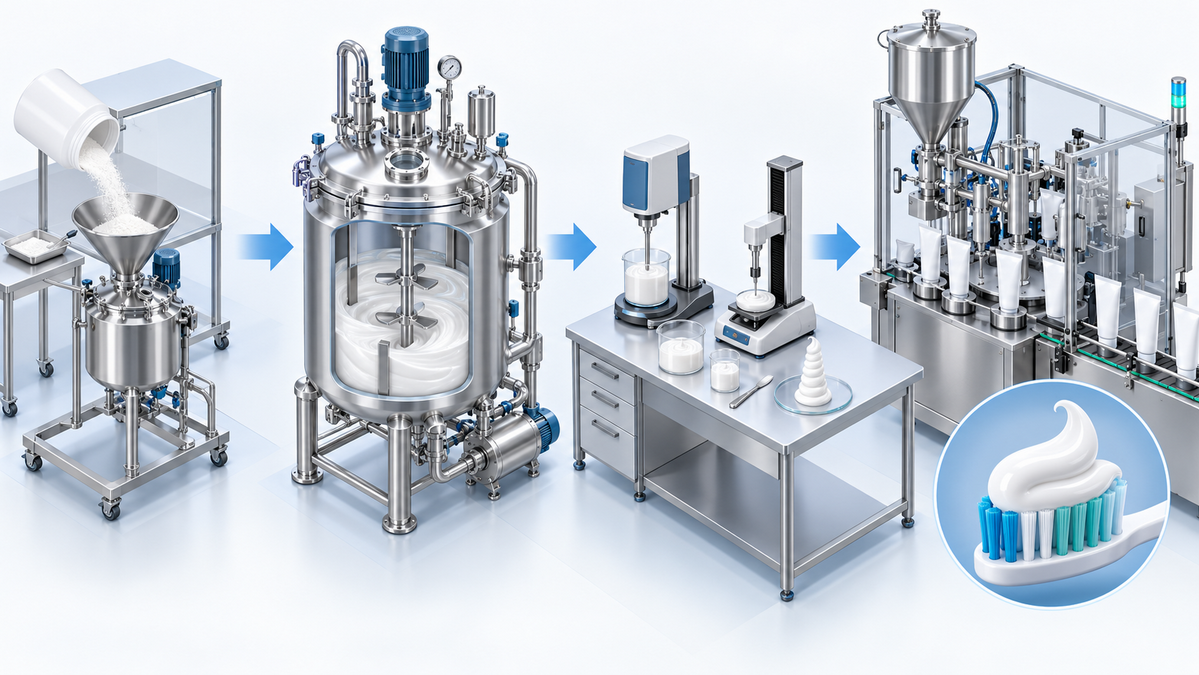
HPMC contains hydroxypropyl and methoxy groups, while HEMC contains hydroxyethyl and methoxy groups. Their different chemical structures can influence viscosity development, hydration, flow behavior, ribbon stand-up, and compatibility within a toothpaste formula.
Yes. HPMC can help create a more structured toothpaste system that resists collapse after extrusion. It may improve ribbon definition, abrasive suspension, and storage stability when the correct grade and dosage are selected.
HEMC can support smooth and controlled toothpaste extrusion when properly selected for the formula. It may help create a balanced relationship between product body and flow under squeezing pressure.
Viscosity is only one part of toothpaste performance. A formula also needs appropriate yield stress, shear-thinning behavior, extrusion force, elasticity, stability, and ribbon stand-up. Two toothpaste formulas can have similar viscosity but very different performance in the final tube.
In some formulations, a combination of cellulose ethers may be considered to fine-tune structure, flow, and stability. Any blend should be tested carefully for compatibility, processing behavior, storage stability, and consumer texture.
Hard-to-squeeze toothpaste can result from viscosity increase, binder overuse, water redistribution, abrasive interaction, temperature exposure, changes in surfactant behavior, or packaging-related effects. Storage testing is important for identifying the cause.
Manufacturers should create matched prototypes using the same base formula and compare viscosity, yield stress, extrusion force, ribbon stand-up, stability, abrasive suspension, filling behavior, and sensory performance. Testing should be repeated after storage in the final package.
1. [LANDERCOLL Cellulose Ether for Toothpaste] — Information on cellulose ether requirements, toothpaste performance considerations, product-grade verification, documentation, and application evaluation.
2. [The Functional Role of HPMC in Modern Toothpaste Formulations] — Discussion of HPMC rheology control, pseudoplastic behavior, abrasive suspension, stability, and toothpaste extrusion performance.
3. [Cellulose Binders and Thickeners for Toothpaste Application] — Background information on toothpaste binders, thickening systems, rheology, paste stability, and manufacturing performance.
4. [Cellulose Ether Technical Data Sheet Guide: MHEC and HPMC] — Overview of technical data parameters relevant to selecting cellulose ether grades, including viscosity, pH, moisture, ash content, particle size, and product consistency.
5. [Applications of CMC and HEC in Daily Chemical Products] — Industry context covering cellulose-based rheology modifiers, suspension performance, thickening, and toothpaste-related daily chemical applications.
6. [Cellulose Ethers, Encyclopedia of Polymer Science and Technology] — Reference material on cellulose ether chemistry, classifications, and representative polymer properties.


