


close
Choose Your Site
Global
Social Media
Views: 222 Author: Shengda Publish Time: 2026-05-25 Origin: Site


As a cellulose ether specialist working with construction material manufacturers for over two decades, I've witnessed firsthand how the right additive selection dramatically impacts spray mortar performance and project economics. When it comes to minimizing rebound rates and material waste in spray mortar applications, the choice between Hydroxypropyl Methyl Cellulose (HPMC) and Hydroxyethyl Methyl Cellulose (HEMC) represents one of the most critical decisions contractors and formulation engineers face today.
The construction additives market is projected to reach USD 71.33 billion by 2034, with cellulose ethers playing an increasingly vital role in performance optimization. Specifically, the cellulose ether for mortar market is expected to grow from USD 292 million in 2025 to USD 356 million by 2032, reflecting a 3.5% CAGR. This growth is driven by the construction industry's relentless pursuit of efficiency, sustainability, and waste reduction—objectives that directly align with proper cellulose ether selection in spray mortar formulations. [fortunebusinessinsights]
Rebound rate—the percentage of sprayed mortar that fails to adhere to the substrate and falls away—represents a significant source of material waste in construction projects. Industry standards typically aim for sidewall rebound rates below 15% and arch rebound rates below 25% in tunnel shotcrete applications. However, without proper additive optimization, actual field conditions often produce rebound rates substantially higher than these benchmarks. [facebook]
Recent research demonstrates that mechanically triggered core-shell materials containing HPMC can reduce rebound rates to as low as 7.95% when dosed at 0.07%, representing a 35.15% reduction compared to conventional formulations. This dramatic improvement translates directly into cost savings through reduced material consumption, lower labor costs, and enhanced project timelines. [sciencedirect]
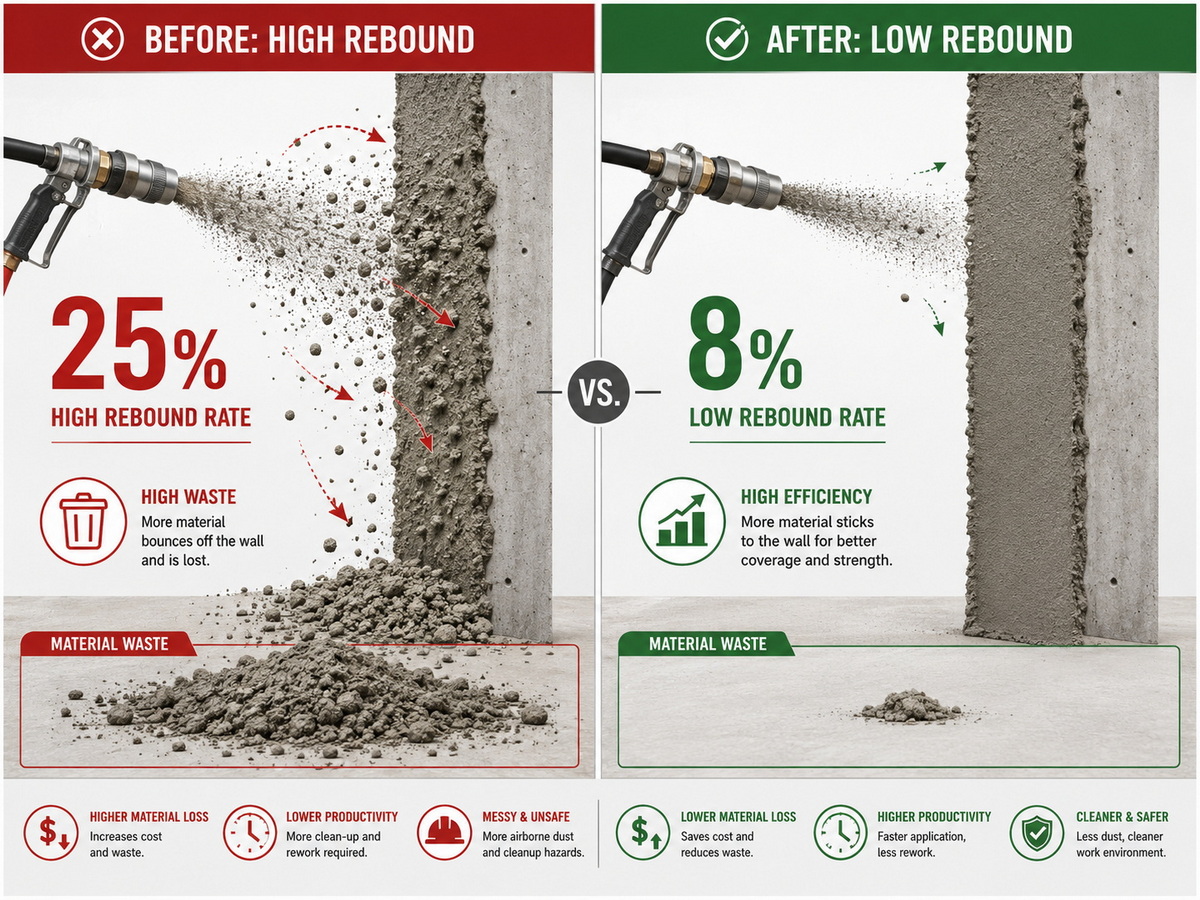
The rebound rate in spray mortar applications depends on multiple interrelated variables including sand ratio (the most influential factor), water-cement ratio, cementitious material content, and critically, the type and dosage of cellulose ether additives. The cellulose ether's contribution centers on its ability to optimize viscosity, water retention, thixotropy, and adhesion—all properties that directly influence how mortar behaves during spraying and initial contact with substrates. [agris.fao]
HPMC offers an exceptionally wide viscosity range from 400 to 200,000 mPa·s, providing formulation flexibility across diverse application requirements. This broad spectrum allows engineers to fine-tune mortar consistency for specific spray equipment, substrate conditions, and environmental factors. For spray mortar applications, viscosities of 100,000 mPa·s are commonly employed in putty formulations, while 200,000 mPa·s grades excel in tile adhesives and masonry mortars. [tenessy]
The viscosity contribution of HPMC directly impacts the mortar's ability to remain suspended during spraying and resist sagging upon application. Higher viscosity grades enhance cohesion and reduce segregation and bleeding, both critical factors in minimizing rebound. [kdochem]
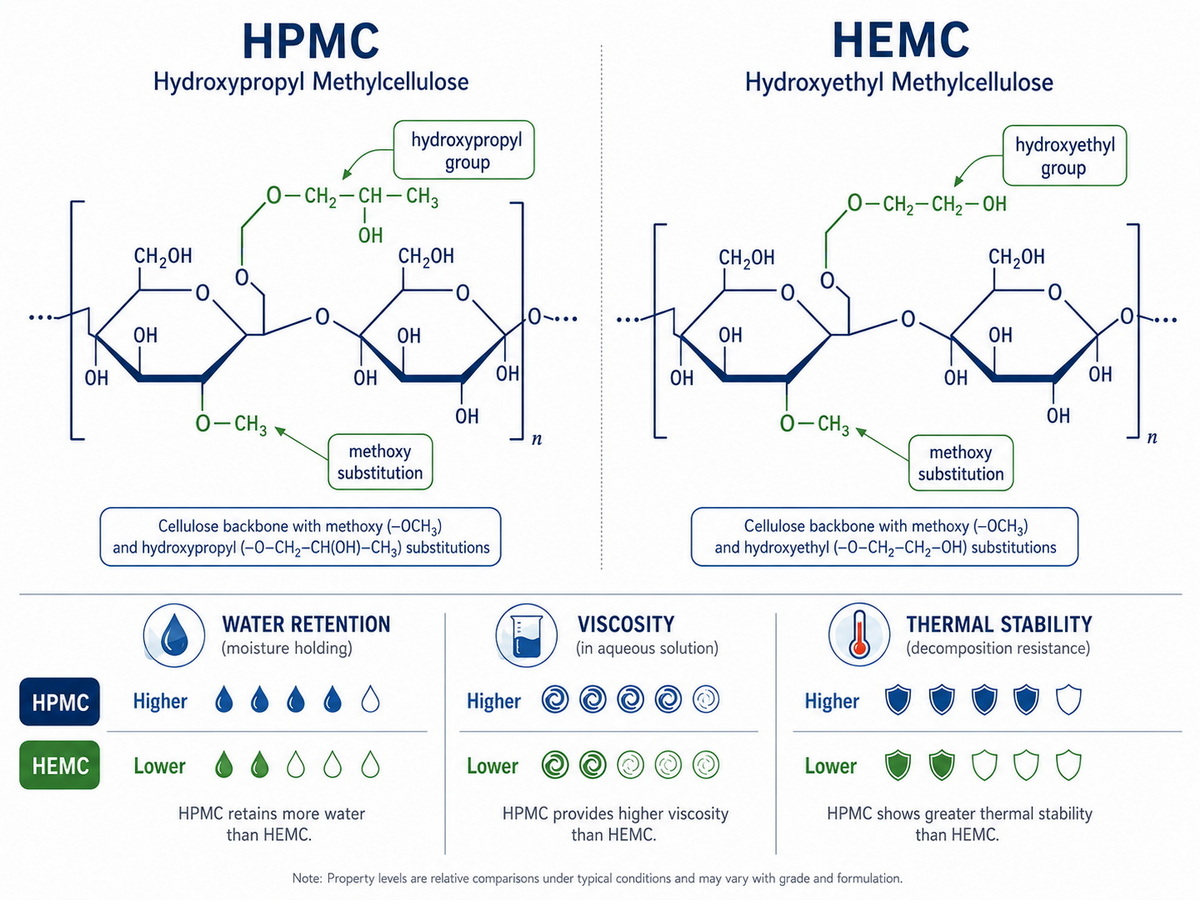
HPMC demonstrates excellent water retention properties, which serve multiple functions in spray mortar systems. By retaining water within the mortar matrix, HPMC ensures adequate hydration of cementitious materials, extending open time and improving bonding effectiveness. This extended workability window is particularly valuable in large-scale spray applications where consistent performance over time is essential. [tenessy]
The water retention capacity increases with higher viscosity grades, finer particle fineness, and greater dosage levels. However, optimization requires balance—excessive water retention can lead to increased overall water demand and potentially compromise compressive strength if not properly formulated with complementary additives. [celluloseether]
Industry practice typically employs HPMC dosages ranging from 0.1% to 0.5% of dry mortar weight. Within this range, the specific dosage must be calibrated based on desired viscosity, environmental conditions, and substrate characteristics. For spray mortar specifically designed to minimize rebound, dosages toward the higher end of this spectrum (0.3-0.5%) generally produce superior results, though field testing remains essential for optimization. [facebook]
HEMC exhibits superior water solubility and dispersibility compared to HPMC, enabling faster and more efficient mixing—a crucial advantage in mechanized spray mortar production. This enhanced dispersibility stems from the hydroxyethyl groups in HEMC's molecular structure, which increase hydrophilicity and facilitate rapid hydration. [linkedin]
The higher gel temperature of HEMC compared to standard HPMC means it can disperse effectively at elevated temperatures and dissolve upon cooling, similar to hot-dissolving HPMC formulations. This characteristic provides operational flexibility in varied climatic conditions and heated mixing processes. [linkedin]
HEMC solutions demonstrate higher viscosity at lower concentrations and exhibit more pseudoplastic (shear-thinning) rheological behavior. This pseudoplasticity is particularly advantageous in spray mortar applications—the material flows easily under the high shear conditions within spray equipment and nozzles, yet rapidly recovers viscosity upon deposition, minimizing sag and rebound on vertical or overhead surfaces. [kimachemical]
The superior anti-sag properties of HEMC-modified mortars directly contribute to reduced rebound rates by ensuring applied material maintains position immediately after contact with the substrate. This positioning ability is essential for achieving the vertical surface stability demanded in wall plastering and tunnel lining applications. [linkedin]
HEMC's molecular structure imparts enhanced resistance to alkaline environments and salt contamination. Given that cementitious mortars are inherently highly alkaline (pH 12-13), this stability ensures consistent performance throughout the mortar's service life. For projects in coastal regions or high-humidity, high-salt environments, HEMC represents the more robust choice. [tenessy]
This alkali resistance translates to more predictable long-term performance in spray mortar applications, where the additive must maintain effectiveness as cement hydration progresses and pore solution chemistry evolves.
| Property | HPMC | HEMC |
|---|---|---|
| Water Retention Capacity | Excellent, viscosity-dependent | Excellent to superior, smoother consistency (https://tenessy.com/hpmc-vs-hemc-which-is-better-for-your-project/) |
| Temperature Sensitivity | Moderate gel temperature | Higher gel temperature (https://www.linkedin.com/pulse/soluble-performance-comparison-hpmc-hec-hemc-its-explanation-joe-chow) |
| Optimal Dosage Range | 0.1-0.5% of dry mortar (https://www.facebook.com/kemoxcellulose/photos/hpmc-and-rdp-two-essential-mortar-additivesconventional-mortars-which-are-primar/643011675396673/) | 0.1-0.5% of dry mortar (comparable) |
| Salt Resistance | Good | Superior (https://tenessy.com/hpmc-vs-hemc-which-is-better-for-your-project/) |
| Alkali Resistance | Good | Enhanced (https://tenessy.com/hpmc-vs-hemc-which-is-better-for-your-project/) |
Both cellulose ethers excel at water retention, but HEMC provides a smoother consistency that may offer advantages in achieving uniform spray patterns and consistent layer thickness. The slightly superior water retention of HEMC can be particularly beneficial in hot weather conditions or porous substrates where rapid moisture loss might otherwise compromise adhesion. [tenessy]
HPMC's ability to enhance viscosity and adhesion makes it highly suitable for tile adhesives and wall putties where strong initial tack is essential. In spray mortar contexts, this translates to effective particle binding during flight and initial contact, reducing the likelihood of particle bounce-back. [tenessy]
HEMC's excellent thickening and bonding properties combined with higher thermal stability position it ideally for high-temperature environments and applications requiring smooth consistency. The higher gel temperature means HEMC-modified mortars maintain performance in elevated ambient temperatures or when mixed with warm water—conditions that might compromise HPMC effectiveness. [tenessy]
Choose HPMC when:
- Working with cement-based spray mortars requiring extended open time and excellent fluidity [tenessy]
- Projects demand cost-effective performance in conventional construction environments [tenessy]
- Application involves horizontal or low-slope surfaces where extreme anti-sag properties are less critical
- Standard atmospheric conditions prevail without extreme heat or salt exposure
Choose HEMC when:
- Formulating gypsum-based spray mortars or highly alkaline systems [tenessy]
- Projects occur in coastal, high-humidity, or high-salt environments [tenessy]
- Application involves vertical or overhead spraying where superior anti-sag performance is essential [kimachemical]
- Higher viscosity at lower dosages offers formulation or cost advantages [kimachemical]
- High-temperature conditions require enhanced thermal stability [tenessy]
Modern spray mortar formulations rarely rely on cellulose ethers alone. Research consistently demonstrates that composite additive systems combining cellulose ethers with complementary materials like redispersible polymer powders (RDP), air-entraining agents, and specialized pumping agents achieve superior overall performance. [linkedin]
When cellulose ether is used in isolation, while it increases cohesion and reduces segregation, it may significantly increase water consumption, potentially leading to decreased compressive strength. Similarly, air-entraining agents alone reduce segregation and water demand but increase porosity, again compromising strength. The synergistic combination of these additives, properly balanced, delivers optimal workability, minimal rebound, and adequate mechanical properties. [linkedin]
Effective dosage optimization follows a systematic approach:
1. Establish baseline viscosity targets based on spray equipment specifications and substrate characteristics
2. Begin with conservative dosages (0.1-0.2%) and incrementally increase while monitoring workability, pumpability, and spray pattern
3. Conduct field rebound rate measurements using standardized collection and weighing protocols at various dosage levels
4. Balance cellulose ether dosage with complementary additives, particularly RDP (typically 1-5% of dry mortar weight) [facebook]
5. Validate mechanical properties (compressive strength, bond strength) to ensure additive optimization doesn't compromise performance
6. Document environmental conditions (temperature, humidity, substrate moisture) during optimization trials for future reference
Industry experience suggests that dosages in the 0.2-0.4% range typically provide optimal cost-performance balance for most spray mortar applications, though specific requirements may justify adjustments outside this window.
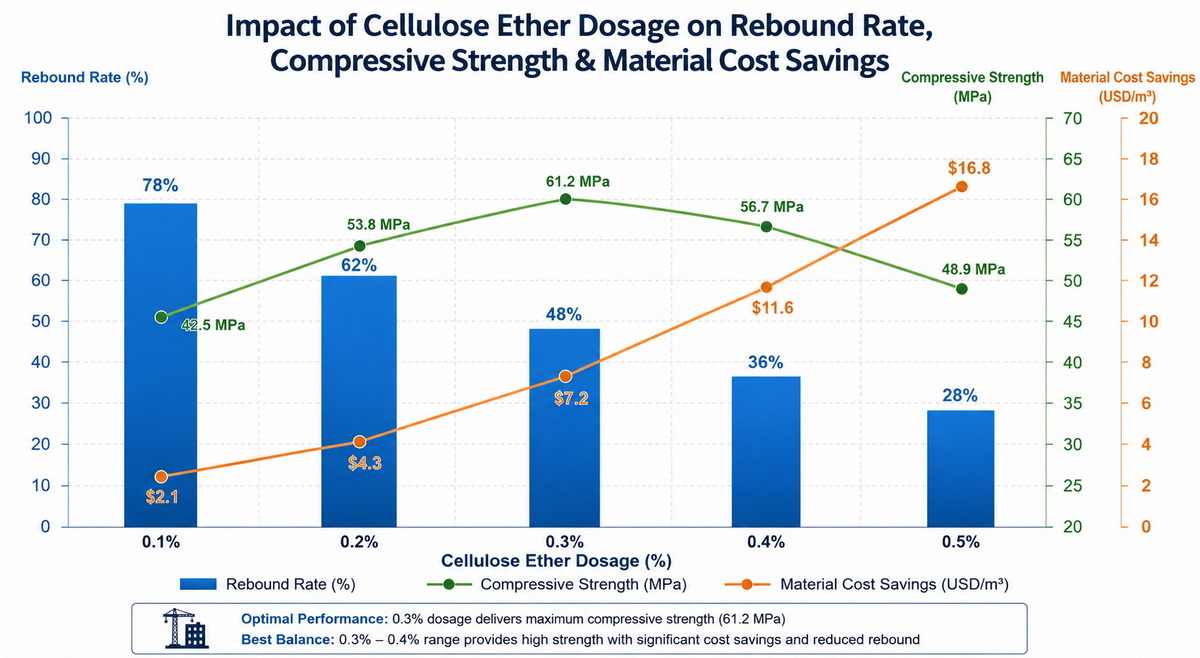
Reducing rebound rate from industry-typical levels of 15-25% to optimized levels of 8-12% through proper cellulose ether selection and dosage represents substantial material savings. On a project consuming 100 tons of dry mortar, a reduction from 20% to 10% rebound translates to 11 tons of material savings (accounting for the effective material needed)—a direct cost reduction proportional to material unit price.
Beyond raw material costs, reduced rebound diminishes disposal expenses for rebounded material, labor costs for cleanup and reapplication, and equipment wear from processing excess material through the system.
The construction industry faces increasing pressure to minimize waste and reduce environmental impact. Construction waste management represents a significant challenge, with governments worldwide implementing policies to reduce waste generation, maximize reusing and recycling, and minimize landfill intake. [gov]
Optimized spray mortar formulations contribute to sustainability objectives by:
- Reducing raw material extraction and processing requirements proportional to waste reduction
- Lowering carbon emissions associated with material production and transportation
- Minimizing landfill burden from construction waste disposal
- Improving resource efficiency in alignment with circular economy principles
The growing emphasis on eco-friendly building materials and sustainable construction practices further drives adoption of optimized additive systems that enhance material efficiency. [strategicrevenueinsights]
Lower rebound rates accelerate project completion through:
- Reduced material handling and logistics requirements
- Fewer reapplication cycles to achieve specified thickness
- Enhanced productivity from uninterrupted spraying operations
- Improved surface quality with more uniform thickness and fewer voids requiring remediation
These timeline improvements translate to reduced indirect costs (equipment rental, site overhead, financing charges) and earlier project revenue realization or facility utilization.
In tunnel construction and underground excavation support, shotcrete (sprayed concrete/mortar) serves critical structural and safety functions. A typical tunnel shotcrete application combines HEMC (for its superior alkaline resistance and anti-sag properties) with optimized aggregate gradation and admixture packages. [heatrod]
Field research on tunnel shotcrete demonstrates that sand ratio represents the most influential factor affecting rebound rate, followed by water-cement ratio and cementitious material content. Within these parameters, the cellulose ether type and dosage significantly influence the system's rheology and thus practical rebound performance. [agris.fao]
Projects implementing optimized HEMC-based formulations in tunnel applications report achieving sidewall rebound rates of 10-12% and arch rebound rates of 18-22%—both well within specification limits and representing meaningful material savings over conventional formulations.
Exterior wall spray plaster applications benefit from HEMC's excellent water retention, thermal stability, and smooth consistency, making it particularly suitable for exposed facades. In a large-scale commercial development project in Southeast Asia, optimization of HEMC dosage from 0.15% to 0.28% reduced measured rebound rate from 17.3% to 9.8% while maintaining specified compressive strength and bond performance. [tenessy]
The project achieved material cost savings of approximately USD 23,000 on mortar consumption totaling 380 tons, with additional savings from reduced labor hours for cleanup and reduced equipment maintenance from lower total material throughput.
While not strictly "spray" mortar in the traditional sense, centrifugally-applied cement mortar lining for pipe rehabilitation shares similar performance requirements. A case study from Williamsburg, Virginia, employed Microsilica Restoration Mortar with optimized cellulose ether content to line 600 linear feet of 36-54 inch reinforced concrete pipe. [madewell]
The optimized formulation achieved near-zero rebound through the combination of centrifugal application technique and rheology modification via cellulose ethers, demonstrating that when application method and material properties are properly matched, dramatic waste reduction becomes achievable.
As a formulation specialist working with manufacturers like Shandong Shengda New Material Co., Ltd., I recommend this systematic approach to developing optimized spray mortar formulations:
1. Define application requirements (substrate type, spray orientation, environmental conditions, thickness specifications, mechanical property targets)
2. Select cellulose ether type (HPMC vs. HEMC) based on comparative analysis framework outlined above
3. Determine viscosity grade appropriate to spray equipment and desired rheology
4. Establish complementary additive package (RDP, air-entraining agents, pumping aids) with preliminary dosages
5. Prepare laboratory trial batches across dosage range (e.g., 0.1%, 0.2%, 0.3%, 0.4%)
6. Conduct rheological testing (flow table, rotational viscometry) to characterize fresh properties
7. Perform spray trials using actual field equipment to assess pumpability, spray pattern, and adhesion
8. Measure rebound rate using collection and weighing method at each dosage level
9. Test mechanical properties (compressive strength, bond strength, shrinkage) on sprayed specimens
10. Optimize formulation based on balanced consideration of workability, rebound, mechanical properties, and cost
11. Validate in field conditions before full-scale implementation
12. Document specification including mixing procedures, equipment settings, and quality control parameters
Consistent spray mortar performance requires rigorous quality control of both incoming materials and fresh mortar properties:
Incoming Material Testing:
- Cellulose ether viscosity (standardized 2% aqueous solution at 20°C)
- Moisture content (should be ≤5%)
- Particle size distribution (affects dissolution and dispersion)
- pH value (typically 6-8 for cellulose ethers)
Fresh Mortar Testing:
- Consistency/flow (cone slump or flow table method)
- Air content (pressure or volumetric method)
- Density (unit weight)
- Pot life/open time monitoring
Applied Mortar Testing:
- In-place thickness measurement (probe or electromagnetic methods)
- Visual inspection for uniformity and defects
- Bond strength testing (pull-off test per ASTM C1583 or equivalent)
- Compressive strength (cores or molded specimens)
The cellulose ether industry continues innovating to address evolving construction needs. Emerging developments include:
- Mechanically-triggered core-shell cellulose ether systems that respond to spray shear forces, releasing performance-enhancing components upon application [sciencedirect]
- Surface-modified instant-dispersing grades that combine rapid mixing with controlled viscosity development [linkedin]
- Hybrid cellulose ether formulations blending HPMC and HEMC characteristics for optimized performance profiles
- Nano-enhanced cellulose ethers incorporating silica or other nanoparticles for superior adhesion and mechanical properties
As sustainability pressures intensify, the cellulose ether industry is exploring:
- Enhanced bio-based content leveraging sustainable cellulose sources
- Reduced production energy consumption through process optimization
- Extended performance at lower dosages minimizing additive consumption
- Compatibility with recycled aggregates and supplementary cementitious materials supporting circular economy initiatives [polyu.edu]
The integration of digital technologies with material science offers promising developments:
- Real-time rheology monitoring during mixing and pumping to ensure consistency
- Automated dosage adjustment based on environmental sensors and quality feedback
- Predictive modeling of rebound rate and application quality based on formulation and conditions
- Machine learning optimization of additive packages for specific applications and constraints
The choice between HPMC and HEMC for spray mortar applications demands careful consideration of application requirements, environmental conditions, substrate characteristics, and economic constraints. Both cellulose ethers offer proven performance in reducing rebound rates and material waste when properly selected and dosed.
HPMC excels in cement-based systems requiring extended workability and cost-effective performance in standard conditions, while HEMC provides advantages in alkaline environments, high-temperature applications, and situations demanding superior anti-sag properties and salt resistance. The growing cellulose ether market, projected to reach USD 356 million by 2032, reflects the construction industry's recognition of these additives' critical role in performance optimization and sustainability. [intelmarketresearch]
For manufacturers like Shandong Shengda New Material Co., Ltd. and the contractors they serve, the path forward involves systematic formulation optimization, rigorous quality control, and continuous innovation to achieve the dual objectives of superior construction performance and environmental responsibility. By reducing rebound rates from typical levels of 15-25% to optimized levels of 8-12% or lower, properly formulated spray mortars deliver substantial material savings, accelerated project timelines, and meaningful sustainability benefits.
As construction practices evolve toward greater mechanization, sustainability, and quality control, the role of advanced cellulose ether technology in spray mortar formulations will only grow in importance. The expertise to select, formulate, and optimize these critical additives represents a competitive advantage for manufacturers and a value proposition for the global construction industry.
For construction-grade and daily chemical-grade cellulose ether solutions optimized for your specific spray mortar applications, contact Shandong Shengda New Material Co., Ltd. Our research-backed formulation expertise and comprehensive product portfolio deliver measurable rebound reduction and material savings for projects worldwide.
A1: The standard dosage range for both HPMC and HEMC in spray mortar applications is 0.1% to 0.5% of dry mortar weight. For optimal rebound reduction, dosages typically fall in the 0.2-0.4% range, though specific requirements depend on viscosity grade, environmental conditions, substrate characteristics, and complementary additives. Field testing is essential to determine the optimal dosage for your particular application, as over-dosing can increase water demand and potentially compromise strength, while under-dosing fails to achieve necessary viscosity and adhesion properties. [facebook]
A2: Cellulose ethers reduce rebound rate through multiple mechanisms: (1) Enhanced viscosity increases mortar cohesion, keeping particles bound together during spraying and impact; (2) Superior water retention maintains workability and prevents premature stiffening, allowing particles to deform and adhere upon contact; (3) Improved thixotropy enables flow under spray shear but rapid viscosity recovery upon deposition; (4) Increased adhesion between mortar and substrate reduces bounce-back; and (5) Anti-sag properties (particularly with HEMC) help applied material maintain position on vertical surfaces. Research demonstrates rebound rate reductions of 35% or more with optimized cellulose ether formulations. [kdochem]
A3: For exterior wall spray applications, HEMC is generally the preferred choice due to several key advantages: (1) Higher thermal stability performs better in variable outdoor temperatures; (2) Superior salt resistance is essential in coastal or humid environments; (3) Enhanced alkaline resistance ensures long-term performance in cementitious systems; and (4) Excellent anti-sag properties maintain material position on vertical surfaces. However, if cost is a primary concern and the environment is temperate without extreme salt exposure, HPMC can deliver adequate performance at potentially lower cost. The specific decision should factor in local climate, substrate material, exposure conditions, and budget constraints. [kimachemical]
A4: Yes, hybrid formulations combining HPMC and HEMC are increasingly employed to leverage the complementary strengths of each cellulose ether type. Such blends can optimize the balance between workability (where HPMC excels), anti-sag performance (where HEMC excels), cost-effectiveness, and environmental resistance. Typical blend ratios range from 30:70 to 70:30 HPMC:HEMC, depending on which properties require emphasis. The formulation approach should include systematic testing to ensure the blend provides superior performance compared to either component alone and that no adverse interactions occur. Complementary additives like redispersible polymer powders should also be optimized for the specific cellulose ether blend. [linkedin]
A5: Proper storage and handling of cellulose ethers is critical to maintaining consistent spray mortar performance: (1) Store in cool, dry conditions (15-25°C, <60% relative humidity) away from moisture sources; (2) Keep packaging sealed until ready for use to prevent moisture absorption—cellulose ethers are hygroscopic and moisture pickup degrades performance; (3) Use within 12-24 months of manufacture for optimal properties; (4) Protect from contamination by using clean, dedicated equipment for handling; (5) Add to mixing water gradually with good agitation to prevent clumping and ensure complete dispersion; and (6) Monitor incoming material quality through viscosity testing and visual inspection. Cellulose ether moisture content should be ≤5% for consistent performance. Degraded or improperly stored cellulose ether will exhibit reduced viscosity, compromised water retention, and unpredictable rheology, potentially increasing rebound rates and reducing applied mortar quality. [celluloseether]
1. Tenessy. (2025). "HPMC vs HEMC: Which is Better for Your Project?" Retrieved from https://tenessy.com/hpmc-vs-hemc-which-is-better-for-your-project/
2. ScienceDirect. (2026). "Mechanically triggered core-shell materials for sprayed mortar." Retrieved from https://www.sciencedirect.com/org/science/article/pii/S2366131326000136
3. Fortune Business Insights. (2026). "Construction Additives Market Size, Industry Share, Forecast, 2034." Retrieved from https://www.fortunebusinessinsights.com/construction-additives-market-102868
4. KDOCHEM. (2024). "Cellulose ether can be used as a retardant, water-retaining agent, thickener and binder." Retrieved from https://www.kdochem.com/news/cellulose-ether-hydroxy-ethyl-methyl-cellulose-in-spray-mortar.html
5. LinkedIn. (2025). "How to Select Cellulose Ether (HPMC/HEMC) in Dry-Mix Mortar." Retrieved from https://www.linkedin.com/pulse/how-select-cellulose-ether-hpmchemc-dry-mix-mortar-amy-wang-gum7c
6. Celluloseether.com. "What are the functions of cellulose ethers?" Retrieved from https://celluloseether.com/what-are-the-functions-of-cellulose-ethers/
7. Kimachemical. (2023). "Comparison between HEMC and HPMC in the field of coatings." Retrieved from https://www.kimachemical.com/news/comparison-between-hemc-and-hpmc-in-the-field-of-coatings/
8. LinkedIn. (2023). "Soluble Performance Comparison of HPMC, HEC, HEMC and Its Explanation." Retrieved from https://www.linkedin.com/pulse/soluble-performance-comparison-hpmc-hec-hemc-its-explanation-joe-chow
9. Intel Market Research. (2026). "Cellulose Ether for Mortar Market Outlook 2026-2032." Retrieved from https://www.intelmarketresearch.com/cellulose-ether-for-mortar-market-23920
10. Wiley Online Library. (2022). "Analysis of Rebound Rate of Wet Shotcrete Based on Experiment and Simulation." Retrieved from https://onlinelibrary.wiley.com/doi/10.1155/2022/1840580
11. Hong Kong Government. (2025). "Construction Waste Management." Retrieved from https://www.gov.hk/en/residents/environment/waste/management/constructionwaste.htm


