


close
Choose Your Site
Global
Social Media
Views: 243 Author: Shengda Publish Time: 2026-08-10 Origin: Site


Content Menu
>> Common construction applications
● How To Choose the Right Grade
● FAQ
>> 1. What is HPMC mainly used for?
>> 2. What is the difference between low and high viscosity HPMC?
>> 3. Why is HPMC important in tile adhesive?
>> 4. Can HPMC be used in pharmaceutical products?
>> 5. Is HPMC suitable for personal care formulations?
Hydroxypropyl Methyl Cellulose, or HPMC, is one of the most widely used cellulose ethers in modern industrial formulation. It is valued for its thickening, binding, film-forming, water-retention, and stabilizing properties, making it useful in a wide range of products and systems.
For manufacturers and formulators, HPMC is not just a raw material. It is a performance ingredient that can shape how a product behaves during processing, application, and final use. Choosing the right grade is essential because viscosity, substitution pattern, and formulation compatibility all affect the final result.
HPMC is a non-ionic, water-soluble cellulose derivative made from natural cellulose through etherification. It is commonly used because it offers a practical balance of stability, functionality, and versatility across multiple industries.
In simple terms, HPMC helps formulas become thicker, more stable, easier to apply, and more consistent. In construction, it improves mortar and adhesive performance. In pharmaceuticals, it supports tablets, coatings, and controlled release systems. In personal care, it helps create smooth textures and stable gels. 
Different HPMC grades behave differently in water, under heat, and within complex formulations. Viscosity level, hydration speed, and application requirements all influence which grade is most suitable.
A grade that works well in tile adhesive may not be ideal for tablet coating. Likewise, a grade designed for film formation may not provide the body needed in wall putty or plaster. This is why product selection should always begin with the end-use requirement, not just the ingredient name.
HPMC is often categorized by viscosity level and end-use performance. The table below gives a practical overview of how grades are usually matched to applications.
| Grade type | Main characteristics | Typical uses |
|---|---|---|
| Low viscosity | Easier flow, faster processing, lighter body | Tablet coating, some liquid systems |
| Medium viscosity | Balanced thickening and workability | Tile adhesives, mortars, wall putty |
| High viscosity | Strong water retention and body | Plasters, thick-bed mortars, controlled-release systems |
| Film-forming grades | Smooth, flexible film performance | Pharmaceutical coatings, oral films, cosmetic films |
These categories are not fixed rules, but they provide a useful starting point for formulation planning. Final selection should always be confirmed through application testing.
Construction remains one of the most important application areas for HPMC. It is widely used in tile adhesives, cement-based mortars, plasters, renders, skim coats, and wall putties.
In these systems, HPMC helps improve water retention, workability, sag resistance, and open time. Better water retention allows cement to hydrate properly, which supports stronger adhesion and a more stable application process. 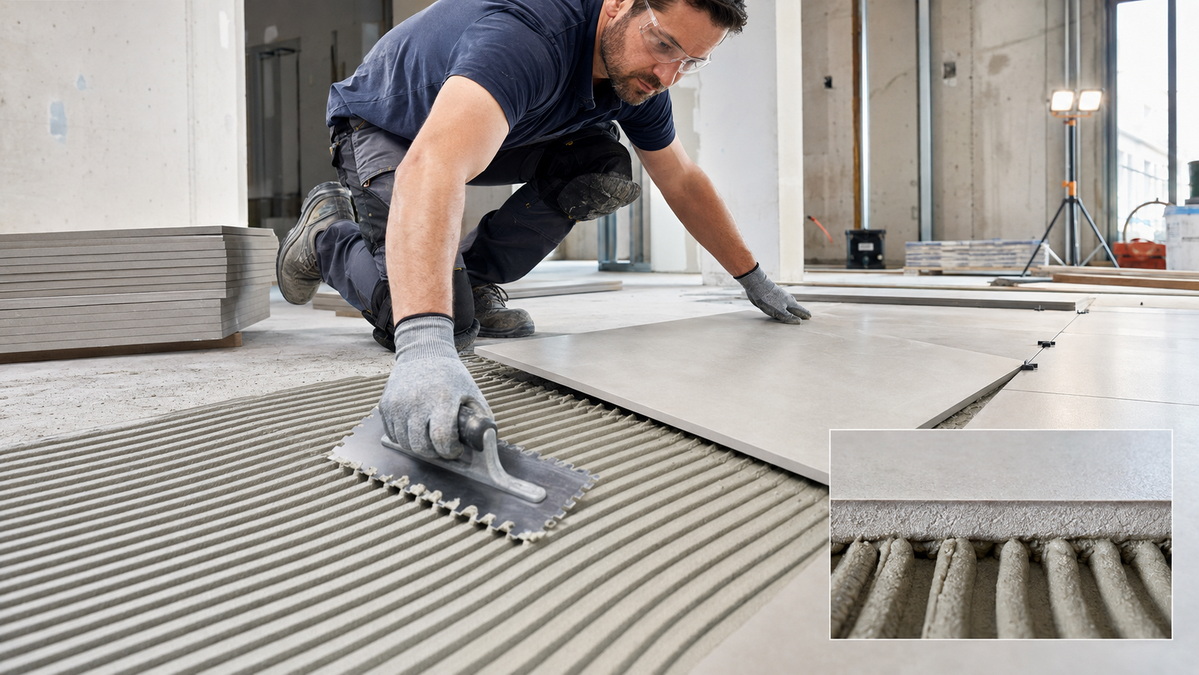
- Improves water retention and helps reduce premature drying.
- Supports smoother application and better workability.
- Helps reduce sagging in vertical applications.
- Extends open time, giving installers more flexibility.
- Improves consistency across dry-mix mortar systems.
1. Tile adhesives.
2. Cement mortars.
3. Wall putty and skim coat.
4. Plasters and renders.
5. Self-leveling compounds.
For tile adhesive, the choice of HPMC grade is especially important. A formulation for large-format tiles, for example, may require stronger sag resistance and longer open time than a formula for small ceramic tiles. This is where medium-to-high viscosity grades are often preferred.
As a general principle, lower viscosity can support easier flow, while higher viscosity can improve water retention and body. The best choice depends on the final application, local climate, substrate type, and required installation behavior.
HPMC has long been used in pharmaceutical formulations because of its safety profile, functional flexibility, and stable performance. It is commonly used as a binder, film former, capsule material, and release-controlling polymer.
In tablet production, HPMC helps bind particles together and supports a strong final tablet structure. In coating systems, it creates smooth and protective films. In controlled-release products, it helps manage how the active ingredient is released over time. 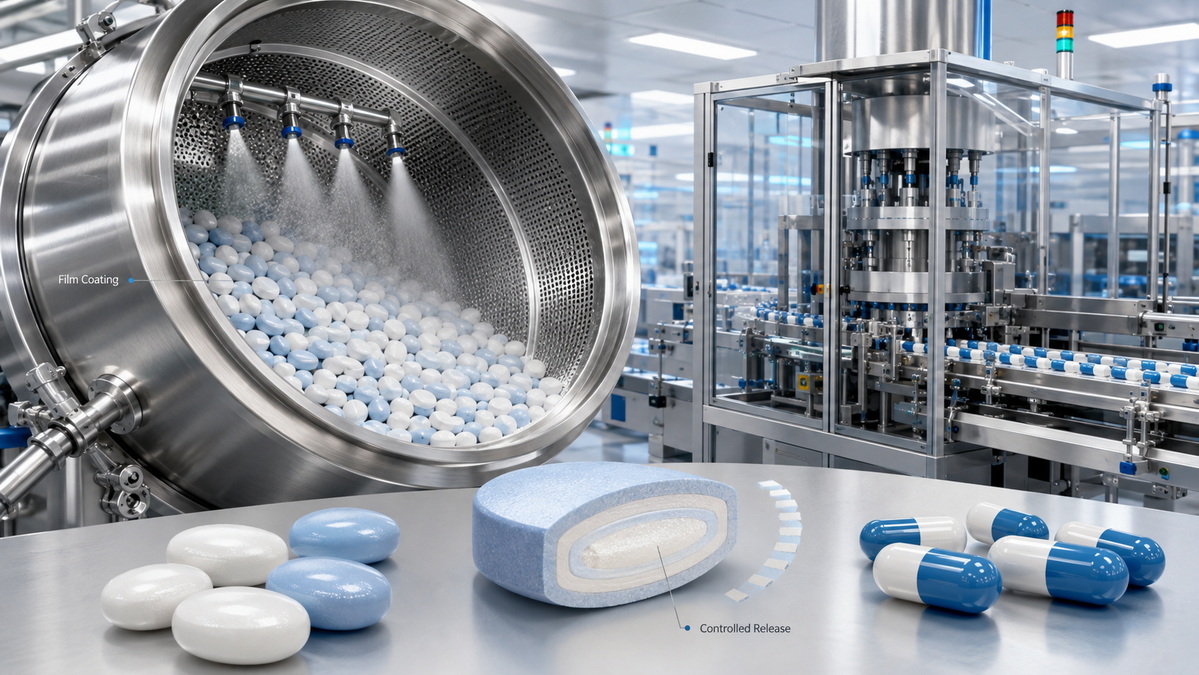
- Tablet binding.
- Film coating.
- Capsule shells.
- Mucoadhesive formulations.
- Controlled-release matrix tablets.
Pharmaceutical developers should evaluate compatibility with salts, surfactants, pH conditions, and other excipients because these factors may influence viscosity or gel behavior. This is especially important when HPMC is used in extended-release or moisture-sensitive formulations.
HPMC is also widely used in personal care products as a thickener, stabilizer, suspending agent, and gelling agent. It can be found in shampoos, lotions, facial gels, eye care products, and other cosmetic or hygiene formulations.
Its value lies in its ability to improve texture and product stability while maintaining a smooth sensory profile. For formulators seeking plant-based or mild ingredients, HPMC can be a useful option in modern personal care systems.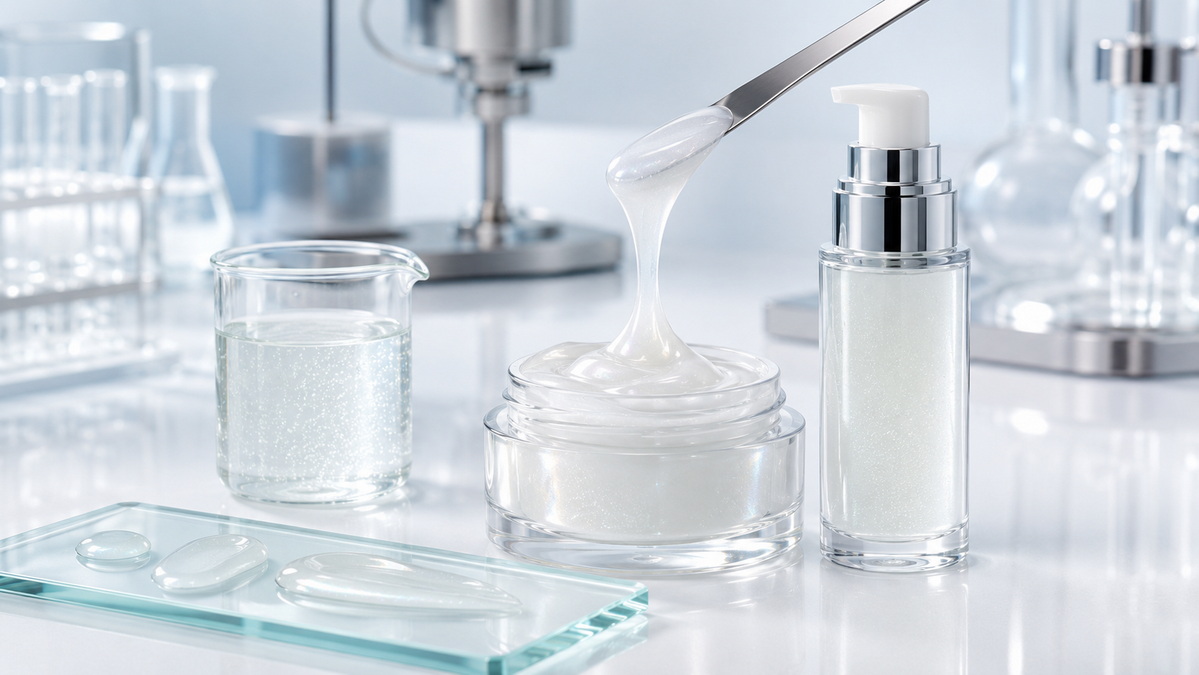
- Improves product thickness and texture.
- Helps stabilize emulsions and suspensions.
- Supports clear or translucent gels.
- Enhances product spreadability and consistency.
A successful HPMC selection process begins with the target application. Once the formula goal is clear, the next step is to match the grade to the required performance characteristics.
1. Define the application clearly.
2. Decide whether the priority is thickening, water retention, film formation, or release control.
3. Match viscosity to the required flow and consistency.
4. Check hydration behavior and processing conditions.
5. Test compatibility with all other ingredients.
6. Confirm final performance with real application trials.
In construction, for example, water retention and open time may matter more than clarity or film formation. In pharmaceuticals, film quality and release profile may matter more than bulk thickness. The formulation target should always guide the grade decision.
Demand for cellulose ethers continues to grow as construction, pharmaceutical manufacturing, and personal care industries expand. One recent market estimate values the global cellulose ethers and derivatives market at US$ 10.3 billion in 2026 and projects growth to US$ 19.2 billion by 2033.
This growth reflects rising demand for functional, reliable, and sustainable ingredients. It also shows that buyers are paying more attention to product consistency, technical support, and application-specific performance.
When comparing suppliers, do not focus only on viscosity numbers. Ask for application data, processing recommendations, and test results that match your actual use case. A good supplier should be able to explain how the grade performs in your system, not only in a generic specification sheet.
If possible, evaluate samples under real production conditions. Small differences in raw material behavior can lead to major differences in workability, stability, and final product quality.
HPMC is a highly adaptable cellulose ether used in construction, pharmaceuticals, and personal care products. Its real value comes from the way different grades influence water retention, viscosity, film formation, and release behavior.
The right grade can improve manufacturing efficiency, product stability, and end-use performance. For formulators, the best approach is to define the application first, then match the grade to the functional need.
Shandong Shengda New Material Co., Ltd. provides HPMC, HEMC, and HEC solutions for building materials and daily chemical applications. Choosing the right cellulose ether can help your formula perform better from production to final use.
HPMC is mainly used as a thickener, binder, film former, water-retention agent, and release-controlling polymer in construction, pharmaceutical, and personal care products.
Low viscosity HPMC is generally better for easier processing and coating, while high viscosity HPMC offers stronger thickening, better water retention, and more body.
HPMC improves water retention, workability, sag resistance, and open time, which helps tile adhesive perform better during installation.
Yes. HPMC is commonly used in tablet binding, film coating, capsule shells, and controlled-release systems.
1. [Hydroxypropyl Methylcellulose—A Key Excipient in Pharmaceutical Drug Delivery Systems]
2. [Hydroxypropyl methyl cellulose: Application, metabolism and pharmacokinetics]
3. [Cellulose Ethers & Derivatives Market Size & Share, 2033]
4. [How HPMC Enhances Tile Adhesive Bond Strength]
5. [Understanding the Different HPMC Grades and Their Applications]
6. [Reliable HPMC Manufacturer | Hydroxypropyl Methyl Cellulose - SHANDONG LANDU NEW MATERIAL CO.,LTD]


