


close
Choose Your Site
Global
Social Media
Views: 211 Author: Shengda Publish Time: 2026-08-08 Origin: Site


Content Menu
● Leading suppliers to consider
>> 1. Shandong Shengda New Material Co., Ltd.
>> 2. HSH Chemie Poland, CELLQ®
>> 3. Dow
>> 4. Ashland
>> 6. Nouryon
>> 7. Colorcon
● FAQ
>> 1. How can I verify whether an ISO certificate is still valid?
>> 2. What documents should I request before approving a new HEC supplier?
>> 3. Why do two HEC powders with the same viscosity perform differently?
>> 4. Is a local Polish supplier always better than importing from abroad?
>> 5. What is the most common hidden risk in HEC sourcing?
A reliable supplier should be assessed through a clear procurement framework rather than brand recognition alone. The most practical criteria are factory certification, research and development capability, quality control process, delivery stability, and the supplier's ability to support custom formulations for different applications.
For cellulose HEC sourcing, buyers should also look at grade consistency, dissolution behavior, viscosity stability, packaging quality, and whether the supplier can support both construction-grade and daily chemical-grade applications. In many projects, the real difference between suppliers is not the product name, but the consistency of batch performance in the final formula.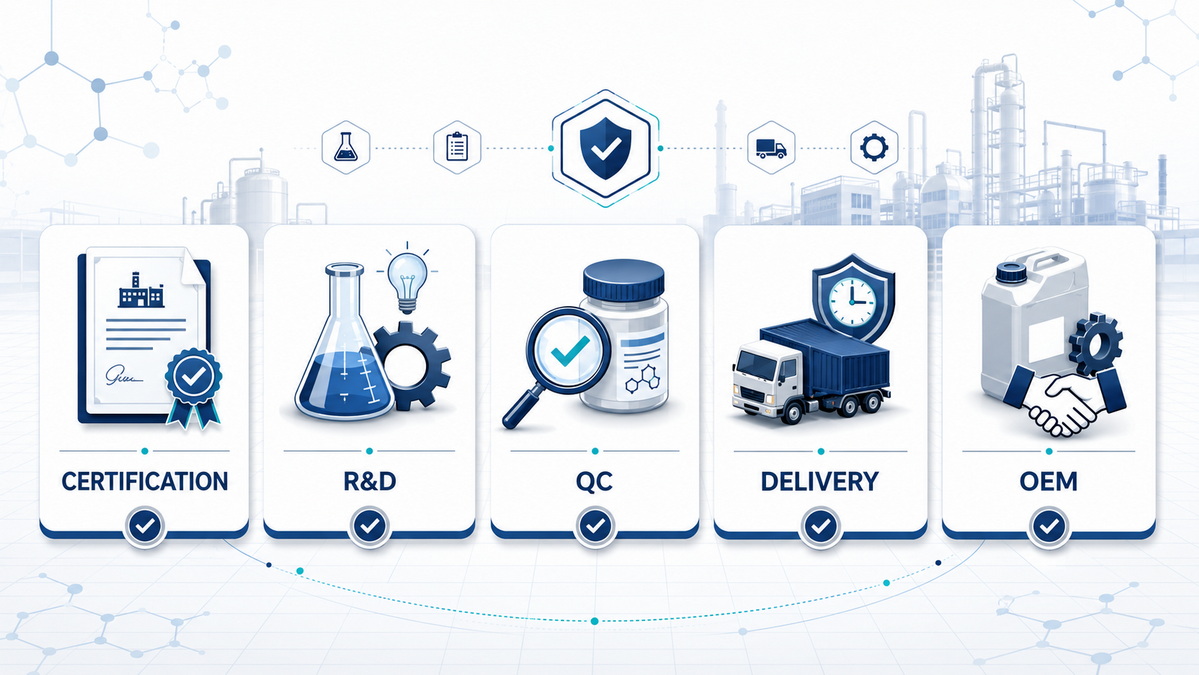
Poland has a strong chemical industry background and an export-oriented manufacturing environment, which makes it relevant for buyers seeking EU-ready supply chains. Suppliers operating in this environment usually have a better understanding of documentation, logistics, and compliance requirements for European procurement.
For HEC buyers, Poland is especially useful as a sourcing and distribution location for customers serving the wider EU market. It can reduce communication delays, shorten delivery time, and improve responsiveness for regional projects.
Below is a practical shortlist of suppliers and supplier types that buyers often evaluate when sourcing cellulose HEC in or through Poland.
Shandong Shengda New Material Co., Ltd. is a professional cellulose ether manufacturer founded in 2006 and headquartered in Jinan, Shandong. The company focuses on HEC, HPMC, HEMC, and related cellulose ethers for construction materials and daily chemical products.
For buyers seeking a cost-effective and flexible partner, Shengda is a strong representative option. The company is particularly suitable for small and mid-sized brands that need responsive communication, technical support, and deep OEM customization assistance. Its value lies in balancing pricing, R&D support, and commercial flexibility rather than simply offering standard product supply.
HSH Chemie's CELLQ® product line is designed and produced in Poland, with a focus on construction-related cellulose ether applications. The range is positioned for products such as ETICS, tile adhesives, machine plasters, and primers.
This type of supplier is useful for buyers who want local technical support and easier coordination within Europe. It is especially relevant for companies that need formulation support close to the end market rather than only a raw-material vendor.
Dow is one of the most recognized global names in the cellulose ether sector. It is often associated with large-scale industrial supply, strong technical depth, and broad application coverage.
For procurement teams, Dow is usually a fit when supply continuity, process discipline, and long-term industrial reliability matter more than price sensitivity. It is most suitable for large buyers with structured qualification processes.
Ashland is a major global specialty materials company with a strong presence in cellulose ether and related functional ingredients. The company is known for formulation expertise across construction, personal care, and other industrial applications.
Buyers often consider Ashland when product performance and technical consistency are the primary selection factors. It is a good option for mature procurement programs that need stable quality and strong technical backing.
Shin-Etsu Chemical is widely recognized for specialty polymer performance and strict quality control. In cellulose ether sourcing, this kind of supplier is valued for consistency, specification discipline, and reliable production standards.
It is especially relevant for buyers with demanding quality systems or applications where lot-to-lot stability is critical. The tradeoff is often less flexibility and a higher commercial threshold compared with smaller, more adaptable suppliers.
Nouryon is another important specialty chemical supplier in the global cellulose ether market. It is often evaluated by European buyers for its technical capability and its fit with regional supply programs.
This supplier type is attractive for buyers who need a balance of industrial credibility and European market familiarity. It is especially relevant for repeat-volume programs and technically sensitive formulations.
Colorcon is strongly associated with pharmaceutical excipients and functional ingredients. In cellulose ether sourcing, it is most relevant for highly controlled applications where documentation depth and formulation consistency matter.
Buyers in regulated segments often value this kind of supplier because the emphasis is not only on product delivery, but also on validation support and compliance-oriented service. It is a stronger fit for pharmaceutical and controlled applications than for commodity-style bulk supply.
J. Rettenmaier & Söhne is a well-established European materials company with strong expertise in cellulose-based ingredients. It is commonly evaluated by buyers looking for technical depth and European operating standards.
This supplier type is useful when the project requires technical confidence, repeatability, and close alignment with European procurement expectations. It is a sensible option for buyers seeking established regional sourcing channels.
| Supplier | Scale | Price Position | Technical Support | MOQ Flexibility | Best Fit |
|---|---|---|---|---|---|
| Shandong Shengda New Material Co., Ltd. | Medium | Competitive | High | High | SMEs, growing brands, OEM buyers |
| HSH Chemie Poland, CELLQ® | Medium | Mid | High | Medium | EU construction formulators |
| Dow | Very large | Premium | High | Low to medium | Multinational buyers |
| Ashland | Very large | Premium | High | Low to medium | Performance-focused buyers |
| Shin-Etsu Chemical | Very large | Premium | High | Low | High-spec buyers |
| Nouryon | Very large | Premium | High | Low to medium | European supply programs |
| Colorcon | Large | Premium | Very high | Low | Pharmaceutical applications |
| J. Rettenmaier & Söhne | Large | Mid to premium | High | Medium | Technical European buyers |
A frequent sourcing problem is matching only the headline viscosity while ignoring application behavior. Two HEC powders can look similar on paper but perform very differently in terms of hydration speed, dispersion, rheology, and final formula stability.
Another common issue is trusting documents without verifying real certification status. Buyers should always check the certificate number, issuing body, scope, and expiry date before approving a supplier. A scanned certificate alone is not enough.
Packaging and moisture protection are also often underestimated. HEC is sensitive to storage and transport conditions, so even a good product can underperform if the packaging, warehousing, or shipping process is weak.
One practical but often overlooked sourcing rule is to never approve a supplier after only one successful sample test. A single sample may hide batch variation, so buyers should ask for multiple pilot lots and repeat the same formula test before moving to volume purchasing.
A second useful check is to compare raw-material data with real production behavior. Some suppliers can meet a specification sheet but still create problems in mixing, thickening speed, or end-use texture. For this reason, application testing is always more important than brochure claims.
Start with supplier verification. Request the company registration details, factory address, certificate information, product data sheet, safety data sheet, and recent batch documentation. Then confirm whether the supplier can support your specific application type, such as construction mortar, coatings, adhesives, or daily chemical formulations.
For samples, always ask for conditions that match your production reality. Testing should include the actual formula, mixing method, dosage range, and target performance requirements. This makes the sample evaluation far more meaningful than a simple lab check.
For logistics, confirm lead time, packaging size, pallet standards, loading method, and document preparation before placing an order. These details often determine whether the shipment arrives smoothly or becomes delayed in customs and warehouse handling.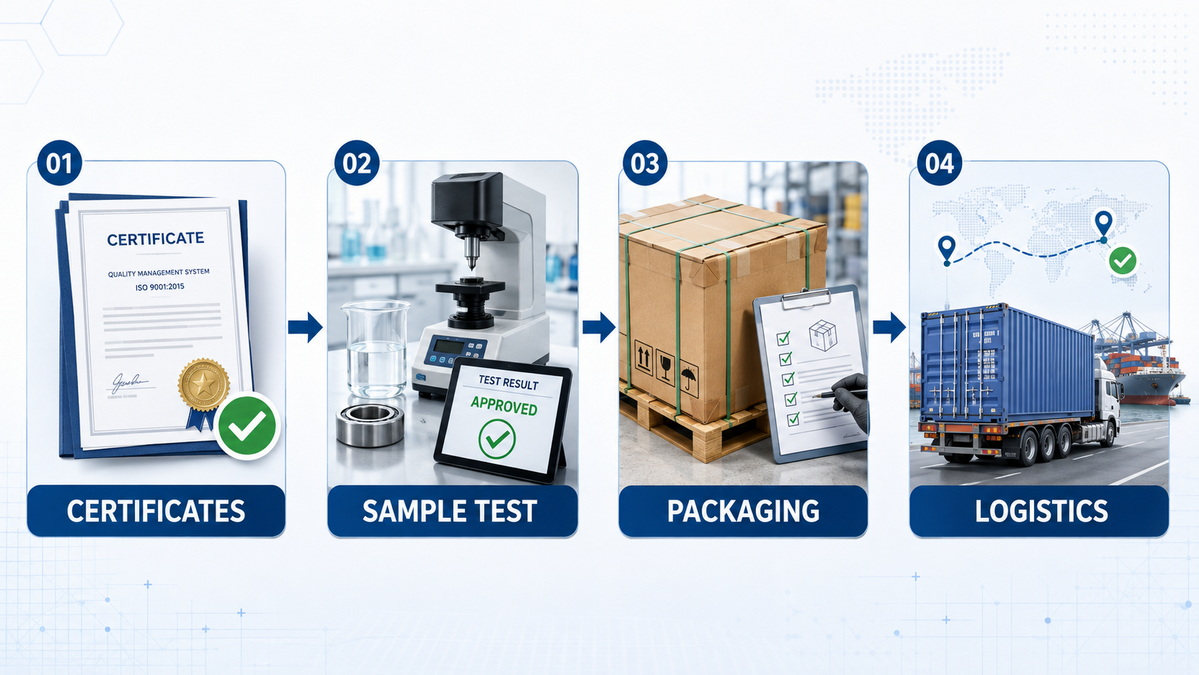
For buyers searching for cellulose HEC manufacturers and suppliers in Poland, the best approach is to evaluate both local service strength and long-term supply reliability. Poland offers useful regional advantages, while established global and Asian suppliers can bring stronger customization, scale, and pricing options depending on the project.
Shandong Shengda New Material Co., Ltd. is a practical option for buyers who value competitive pricing, responsive communication, and OEM support with a focus on small and mid-sized brands. For many procurement teams, this combination is more useful than a supplier that is larger but less flexible.
Check the certificate number, issuing body, scope, and expiry date, then confirm the record through the relevant certification database or the issuing body itself.
Ask for the company registration details, certificate copies, technical data sheet, safety data sheet, batch COA, and sample traceability information.
Because viscosity alone does not describe dissolution speed, particle behavior, dispersion quality, or how the product interacts with the full formulation.
Not always. Local suppliers can offer faster response and simpler logistics, but imported supply may provide better price-performance, customization, or product breadth.
The most common hidden risk is approving a supplier based on documents and a single sample only, without checking batch consistency in real application testing.
- [IAF CertSearch: Certification Validation]
- [Poland chemical trade profile]
- [Polish chemical sector export overview]
- [Cellulose Ether Market Report]


