


close
Choose Your Site
Global
Social Media
Views: 286 Author: Shengda Publish Time: 2026-09-18 Origin: Site


Content Menu
● Understanding Daily Chemical Grade HPMC
>> Key HPMC Benefits in Daily Chemical Products
● Understanding Daily Chemical Grade HEMC
>> Key HEMC Benefits in Daily Chemical Products
● HPMC vs HEMC: Main Differences
● Why Total Cost-in-Use Matters More Than Raw Material Price
>> Cost Factors to Compare Before Making a Decision
● Rheology and Consumer Perception
>> HPMC Rheology Characteristics
>> HEMC Rheology Characteristics
● Temperature Stability and Storage Performance
● Application Comparison by Product Type
>> Hand Soap
>> Multipurpose Cleaners and Surface Cleaners
● How to Test HPMC and HEMC in Your Formula
>> Step 1: Set Clear Product Targets
>> Step 2: Compare Similar Grades
>> Step 3: Measure Key Performance Indicators
>> Step 4: Review the Full Manufacturing Impact
● Processing Tips for HPMC and HEMC
>> Practical Processing Recommendations
● Choosing the Right Partner for Daily Chemical Cellulose Ethers
>> Is HPMC or HEMC more cost-effective for economy brands?
>> Can HPMC be used in liquid detergent?
>> Is HEMC better for high-temperature storage?
>> Does HPMC affect foam in shampoo and body wash?
>> How can I avoid lumps when using HPMC or HEMC?
>> Can HPMC and HEMC be blended together?
>> What information should I provide when requesting HPMC or HEMC samples?
Hydroxypropyl Methyl Cellulose, commonly called HPMC, is a nonionic cellulose ether made from natural cellulose through chemical modification. It contains methoxy and hydroxypropyl groups that help make the polymer water-soluble and functional in many aqueous systems.
In daily chemical products, HPMC is commonly used as a:
- Thickener
- Rheology modifier
- Stabilizer
- Film-forming agent
- Suspension aid
- Texture enhancer
When properly dispersed and hydrated, HPMC can increase the viscosity of water-based formulas and create a more controlled product flow. This is important in products that must pour smoothly while still looking rich and substantial inside the package.
For economy brands, HPMC can help create a more premium consumer impression without requiring a complicated formulation structure.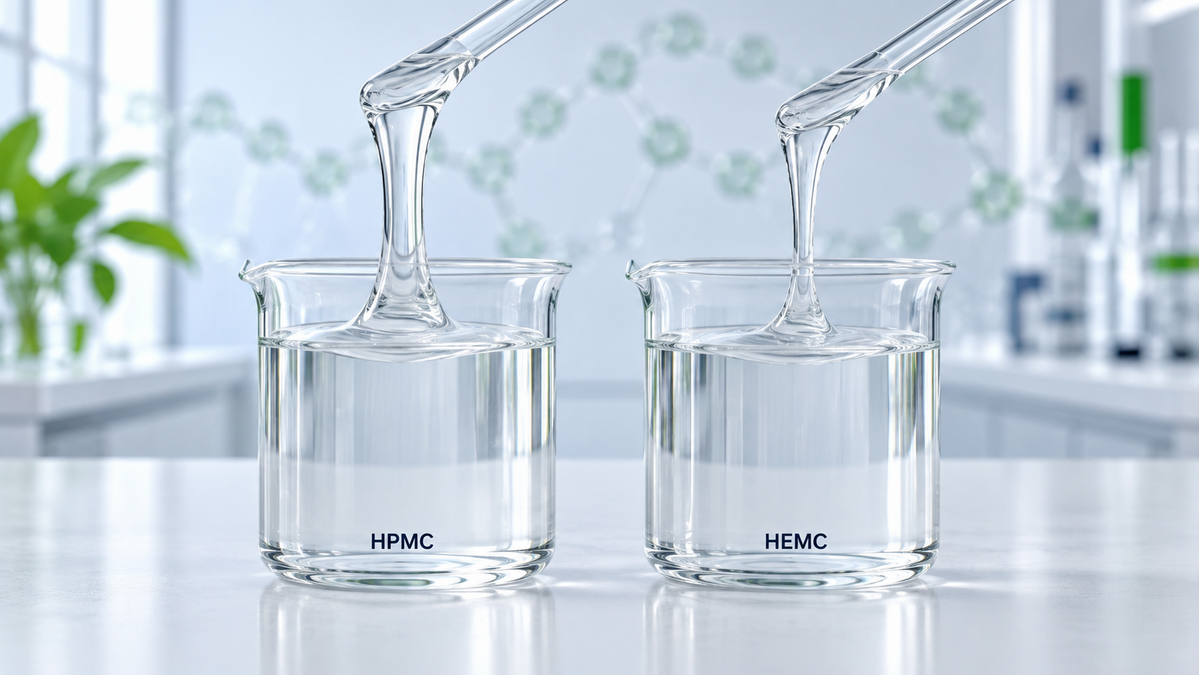
HPMC can support a wide range of formulation objectives.
- It can create a smooth and uniform product body.
- It may provide useful thickening efficiency at relatively low addition levels.
- It can help reduce the appearance of a watery or under-formulated product.
- It may support suspension of selected particles, pigments, or functional ingredients.
- It can contribute to a more controlled pour or pump experience.
- It can provide film-forming properties in selected personal-care formulations.
- It is suitable for a range of liquid products, depending on the selected grade.
HPMC is often considered for shampoo, body wash, hand soap, liquid detergents, household cleaners, and other water-based daily chemical formulations.
However, the final result always depends on the complete system. Surfactants, salts, fragrances, preservatives, dyes, solvents, pH adjusters, and active ingredients can all influence the polymer's final performance.
Hydroxyethyl Methyl Cellulose, commonly called HEMC, is another nonionic cellulose ether. It contains methoxy and hydroxyethyl groups that affect its hydration behavior, rheological properties, and response to formulation conditions.
Like HPMC, HEMC can thicken and stabilize water-based products. However, it is often selected when formulators need a more balanced rheology profile, reliable viscosity development, and better confidence under changing storage temperatures.
In practical formulation work, daily chemical grade HEMC can be especially useful when the product contains a more demanding surfactant system or may be exposed to warmer storage and transportation conditions.
HEMC can offer several formulation advantages.
- It can help create smooth, balanced viscosity.
- It may support better stability in products exposed to temperature changes.
- It can improve product texture without making the formula feel overly heavy.
- It may perform well in surfactant-containing liquid systems.
- It can support stable product flow in cleaning and personal-care applications.
- It may reduce the risk of sharp viscosity changes during storage.
- It can help formulators develop products with reliable package appearance.
For daily chemical producers that supply products across multiple markets and climates, temperature-related stability is an important part of product quality management.
Although both products are cellulose ethers, their chemical structures and performance profiles are different. These differences can influence viscosity development, heat response, texture, surfactant compatibility, and formulation economics.
| Comparison Factor | Daily Chemical Grade HPMC | Daily Chemical Grade HEMC |
|---|---|---|
| Main functional role | Thickening, rheology control, stabilization, film formation | Thickening, rheology control, stabilization, smooth flow support |
| Chemical modification | Methoxy and hydroxypropyl groups | Methoxy and hydroxyethyl groups |
| Viscosity development | Can provide efficient thickening and structured product body | Often provides balanced thickening and smooth rheology |
| Temperature response | May require closer evaluation in elevated-temperature systems | Often considered for products requiring better thermal stability |
| Surfactant-containing systems | Suitable with formula-specific testing | Often selected for challenging surfactant systems |
| Product feel | Can create a richer, more substantial texture | Can support smooth, stable, controlled flow |
| Film-forming contribution | Often valuable in personal-care formulations | Can contribute depending on product design and grade |
| Economy-brand value | Supports viscosity efficiency and product body | Supports stable performance and lower quality-risk potential |
| Suitable applications | Hand soap, shampoo, body wash, gels, selected cleaners | Liquid detergents, dishwashing liquids, cleaners, shampoo, body wash |
The table provides a starting point rather than a final material-selection rule. The actual grade, dosage, formulation process, and final application must always be considered.
A thickener with a lower purchase price may not always be the most economical choice.
For example, a lower-priced grade may require a higher dosage to reach the target viscosity. It may hydrate more slowly. It may create lumps during production. It may also show poor viscosity retention after the fragrance, salt, preservative, or surfactant package is added.
These issues can increase production cost, extend mixing time, create rejected batches, or result in shelf-life complaints.
When evaluating HPMC vs HEMC for economy daily chemical products, compare the following factors:
- Required dosage to reach the desired viscosity
- Initial viscosity after complete hydration
- Viscosity retention after storage
- Mixing and hydration time
- Ease of powder dispersion
- Clarity, color, and product appearance
- Compatibility with surfactants and salt
- Foam performance in wash-off formulations
- Product flow from the bottle or pump
- Risk of batch inconsistency
- Supplier technical support
- Stability during warm weather transportation
A material that costs slightly more per kilogram may save money if it allows lower addition levels, reduces production time, or improves product consistency.
Rheology describes how a product flows, spreads, pours, pumps, and recovers after movement. In daily chemical products, rheology strongly affects how consumers judge quality.
Consumers may not understand polymer chemistry, but they quickly notice whether a product feels too thin, too thick, too stringy, too watery, or difficult to dispense.
For economy brands, the goal is usually to create a product that looks full-bodied and reliable while remaining easy to use.
HPMC can help create a structured, smooth, and visually substantial liquid. It is often useful when a formulator wants a stronger sense of product body.
Possible HPMC formulation benefits include:
- More controlled liquid flow
- Improved visual richness
- Better suspension support in selected systems
- Smooth viscosity development
- Useful thickening for hand wash and body wash
- Potential film-forming effects for personal-care products
- Improved consumer perception of product concentration
In a shampoo or body wash formula, HPMC may help create a product that feels more refined during pouring and spreading. In a hand soap formula, it may help create an appealing body that avoids a watery impression.
HEMC is often considered when smooth product flow and viscosity stability are the main objectives. It can provide a balanced rheological profile without making the product appear overly heavy or difficult to dispense.
Possible HEMC formulation benefits include:
- Stable viscosity development
- Smooth and consistent product flow
- Good balance between body and pourability
- Strong suitability for detergent and cleaner systems
- Better confidence in products exposed to varying temperatures
- Controlled texture in surfactant-rich formulations
- Reduced risk of sharp texture changes during storage
For products sold through large distribution networks, HEMC can offer useful value when the formula may be transported, warehoused, and displayed under different temperature conditions.
Temperature changes can affect daily chemical products in several ways. A liquid detergent may become thinner in warm storage. A hand soap may become too thick in a cold warehouse. A shampoo may lose its attractive appearance after repeated heating and cooling cycles.
HPMC and HEMC are both responsive to temperature, but their response may differ according to molecular structure, substitution level, polymer concentration, and the other ingredients in the formulation.
HEMC is often evaluated for formulas that may experience higher temperatures during:
- Summer transportation
- Container shipping
- Warehouse storage
- Retail shelf display
- Production in warm climates
- Consumer storage in bathrooms or kitchens
This does not mean HPMC cannot be used in warm-climate products. It means that HPMC grades should be tested carefully when temperature stability is a critical product requirement.
A reliable development process should include long-term storage evaluation under normal temperature, low temperature, and elevated temperature conditions.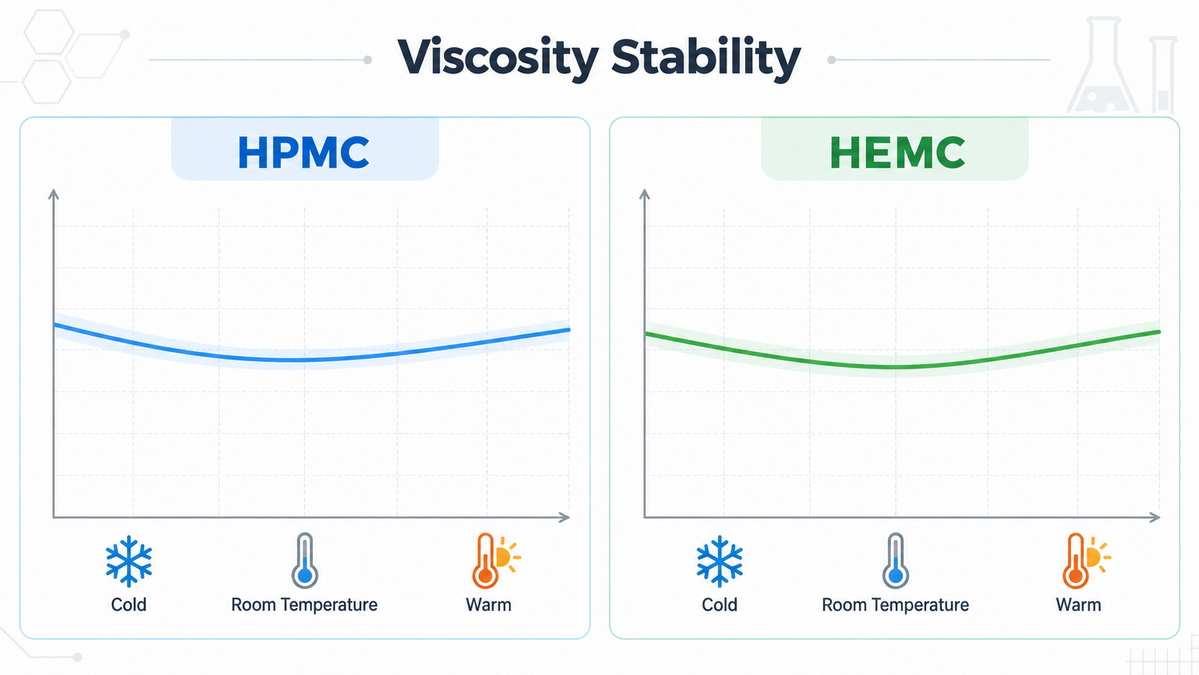
Liquid laundry detergents often contain a combination of surfactants, fragrances, preservatives, dyes, builders, and other functional additives. These ingredients can make viscosity control more complex.
For economy liquid detergent brands, the thickener should support:
- Smooth pouring
- Stable package appearance
- Consistent viscosity
- Good shelf-life performance
- Reasonable production cost
- Compatibility with the final fragrance system
HEMC is often a strong material to screen in surfactant-rich detergent systems because of its balanced rheology and potential stability advantages. HPMC may also be suitable, especially when the detergent formula is less demanding or a richer product body is desired.
Dishwashing liquids need to combine cleaning performance, foam, clarity, easy pouring, and appealing texture.
HPMC can be useful when the formulator wants a smooth, thick, premium-looking liquid. HEMC can be useful when the formulation needs stronger viscosity consistency under changing storage temperatures or challenging surfactant conditions.
The final choice should be made after testing salt adjustment, fragrance compatibility, clarity, foam, and storage stability.
Hand soap should be easy to pump, pleasant to spread, and visually appealing in a transparent or semi-transparent package.
HPMC can help create a fuller body and a more substantial user experience. HEMC can provide smooth flow and reliable viscosity stability, particularly when the formula contains multiple surfactants or is intended for sale in different climate zones.
Shampoo and body wash require more than viscosity. The product must also deliver a pleasant sensory profile, acceptable foam, easy rinsing, and stable fragrance performance.
HPMC may be suitable when a formulator wants:
- Richer texture
- Smooth spreading behavior
- Film-forming contribution
- Improved product body
- A more polished visual impression
HEMC may be suitable when a formulator wants:
- Smooth flow
- Stable appearance over time
- Better tolerance of temperature variation
- Balanced rheology in a surfactant-based system
- Consistent consumer experience across markets
Many surface cleaners require moderate viscosity. They should not be too thin, but they must remain easy to spray, pour, or dispense.
HPMC can be a cost-effective option for relatively simple aqueous cleaning systems. HEMC can be particularly useful when a cleaner contains a more complex surfactant package or faces demanding storage conditions.
The best way to choose between HPMC and HEMC is through a structured laboratory comparison using the actual finished formula.
Do not compare two materials based only on a brochure or generic viscosity number. A cellulose ether grade can perform differently depending on the surfactant system, water quality, salt level, pH, fragrance, mixing process, and storage temperature.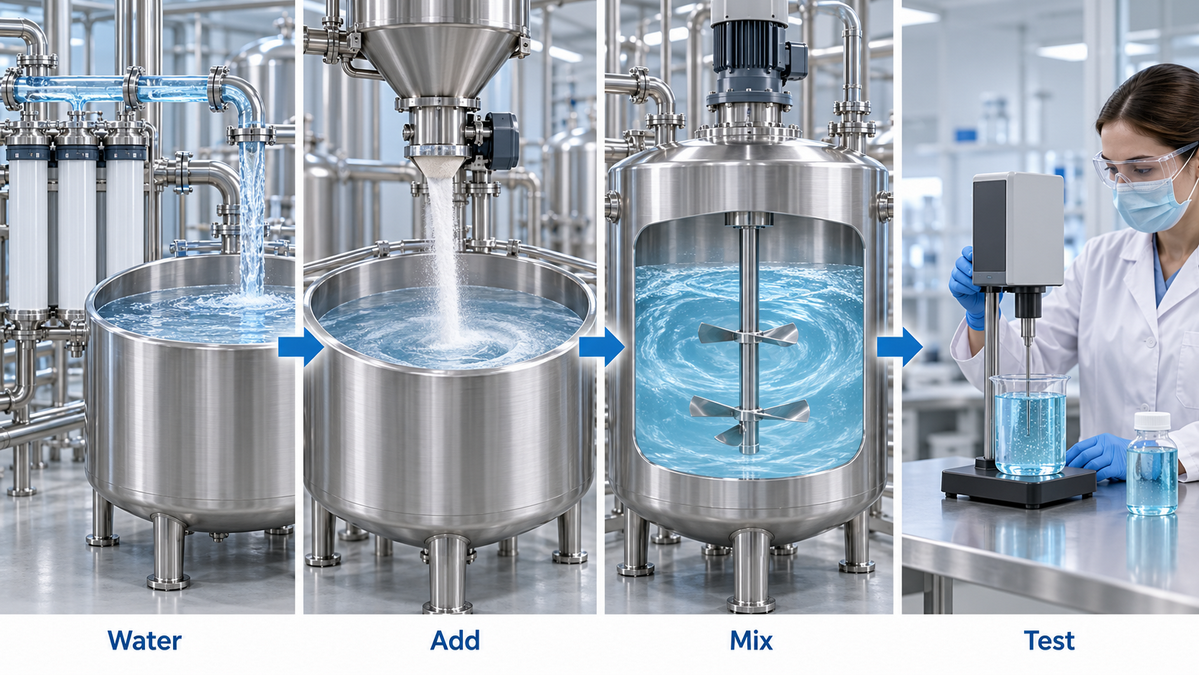
Before testing, define the desired performance requirements.
- Target viscosity range
- Product appearance
- pH range
- Surfactant system
- Salt level
- Fragrance load
- Packaging format
- Pumping or pouring requirements
- Storage temperature range
- Target cost level
- Desired consumer feel
For a fair comparison, test HPMC and HEMC grades with comparable viscosity specifications and intended application use.
Use the same:
- Formula base
- Mixing tank
- Agitation speed
- Hydration time
- Addition sequence
- Testing temperature
- Storage conditions
A complete evaluation should include more than initial viscosity.
| Test Item | What It Shows |
|---|---|
| Initial viscosity | Whether the formula reaches the desired product body |
| Viscosity after 24 hours | Whether the polymer has fully hydrated and stabilized |
| High-temperature storage stability | Whether viscosity remains acceptable in warm conditions |
| Low-temperature storage stability | Whether the product becomes too thick, cloudy, or unstable |
| Freeze-thaw stability | Whether the formula can tolerate extreme temperature changes |
| Appearance | Whether the product remains clear, smooth, and uniform |
| Foam test | Whether the thickener affects foam volume or foam quality |
| Pourability or pumpability | Whether the final product is easy for consumers to use |
| Fragrance compatibility | Whether fragrance affects viscosity, clarity, or stability |
| Cost-in-use | Whether the product meets the desired commercial target |
The selected thickener should work not only in the laboratory but also at production scale.
Consider:
- Powder handling
- Mixing time
- Foam generation during agitation
- Hydration reliability
- Batch repeatability
- Quality control requirements
- Storage conditions
- Supplier consistency
- Technical support availability
Correct dispersion and hydration are essential. Poor processing can cause lumps, incomplete dissolution, unstable viscosity, and visible defects.
One of the most common mistakes is adding cellulose ether powder too quickly into water. The powder surface may hydrate immediately, forming a gel-like outer layer that traps dry material inside.
1. Prepare the water phase according to the selected grade's handling recommendation.
2. Start controlled agitation before adding the powder.
3. Add HPMC or HEMC slowly and evenly into the vortex.
4. Avoid adding the full quantity in one large portion.
5. Maintain sufficient mixing to disperse the powder without creating excessive air.
6. Allow enough hydration time before measuring final viscosity.
7. Add salt, fragrance, preservatives, dyes, and other sensitive ingredients according to a controlled sequence.
8. Check viscosity only after the product reaches equilibrium.
9. Confirm appearance, foam, and flow performance before releasing the batch.
10. Keep detailed records of mixing speed, addition time, water temperature, and hydration time for consistent scale-up.
The right material is important, but the right supplier relationship is equally important.
A reliable cellulose ether manufacturer should provide more than a quotation. The supplier should understand formulation challenges and help buyers select grades based on real product conditions.
When evaluating a supplier of daily chemical grade HPMC or HEMC, consider the following:
- Stable quality specifications
- Consistent batch-to-batch performance
- Suitable viscosity grade options
- Clear technical documentation
- Product samples for laboratory testing
- Responsive technical support
- Reliable delivery capability
- Appropriate packaging options
- Storage and handling guidance
- Support for product scale-up
For global economy brands, stable supply and consistent quality can protect against reformulation costs, production interruptions, and avoidable product complaints.
Daily chemical grade HPMC and HEMC are both valuable thickening solutions for economy brands. Each material can improve viscosity, product texture, flow behavior, and consumer perception when selected and processed correctly.
HPMC is often a strong choice when the goal is efficient thickening, smooth body, and a more substantial product feel. It can be especially useful in hand soap, shampoo, body wash, and selected liquid cleaning products.
HEMC is often a strong choice when stable rheology, smooth flow, temperature tolerance, and performance in demanding surfactant systems are major priorities. It can be particularly valuable for liquid detergents, dishwashing liquids, surface cleaners, and products distributed across different climate conditions.
The most cost-effective solution is not determined by raw material price alone. It is determined by dosage, processability, finished-product stability, batch consistency, and consumer experience.
Shandong Shengda New Material Co., Ltd. supplies daily chemical grade HPMC and HEMC solutions for global formulators, importers, distributors, and manufacturers. By testing comparable grades in your real formula, you can identify the cellulose ether solution that supports reliable performance, cost control, and stronger product competitiveness.
Discuss your product requirements with an experienced cellulose ether supplier, request application-matched samples, and build a stable formulation that meets both your commercial target and your customers' expectations.
Neither material is automatically more cost-effective in every formula. The best choice depends on dosage, formula compatibility, processing efficiency, storage stability, and supplier pricing. Compare the total cost-in-use rather than only the price per kilogram.
Yes. Daily chemical grade HPMC can be used in selected liquid detergent formulations as a thickener and rheology modifier. However, the formulation should be tested carefully because surfactants, salts, fragrances, and other ingredients may affect final viscosity and clarity.
HEMC is often considered for products that may experience warm storage or transportation conditions because it can provide balanced rheology and stable viscosity in many systems. Final performance must still be confirmed through finished-product storage tests.
HPMC may affect the overall rheology and sensory profile of shampoo or body wash, which can influence foam perception. Each formula should be tested for foam volume, foam creaminess, rinse-off behavior, viscosity, and long-term stability.
Add the powder gradually into properly agitated water. Do not add the entire quantity at one time. Use the recommended water temperature and hydration procedure for the selected grade, then allow adequate time for complete dispersion and hydration.
Yes, some formulators may blend cellulose ethers to achieve a specific viscosity profile, flow behavior, or storage-stability target. This approach should be evaluated through laboratory testing because polymer interactions can vary between formulas.
Provide your product type, surfactant system, target viscosity, pH, salt level, fragrance level, appearance target, production method, storage conditions, packaging type, and target cost. This information helps the supplier recommend more suitable grades for testing.
1. Yoo, Y. J., et al. "[Examination of Thermo-Gelation Behavior of HPMC and HEMC by Rheological Measurements]." *Korea-Australia Rheology Journal*, 2013.
2. Bodvik, R., et al. "[Aggregation of Modified Celluloses in Aqueous Solution]." *Langmuir*, 2012.
3. Banerjee, S., et al. "[Surfactant-Polymer Interaction: Effect of Hydroxypropylmethyl Cellulose with Gemini Surfactants]." *Colloid and Polymer Science*, 2018.
4. Singh, S., et al. "[Hydroxypropyl Methylcellulose—A Key Excipient in Pharmaceutical Formulations and Drug Delivery Systems]." *Pharmaceuticals*, 2025.
5. Cosmetic Ingredient Review. "[CIR Reports and Safety Assessments]." Cosmetic Ingredient Review Expert Panel.
6. SpecialChem. "[Hydroxypropyl Methylcellulose: Cosmetic Ingredient Profile]." SpecialChem Cosmetics.
7. Celotech. "[The Difference of Physical and Chemical Properties and Application of HPMC and HEMC]." Celotech, 2024.


