


close
Choose Your Site
Global
Social Media
Views: 265 Author: Shengda Publish Time: 2026-11-02 Origin: Site


Content Menu
● HEMC vs HPMC: What Changes in Their Chemical Structure?
>> Why Product Specifications Matter More Than Generic Rankings
● What Does "Film-Forming" Mean in Water-Based Coatings?
>> Standalone Cellulose Ether Films
>> Film Development in Latex Paint
● HEMC vs HPMC Film-Forming Properties: Comparison Table
● How HEMC and HPMC Influence Coating Film Quality
>> Water Retention and Drying Uniformity
>> Leveling, Sag Resistance, and Film Build
>> Continuity, Pinholes, and Surface Defects
● Temperature Response: Avoiding a Common Selection Error
>> Gelation Temperature Is Not Film-Formation Temperature
● Adhesion, Flexibility, and Water Resistance
>> Does HEMC Provide Better Adhesion Than HPMC?
>> Which Produces a More Flexible Film?
>> Does Either Cellulose Ether Make Paint Waterproof?
● A Practical HEMC vs HPMC Evaluation Protocol
>> Step 1: Define the Application and Failure Mode
>> Step 2: Run Two Different Comparisons
>> Step 3: Standardize Preparation
>> Step 4: Evaluate Application and Cured Films
● Expert Insight: Diagnose the Film Defect Before Changing the Polymer
● Dosage, Cost, and Responsible Material Selection
● Select a Cellulose Ether Around Your Coating Requirements
>> 1. Is HEMC better than HPMC for water-based coatings?
>> 2. Can HPMC act as the main binder in latex paint?
>> 3. Does higher cellulose ether viscosity mean a stronger coating film?
>> 4. Can HEMC replace HPMC at the same dosage?
>> 5. Which tests best distinguish HEMC and HPMC in coatings?
HEMC vs HPMC film-forming properties in coatings should be evaluated at two levels: how each cellulose ether forms its own film, and how it influences the film created by a complete coating formulation. Hydroxyethyl methyl cellulose (HEMC) and hydroxypropyl methylcellulose (HPMC) can support thickening, water retention, and application control. However, neither name alone predicts better adhesion, flexibility, or water resistance.
At Shandong Shengda New Material Co., Ltd., our focus on cellulose ether research, development, production, and supply shapes a practical selection principle: compare grades, not just polymer abbreviations.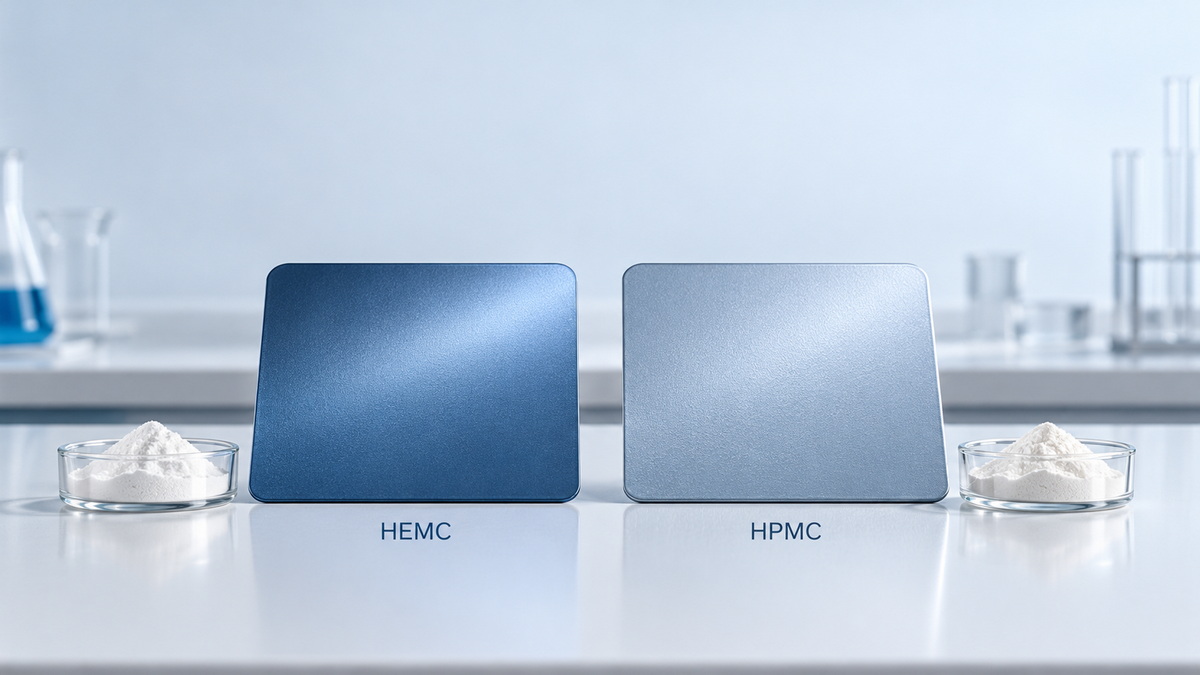
Both materials are nonionic cellulose ethers derived from cellulose through chemical modification. Their distinguishing feature is the type of substituent attached to the cellulose backbone.
- HEMC contains methyl and hydroxyethyl groups.
- HPMC contains methyl and hydroxypropyl groups.
These substitutions affect polymer hydration, solution behavior, and temperature response. Molecular weight, substitution level, substitution distribution, and surface treatment also influence performance.
Consequently, two HPMC grades can behave differently in the same coating. The same applies to HEMC.
A viscosity number is meaningful only when its measurement conditions are known.
Before comparing supplier specifications, check:
- Polymer concentration in the test solution.
- Measurement temperature.
- Instrument, spindle, and rotational speed.
- Hydration procedure and conditioning time.
- Whether the product contains performance-modifying additives.
Matching viscosity labels does not automatically produce matching paint rheology or equivalent dry-film performance.
The term has two related but distinct meanings.
When water evaporates from a suitable cellulose ether solution, polymer chains become concentrated and can form a coherent film.
Such films can be assessed for continuity, clarity, tensile behavior, and moisture sensitivity. However, results depend on polymer grade, film thickness, conditioning humidity, and any plasticizer present.
A transparent standalone film does not prove that the same additive will improve gloss or durability in a pigmented paint.
In conventional latex coatings, the acrylic, vinyl-acrylic, or other dispersed polymer binder forms the main protective matrix.
HEMC and HPMC primarily influence the environment in which that matrix develops. They affect viscosity, water movement, application thickness, and the time available for leveling.
They should not be treated as substitutes for the principal binder.
The practical question is therefore not simply, "Which cellulose ether makes a stronger film?" It is, "Which grade helps this coating develop the required surface and durability?"
| Evaluation factor | HEMC | HPMC | Practical interpretation |
|---|---|---|---|
| Chemical substitution | Methyl and hydroxyethyl groups | Methyl and hydroxypropyl groups | Chemistry affects hydration and thermal response |
| Role in latex coatings | Rheology modification and water-management support | Rheology modification and water-management support | Neither replaces the main latex binder |
| Standalone film behavior | Requires grade-specific evaluation | Requires grade-specific evaluation | Compare under identical conditioning |
| Thermal behavior | Depends on substitution and formulation | Depends on substitution and formulation | Avoid universal temperature rankings |
| Leveling and sag balance | Depends on grade, dose, and formulation | Depends on grade, dose, and formulation | Measure application performance directly |
| Water resistance | Cannot be predicted from the abbreviation | Cannot be predicted from the abbreviation | Test the complete cured coating |
| Selection basis | Validated application results | Validated application results | Choose against defined acceptance criteria |
This comparison deliberately avoids declaring an overall winner. The available technical information does not establish universal superiority across coating systems.
Water management matters especially on absorbent substrates and during warm, dry application conditions.
If a substrate removes water too quickly, a coating may lose working time before brush marks or roller texture can relax.
Suitable cellulose ether grades can help regulate this process. However, retaining more water is not always beneficial. Excessive retention may extend drying or alter early film development.
The objective is controlled water loss, not maximum retention under every condition.
A coating must flow enough to reduce application marks while remaining stable on a vertical surface.
Increasing thickening can improve resistance to sagging, but it may also restrict leveling. Conversely, a formulation that levels readily may run at the intended application thickness.
For an HEMC vs HPMC comparison, assess both:
- The appearance of the dried surface.
- The maximum usable wet-film thickness before sagging.
A single viscosity reading cannot fully describe this balance because brushing, rolling, resting, and drying involve different shear conditions.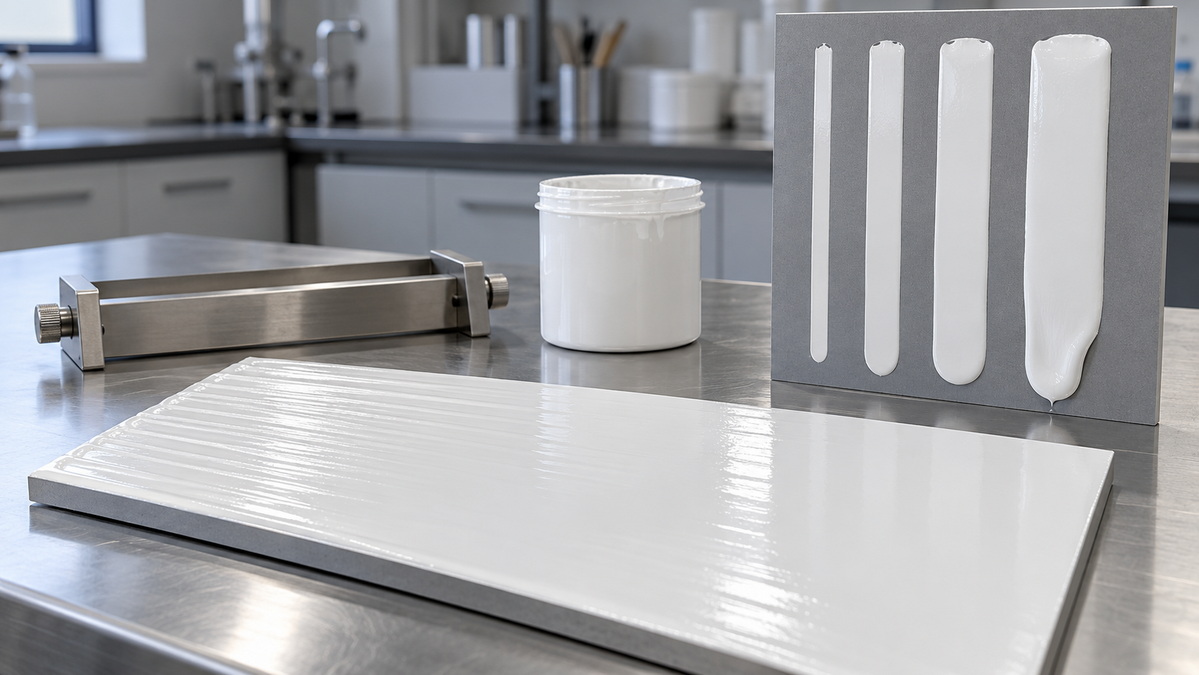
Cellulose ether selection can influence defect formation indirectly through hydration quality, viscosity development, and air release.
Poorly dispersed material may leave lumps or localized texture. An unsuitable rheology profile may prevent bubbles from escaping before the surface becomes immobile.
Before blaming polymer chemistry for pinholes, examine mixing energy, defoamer compatibility, substrate porosity, and application thickness.
A formulation problem often has several interacting causes.
HEMC is frequently promoted for warmer application conditions. That positioning can be useful when supported by grade-specific results, but it should not become a blanket rule.
Published research on cellulose ether thermal gelation shows that substitution, concentration, and additives influence temperature response. It also documents substantial differences among HPMC types.
The same research describes how HEMC gelation behavior changes with its substitution pattern.
These concepts must remain separate:
- Cellulose ether gelation describes a temperature-dependent change in its solution behavior.
- Minimum film-formation temperature describes the conditions under which a latex binder forms a continuous film.
A cellulose ether with a higher gelation temperature does not automatically allow a latex coating to form properly at a lower temperature.
For warm-weather projects, evaluate the complete coating at the expected substrate temperature, humidity, and airflow. Do not use a solution gel point as a substitute for application testing.
Neither polymer family guarantees superior adhesion.
Cellulose ethers can influence wetting, application consistency, and water movement. Nevertheless, final adhesion also depends on binder chemistry, substrate preparation, pigment loading, and curing.
Evaluate adhesion after the specified conditioning period. Where moisture exposure is relevant, include a suitable wet-conditioning procedure rather than relying only on dry results.
Standalone cellulose ether flexibility cannot be transferred directly to paint performance.
In a pigmented coating, flexibility depends heavily on the binder matrix, pigment concentration, film thickness, and environmental conditioning.
If flexibility is a purchasing criterion, test the actual formulation on a suitable substrate. Compare cracking or deformation at equal dry-film thickness.
No. Their water-soluble character means that waterproofing should not be inferred from their presence.
The effect of either additive on moisture response must be measured in the complete coating. Relevant observations include whitening, softening, blistering, and recovery after drying.
A smooth, continuous-looking film may still have insufficient resistance to repeated washing or prolonged moisture exposure.
The following procedure is a proposed development framework, not a report of Shengda laboratory results.
Specify the coating type, substrate, application method, and service conditions.
Then identify the problem being solved:
- Roller marks.
- Excessive sagging.
- Short working time.
- Poor scrub resistance.
- Water whitening.
- Unstable viscosity.
A focused comparison is more useful than testing without a clear performance target.
First, compare HEMC and HPMC at equal active-polymer dosage. This reveals differences in thickening efficiency and application behavior.
Next, adjust dosage to approach the same application-viscosity target. This helps reveal differences that would otherwise be hidden by unequal consistency.
Keep binder solids, pigment volume concentration, and other ingredients controlled. Document any water adjustments.
Use the supplier-recommended dispersion and hydration procedure for each grade.
Record addition order, mixing speed, temperature, pH, and maturation time. Delayed-solubility products require particular attention because initial dispersion and final viscosity development are separate events.
Do not compare one fully hydrated sample against another that is still developing viscosity.
| Test area | Suggested measurement | Purpose |
|---|---|---|
| Wet application | Leveling, sagging, roller texture | Identify handling differences |
| Drying | Touch-dry and recoat observations | Assess scheduling implications |
| Surface quality | Pinholes, craters, visible texture | Detect appearance defects |
| Durability | Scrub resistance and adhesion | Evaluate service performance |
| Moisture response | Whitening, softening, recovery | Assess water sensitivity |
Use consistent substrates, wet-film thicknesses, and conditioning. Replicate critical measurements and record variability, not just the best result.
ASTM D2486 provides an established framework for comparing the scrub resistance of wall paints.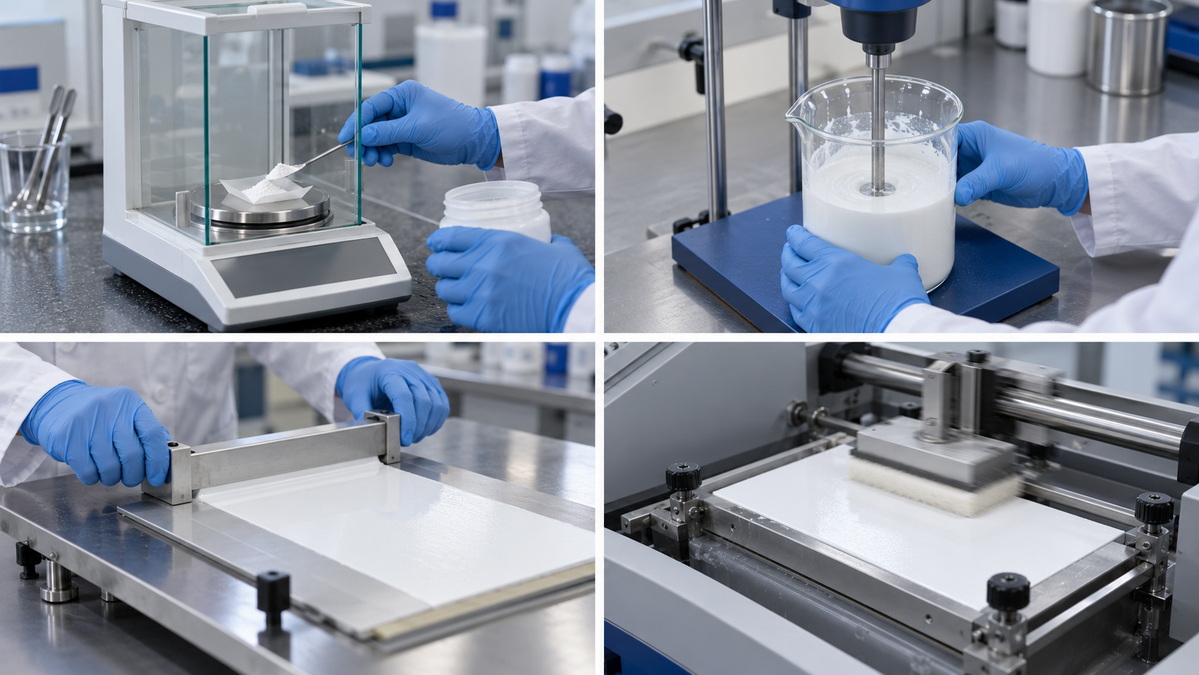
Consider an illustrative interior wall-paint formulation that develops roller marks and weak scrub resistance.
Changing from HPMC to HEMC may alter viscosity and working time. However, it will not necessarily resolve insufficient binder content or an unsuitable pigment-to-binder balance.
A more informative investigation separates the defects:
1. Assess whether roller marks result from fast water loss, excessive structure, or inadequate leveling.
2. Check scrub resistance independently after consistent curing.
3. Examine binder level and pigment loading before attributing durability entirely to the thickener.
4. Retest the selected cellulose ether at an optimized dose.
This approach prevents an apparent improvement in appearance from concealing an unresolved durability problem.
It also avoids rejecting a suitable polymer because another formulation variable caused the failure.
Published supplier information for one HEMC grade lists a typical emulsion-paint dosage of 0.3–0.8%. That range belongs to that product and application guidance; it is not a universal recommendation for every HEMC or HPMC grade.
Choose the lowest validated dose that meets application, storage, and durability requirements.
Compare cost per tonne of finished paint rather than price per kilogram of additive alone. Include dosage, mixing requirements, batch consistency, and rejected material.
Likewise, a cellulose-derived ingredient does not by itself establish that a coating is environmentally preferable. Sustainability claims require evidence about sourcing, manufacturing, formulation, and service life.
Shandong Shengda New Material Co., Ltd. develops, produces, and supplies HPMC, HEMC, and related cellulose ether solutions for international customers.
For a relevant product discussion, share your binder type, pigment loading, target viscosity, application method, climate conditions, and current coating defect.
Contact Shengda to discuss candidate grades and sample requirements, then validate the selection through controlled formulation trials. This creates a clearer purchasing basis than choosing HEMC or HPMC by name alone.
Not universally. A suitable HEMC grade may outperform a particular HPMC grade in one formulation, while another comparison produces the opposite result. Evaluate application behavior and cured-film properties together.
HPMC can form films in appropriate systems, but in conventional latex paint it normally serves as an additive. The dispersed polymer binder remains responsible for the principal protective matrix.
No. Higher solution viscosity indicates thickening behavior under specified conditions. It does not directly establish stronger adhesion, greater flexibility, or better scrub resistance.
Treat equal dosage as a screening condition, not a guaranteed replacement ratio. Hydration, rheology, air release, and drying behavior may change. Confirm performance before production-scale substitution.
Combine leveling and sag observations with drying, surface inspection, scrub resistance, adhesion, and moisture-response testing. No single test captures both application quality and long-term film performance.
1. Sarkar, N. (1979). "Thermal Gelation Properties of Methyl and Hydroxypropyl Methylcellulose." *Journal of Applied Polymer Science*, 24, 1073–1087. Covers substitution, concentration, additives, and thermal response, including discussion of HEMC. [Read the reproduced paper]. [scribd]
2. Dow. *WALOCEL™ MW 40000 PFV Hydroxyethyl Methyl Cellulose: Technical Data Sheet*. Describes delayed solubility, thickening in water-based systems, workability, and water retention. [View the technical data sheet]. [rainers]
3. SpecialChem. *WALOCEL™ MW 15000 PFV—Dow*. Identifies an HEMC thickener for water-based systems and lists product-specific emulsion-paint dosage guidance. [View the product information]. [specialchem]
4. Dow. *METHOCEL™ F4M-PRG Hydroxypropyl Methylcellulose: Sales Specification*, effective July 26, 2012. Illustrates viscosity specification at a defined solution concentration and temperature. [View the specification]. [chempoint]
5. Nationwide Protective Coating Manufacturers. *ENVIRO-3000® Ceramic Shield: Scrub Resistance Test Report Summary*. Provides a practical example of comparative wall-paint scrub testing referencing ASTM D2486. [View the test report]. [nationwidecoatings]
6. Landercoll. *Cellulose Ether for Emulsion Paint*. Provides application context distinguishing the primary polymer-emulsion binder from cellulose ether additives. [Read the application overview]. [landercoll]


