

close
Choose Your Site
Global
Social Media
Views: 222 Author: Shengda Publish Time: 2026-06-21 Origin: Site


Content Menu
● What Is Hydroxyethyl Cellulose and Why It Matters
● Key Functional Properties of HEC for Formulators
● Construction‑Grade HEC: Mortars, Grouts, Renders and Tile Adhesives
>> HEC in Cement Mortars and Grouts
>> HEC in Tile Adhesives and Construction Adhesives
● HEC in Water‑Based Paints and Coatings
● Daily‑Chemical‑Grade HEC: Personal Care and Household Products
>> HEC in Shampoos, Conditioners and Body Wash
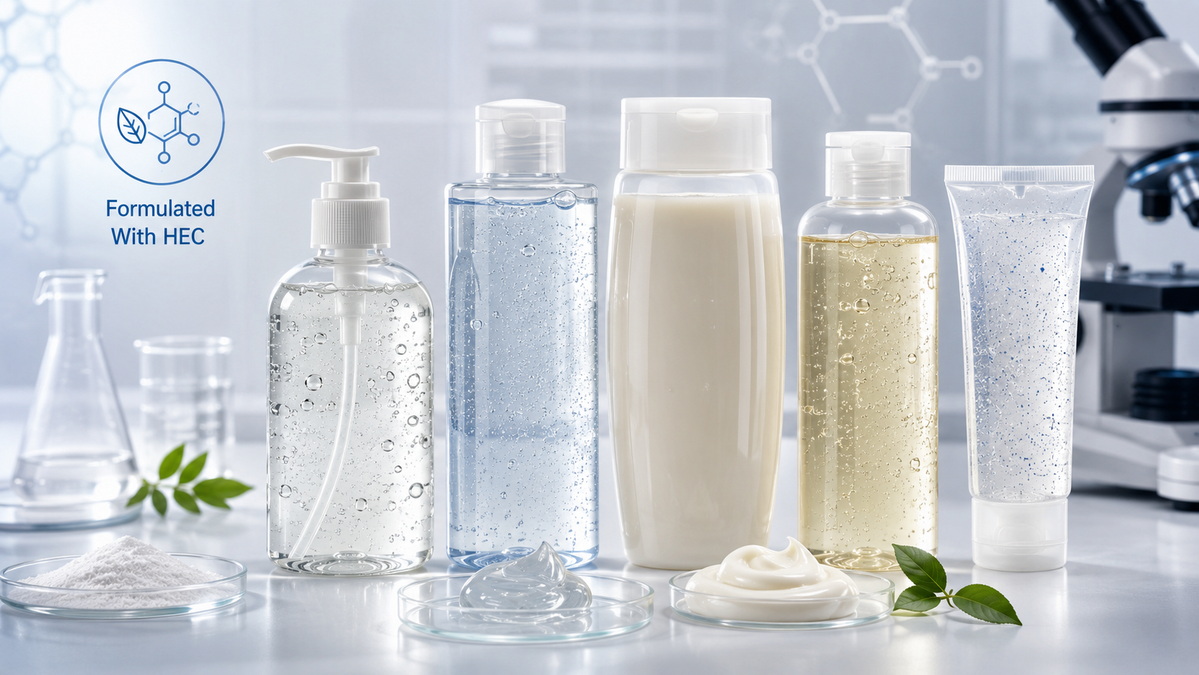
>> HEC in Creams, Lotions and Gels
● Extended Applications: Pharmaceuticals, Oilfield, Paper and Textiles
● Market Trends: Why HEC Demand Is Growing
● Expert Tips: How to Select the Right HEC Grade
● Practical Formulation Guidance: Construction and Daily Chemicals
>> For Construction Formulators
>> For Personal Care and Daily Chemical Formulators
● How a Specialized HEC Manufacturer Supports Your Business
● Call to Action: Optimize Your HEC Strategy
● FAQ About Hydroxyethyl Cellulose (HEC)
As a formulator and technical advisor in the cellulose ether industry, I have seen how Hydroxyethyl Cellulose (HEC) quietly powers a huge range of products—from construction mortars and paints to shampoos and lotions. For manufacturers and brand owners, choosing the right construction‑grade and daily‑chemical‑grade HEC directly impacts product stability, feel, and overall performance. [linkedin]
Hydroxyethyl Cellulose (HEC) is a non‑ionic, water‑soluble cellulose ether produced by etherifying natural cellulose with ethylene oxide. It typically appears as a white, odorless powder that dissolves in cold water to form clear or slightly opalescent viscous solutions. [hengkechem]
From a formulation perspective, HEC is valued because it combines several functions in one polymer:
- Thickening and rheology control
- Water retention and moisture management
- Stabilization and suspension of solids
- Film‑forming and binding capability [ihpmc]
When I review or troubleshoot customer formulations, I always start with the core property set of HEC because it explains most in‑use behavior. [linkedin]
1. Thickening and Rheology Control
HEC provides efficient thickening in water‑based systems, giving formulators control over:
- Viscosity at low and high shear
- Flow and leveling in paints and coatings
- Anti‑sag and anti‑drip behavior in mortars and pastes [hengkechem]
2. Water Retention and Moisture Balance
In cement‑based construction materials and personal care products, HEC helps:
- Reduce water loss into absorbent substrates
- Support proper cement hydration in mortars and grouts
- Maintain a pleasant skin and hair feel in shampoos and lotions [ihpmc]
3. Stabilization and Suspension
Because HEC can form a protective colloid, it:
- Stabilizes emulsions and dispersions
- Keeps pigments and fillers uniformly suspended
- Improves shelf life and appearance of paints, personal care products, and pharmaceuticals [linkedin]
4. Film‑Forming and Binding
In certain systems, HEC can form flexible films and act as a binder, supporting:
- Coating integrity
- Tablet binding in pharmaceutical applications
- Adhesion and cohesion in construction and adhesive formulations [ihpmc]

In the construction industry, Hydroxyethyl Cellulose is widely used as a key additive in dry‑mix mortars and cement‑based systems. [comixmennigeria.com]
In cement and mortar formulations, construction‑grade HEC provides:
- Improved workability and trowelability
- Enhanced water retention for full cement hydration
- Increased cohesion and reduced segregation
- Reduced shrinkage and crack tendency in certain systems [comixmennigeria.com]
These features are especially important in:
- Wall plasters and renders
- Grouts and patching mortars
- Self‑leveling compounds and repair mortars [hengkechem]

Although HPMC and HEMC dominate many tile adhesive formulations, HEC is also used in construction adhesives and selected tile adhesive systems, particularly where its specific rheology profile is preferred. [comixmennigeria.com]
HEC can help:
- Build consistent paste viscosity
- Improve open time and adjustability
- Enhance adhesion and bonding strength when combined with polymer powders and other additives [comixmennigeria.com]
One of the most established uses of HEC is as a rheology modifier in water‑based paints and coatings. [linkedin]
In architectural coatings and industrial water‑based paints, HEC:
- Controls low‑shear and mid‑shear viscosity to prevent sagging and dripping
- Improves flow and leveling for smooth film formation
- Helps keep pigments well dispersed, improving color acceptance and hiding power
- Contributes to splash resistance and stable brush/roller feel [hengkechem]
Formulators often combine HEC with other rheology modifiers to fine‑tune spatter resistance, application feel, and storage stability.
In personal care and daily chemical products, HEC is widely used because it combines safety, sensory performance, and formulation flexibility. [kimacellulose]
In hair and body cleansing products, HEC:
- Acts as a primary or co‑thickener in surfactant systems
- Provides smooth, rich texture and pleasant flow
- Stabilizes suspended beads or actives
- Reduces phase separation during storage [kimacellulose]
Many brand owners choose non‑ionic HEC because it has excellent compatibility with anionic, cationic, and amphoteric surfactants and offers mildness for skin and scalp. [kimacellulose]
In leave‑on and rinse‑off formulations, HEC works as:
- A viscosity builder for creams, lotions, and gels
- A stabilizer for oil‑in‑water emulsions
- A contributor to spreadability and sensory feel on skin [kimacellulose]
HEC can be combined with carbomers, xanthan gum, or other polymers to design specific textures—from light fluid lotions to rich creams and translucent gels. [linkedin]
Beyond construction and daily chemicals, Hydroxyethyl Cellulose supports multiple industrial segments. [kimacellulose]
- Pharmaceuticals:
- Binder and matrix former in tablets
- Viscosity modifier in oral liquids, creams and ophthalmic formulations [comixmennigeria.com]
- Oil and Gas / Drilling Fluids:
- Rheology modifier and fluid‑loss controller
- Suspension agent for drill cuttings in water‑based fluids [ihpmc]
- Paper and Textiles:
- Thickener for textile printing pastes
- Sizing and coating additive for papers to improve smoothness and printability [hengkechem]
This cross‑industry versatility is one reason why the global HEC market is projected to grow steadily, driven by demand in personal care, construction, and pharmaceuticals. [globenewswire]
Recent industry reports show that the global Hydroxyethyl Cellulose market continues to expand, supported by: [globenewswire]
- Ongoing shift to water‑based and low‑VOC coatings
- Rising demand for mild, high‑performance personal care products
- Infrastructure and renovation growth in emerging regions, increasing use of dry‑mix mortars and admixtures
- Expansion of pharmaceutical and oilfield applications relying on HEC's thickening and stabilizing properties
From an application engineer's viewpoint, grade selection is where projects succeed or fail. When you evaluate HEC for construction or daily chemical use, consider these factors: [kimacellulose]
1. Target Application and Industry
- Construction mortars and coatings
- Shampoos, lotions, cleaning products
- Pharmaceuticals or oilfield fluids
2. Viscosity and Rheology Profile
- Required viscosity at application shear rates
- Desired flow, leveling, and sag resistance
3. Dissolution Behavior and Particle Size
- Cold‑water dispersibility and lump‑free dissolution
- Handling in large‑scale mixing equipment
4. Purity, Residuals and Regulatory Needs
- Cosmetic or pharmaceutical compliance where relevant
- Region‑specific regulations and certifications
5. Compatibility with Other Ingredients
- Cement, lime, and supplementary cementitious materials
- Surfactants, polymers, and active ingredients
A professional supplier can provide grade recommendations, lab data, and pilot‑scale support to narrow down the right HEC type for your formulation.
To maximize the benefits of construction‑grade HEC:
- Start with a benchmark formulation using a mid‑viscosity HEC grade recommended for mortars or coatings.
- Adjust dosage stepwise to balance water retention, workability, and strength.
- Combine HEC with other cellulose ethers, redispersible polymer powders, and air‑entraining agents as needed for specific performance targets. [ihpmc]
Careful lab and field testing under local conditions (temperature, humidity, cement type) remains essential.
For shampoos, conditioners, gels, and cleaning products: [comixmennigeria.com]
- Hydrate HEC under controlled shear to avoid lumps.
- Combine with compatible surfactants and co‑thickeners to fine‑tune viscosity and sensory feel.
- Evaluate clarity, foam stability, and storage stability as part of your development protocol.
As a China‑based cellulose ether manufacturer, Shandong Shengda New Material Co., Ltd. focuses on HEC, HPMC, HEMC and related cellulose ethers for both construction and daily chemical segments. [shengdahpmc]

If you are:
- A construction materials manufacturer looking to upgrade mortar or paint performance, or
- A personal care or household brand seeking stable, high‑quality rheology in your formulations,
consider benchmarking construction‑grade and cosmetic‑grade HEC from a dedicated cellulose ether producer.
You can:
- Request tailored HEC recommendations for your application
- Run lab‑scale evaluations with supplier support
- Develop cost‑effective, high‑performance formulations that clearly stand out in your market
1. Is HEC compatible with both construction and cosmetic applications?
Yes. HEC is a versatile polymer used in both construction and daily chemical products, but different grades and purity levels are selected for each industry. [linkedin]
2. How does HEC compare with HPMC and HEMC in mortars?
HEC shares thickening and water‑retention roles with HPMC and HEMC, but has a different rheology profile and temperature behavior, so grade selection and dosage must be tailored to the specific mortar system. [kimacellulose]
3. Why is HEC popular in shampoos and body washes?
HEC offers mildness, good compatibility with surfactants, and pleasant sensory feel, making it a reliable thickener and stabilizer in personal care formulations. [kimacellulose]
4. Can HEC be used in high‑salt or electrolyte‑rich systems?
HEC has better salt tolerance than many ionic polymers, and is used in some high‑salt systems, but tolerance depends on grade, salt type, and overall formulation design. [hengkechem]
5. How is the global market outlook for HEC?
Market analyses indicate steady growth for Hydroxyethyl Cellulose, supported by rising demand in personal care, construction, coatings, pharmaceuticals and oilfield applications worldwide. [globenewswire]
1. Applications of Hydroxyethyl Cellulose (HEC).
https://www.ihpmc.com/news/applications-of-hydroxyethyl-cellulose-hec/ [ihpmc]
2. Hydroxyethylcellulose – HEC industrial applications.
https://comixmennigeria.com.ng/product/hydroxyethylcellulose-hec/ [comixmennigeria.com]
3. Shandong Shengda New Material Co., Ltd. – About Us.
https://www.shengdahpmc.com/aboutus.html [shengdahpmc]
4. What are the applications of Hydroxyethyl Cellulose?
https://www.linkedin.com/pulse/what-applications-hydroxyethyl-cellulose-rio-lee-xa07c [linkedin]
5. Hydroxyethyl Cellulose Market overview and growth drivers.
https://www.globenewswire.com/fr/news-release/2025/07/10/3113456/0/en/Hydroxyethyl-Cellulose-Market-to-Surpass-USD-1114-54-Milli... [globenewswire]
6. Hydroxyethyl Cellulose – properties and uses.
https://www.hengkechem.com/hydroxyethyl-cellulose-hec.html [hengkechem]
7. Types and application fields of Hydroxyethyl Cellulose.
https://www.kimacellulose.com/what-are-the-different-types-of-hydroxyethyl-cellulose-hec.html [kimacellulose]
8. Dongyuan Shengda New Material Co., Ltd. – manufacturer profile.
https://b2bmap.com/dongyuan-shengda-new-material [b2bmap]
9. Usage and application fields of hydroxyethyl cellulose (HEC).
https://www.kimacellulose.com/usage-and-application-fields-of-hydroxyethyl-cellulose-hec.html [kimacellulose]


