


close
Choose Your Site
Global
Social Media
Views: 222 Author: Rebecca Publish Time: 2026-01-31 Origin: Site


Content Menu
● What Is Methyl Hydroxyethyl Cellulose (MHEC)?
● Core Keywords and Search Intent
● Chemical Structure and Production Basics
>> How MHEC Is Chemically Modified
>> Key Quality Parameters for Buyers
● Functional Properties of MHEC in Formulations
>> Water Solubility and Solution Behavior
>> Thickening and Rheology Control
>> Water Retention and Open Time
>> Cohesion and Slump Resistance
● Main Applications of MHEC by Industry
>> 1. MHEC in Construction Materials
>> 2. MHEC in Paints and Coatings
>> 3. MHEC in Personal Care Products
● MHEC vs HPMC vs HEMC vs HEC (For Construction Buyers)
● Practical Formulation Guidelines for MHEC
>> Recommended Dosage Ranges (Indicative)
>> How to Disperse and Dissolve MHEC
>> Common Problems and Troubleshooting
● Quality, Compliance and Safety Considerations
● When to Choose MHEC Over Other Cellulose Ethers
● Call to Action: Work With a Specialist Cellulose Ether Manufacturer
● Frequently Asked Questions About MHEC
>> 1. What is methyl hydroxyethyl cellulose (MHEC) used for?
>> 2. How is MHEC different from HPMC?
>> 3. Is MHEC safe for use in cosmetics and pharmaceuticals?
>> 4. Can MHEC be used together with other cellulose ethers?
>> 5. How should MHEC be stored to maintain performance?
Methyl Hydroxyethyl Cellulose (MHEC) is a non-ionic cellulose ether widely used as a water-soluble polymer, thickener and rheology modifier in construction, coatings, personal care and pharmaceutical formulations. It is produced by etherifying purified cellulose with methyl and hydroxyethyl groups, which significantly improves solubility, stability and performance compared with native cellulose.
For buyers of cellulose ethers, MHEC is often evaluated alongside HPMC, HEMC and HEC as a cost-effective workhorse for cement-based and water-based systems.

Target main keyword: methyl hydroxyethyl cellulose (MHEC)
Suggested secondary keywords (for on-page and internal linking):
- methyl hydroxyethyl cellulose uses
- MHEC for tile adhesive and mortar
- MHEC vs HPMC vs HEMC vs HEC
- cellulose ether for construction chemicals
- MHEC properties and applications
- MHEC dosage and troubleshooting
(Use these variations naturally in headings, first paragraph and FAQs.)
MHEC is derived from refined cellulose (usually wood pulp or cotton linters) by introducing methyl and hydroxyethyl groups onto the cellulose backbone. This double substitution breaks strong hydrogen bonding in cellulose and makes the polymer cold-water soluble while retaining a flexible, film-forming structure.
- Cellulose backbone: anhydroglucose units linked by \(\beta-1,4\) bonds
- Methyl groups: improve hydrophobic association and film strength
- Hydroxyethyl groups: enhance water solubility, salt tolerance and flexibility
When evaluating MHEC from different suppliers, technical teams usually focus on:
- Viscosity grade (e.g., 20,000–80,000 cps Brookfield)
- Degree of substitution (DS) and molar substitution (MS)
- Moisture content and ash content
- Particle size and dispersibility
- Gel temperature and solution clarity
These parameters directly affect workability in tile adhesive, putty, self-leveling compounds and water-based paints.
Suggested visual:
Insert a simple molecular schematic image after this section showing cellulose backbone with methyl and hydroxyethyl side groups.
MHEC is readily soluble in cold water, forming clear or slightly opalescent viscous solutions. Solubility and final viscosity depend on molecular weight, substitution level and temperature.
Important behaviors for formulators:
- Rapid hydration if properly dispersed
- Pseudoplastic (shear-thinning) flow: viscosity decreases under shear and recovers when shear stops, which improves pumping, brushing and spraying performance.
- Good compatibility with many inorganic salts and cements
As a high-efficiency thickener, MHEC allows formulators to adjust:
- Wet mortar consistency and anti-sag performance
- Paint viscosity at low and high shear
- Storage stability of ready-mixed products
In cementitious systems, its pseudoplasticity helps mortars stay creamy during mixing yet non-sagging on vertical surfaces.
MHEC forms flexible, cohesive films on drying, providing:
- Improved adhesion to mineral substrates and coatings
- Surface protection and dust-binding
- Better cohesion in cementitious and gypsum systems
In water-based paints and putties, this film-forming capability supports good brushability, levelling and hiding.
One of the most valuable properties of MHEC in construction is water retention. By slowing water loss into porous substrates and the environment, MHEC:
- Supports complete hydration of cement and gypsum
- Extends open time and correction time of tile adhesives
- Reduces early cracking and improves final strength
MHEC improves cohesion of mixes by binding fine particles and controlling flow. The result is:
- Less segregation and bleeding
- Better trowel feel
- Higher sag resistance on walls and ceilings
MHEC is widely used in dry-mix mortar and other construction chemicals as a thickener, water-retention agent and rheology modifier.
Typical applications:
- Tile adhesive (C1/C2, deformable grades)
- Wall putty and skim coat
- EIFS/ETICS basecoat and adhesive
- Self-leveling underlayment (SLU)
- Cement and gypsum plaster, repair mortars
- Grouts and masonry mortars
Key benefits for construction users:
- Improved workability and slip resistance
- Longer open time and better curing
- Enhanced adhesion and mechanical strength
- Better surface finish and crack resistance
Suggested visual:
Photo of tile adhesive application or plastering work to make the section more intuitive.
In water-based paints and coatings, MHEC serves as:
- Primary or co-thickener
- Rheology modifier for sag resistance
- Film-forming aid in certain systems
Performance contributions:
- Controlled viscosity across different shear rates
- Improved spatter resistance and application feel
- Enhanced levelling and coverage on various substrates
MHEC is used in creams, lotions, shampoos and gels as a safe, non-ionic polymer.
Functions include:
- Thickening and stabilizing emulsions
- Providing smooth, non-tacky feel
- Suspending actives and pigments
In pharmaceuticals, MHEC works as a binder, disintegrant and controlled-release polymer in tablets and capsules.
Typical benefits:
- Better tablet hardness and lower friability
- Controlled disintegration and dissolution
- Enhanced stability of active ingredients
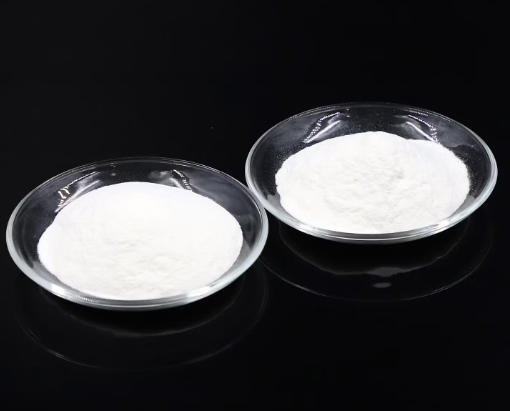
For a manufacturer like Shandong Shengda New Material Co., Ltd., which supplies HPMC, HEMC and HEC, it is strategic to position MHEC clearly among related cellulose ethers.
| Product | Main Substitution | Key Features | Typical Focus Uses |
|---|---|---|---|
| MHEC | Methyl + Hydroxyethyl | Strong water retention, good thickening, balanced cost | Dry-mix mortars, tile adhesive, putty, paints |
| HPMC | Methyl + Hydroxypropyl | Very stable performance, excellent workability and open time | Premium tile adhesive, self-leveling, skim coat |
| HEMC | Hydroxyethyl + Methyl | Better salt and temperature tolerance, good water retention | Gypsum-based plasters, EIFS systems, cement mortars |
| HEC | Hydroxyethyl | Strong thickening in water, good compatibility | Paints, latex systems, personal care |
Actual dosage depends on formulation, cement quality and required performance, but typical solid-on-solid ranges are:
- Tile adhesive: 0.2–0.6%
- Wall putty / skim coat: 0.2–0.5%
- Cement plaster / render: 0.15–0.4%
- Self-leveling compounds: 0.05–0.2%
- Water-based paint: 0.2–1.0% (on total formulation)
These values are approximate and should be optimized through lab tests and jobsite trials.
To avoid lump formation and ensure full performance:
1. Dry blending method (for mortars)
- Premix MHEC evenly with other dry powders (cement, sand, fillers, redispersible polymer powder).
- Add water under mixing while agitating until a smooth mortar is obtained.
- Allow a short maturation time, then remix before application.
2. Stock solution method (for paints/liquids)
- Disperse MHEC in part of the water under high shear.
- Allow time for hydration and viscosity development.
- Add pigments, binders and other additives after full swelling.
- Lumps in solution
- Cause: Direct contact with water, insufficient dispersion.
- Solution: Pre-mix with other powders, use high shear, add to vortex.
- Too high viscosity / poor workability
- Cause: Over-dosage or too high viscosity grade.
- Solution: Reduce dosage or switch to a lower-viscosity MHEC.
- Short open time / poor adhesion
- Cause: Low water retention, highly absorbent substrates.
- Solution: Increase MHEC dosage or move to a different substitution level; pre-wet substrate.
- MHEC is non-ionic and generally non-toxic in typical industrial use.
- Industrial grades for construction and coatings must be clearly separated from pharmaceutical or cosmetic grades.
- Product should be supplied with COA, TDS, SDS and regulatory documentation to support customer qualifications.
- Consistent batch-to-batch quality is critical for automated dry-mix plants and large project sites.
Suggested visual:
Table-style graphic or photo showing quality control laboratory and packaging.
You may prefer MHEC when:
- You need strong water retention and workability at a competitive cost.
- Your main products are dry-mix mortars, tile adhesives, putties and water-based paints.
- You require a balance of thickening, open time and sag resistance without over-thickening.
- Your markets prioritize cost-performance ratio and consistent quality.
For high-end or very demanding systems, your technical team might blend MHEC with HPMC or HEMC to fine-tune rheology and open time.
If you are looking for a reliable, technical-grade MHEC supplier for tile adhesives, wall putty, paints or other industrial formulations, partnering with a dedicated cellulose ether manufacturer is essential. A professional producer can help you select the right MHEC, HPMC, HEMC or HEC grade, optimize your formulation and support your product differentiation in competitive markets.
Ready to develop or upgrade your dry-mix mortar or coating formulations with high‑performance MHEC?
Contact our technical team to discuss your application, request a free sample and get tailored formulation support.
Contact us to get more information!
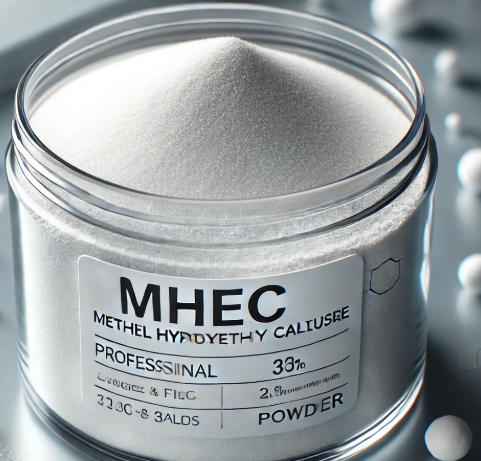
MHEC is mainly used as a thickener, water-retention agent and rheology modifier in construction materials, water-based paints, personal care products and pharmaceutical formulations.
Both are non-ionic cellulose ethers, but MHEC carries methyl and hydroxyethyl groups, while HPMC has methyl and hydroxypropyl groups. This difference leads to slightly different solubility, temperature resistance and rheology profiles, which formulators use to fine-tune performance.
Grades specifically produced and purified for personal care and pharmaceutical applications are considered safe when used according to regulatory guidelines and good manufacturing practices. Industrial construction grades should not be used in human-contact products.
Yes. Many advanced formulations use blends of MHEC, HPMC, HEMC or HEC to combine different water-retention, thickening and open-time characteristics. The optimal ratio needs to be evaluated through lab testing.
MHEC should be stored in a cool, dry place, in its original packaging, away from moisture, high temperatures and direct sunlight. Proper storage helps maintain viscosity, dispersibility and overall performance over the stated shelf life.


