


close
Choose Your Site
Global
Social Media
Views: 239 Author: Shengda Publish Time: 2026-11-11 Origin: Site


Content Menu
● What Is Hydroxypropyl Methylcellulose?
● What Does the Evidence Say About HPMC Safety?
>> Food Safety Findings Have Defined Boundaries
>> U.S. Food Use Is Subject to Specific Conditions
>> Food Findings Do Not Replace Workplace Assessments
● HPMC Safety by Grade: What Buyers Need to Know
● Is HPMC Safe in Construction Products?
>> Control Powder Exposure During Production
>> Evaluate the Finished Mortar Separately
● Is Hydroxypropyl Methylcellulose Safe for Skin and Daily Chemical Products?
>> Why Irritation Cannot Be Judged from HPMC Alone
● Does HPMC Cause Side Effects?
● Regulatory Update: Why Current Specifications Matter
● A Six-Step HPMC Safety Checklist for Buyers
>> 1. Define the Intended Application
>> 2. Confirm the Supplied Grade
>> 3. Review the Documentation Package
>> 4. Compare Specifications and Test Methods
>> 5. Validate the Finished Formulation
>> 6. Establish Traceability and Change Control
● Practical Example: Replacing an HPMC Grade in Tile Adhesive
● Choose HPMC with Clear Application Support
>> Is Hydroxypropyl Methylcellulose Safe to Eat?
>> Is HPMC the Same as Hypromellose?
>> Can Construction-Grade HPMC Be Used in Cosmetics?
>> Does HPMC Dust Require Protective Measures?
>> Does "No Numerical ADI" Mean Unlimited Consumption Is Safe?
>> Is Plant-Derived HPMC Automatically Sustainable?
Is hydroxypropyl methylcellulose safe? Generally, yes—when the correct grade meets applicable specifications and is used under appropriate conditions. However, HPMC safety depends on more than the ingredient name. Purity, exposure route, formulation, and intended application all matter.
At Shandong Shengda New Material Co., Ltd., our focus is cellulose ether solutions for construction and daily chemical applications. From a manufacturer's perspective, the most useful safety question is not simply whether HPMC is safe, but whether a particular grade is suitable for your product and production process.
Hydroxypropyl methylcellulose, commonly abbreviated as HPMC, is a chemically modified cellulose polymer. Its starting material comes from plant cellulose, but the finished ingredient is not untreated natural fiber.
HPMC helps control viscosity, retain water, stabilize mixtures, and form films. These properties explain its use across very different industries:
- Construction materials, including cement-based mortars and tile adhesives.
- Daily chemical products requiring controlled consistency.
- Cosmetics and personal care formulations.
- Certain foods and pharmaceutical products using appropriately qualified grades.
Its chemical identity does not make every commercial grade interchangeable. Two HPMC powders may look similar while having different specifications, processing characteristics, and approved applications.
In its 2018 re-evaluation of several celluloses, including HPMC, the European Food Safety Authority concluded that no numerical acceptable daily intake was necessary and identified no safety concern at the reported uses and use levels.
The assessment also reported low acute toxicity and no genotoxic concern for the evaluated celluloses.
These conclusions are reassuring, but their boundaries matter. They concern specified substances used as food additives under evaluated conditions. They do not establish that construction-grade HPMC can be eaten or that unlimited consumption is appropriate.
Similarly, an acceptable daily intake described as "not specified" should not be interpreted as permission to ignore purity requirements or intended-use restrictions.
In the United States, 21 CFR 172.874 permits hydroxypropyl methylcellulose in food under defined conditions.
These include compliance with the referenced specifications, use for identified technological functions, and good manufacturing practice. The regulation also includes labeling requirements and an exception for standardized foods that do not provide for its use.
For buyers, this is more useful than a blanket claim that HPMC is "approved everywhere." Regulatory suitability must be checked against the actual grade, application, and destination market.
Eating a qualified food ingredient and breathing airborne industrial powder are different exposure scenarios.
A material can have low oral toxicity while still requiring dust controls during manufacturing. Likewise, a favorable ingredient assessment does not establish the safety of an entire detergent, mortar, or cosmetic formulation.
The practical rule is grade-specific evaluation: assess the supplied product and its intended use, not just the polymer name.
| Grade or application | Main evaluation priorities | What buyers should not assume |
|---|---|---|
| Construction-grade HPMC | Dust handling, formulation compatibility, consistency, intended industrial use | That it is suitable for ingestion |
| Daily chemical-grade HPMC | Finished-product compatibility, impurities, exposure conditions | That every grade suits every detergent |
| Cosmetic-use HPMC | Relevant ingredient specifications and finished-formula assessment | That ingredient safety guarantees product safety |
| Food-grade HPMC | Applicable food specifications and permitted uses | That industrial grades are equivalent |
| Pharmaceutical-use HPMC | Relevant compendial and application requirements | That food suitability establishes pharmaceutical suitability |
A purchasing decision should connect the product specification with the intended application.
For example, viscosity may determine processing performance, but it cannot prove food compliance. Similarly, a safety data sheet provides handling information; it is not a substitute for a food or pharmaceutical qualification package.
For construction applications, HPMC safety should be evaluated alongside the hazards of the complete building material.
HPMC contributes water retention and rheology control, but a cement-based product may present additional hazards unrelated to the cellulose ether itself. Reviewing only the HPMC documentation leaves part of the risk assessment unfinished.
Dust can become airborne when operators open bags, charge mixers, or clean equipment.
Depending on the supplied product, safety documentation may identify mechanical eye irritation, respiratory discomfort, or combustible dust concerns. A non-hazardous classification does not mean dust can be ignored.
Practical controls include:
- Using local extraction where powder enters the process.
- Reducing unnecessary drop heights.
- Keeping containers closed when not in use.
- Selecting eye and respiratory protection through a workplace assessment.
- Avoiding cleaning practices that disperse accumulated dust.
- Evaluating ignition sources wherever combustible dust could accumulate.
Always follow the actual supplier's safety data sheet and applicable workplace requirements.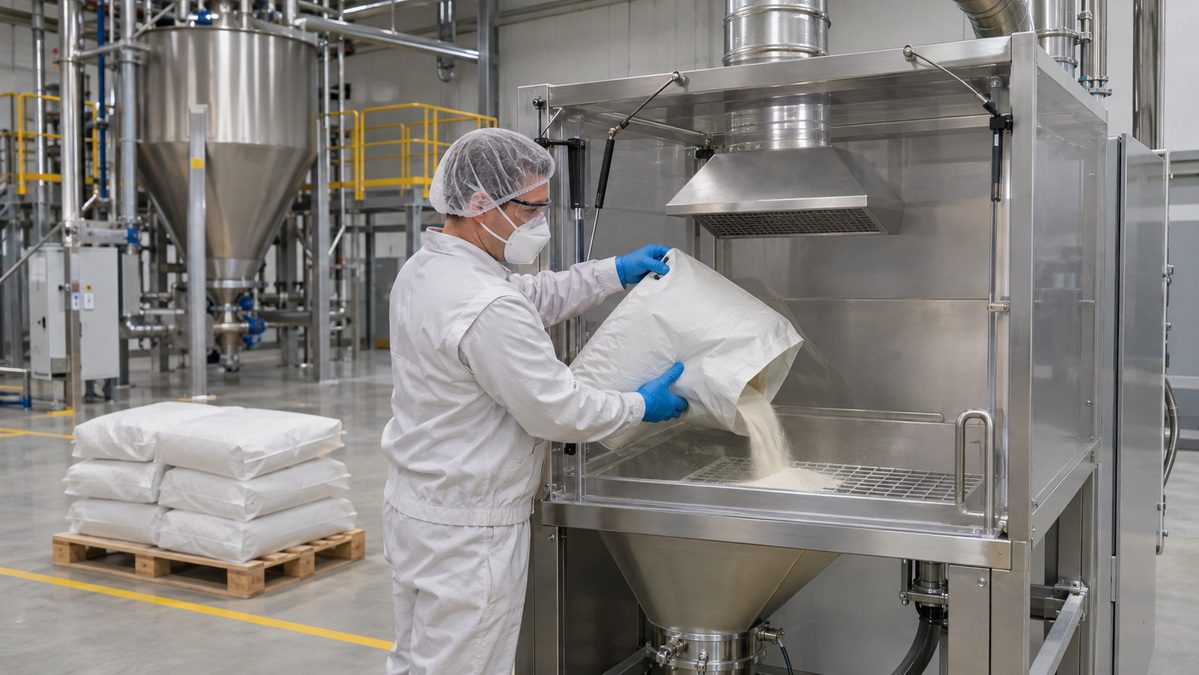
An HPMC safety assessment cannot establish that a finished mortar is harmless.
The formulation may contain alkaline binders, mineral fillers, or other additives requiring separate precautions. Manufacturers should assess the complete mixture and provide appropriate instructions to downstream users.
This distinction protects workers and prevents misleading product claims.
Cosmetic Ingredient Review assessments support HPMC's safety under the cosmetic practices and concentrations evaluated. However, that conclusion should not be extended automatically to every cleaning product or skin-contact formulation.
Finished-product safety depends on the complete composition, including surfactants, preservatives, fragrance, pH, and exposure duration.
For a daily chemical manufacturer, the relevant questions include:
- Is the grade intended for this application?
- Does it remain compatible with the formulation?
- Are impurity specifications appropriate?
- Does the product rinse off or remain on the skin?
- What finished-product testing is required?
If a product causes redness or discomfort, its ingredient list alone rarely identifies the cause.
HPMC should not automatically be blamed, but neither should individual sensitivity be dismissed. Stop using a product that causes an adverse reaction and seek appropriate medical advice.
Industrial HPMC powders should not be used to prepare homemade eye drops, medicines, or other products requiring specialized purity and manufacturing controls.
Safety discussions should distinguish ordinary product use from accidental exposure and inappropriate substitution.
For qualified food uses, the regulatory evidence is reassuring within its evaluated scope. It does not support treating industrial HPMC as an edible supplement.
In workplaces, airborne powder may cause mechanical irritation or respiratory discomfort. Handling precautions remain relevant even where the supplied material is not classified as hazardous.
Avoid unsupported claims such as:
- "HPMC is completely harmless."
- "All grades are safe to swallow."
- "No protective equipment is ever needed."
- "Plant-derived means allergy-free."
These statements erase the conditions that make a safety conclusion meaningful.
Safety qualification is not a one-time exercise.
Commission Regulation (EU) 2025/666 amended specifications for several cellulose food additives, including HPMC, identified as E 464. The changes include tighter controls on toxic elements.
For procurement teams, the practical implication is straightforward: historical acceptance of an ingredient does not replace checking current specifications and applicable transition arrangements.
This update also illustrates an important distinction. Changes affecting another cellulose derivative should not automatically be attributed to HPMC. E 464 and sodium carboxymethyl cellulose, E 466, are different additives.
Buyers should identify the exact substance, applicable legal provision, and relevant implementation date before drawing conclusions.
Specify whether the material will enter tile adhesive, dry-mix mortar, detergent, personal care, food, or pharmaceutical production.
Do not request a generic "safe HPMC" without explaining the use.
Ask the supplier to identify the recommended grade and its application boundaries.
A shared chemical name or CAS number does not establish equivalent suitability.
Request documents relevant to the purchase:
- Safety data sheet.
- Technical data sheet.
- Batch-specific certificate of analysis.
- Intended-use statement.
- Applicable compliance declarations.
Check that the supplier identity, grade designation, and batch information align.
Review viscosity, moisture, and other agreed parameters alongside safety-related requirements.
When comparing viscosity results, confirm the solution concentration, temperature, and measurement method. Numbers generated under different conditions may not be directly comparable.
Test the candidate grade in the actual formulation and process.
For construction products, examine mixing, workability, water retention, and relevant performance requirements. For daily chemical products, evaluate compatibility and stability, together with the finished-product safety testing appropriate to the application.
Keep approved specifications, test records, and batch references.
Agree how changes in manufacturing, specifications, or product composition will be communicated. Consistent documentation supports safer decisions when sourcing across borders.
Consider a hypothetical tile adhesive producer evaluating a lower-cost HPMC grade.
Matching the declared viscosity is a starting point, not a complete qualification. The producer should also compare handling behavior, dissolution characteristics, water retention, and performance in the finished adhesive.
A sensible trial sequence is:
1. Review the candidate grade's documentation.
2. Compare laboratory batches under controlled conditions.
3. Run a limited production trial.
4. Assess relevant finished-product performance.
5. Confirm handling controls before routine purchasing.
This example is illustrative, not a reported customer case. Its lesson is that safe substitution requires both material review and application testing.
At Shandong Shengda New Material Co., Ltd., our focus is helping global customers select cellulose ether solutions for construction and daily chemical applications.
When discussing an HPMC requirement, share your formulation type, target performance, processing conditions, destination market, and documentation needs.
Contact our team to discuss a suitable grade, request the relevant technical and safety documentation, and arrange samples for application testing. Qualification should come before a full-scale purchasing commitment.
HPMC meeting applicable food-grade specifications may be used in permitted food applications under relevant conditions. Construction-grade and other industrial products must not be treated as edible substitutes.
Hypromellose is another name for hydroxypropyl methylcellulose, commonly encountered in pharmaceutical contexts. The name alone does not establish a product's grade or suitability.
Do not assume so. Cosmetic applications require appropriate specifications and finished-product evaluation. Ask for a grade supported for the intended application rather than substituting on price alone.
Yes. Assess dust generation, ventilation, eye exposure, and any combustible dust potential. Select controls using the supplied product's safety data sheet and local workplace requirements.
No. It describes a regulatory assessment conclusion within its scope. It does not remove purity requirements, manufacturing controls, or restrictions on intended use.
No. Plant-derived feedstock does not establish the environmental performance of manufacturing, energy use, packaging, or transport. Sustainability claims require evidence beyond the ingredient's origin.
1. Original article supplied for restructuring: "Is Hydroxypropyl Methyl cellulose Safe?" Published November 21, 2023. Used as the starting content, not as independent proof of safety. [hpmc]
2. EFSA ANS Panel. "Re-evaluation of celluloses E 460(i), E 460(ii), E 461, E 462, E 463, E 464, E 465, E 466, E 468 and E 469 as food additives." *EFSA Journal*, 2018, 16(1):5047. Source for the food-additive assessment, toxicity findings, and numerical ADI conclusion. [pubmed.ncbi.nlm.nih]
3. Electronic Code of Federal Regulations. "21 CFR § 172.874—Hydroxypropyl methylcellulose." Source for U.S. food-use conditions, specifications, technological functions, and labeling requirements. [ecfr]
4. European Commission. "Commission Regulation (EU) 2025/666 of 4 April 2025." Source for updated cellulose food-additive specifications and toxic-element controls, including E 464. [eur-lex.europa]
5. Cosmetic Ingredient Review. "Quick Reference Table," December 2014, Hydroxypropyl Methylcellulose entry. Source for the cosmetic safety conclusion within the evaluated practices of use and concentration. [cir-safety]
6. Redox. "Safety Data Sheet: Hydroxypropyl Methyl Cellulose," Revision 3, April 8, 2024. Source for representative handling precautions, dust management, eye irritation, and combustible dust considerations. This document does not replace the safety data sheet for a Shengda product. [redox]
7. Nutrition & Biosciences USA 1, LLC. "METHOCEL™ E15 Premium LV Hydroxypropyl Methylcellulose—Safety Data Sheet," October 16, 2018. Additional source for product-specific combustible dust and exposure-control guidance; not a specification for Shengda products. [chempoint]


