


close
Choose Your Site
Global
Social Media
Views: 222 Author: Shengda Publish Time: 2026-06-05 Origin: Site


Content Menu
● Why Cellulose Ethers Matter in Modern Construction
● Key Functional Benefits of HPMC in Construction
● MHEC (HEMC) Applications Beyond Construction
● Market Trends: Why HPMC & MHEC Demand Is Growing
● Practical Formulation Tips from the Field
● Sustainability and Safety Advantages
● Why Work with a Specialized Chinese Manufacturer
● Example Use Cases from Real Projects
● How to Evaluate a Cellulose Ether Partner
● Call to Action: Collaborate on Your Next Generation Formulations
Hydroxypropyl Methyl Cellulose (HPMC) and Methyl Hydroxyethyl Cellulose (MHEC/HEMC) have become indispensable cellulose ethers in modern construction and personal care formulations thanks to their powerful water retention, thickening, and film‑forming performance, as well as their strong safety profile and alignment with global sustainability trends. As a China‑based manufacturer, Shandong Shengda New Material Co., Ltd. is well‑positioned to deliver consistent, application‑driven HPMC and related cellulose ether solutions to global customers who demand reliability, technical support, and long‑term partnership. [celotech]
Hydroxypropyl Methyl Cellulose (HPMC) and Methyl Hydroxyethyl Cellulose (MHEC, also known as HEMC) are non‑ionic, water‑soluble cellulose ethers produced from refined plant fibers through etherification under alkaline conditions. Both function as multifunctional additives—thickeners, water retention agents, stabilizers, and film formers—across construction, pharmaceutical, food, and personal care industries. [designingbuildings.co]%20Powder)
From an industry practitioner's perspective, the key difference lies in substitution type: HPMC uses hydroxypropyl groups, while MHEC uses hydroxyethyl groups, which leads to slightly different rheology, water retention, and temperature resistance in cement‑based and gypsum‑based systems. In practice, formulators often evaluate both to balance workability, open time, and anti‑sag performance in tile adhesives, renders, and self‑leveling compounds. [sciencedirect]

In cement‑based mortars, tile adhesives, and self‑leveling flooring compounds, small dosages of HPMC or MHEC dramatically influence water retention, viscosity, workability, and final surface quality. MHEC is widely used in self‑leveling flooring and cementitious tile adhesives, while related cellulose ethers such as MHPC and HPMC are often selected for their air‑entraining and workability‑enhancing effects. [hpmc]
For building materials manufacturers, this means that cellulose ether selection and grade optimization directly impact on‑site productivity, defect rates (such as cracking, hollowing, and sagging), and overall customer satisfaction. In a competitive market where labor costs are rising and performance standards are tightening, the "invisible" cellulose ether often becomes the decisive factor that differentiates a premium dry‑mix mortar or adhesive from a commodity product. [marketsandmarkets]
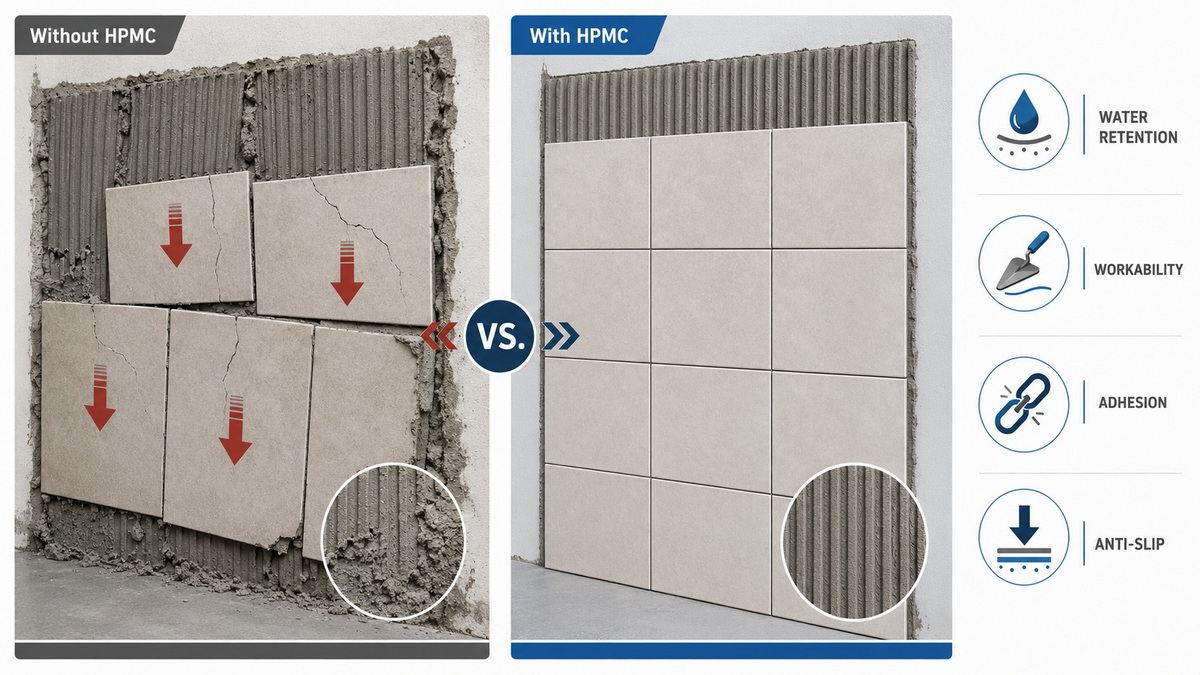
From hands‑on discussions with mortar producers and site applicators, several HPMC benefits show up repeatedly as make‑or‑break factors in real projects. [celotech]
1. Superior water retention
- HPMC significantly reduces water loss to porous substrates, ensuring more complete cement hydration and higher final strength. [designingbuildings.co]
- Better water retention also extends open time, giving applicators more flexibility and lowering the risk of tile detachment or weak bonding. [sciencedirect]
2. Optimized workability and rheology
- As a rheology modifier, HPMC improves trowelability, makes the mortar "creamier," and reduces stickiness to tools, improving application speed. [celotech]
- In tile adhesives and plasters, tailored viscosity helps balance slump resistance with easy spreading, crucial for vertical applications. [hpmc]
3. Enhanced adhesion and anti‑slip
- In cementitious tile adhesives, HPMC contributes to bond strength by stabilizing the cement matrix and ensuring consistent curing at the adhesive–substrate interface. [sciencedirect]
- Anti‑slip performance on walls is heavily dependent on the right cellulose ether grade and dosage, protecting tiles from sliding during installation. [sciencedirect]
4. Crack reduction and surface quality
- By controlling water evaporation and improving cohesion, HPMC helps minimize plastic shrinkage cracking in renders and skim coats. [designingbuildings.co]
- The result is smoother surfaces, fewer callbacks, and a better visual finish—critical for decorative coatings and thin‑layer plasters. [designingbuildings.co]
While construction remains the largest application segment for cellulose ethers, MHEC (HEMC) has proven value in pharmaceuticals, cosmetics, textiles, and paints. [echemi]
In pharmaceuticals, hydroxyethyl methylcellulose acts as a thickener, suspending agent, film‑forming agent, and controlled‑release matrix in syrups, suspensions, coated tablets, and sustained‑release formulations. It improves patient experience by enhancing taste and mouthfeel, preventing sedimentation of active ingredients, and enabling 24‑hour controlled‑release profiles in some antihypertensive tablets. [kimacellulose]
In cosmetics, MHEC is widely used to thicken shampoos, conditioners, and creams, form a protective film on hair, and stabilize emulsions. It provides a pleasant, non‑sticky skin feel and contributes to the stable, glossy appearance that end users associate with premium personal care products. [hpmc]
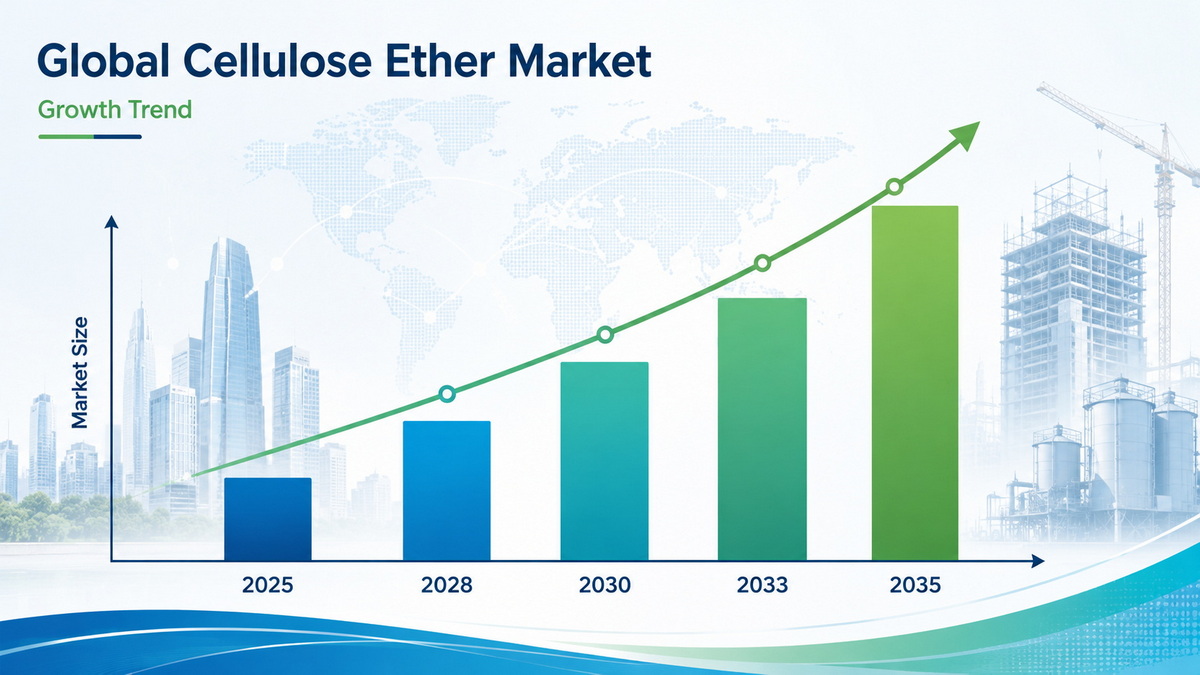
Global demand for cellulose ethers and derivatives is currently on a strong growth trajectory, driven by construction, pharmaceuticals, and personal care. One market study projects the cellulose ether and derivatives industry to grow from around 11.85 billion USD in 2026 to 16.47 billion USD by 2031, with a CAGR of approximately 6.8%. [insightaceanalytic]
More recent analytical data suggests an even stronger outlook, with valuations around 8–9 billion USD in the mid‑2020s and a projected market size above 22 billion USD by 2035, at a CAGR of about 9.3% from 2026 to 2035. Asia‑Pacific, particularly China, is expected to maintain the highest growth rate thanks to rapid urbanization, infrastructure investments, and expanding manufacturing capacity for cellulose ether‑based products. [linkedin]
Drawing on best practices from industrial users and technical literature, there are several practical guidelines when working with HPMC in construction and personal care formulations. [lotioncrafter]
For construction dry‑mix systems:
- Grade selection: Choose viscosity, substitution type, and particle size based on application—tile adhesives, skim coats, self‑leveling products require different flow and open‑time profiles. [celotech]
- Dosage optimization: Over‑dosing HPMC can lead to excessive air entrainment or too high viscosity, while under‑dosing compromises water retention and adhesion; iterative lab and field testing is essential. [celotech]
- Compatibility: Evaluate interactions with redispersible polymer powders, accelerators, retarders, and lightweight fillers to avoid segregation or unexpected thickening. [sciencedirect]
For liquid personal care formulations:
- Dispersion process: A common method is to disperse HPMC into hot water (for example, around 75 °C) where it does not dissolve, then complete dissolution by adding cold water and mixing as the system cools to around 25 °C. [lotioncrafter]
- Viscosity control: Fine‑tune concentration and molecular weight to achieve the desired flow—clear gels, creamy lotions, or sprayable fluids—without compromising sensory feel. [echemi]
- Stability testing: Always perform freeze–thaw and long‑term stability tests, as cellulose ethers significantly impact emulsion and suspension stability over shelf life. [hpmc]
HPMC and MHEC are derived from cellulose, which ultimately comes from plant‑based raw materials, making them attractive to brands and project owners focused on more sustainable chemistry. They are generally regarded as non‑toxic, non‑ionic, and compatible with many formulations, with proven safety records in pharmaceuticals, food, and personal care when used within regulatory limits. [kimacellulose]
From a construction sustainability standpoint, improved water retention, better cement hydration, and reduced cracking can extend the service life of buildings and minimize repair cycles, indirectly reducing environmental impact over the structure's lifetime. At the same time, replacing more hazardous additives with cellulose ethers supports safer working environments for applicators and production staff. [hpmc]
China has grown into a key hub for cellulose ether production, offering competitive pricing, robust capacity, and increasingly sophisticated quality control. Manufacturers like Shandong Shengda New Material Co., Ltd. focus on integrated research, development, production, and global distribution of HPMC and related cellulose ethers for both construction and daily chemical applications. [wxjhkj]
From a procurement and technical standpoint, partnering with a specialized producer offers several advantages:
- Application‑driven product portfolio: Construction‑grade and personal‑care‑grade HPMC/MHEC grades tailored for tile adhesives, wall putty, EIFS/ETICS, joint fillers, shampoos, creams, and more. [hpmc]
- Consistent quality and documentation: Availability of TDS, COA, and MSDS, with batch‑to‑batch consistency backed by modern process control. [cn.kdochem]
- Technical support: Guidance on grade selection, dosage optimization, and troubleshooting, based on experience across different markets and climate conditions. [designingbuildings.co]
Although specific customer cases are often confidential, typical deployment scenarios illustrate how HPMC and MHEC add value. [celotech]
- Cementitious tile adhesive for hot climates: A producer serving Middle Eastern markets switched to a higher‑water‑retention HPMC grade to prevent premature drying on highly absorbent substrates, extending open time and significantly lowering onsite tile failure rates. [sciencedirect]
- Self‑leveling flooring for industrial warehouses: By optimizing MHEC grade and dosage, a flooring manufacturer achieved improved flow and defoaming, resulting in flatter surfaces and reduced rework in large industrial installations. [hpmc]
- Sulfate‑free shampoo line: A personal care brand introduced MHEC as a key thickener and film‑former in a new sulfate‑free shampoo, achieving a richer foam and smoother after‑feel while maintaining a "clean label" positioning. [echemi]
These examples highlight a common pattern: selecting the right cellulose ether grade is a strategic formulation decision, not a commodity purchasing choice. [designingbuildings.co]
When sourcing HPMC, MHEC, or other cellulose ethers for construction or personal care, procurement and R&D teams typically evaluate suppliers on several criteria. [marketsandmarkets]
Key evaluation points:
- Product range covering both construction and personal‑care grades
- Proven export track record and compliance with international standards
- Responsive technical service for formulation and troubleshooting
- Reliable logistics, lead times, and safety stock arrangements
- Transparent documentation (TDS, COA, MSDS) and lab support
For global buyers, working with a manufacturer like Shandong Shengda New Material Co., Ltd. that understands both technical performance and international compliance can reduce risk and accelerate product development cycles. [wxjhkj]
If you are a dry‑mix mortar producer, tile adhesive manufacturer, personal care brand, or chemical distributor, this is the right time to review your cellulose ether strategy in light of rapid market growth and tightening performance expectations. By partnering with a focused producer of HPMC and related cellulose ethers in China, you can secure a long‑term supply of tailored grades, backed by application‑oriented technical support. [insightaceanalytic]
To discuss your current formulations, compare grades, or request technical data sheets and free lab samples, reach out to our technical team and share your target application, performance requirements, and regional regulations. Together, we can co‑engineer construction and personal care solutions that are more durable, more user‑friendly, and more sustainable for global markets. [cn.kdochem]
1. What is the difference between HPMC and MHEC (HEMC)?
HPMC uses hydroxypropyl substituents whereas MHEC uses hydroxyethyl groups, which leads to slightly different water retention, temperature resistance, and rheology in cement and gypsum systems. In practice, formulators often choose HPMC for certain tile adhesives and MHEC for self‑leveling and specific renders based on required flow and open time. [hpmc]
2. Is HPMC safe for use in personal care and pharmaceuticals?
Yes, HPMC and related cellulose ethers are widely accepted as safe excipients in pharmaceuticals and as thickeners and film formers in cosmetics, provided they comply with relevant regulations and quality standards. They are non‑ionic, non‑toxic, and have a long history of use in syrups, suspensions, tablets, creams, and shampoos. [kimacellulose]
3. How does HPMC improve tile adhesive performance?
HPMC enhances water retention, improving cement hydration and bond strength, and it adjusts viscosity to balance easy spreading with anti‑slip behavior on vertical surfaces. This leads to longer open time, better wetting of tiles, and reduced risk of sliding or hollowing after installation. [celotech]
4. What market trends are driving cellulose ether demand?
Growing construction activity, especially in Asia‑Pacific, and increased use of cellulose ethers in pharmaceuticals and personal care are boosting global demand. Forecasts indicate the cellulose ether and derivatives market could exceed 16 billion USD by 2031 and potentially surpass 22 billion USD by 2035. [marketsandmarkets]
5. How should I choose the right HPMC grade for my application?
Grade selection depends on viscosity, substitution type, particle size, and intended application (tile adhesive, skim coat, self‑leveling, or personal care product). The most reliable approach is to work with your supplier's technical team, run lab evaluations, and validate performance through controlled field trials. [designingbuildings.co]
1. Celotech. "The Application of Methyl Hydroxyethyl Cellulose (MHEC)." https://www.celotech.com/news/the-application-of-methyl-hydroxyethyl-cellulose/
2. Plank, J. "Working mechanism of methyl hydroxyethyl cellulose (MHEC) as admixture for construction chemicals." Cement and Concrete Research, via ScienceDirect. https://www.sciencedirect.com/science/article/pii/S0008884612000695
3. ECHEMI. "What Are Methyl Hydroxyethyl Cellulose Uses." https://www.echemi.com/cms/603810.html
4. HPMC.com. "Hydroxy Ethyl Methyl Cellulose." https://www.hpmc.com/mhec/hydroxy-ethyl-methyl-cellulose.html
5. Kimacellulose. "The role of hydroxyethyl methylcellulose in the pharmaceutical industry." https://www.kimacellulose.com/the-role-of-hydroxyethyl-methylcellulose-in-the-pharmaceutical-industry.html
6. Designing Buildings Wiki. "The Uses and Benefits of Hydroxypropyl Methylcellulose (HPMC) Powder." https://www.designingbuildings.co.uk/wiki/The%20Uses%20and%20Benefits%20of%20Hydroxypropyl%20Methylcellulose%20(HPMC)%20Powder
7. MarketsandMarkets. "Cellulose Ether & Derivatives Market worth $16.47 billion by 2031." https://www.marketsandmarkets.com/PressReleases/cellulose-ethers.asp
8. 无锡市玖鹤科技有限公司. "羟丙基甲基纤维素 – 产品中心." http://www.wxjhkj.com/product.asp?pid=85
9. Google Patents. "Process for the production of hydroxyethyl methyl cellulose." US4438264A. https://patents.google.com/patent/US4438264A/en
10. Lotioncrafter. "Hydroxypropyl Methylcellulose (HPMC)." https://lotioncrafter.com/products/hydroxypropyl-methylcellulose-hpmc
11. InsightAce Analytic. "Cellulose Ether and Derivatives Market Size." https://www.insightaceanalytic.com/report/cellulose-ether--derivatives-market/2009
12. 山东坤渡化工有限公司. "羟丙基甲基纤维素(HPMC)." https://cn.kdochem.com/products/hydroxypropyl-methyl-cellulose.html
13. Tenessy. "What is methyl hydroxyethyl cellulose MHEC used for?" https://tenessy.com/what-is-methyl-hydroxyethyl-cellulose-mhec-used-for/
14. HPMC.com. "HPMC in Personal Care: Benefits and Applications." https://www.hpmc.com/company-news/hpmc-in-personal-care:-benefits-and-applications.html
15. LinkedIn Article. "Cellulose Ether and Derivatives Market Size, Trends, 2026-2033." https://www.linkedin.com/pulse/cellulose-ether-derivatives-market-size-trends-2026-2033-iszdf


