


close
Choose Your Site
Global
Social Media
Views: 213 Author: Shengda Publish Time: 2026-08-15 Origin: Site


Content Menu
● Why Hair Detangling Depends on Conditioner Structure
>> HPMC: Hydroxypropyl Methylcellulose
>> HEMC: Hydroxyethyl Methylcellulose
● HPMC vs HEMC in Hair Conditioners
● How HPMC Supports Smoothing Effects
>> Improved Product Distribution
>> Suitable Applications for HPMC
● How HEMC Supports Detangling Formulas
>> Improved Formula Uniformity
>> Suitable Applications for HEMC
● Which Is Better for Detangling: HPMC or HEMC?
● How to Evaluate HPMC and HEMC in a Conditioner Formula
>> Step 1: Build a Standard Conditioner Base
>> Step 2: Test Equal Active Levels
>> Step 3: Evaluate Processing Behavior
>> Step 4: Measure Hair Performance
● Formulation Considerations for Export Hair-Care Products
● Develop More Consistent Hair Conditioner Performance
● FAQ
>> Is HPMC a direct hair-conditioning ingredient?
>> Is HEMC better than HPMC for hair detangling?
>> Can HPMC and HEMC be used in silicone-free conditioners?
>> Are HPMC and HEMC compatible with cationic conditioning agents?
>> What is the recommended use level of HPMC or HEMC in a conditioner?
>> Does a thicker conditioner always provide better smoothing?
Hair becomes difficult to comb when individual fibers catch against one another. This is especially common when hair is chemically treated, heat-damaged, bleached, weathered, or naturally porous. Raised cuticle edges increase friction. Higher friction creates more resistance during wet combing and may lead to breakage.
A high-performing hair conditioner helps reduce this problem by forming a more lubricated and uniform surface around the hair fiber.
Key factors that affect detangling performance include:
- Surface lubrication from silicones, oils, esters, and fatty materials
- Cationic deposition on negatively charged damaged hair surfaces
- Cuticle smoothing that reduces fiber-to-fiber friction
- Product spreadability during application
- Rinse behavior after the conditioner has been distributed
HPMC and HEMC support these functions indirectly. They help create a stable conditioner structure that can keep conditioning ingredients uniformly dispersed. They also influence the product's flow, pickup, spreadability, and perceived creaminess.
A conditioner that is too thin may run off the hair before consumers can distribute it evenly. A conditioner that is too thick may feel heavy, difficult to spread, or slow to rinse. The goal is a controlled rheology profile that supports both application and performance.
HPMC and HEMC are water-soluble cellulose ethers. Both originate from cellulose, a naturally occurring polymer found in plant-based raw materials. Through chemical modification, cellulose gains improved solubility and useful thickening, stabilizing, and film-forming properties.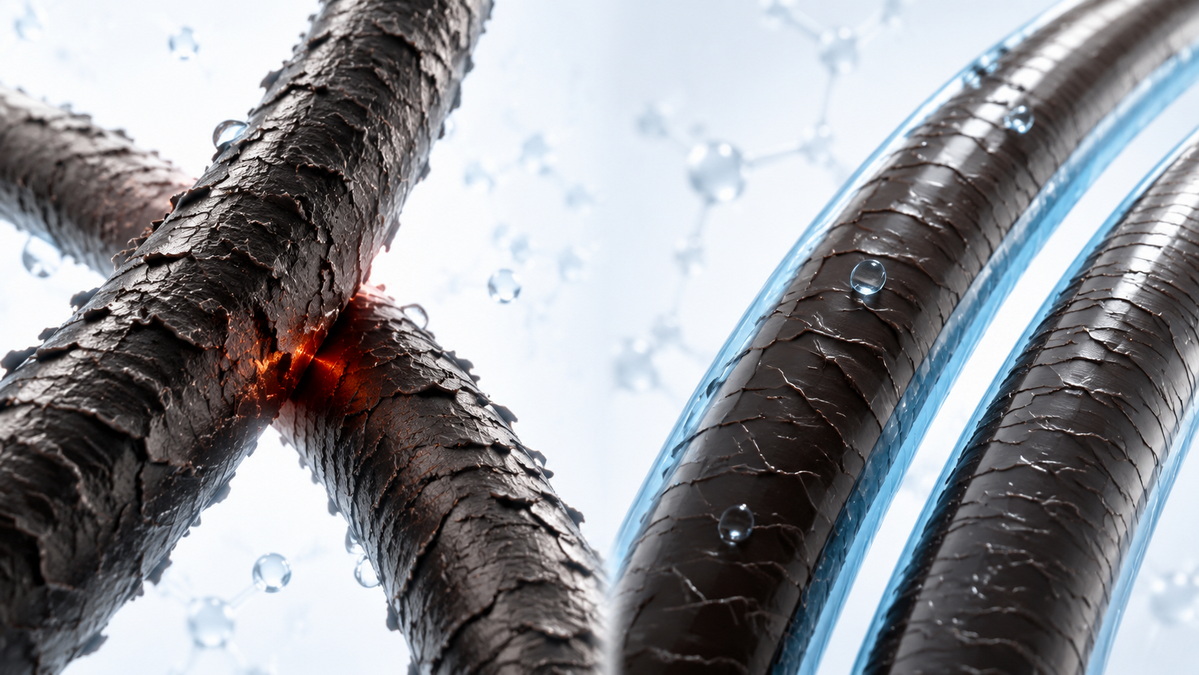
HPMC contains methoxy and hydroxypropyl substitution groups. It is commonly used in personal care, pharmaceutical, food, coating, and construction applications.
In hair conditioners, HPMC can contribute to:
- Viscosity development
- Creamy product texture
- Emulsion support
- Suspension of functional ingredients
- Film-forming support
- Improved sensory consistency
Its ability to form a smooth aqueous polymer network can make HPMC useful in creamy rinse-off conditioners, hair masks, and silicone-free hair-care formulations.
HEMC contains methoxy and hydroxyethyl substitution groups. It is also a nonionic cellulose ether with useful rheology-control and water-retention properties.
In conditioner formulations, HEMC can contribute to:
- Stable viscosity control
- Smooth product flow
- Improved emulsion consistency
- Reliable processing behavior
- Support for ingredient distribution
- Storage stability in demanding systems
HEMC is often evaluated when a formulator needs dependable viscosity across a wider processing-temperature range or wants to fine-tune the texture of a conditioner base.
| Performance Factor | HPMC | HEMC |
|---|---|---|
| Chemical structure | Methoxy and hydroxypropyl groups | Methoxy and hydroxyethyl groups |
| Primary conditioner role | Thickening, stabilizing, and film-forming support | Thickening, stabilizing, and rheology control |
| Texture contribution | Can support a rich, cohesive, creamy feel | Can support smooth and controlled flow |
| Thermal behavior | Often has a lower thermal gelation range, depending on grade | Often has a higher thermal gelation range, depending on grade |
| Processing suitability | Suitable for many hot- and cold-process systems with controlled temperature management | Particularly worth evaluating for heat-demanding processes |
| Detangling contribution | Indirect support through texture, spreadability, and formula uniformity | Indirect support through viscosity consistency and uniform ingredient distribution |
| Best-fit product concepts | Creamy conditioners, repair masks, silicone-free smoothing products | Stable conditioner bases, heat-processed formulas, high-volume production systems |
The differences shown in this table should be treated as formulation guidance rather than absolute rules. Grade-specific properties matter greatly. Molecular weight, viscosity grade, substitution level, particle size, hydration method, and use level can all affect real-world behavior.
A low-viscosity HPMC may perform very differently from a high-viscosity HPMC. The same is true for HEMC. For this reason, product developers should compare specific grades under identical laboratory conditions.
HPMC can help create a conditioner that feels substantial without relying entirely on high levels of waxes or fatty alcohols. In a well-balanced formulation, it can improve the structure of the water phase and help maintain even distribution of oils, emulsifiers, and functional ingredients.
This can create several practical benefits.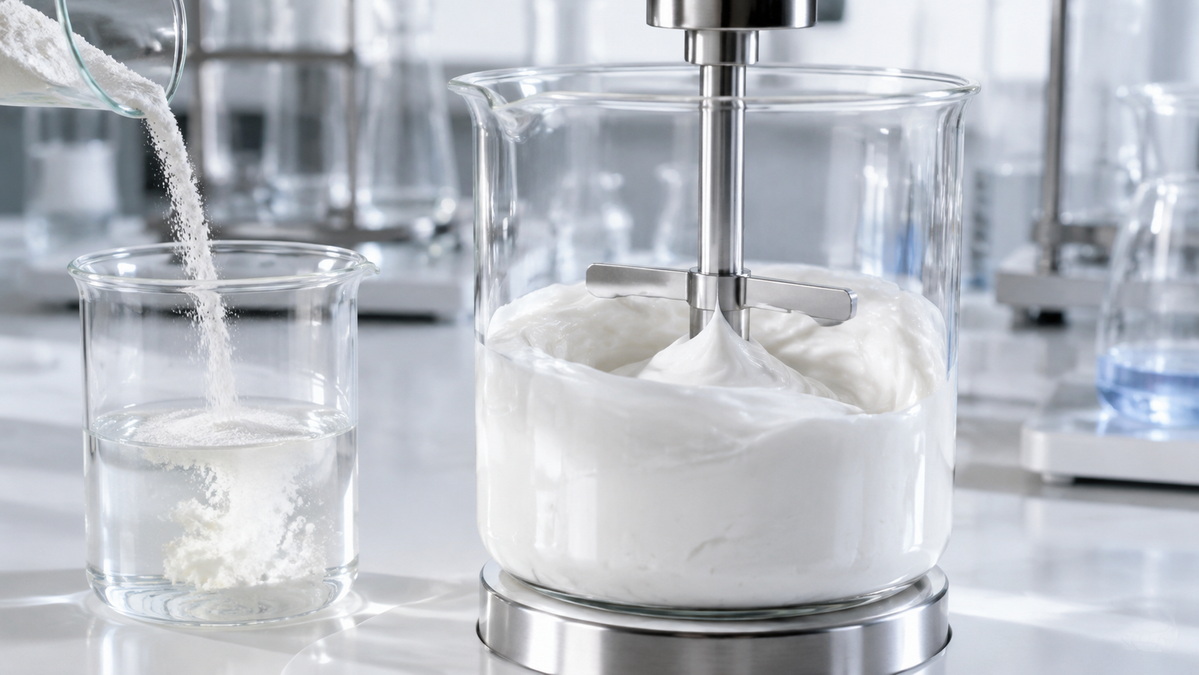
A conditioner must move through wet hair easily. If the product spreads evenly, conditioning agents can contact more hair fibers during the application period.
HPMC can support a cohesive cream structure that stays where it is applied. This may be especially useful for damaged hair masks and richer conditioners designed for mid-lengths and ends.
Consumers often associate a smooth, uniform cream with quality and conditioning performance. Although sensory perception does not replace instrumental testing, product texture strongly affects how consumers use a conditioner.
HPMC can help create a polished and refined appearance. The formula may look less watery, less separated, and more consistent during dispensing.
HPMC can form a light hydrophilic film on surfaces. In hair conditioners, this may contribute to perceived smoothness and improved slip when combined with established conditioning ingredients.
However, the film formed by HPMC is not equivalent to cationic deposition. It should be viewed as a supporting mechanism rather than the main source of detangling performance.
HPMC may be a strong candidate for:
- Rich rinse-off conditioners
- Repair-focused hair masks
- Silicone-free smoothing creams
- Cream conditioners for dry or damaged hair
- Botanical conditioners containing extracts or powders
- Premium products requiring a dense but spreadable texture
HEMC can also create valuable conditioner rheology. Its key advantage is often linked to its temperature-response profile and its ability to provide stable viscosity in different processing conditions.
For manufacturers operating hot-process emulsion lines, this can be important. A conditioner must remain manageable during heating, emulsification, cooling, transfer, filling, and storage.
A stable rheology profile can help manufacturers maintain consistent production results. When a conditioner has controlled flow during processing, it may be easier to mix, pump, deaerate, and fill.
This consistency also helps reduce batch-to-batch variation. A conditioner should have the same appearance, pickup, and sensory feel whether it is made in a pilot batch or at commercial scale.
Consumers expect a conditioner to dispense easily from a bottle or tube. It should not run like water, but it should also not require excessive force to squeeze from packaging.
HEMC can help formulators manage this balance. It can support viscosity while maintaining a smooth, practical flow profile.
Conditioners often contain oils, silicones, botanical extracts, proteins, fragrances, pearlizing agents, and other ingredients. A stable rheological structure can help prevent uneven distribution or visible separation.
When conditioning ingredients remain evenly dispersed, each use of the product is more likely to provide consistent performance.
HEMC may be worth evaluating for:
- High-temperature conditioner production
- Large-scale manufacturing systems
- Conditioners requiring stable viscosity after storage
- Products exposed to variable shipping temperatures
- Botanical or oil-rich conditioner systems
- Conditioners requiring controlled squeeze-bottle flow
The most accurate answer is that neither ingredient is automatically better for detangling.
True detangling performance depends on the entire formulation. The most influential ingredients are usually cationic surfactants, cationic polymers, fatty alcohols, silicones, esters, and lipids that can reduce friction and improve hair-fiber lubrication.
HPMC and HEMC can improve the environment in which those ingredients perform. They can help the conditioner remain stable, spread evenly, and maintain a desirable texture during application.
Choose HPMC when the formula needs:
- A rich and cohesive cream texture
- Strong support for a smoothing or mask-like sensory profile
- A film-forming support ingredient
- A cellulose-based thickening option for silicone-free products
- A stable and polished emulsion appearance
Choose HEMC when the formula needs:
- Greater flexibility during heat-intensive processing
- Controlled viscosity during production and filling
- Reliable flow from tubes or bottles
- Stable texture under challenging storage conditions
- A rheology modifier for high-volume manufacturing consistency
In many development programs, the best approach is to test both materials in the same conditioner base and compare the results objectively.
A practical evaluation should focus on measurable performance rather than appearance alone.
Create a base formula with the same water phase, emulsifier system, fatty alcohol level, conditioning agents, oil phase, pH, and preservative system.
Only change the cellulose ether.
This approach allows the formulator to identify the real impact of HPMC or HEMC without confusing the results with other variable changes.
Start with equal active levels for both ingredients. Adjust only after the first comparison reveals meaningful viscosity or sensory differences.
Test several use levels if necessary. A lower polymer level may provide better spreadability, while a higher level may produce a richer cream but slower rinsing.
During production, observe:
- Dispersion quality
- Hydration time
- Mixing behavior
- Viscosity during heating
- Viscosity during cooling
- Foam generation
- Ease of pumping and filling
A polymer that looks good in a small laboratory beaker may behave differently in a large production vessel.
Use standardized hair tresses and compare:
| Test | Purpose |
|---|---|
| Wet-combing force | Measures the force required to comb wet hair |
| Dry-combing force | Evaluates post-rinse manageability |
| Hair-fiber friction | Indicates the potential for smoothing and slip |
| Sensory panel evaluation | Assesses perceived softness, smoothness, and richness |
| Rinse-off evaluation | Determines whether the product feels heavy or clean after rinsing |
| Stability testing | Confirms viscosity, color, odor, and emulsion consistency over time |
A reliable test program should include a placebo formula and a benchmark conditioner. The benchmark can be an existing commercial product or a previously approved internal formula.
Ingredient selection should also consider regulatory documentation, raw-material consistency, storage stability, and global supply expectations.
Before approving HPMC or HEMC for a hair conditioner project, request the following information from the supplier:
- Technical data sheet
- Certificate of analysis
- Safety data sheet
- Viscosity specification
- Moisture-content specification
- Particle-size information
- Recommended dispersion procedure
- Microbiological control information
- Heavy-metal and impurity-control data
- Storage guidance and shelf-life information
- Compatibility recommendations for cationic systems
A dependable cellulose ether supplier should also be able to provide stable batch quality, application support, and samples for laboratory evaluation.
A successful hair conditioner combines slip, creaminess, stability, controlled rinse behavior, and measurable combing benefits. HPMC and HEMC can both play useful roles in this process when selected according to the full formula and manufacturing requirements.
Shandong Shengda New Material Co., Ltd. provides HPMC and HEMC solutions for global customers developing building-grade and personal-care cellulose ether applications. Our team can support your ingredient selection with technical documentation, product samples, and grade recommendations based on your target conditioner texture and processing conditions.
Request HPMC or HEMC samples and technical information to begin your conditioner formulation evaluation.

HPMC and HEMC are valuable cellulose ether ingredients for hair conditioner development. Both can improve viscosity, emulsion stability, ingredient distribution, and product texture. HPMC is often selected for rich, cohesive, and smoothing-focused conditioner textures, while HEMC may offer advantages in high-temperature processing and controlled viscosity management. Neither material replaces cationic conditioning agents, but both can support better detangling and smoothing performance when used in a balanced formula.
HPMC mainly functions as a thickener, stabilizer, rheology modifier, and film-forming support ingredient. It can improve conditioner texture and contribute to perceived smoothness, but it does not provide the same substantive conditioning effect as cationic surfactants or cationic polymers.
Not necessarily. Both materials support the formulation structure rather than acting as the main detangling agent. The better choice depends on the conditioner's cationic system, oil phase, target texture, processing temperature, and required storage stability.
Yes. Both can be used in silicone-free conditioner systems to help build viscosity, improve stability, and create a smooth cream texture. The formula should still include appropriate alternative lubricants and conditioning ingredients to deliver effective slip.
They can be used in systems containing cationic conditioning ingredients, but compatibility testing is necessary. Formula behavior may vary depending on cationic surfactant type, electrolyte content, pH, processing conditions, and polymer concentration.
There is no universal use level. The right concentration depends on the selected grade, formula composition, desired viscosity, packaging format, and processing method. Initial laboratory screening should follow the supplier's technical recommendation.
No. Excessive viscosity can make a conditioner difficult to spread, slow to rinse, or heavy on fine hair. Effective smoothing depends on a balanced combination of lubrication, deposition, emulsion structure, and rheology control.
1. Fernandes, C., et al. "[On Hair Care Physicochemistry: From Structure and Degradation to Novel Biobased Conditioning Agents]." *Polymers*, 2023. [pmc.ncbi.nlm.nih]
2. Yoo, Y. J., and Um, I. C. "[Examination of Thermo-Gelation Behavior of HPMC and HEMC Aqueous Solutions Using Rheology]." *Korea-Australia Rheology Journal*, 2013. [link.springer]
3. Cosmetic Ingredient Review. "[Hydroxypropyl Methylcellulose]." Cosmetic ingredient safety resource. [cir-safety]
4. Google Patents. "[Hair Conditioning Composition Comprising Cellulose Polymer]." Patent literature concerning hydrophilic cellulose polymers in hair-conditioning compositions. [patents.google]
5. Belsito, D. V., et al. "[Safety Assessment of Polysaccharide Gums as Used in Cosmetics]." Cosmetic Ingredient Review, 2015. [cir-safety]


