

close
Choose Your Site
Global
Social Media
Views: 222 Author: Rebecca Publish Time: 2026-02-02 Origin: Site


Content Menu
● How Cellulose Ether Is Classified
>> By Ionicity
● Key Technical Concepts: DS and MS
>> Degree of Substitution (DS)
● How Cellulose Ether Is Manufactured
● Core Properties of Cellulose Ether
>> Stability and Biodegradability
● Major Commercial Cellulose Ether Types
>> Hydroxypropyl Methyl Cellulose (HPMC)
>> Hydroxyethyl Methyl Cellulose (HEMC / MHEC)
>> Hydroxyethyl Cellulose (HEC)
>> Carboxymethyl Cellulose (CMC)
● Main Industrial Applications of Cellulose Ether
>> Oil and Gas Drilling and Cementing
>> Ceramics
>> Construction and Dry-Mix Mortars
● Emerging Markets and Industry Trends
● HPMC, HEMC, and HEC: How to Choose the Right Cellulose Ether
● Practical Selection Steps for Construction Formulators
● Why Work With a Dedicated Cellulose Ether Manufacturer
● Take the Next Step With Tailor-Made Cellulose Ether Solutions
● Frequently Asked Questions (FAQ)
>> 1. What is the main difference between HPMC and HEMC in mortars?
>> 2. Why is water retention so important in tile adhesives and plasters?
>> 3. Can HEC replace HPMC in all construction applications?
>> 4. Are cellulose ethers environmentally friendly?
>> 5. How do I select the right viscosity grade of HPMC or HEMC?
Cellulose ether is a family of water-soluble polymers derived from natural cellulose, widely used as functional additives in construction materials, paints, drilling fluids, ceramics, food, and pharmaceuticals. For industrial buyers, cellulose ether is best understood as a multifunctional rheology modifier that improves viscosity, workability, open time, and stability in both cement-based and water-based systems.

Cellulose ether is produced by chemically modifying natural cellulose (from wood pulp or cotton) so that some of the hydroxyl groups on the cellulose backbone are replaced by ether groups such as methyl, hydroxypropyl, or hydroxyethyl. This modification makes cellulose ether soluble in water or certain organic solvents and gives it thickening, water retention, film-forming, and binding properties that are essential in many industrial formulations.
Because it combines natural origin with tunable performance, cellulose ether has become a key ingredient across construction, coatings, oilfield, ceramics, food, and pharmaceutical applications. It helps formulators balance workability, stability, appearance, and long-term performance in demanding environments.
Different substituent groups on the cellulose chain create distinct performance profiles:
- Single ethers: Methyl Cellulose (MC), Ethyl Cellulose (EC), Hydroxyethyl Cellulose (HEC), Carboxymethyl Cellulose (CMC).
- Mixed ethers: Hydroxypropyl Methyl Cellulose (HPMC), Hydroxyethyl Methyl Cellulose (HEMC or MHEC), and other combinations that carry more than one substituent.
These substituents determine solubility, gel temperature, compatibility, and performance in applications such as tile adhesives, gypsum plasters, and water-based paints.
From an ionic perspective, cellulose ethers can be divided into:
- Ionic cellulose ethers: Mainly CMC, which carries carboxymethyl groups and behaves as an anionic polymer, widely used as a thickener and stabilizer in food, detergents, and oilfield fluids.
- Non-ionic cellulose ethers: MC, HPMC, HEMC, and HEC, which provide stable viscosity over a wide pH range and are especially important in dry-mix mortars and architectural coatings.
Solubility characteristics are also a key classification method:
- Water-soluble cellulose ethers: MC, HPMC, HEMC, HEC, and most construction-grade derivatives used in mortars, plasters, joint fillers, and water-based paints.
- Organic-soluble cellulose ethers: EC and some specialty grades that dissolve in organic solvents and are used in inks, specialty coatings, and pharmaceutical film coatings.
Cellulose ethers are defined by how many hydroxyl groups on the cellulose chain have been replaced and how long or complex the side chains are. Two parameters are particularly important: Degree of Substitution (DS) and Molar Substitution (MS).
- DS is the average number of substituted hydroxyl groups per anhydroglucose unit, ranging from 0 to 3.
- A higher DS usually increases hydrophobicity and can change solubility, gel temperature, and resistance to enzymatic degradation.
Typical DS ranges include:
- CMC: DS about 0.8–0.9 for standard grades, up to around 1.2 for premium grades.
- HPMC: DS around 1.6–1.8, with thermal gelation occurring at a characteristic temperature depending on the grade.
- HEC: DS often 2.2–2.8, providing a very high gel temperature and good hot-water resistance.
- MS is the average moles of etherifying agent that react per anhydroglucose unit and can be higher than 3 because hydroxyalkyl groups introduce extra hydroxyls that can be further substituted.
- For hydroxyalkyl cellulose ethers such as HEC, MS is typically higher than DS and has a strong impact on solubility, solution clarity, and viscosity stability at different temperatures.
In practical formulation work, DS and MS are key parameters in selecting the right cellulose ether grade for tile adhesives, skim coats, self-leveling compounds, or high-PVC interior paints.
The typical industrial manufacturing route for cellulose ethers includes four main steps: alkalization, etherification, neutralization, and purification.
1. Alkalization
Refined cellulose from wood pulp or cotton is treated with sodium hydroxide to form alkali cellulose, activating the hydroxyl groups for subsequent reactions.
2. Etherification
Alkali cellulose reacts with etherifying agents such as methyl chloride, ethylene oxide, or propylene oxide inside a reactor. Parameters like temperature, pressure, and reaction time are carefully controlled to achieve the targeted DS and MS.
3. Neutralization
The reaction mixture is neutralized to stop etherification and stabilize the cellulose ether, often by adjusting pH and removing excess alkali.
4. Purification and drying
Unreacted raw materials and by-products are removed through washing, filtration, and drying, followed by milling and sieving to obtain a consistent particle size distribution for good dispersibility in dry-mix products.
Modern plants also implement quality control at each stage by monitoring viscosity, moisture content, substitution level, and ash content to keep performance consistent in customer formulations, especially for HPMC, HEMC, and HEC grades used in high-performance mortars.
The solubility of cellulose ether depends on substituent type, DS and MS, and molecular weight.
- Polar groups such as hydroxypropyl or hydroxyethyl improve water solubility and solution clarity, which is desirable in transparent coatings and personal care products.
- Larger or more hydrophobic groups can reduce water solubility and may favor solubility in organic solvents, as in some EC grades for inks or controlled-release coatings.
Cellulose ether is widely used as a rheology modifier because its aqueous solutions are pseudoplastic: viscosity decreases under shear and recovers at rest.
- Viscosity increases with polymer concentration and molecular weight, but typically decreases as temperature rises, especially near the thermal gelation point for MC and HPMC.
- This behavior improves workability of tile adhesives and plasters, allowing easy spreading under trowel pressure while maintaining sag resistance on the wall.
- Most cellulose ethers are stable under normal storage conditions against air, moisture, and moderate heat, although they can degrade under strong oxidizing conditions or at very high temperatures.
- Because cellulose ethers are derived from natural cellulose, they are generally biodegradable and non-toxic, making them attractive alternatives to purely synthetic polymers in construction, coatings, and personal care.
- Many cellulose ethers are approved as GRAS (Generally Recognized As Safe) additives in food and pharmaceuticals, where they act as thickeners, stabilizers, or controlled-release excipients.
- Their long track record in regulated industries supports their use in demanding applications such as external insulation systems or high-build architectural coatings.
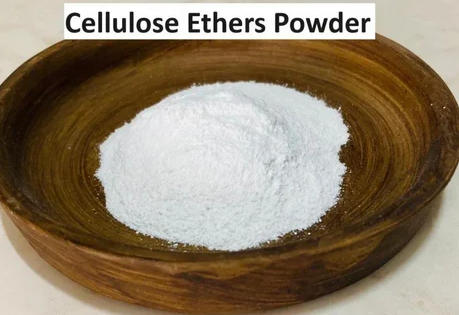
- Production: Prepared from refined cellulose reacted with alkali and methyl chloride, achieving a typical DS between about 1.6 and 2.0.
- Properties: Soluble in cold water, forms gels at elevated temperatures, and offers good water retention and film-forming ability, which can benefit plasters, pastes, and some food applications.
- Production: Derived from cellulose treated with alkali, propylene oxide, and methyl chloride in a controlled etherification process.
- Properties: Non-ionic, soluble in cold water, with a higher gel temperature than MC and excellent water retention, enzyme resistance, and workability enhancement in cement-based mortars.
HPMC is widely used in:
- Tile adhesives and grout to improve open time, slip resistance, and adhesion.
- Gypsum plaster and joint compound for better water retention and crack resistance.
- Putty, renders, and self-leveling compounds for controlled consistency and reduced segregation.
- Production: Produced by etherification of cellulose with methyl and hydroxyethyl substituents, giving a non-ionic cellulose ether with tunable solubility and gel temperature.
- Properties: Provides very good water retention, enhanced open time, and smooth workability, particularly suitable for hot climates where mortars risk rapid water loss.
HEMC is often preferred when longer open time and improved adhesion are required in cement-based tile adhesives, ETICS or EIFS systems, and skim coats.
- Production: Made from cellulose reacted with alkali and ethylene oxide, with DS commonly in the range of roughly 2.2–2.8.
- Properties: Non-ionic, soluble in both cold and hot water, with high thermal stability and good thickening efficiency in water-based systems.
HEC is widely used in:
- Water-based paints and coatings as a key thickener to control viscosity, leveling, sag resistance, and pigment suspension.
- Oilfield fluids as a viscosifier and suspending agent in drilling, workover, and completion fluids.
- Production: Produced by reacting cellulose with chloroacetic acid under alkaline conditions.
- Properties: An anionic cellulose ether readily soluble in cold and hot water, with excellent thickening, stabilizing, and water-retention abilities in aqueous systems.
CMC is used in drilling fluids, detergents, food, paper, and personal care where electrolyte tolerance and stabilizing action are important.
Polyanionic Cellulose (PAC) and CMC are widely used in drilling, completion, and cementing fluids.
- They reduce fluid loss to the formation, stabilize borehole walls, and help control rheology for efficient cuttings transport and higher drilling rates.
- In oil-well cementing, cellulose ethers such as HEC can improve slurry stability and reduce water loss, contributing to better zonal isolation and long-term integrity.
HEC, HPMC, and related cellulose ethers are indispensable thickeners in architectural and industrial water-based paints.
- They provide storage stability, uniform pigment distribution, sag resistance, and good leveling, which translate into smooth, defect-free film appearance.
- In high-PVC interior paints, cellulose ethers help maintain viscosity over time and prevent phase separation, while also improving brush and roller feel.
In ceramic bodies and glazes, HPMC and PAC act as binders, suspension agents, and water-retention aids.
- They improve green strength, reduce cracking during drying, and enhance glaze adhesion, which is particularly important in honeycomb ceramics and advanced refractory products.
Construction is one of the largest application segments for cellulose ethers worldwide.
Common uses include:
- Cement-based tile adhesive and grout
- Wall putty and skim coat
- Gypsum plaster and joint compound
- Self-leveling underlayments
- EIFS or ETICS basecoat and adhesive mortars
In these applications, cellulose ether improves:
- Water retention and curing, preventing premature water loss and ensuring full cement hydration.
- Workability and open time, giving applicators more time for adjustment and finishing.
- Sag resistance and slip control for tile adhesives and thick-layer renders.
The global cellulose ether and derivatives market is expanding steadily, driven by construction, food, pharmaceuticals, personal care, and oil and gas.
- Industry analyses estimate the cellulose ether market value in the multi-billion-dollar range in the mid-2020s, with a robust compound annual growth rate forecast into the next decade.
- Growth is especially strong in Asia-Pacific, supported by infrastructure investment, urbanization, and increased use of ready-mix and dry-mix building materials.
At the same time, sustainability and green chemistry are encouraging formulators to choose cellulose ethers over more persistent synthetic polymers because they are bio-based, biodegradable, and generally low in toxicity.
For many construction and coating applications, the key selection is between HPMC, HEMC, and HEC. The table below summarizes their characteristics in a clear format.
| Cellulose ether | Ionic type | Typical main uses | Key strengths | Typical limitations |
|---|---|---|---|---|
| HPMC | Non-ionic | Cement-based tile adhesive, grout, renders, gypsum plasters | Excellent water retention, good open time, strong workability and sag resistance | Viscosity decreases near gel temperature, may need grade optimization in hot climates |
| HEMC (MHEC) | Non-ionic | Tile adhesive in hot climates, ETICS or EIFS, high-performance mortars | Very good water retention, longer open time, smoother workability under high temperature | Slightly higher cost than some HPMC grades, requires precise grade matching |
| HEC | Non-ionic | Water-based paints, oilfield fluids, some cement slurries | Strong thickening in water, good thermal stability, broad pH compatibility | Less tailored for cement hydration control compared with HPMC and HEMC in mortars |
In practice, many manufacturers fine-tune viscosity grade, substitution level, and particle size to match specific product needs, such as fast-setting tile adhesive, lightweight plaster, or high-build interior paint.
When you are choosing a cellulose ether for a new construction product line, the following steps can help minimize trial and error:
1. Define the base system
Clarify whether the system is cement or gypsum based, the target density (normal or lightweight), the presence of redispersible polymer powder, and local sand quality.
2. Set target performance
Determine the desired open time, slip resistance, water retention, workability profile, pot life, and relevant standards such as C1 or C2, E, T, and S1 or S2 for tile adhesives.
3. Shortlist cellulose ether family
Select HPMC or HEMC for most cement-based mortars, often combined with starch ether, and HEC or HEC-modified systems for water-based paints or joint compounds.
4. Choose viscosity range
Use lower viscosity for pumping and sprayability and higher viscosity for trowel-applied thin-bed adhesives that require strong sag resistance.
5. Run comparative lab and field tests
Compare water demand, open time, vertical slip, tensile adhesion strength, and surface appearance under realistic jobsite conditions.
A specialist supplier can provide technical service, lab support, and customized grades so that your mortar or paint meets both internal specifications and external certification requirements in your target markets.
A dedicated cellulose ether manufacturer can offer much more than basic commodity grades of HPMC, HEMC, and HEC.
- Multiple production bases and significant annual capacity support stable supply, consistent quality, and flexible lead times, which are crucial for export-oriented building material brands.
- In-house research and development and application laboratories for mortars and paints enable close cooperation on formulation development, troubleshooting, and ongoing performance optimization.
By partnering with a technical-oriented manufacturer, you can:
- Shorten product development and scale-up cycles.
- Localize formulations for different climates and construction practices.
- Upgrade from entry-level to premium product tiers with clear performance differentiation.
If you are developing or upgrading dry-mix mortars, water-based paints, or drilling fluids, it is essential to work with a specialized cellulose ether manufacturer that understands both product chemistry and application conditions. Shandong Shengda New Material Co., Ltd. focuses on research, development, production, and sales of cellulose ethers, with HPMC, HEMC, and HEC as core product lines. Contact our technical team today to request application-specific samples, get formulation recommendations for your local market, and receive a detailed proposal for long-term cooperation that helps you improve product performance and strengthen your brand.
Contact us to get more information!
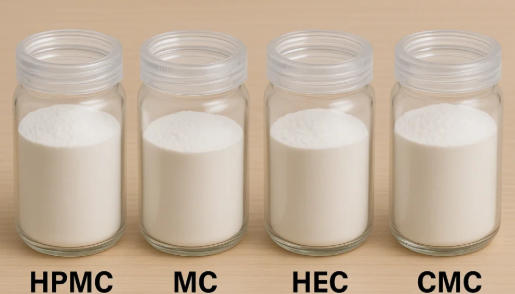
HPMC and HEMC are both non-ionic cellulose ethers used in cement-based mortars, but HEMC usually offers longer open time and improved water retention in hot climates, while HPMC is often the standard choice for a wide range of regular conditions. The optimal choice depends on local temperature, substrate type, and required performance level.
Good water retention prevents rapid water loss into the substrate or the surrounding environment. This ensures proper cement hydration, better adhesion, and reduced risk of shrinkage cracks or low strength. It also keeps the surface workable for a longer time, which is critical for large-format tiles and thin-layer applications.
HEC is an excellent thickener for water-based paints and some slurries, but it is not always optimized for the specific water-retention and setting-control requirements of cement-based mortars. In most cement-based tile adhesives, plasters, and putties, HPMC or HEMC remain the first choice, while HEC is favored in coatings and certain oilfield applications.
Cellulose ethers are derived from renewable cellulose and are generally biodegradable and non-toxic. This makes them attractive for companies that want to reduce reliance on purely synthetic polymers. When combined with low-VOC formulations and responsible sourcing, they support more sustainable construction and coating solutions.
The right viscosity grade depends on the application method and performance targets. Higher viscosity grades usually offer stronger sag resistance and water retention, while lower viscosity grades can improve pumpability, sprayability, and leveling. It is recommended to test several viscosity levels in the lab and on site to determine the most suitable grade.


