


close
Choose Your Site
Global
Social Media
Views: 222 Author: Shengda Publish Time: 2026-05-03 Origin: Site


Outdoor jobsites are unforgiving: surface temperatures can exceed 50°C, wind speeds dry out the mortar, and any mistake shows up as debonding, hollow tiles, or slip. In these conditions, the choice and quality of cellulose ether—whether Hydroxyethyl Methyl Cellulose (HEMC) or Hydroxypropyl Methyl Cellulose (HPMC)—becomes a decisive factor in workability, open time, and long‑term durability. [celotech]

HEMC and HPMC are water‑soluble cellulose ethers used as key functional additives in cement‑based tile adhesives, grouts, and renders. They provide water retention, thickening, workability, and anti‑sag performance, directly influencing adhesion and construction efficiency. [wotaichem]
- HPMC (Hydroxypropyl Methyl Cellulose)
- Substituent groups: methoxy and hydroxypropoxy, giving good film‑forming and water resistance. [linkedin]
- Widely recognized as a standard cellulose ether for construction mortars, especially tile adhesives and renders. [celotech]
- HEMC (Hydroxyethyl Methyl Cellulose, also called MHEC)
- Substituent groups: methoxy and hydroxyethoxy, which are more hydrophilic and strongly polar. [linkedin]
- Delivers higher gel temperature and stronger water retention in hot climates compared with conventional HPMC. [hecmanufacturer]
HEMC and HPMC differ fundamentally in their functional groups, which drive behavior in heat and wind. [celotech]
- HPMC
- Hydroxypropoxy groups contribute to good thermal stability and water resistance, enabling robust performance across a wide temperature range. [hpmcmanufacturer]
- Typical gel temperature: around 50–75°C, depending on substitution level and grade, suitable for many exterior applications. [celotech]
- HEMC
- Hydroxyethoxy groups increase polarity and hydrophilicity, making the polymer more water‑loving and thermally stable at elevated surface temperatures. [hecmanufacturer]
- Often exhibits a higher gel temperature than comparable HPMC, commonly in the 65–75°C range. [hecmanufacturer]
In practice, higher gel temperature means that under strong sunlight when tile surface temperatures exceed 50°C, HEMC keeps water retention and rheology more stable, while some standard HPMC grades may begin to gel and lose efficiency. [landcel]
For tile adhesive, water retention is the first line of defense against fast drying from wind and radiant heat. [landcel]
- HEMC
- Generally provides stronger water retention, especially in hot, dry, or windy environments. [wotaichem]
- Creates finer air bubbles, improving open time and smoothness of application. [linkedin]
- HPMC
- Offers excellent thickening and adhesion, with good water retention at moderate temperatures. [celotech]
- Particularly valued for its robust, consistent rheology and compatibility with a wide variety of cement and filler systems. [celotech]
Below is a simplified comparison based on published technical information and field experience with construction mortars. [hpmcmanufacturer]
| Performance Aspect | HEMC In Tile Adhesive | HPMC In Tile Adhesive |
|---|---|---|
| Thermal gel temperature | Higher (about 65–75°C), more stable at high surface temps (hecmanufacturer) | Moderate (about 50–75°C depending on grade) (celotech) |
| Water retention in hot, dry wind | Very strong, excellent for summer façades (linkedin) | Strong, but some grades lose efficiency at extreme heat (hecmanufacturer) |
| Open time under direct sunlight | Typically longer open time and slower skinning (linkedin) | Good open time; may shorten under severe heat/wind (landcel) |
| Anti‑sag (slip resistance) | Very good, especially in high‑temperature applications (linkedin) | Excellent, widely used for anti‑sag control (hpmcmanufacturer) |
| Workability feel | Smooth, creamy, with fine air bubble structure (linkedin) | Strong body and cohesion, easily adjustable by grade (celotech) |
| Moisture resistance / film robustness | Good, especially when combined with polymer RDP (landcel) | Very good; widely chosen where moisture exposure is high (hpmcmanufacturer) |
| Cost‑to‑performance balance | Attractive in hot climate outdoor systems (hecmanufacturer) | Widely used baseline; excellent balance in standard climates (celotech) |
In the "survival" scenario—a south‑facing wall under summer sun with continuous wind—HEMC‑rich systems often deliver more reliable open time and water retention, while HPMC ensures strong anti‑sag and adhesion across a broad climate range. [linkedin]
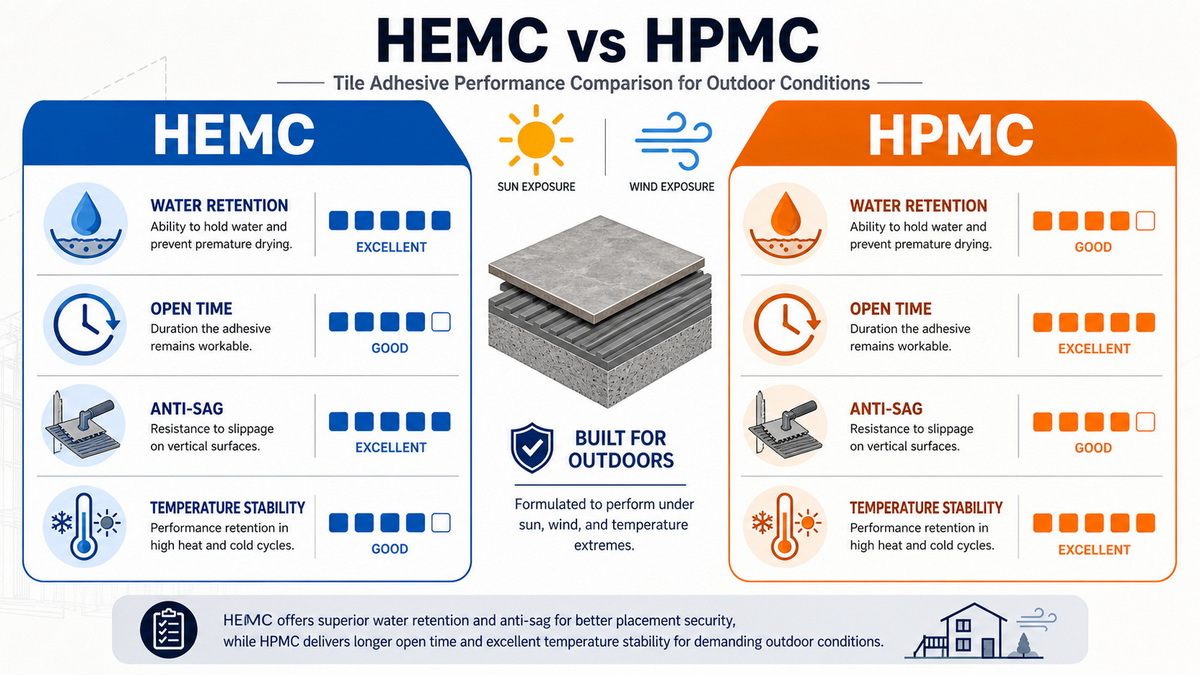
From a formulator and applicator viewpoint, the real question is: which cellulose ether survives the jobsite?
In a typical high‑rise façade tile installation in a hot coastal city, daytime surface temperatures can exceed 50°C, while afternoon wind speeds accelerate evaporation from thin‑bed tile adhesive. Contractors often report rapid skinning, reduced open time, and significant tile slip when the formulation and cellulose ether are not optimized for these conditions. [hecmanufacturer]
When upgrading from a standard HPMC‑only system to a formulation using HEMC (or a blend dominated by HEMC) with higher gel temperature, test data and field feedback frequently show: [celotech]
1. Longer open time under direct sun, giving installers more flexibility when placing large‑format tiles.
2. Better initial grab and reduced slip, even on vertical substrates exposed to wind.
3. More uniform hydration of cement, reducing the risk of poor curing and localized bond failure.
For climates with moderate temperatures and intermittent wind, a high‑quality HPMC or HEMC/HPMC blend often provides an optimal cost‑performance balance with stable workability and strong adhesion. [celotech]
Based on industry guidance for tile adhesive in extreme climates, cellulose ether selection should start from jobsite climate and substrate. [landcel]
- Hot and dry with strong sunlight and wind
- Prioritize HEMC or HEMC‑rich blends with high gel temperature and strong water retention. [wotaichem]
- Adjust dosage upward to compensate for accelerated evaporation and ensure sufficient open time. [landcel]
- Mild to temperate with moderate wind
- High‑performance HPMC grades remain a very dependable standard, balancing cost, rheology, and adhesion. [celotech]
- Blends of HEMC and HPMC can fine‑tune workability and open time.
- High humidity or frequent rain
- Focus on the combination of cellulose ether + redispersible polymer powder (RDP) and overall formulation for water resistance and flexibility. [celotech]
- HPMC's film‑forming and water‑resistance profile remains highly valuable when moisture cycles are intense. [hpmcmanufacturer]
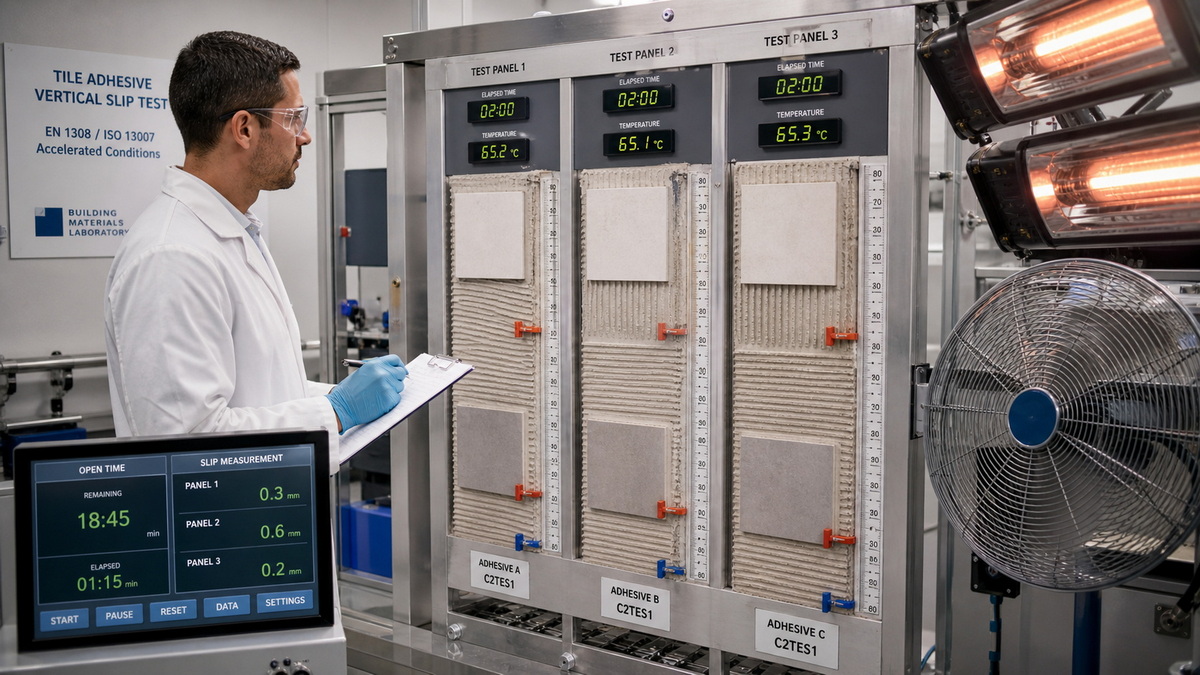
When you develop or upgrade a tile adhesive to survive direct sunlight and wind, follow a structured optimization process supported by a technical supplier:
1. Define climate and application window
- Record expected surface temperature range, wind profile, and working times on site.
2. Select base cellulose ether family (HEMC, HPMC, or blend)
- Choose HEMC for hot, windy façades; HPMC or blends for standard climates and indoor/outdoor mixed use. [hecmanufacturer]
3. Screen viscosity grades and substitution levels
- Test 2–3 grades from your supplier to adjust rheology, sag resistance, and open time.
4. Optimize dosage
- Start from the supplier's recommended range, then adapt based on lab data for open time, slip, and water retention. [landcel]
5. Simulate extreme conditions in the lab
- Use elevated temperature plates and fan‑assisted drying to replicate direct sun and wind.
6. Validate with field trials
- Partner with key contractors to test on real façades and collect quantitative feedback on workability and failures.
As a cellulose ether producer, Shandong Shengda New Material Co., Ltd. can support this workflow with tailor‑made HEMC and HPMC grades, formulation guidelines, and on‑site testing suggestions for your specific region and tile system. [sdshengda.en.made-in-china]
Not all HEMC or HPMC grades perform equally, even at the same nominal viscosity. Differences in purity, substitution uniformity, particle size, moisture and ash content significantly affect real‑world performance in tile adhesives. [hpmc]
A cellulose ether specialist such as Shandong Shengda New Material Co., Ltd. typically focuses on:
- Consistent etherification and substitution distribution, to ensure reproducible water retention and viscosity development in every batch. [sdshengda.en.made-in-china]
- Controlled thermal gelation profile, aligning HEMC and HPMC grades to specific climate targets and open‑time requirements. [wotaichem]
- Low ash and controlled moisture, reducing the risk of unwanted side reactions or variability in setting behavior. [hpmc]
For building‑grade and daily‑chemical‑grade cellulose ethers, this upstream control helps formulators reduce reject rates, on‑site complaints, and hidden costs associated with inconsistent adhesive performance. [sdshengda.en.made-in-china]
From the standpoint of an industry practitioner who has seen both successful and failed façade systems, the cellulose ether choice is often undervalued until problems appear. Once hollow tiles, slip lines, or debonding emerge, the cost of scaffolding, rework, and brand damage far exceeds the small difference between generic and high‑grade HEMC/HPMC.
In that sense, partnering with a dedicated cellulose ether manufacturer rather than treating these materials as simple commodities is a strategic decision: you gain not just a product, but technical support, trial‑based optimization, and long‑term reliability in extreme climates. [sdshengda.en.made-in-china]
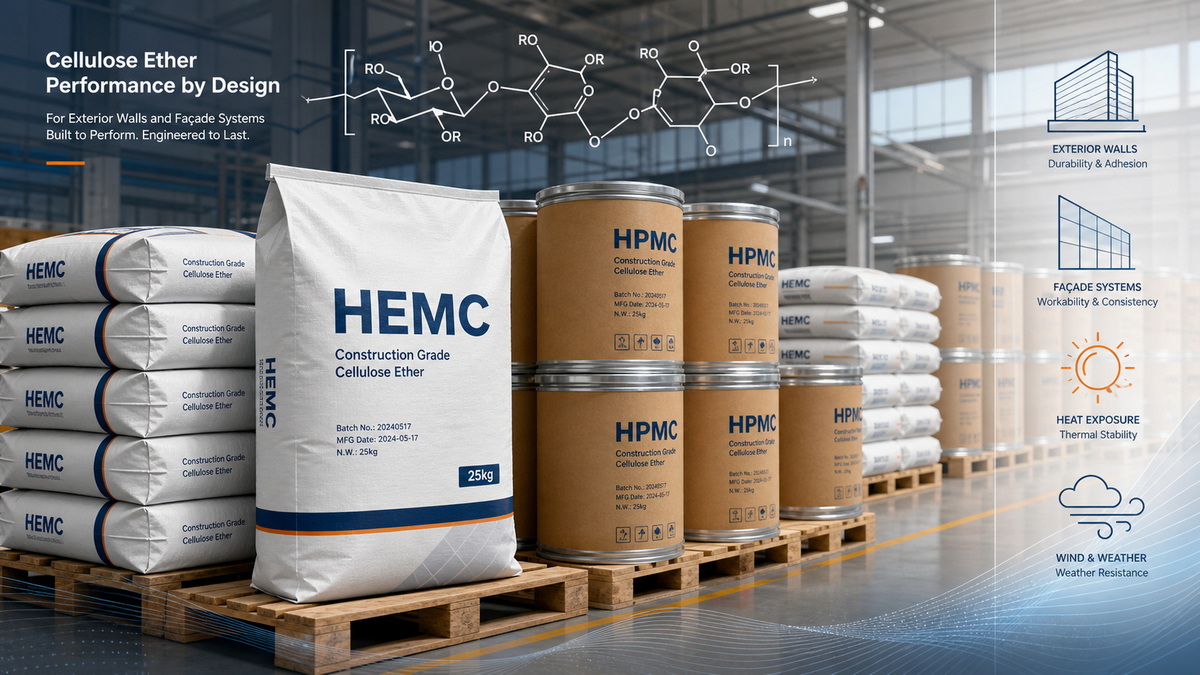
While this guide focuses on tile adhesive under sun and wind, both HEMC and HPMC are widely used across construction and daily‑chemical applications. [celotech]
- Construction materials
- Renders and EIFS, self‑leveling compounds, gypsum plasters, masonry mortars, repair mortars. [celotech]
- Daily‑chemical and household products
- Detergents, personal care formulations, and other systems where thickening, stabilization and skin‑feel are important. [wotaichem]
This cross‑industry know‑how allows manufacturers such as Shandong Shengda New Material to leverage formulation experience from different sectors, offering customers broader insight into rheology control, stabilization, and processability. [sdshengda.en.made-in-china]
Bringing the key points together for tile adhesives exposed to direct sunlight and wind:
- Choose HEMC (or HEMC‑rich blends) when:
- Projects are in hot, dry, or strongly windy climates with high surface temperatures. [hecmanufacturer]
- You need maximum water retention and open time under severe drying conditions. [linkedin]
- Choose HPMC (or HEMC/HPMC blends) when:
- You work in temperate climates where extremes are less common. [celotech]
- You prioritize robust anti‑sag, adhesion, and versatility across multiple mortar types. [hpmcmanufacturer]
In many real‑world systems, the best results come from carefully designed blends of HEMC and HPMC, tuned by experienced manufacturers and supported by lab and field testing. [landcel]
Extreme climates will not become easier; regulations and performance expectations continue to rise. If you formulate tile adhesive or manage a building materials brand, the choice between HEMC and HPMC under direct sunlight and wind is no longer a detail—it is a strategic performance decision. [celotech]
Shandong Shengda New Material Co., Ltd. can work with your R&D and technical teams to:
- Evaluate your current tile adhesive performance in critical climates.
- Recommend optimized HEMC and HPMC grades or blends for your specific substrates and markets.
- Support you with lab testing protocols and field trial guidance aimed at long‑term durability and contractor satisfaction. [sdshengda.en.made-in-china]
A1: Not always. HEMC is particularly advantageous in hot, dry, and windy climates because of its higher gel temperature and strong water retention, while HPMC offers excellent performance in moderate climates and across many mortar types. The best choice depends on your climate, substrate, and performance targets. [hecmanufacturer]
A2: Increasing HPMC dosage may improve water retention up to a point, but it can also raise viscosity excessively, affect workability, and still not match HEMC's stability at very high surface temperatures. A climate‑appropriate HEMC grade or blend usually offers a more balanced solution. [wotaichem]
A3: Both polymers contribute to anti‑sag and initial grab, but HPMC has a long track record as a primary anti‑sag agent in tile adhesives, while HEMC's improved water retention and rheology under heat also help reduce slip on sun‑facing façades. Final performance depends on the full formulation, including fillers and polymer powders. [hpmcmanufacturer]
A4: Often, yes. Outdoor adhesives must withstand temperature swings, UV exposure, moisture cycles, and wind‑driven drying, and so they may benefit from higher‑performance HEMC or specific HPMC grades compared with indoor formulations, which operate in more stable environments. [celotech]
A5: Look for a supplier with proven expertise in construction‑grade cellulose ethers, tight quality control on substitution and purity, and the ability to provide technical support, lab data, and formulation guidance—for example, established manufacturers such as Shandong Shengda New Material Co., Ltd. [hpmc]
1. Celotech, "The Difference Of Physical And Chemical Properties And Application Of HPMC And HEMC In The Construction Industry." [celotech]
2. Wotaichem, "7 Key Differences Of HPMC And HEMC." [wotaichem]
3. Landcel, "How To Optimize Tile Adhesive Formulations For Extreme Climate Conditions." [landcel]
4. Hpmcmanufacturer, "HEMC Vs. HPMC: Which One Is Best For Your Application?" [hpmcmanufacturer]
5. Industry article, "Is HEMC Suitable For Exterior And Interior Construction Use?" [hecmanufacturer]
6. LinkedIn technical note, "Differences Between HPMC And HEMC." [linkedin]
7. Celotech, "Hydroxypropyl Methylcellulose Vs Methyl Cellulose – Role In Dry Mix Mortars." [celotech]
8. HPMC.com, "What Is The Difference Between HPMC And HEMC?" [hpmc]
9. Shandong Shengda New Material Co., Ltd. company profile on Made‑in‑China. [sdshengda.en.made-in-china]


