


close
Choose Your Site
Global
Social Media
Views: 222 Author: Rebecca Publish Time: 2026-02-02 Origin: Site


Content Menu
● What Is Hydroxyethyl Cellulose (HEC) and Why It Matters in Detergent and Shampoo
● Key Functional Properties of HEC in Formulations
>> 1. Water Solubility and Clarity
>> 2. Viscosity and Flow Control
>> 3. Stability Across pH and Temperature
>> 4. Film-Forming and Deposition Behavior
>> 5. Non-Ionic Compatibility and Formulation Flexibility
● How HEC Thickener Works in Liquid Detergents
>> 1. Building the Right Detergent Consistency
>> 2. Improving Solubility and Dilution in Use
>> 3. Suspending Particles and Functional Additives
>> 4. Shelf-Life and Storage Stability of Detergent Formulations
● Role of HEC Thickener in Shampoo and Hair Care Products
>> 1. Creating Premium Shampoo Texture and Flow
>> 2. Adhesion on Hair and Cleansing Efficiency
>> 3. Foam Quality and Lather Sensory
>> 4. Compatibility with Surfactants and Conditioning Agents
● Practical Formulation Tips: Using HEC in Detergent and Shampoo
>> 1. Typical Use Levels and Grade Selection
>> 2. Recommended Addition and Hydration Steps
>> 3. Viscosity Adjustment and Troubleshooting
>> 4. Safety, Regulatory, and Consumer Perception
● Why Work with a Professional Cellulose Ether Manufacturer
● Comparison: HEC in Detergents vs Shampoos
● Optimize Your Next Detergent and Shampoo Project with HEC
● FAQs About HEC Thickener in Detergent and Shampoo
>> 1. Is HEC suitable for both clear and opaque detergents?
>> 2. Will HEC affect the cleaning power of my detergent?
>> 3. Can HEC be combined with other thickeners?
>> 4. Does HEC work with mild or sulfate-free shampoos?
>> 5. How do I choose the right HEC grade for my project?
Hydroxyethyl Cellulose (HEC) is a non-ionic, water-soluble cellulose ether widely used as a thickener and rheology modifier in liquid detergents and shampoos. It helps formulators achieve stable viscosity, clear appearance, and pleasant user experience while maintaining performance across different temperatures and pH conditions.
For personal care and home care brands, choosing the right HEC grade and using it correctly directly impacts product quality, production efficiency, and customer perception of premium texture.

HEC dissolves readily in water to form clear, homogeneous solutions, which is critical for transparent liquid detergents and shampoos. This property supports consistent appearance, easy mixing in production tanks, and trouble-free filling on production lines.
In sulfate-based shampoos and common laundry or dishwashing detergents, this clarity also helps stabilize other dissolved surfactants and additives.
A core role of HEC is precise viscosity control, or how thick and flow-resistant the liquid is. With suitable dosage and grade selection, formulators can fine-tune flow behavior for squeeze bottles, pump dispensers, and refill pouches.
- Too low viscosity: Product feels cheap, runs off hair or surfaces, and may drip or spill.
- Too high viscosity: Difficult to pump, dose, or rinse, and can trap air bubbles.
HEC offers a smooth, pseudoplastic flow that allows easy pouring and pumping while remaining structured in the bottle.
HEC maintains stable thickening performance over a broad pH range and under varying environmental conditions. This is vital for detergents that may be stored in hot warehouses or used with cold water in winter.
For shampoos and body washes, pH-adjusted systems around pH 4.5–6.0 still retain consistent viscosity when using a suitable HEC grade.
Beyond thickening, HEC forms clear, flexible films on surfaces such as skin, hair, and hard substrates. In shampoos, this improves product adhesion on hair fibers during washing, supporting better cleansing and conditioning before rinsing.
In cleaning products, this film-forming character helps the detergent stay longer on vertical or inclined surfaces, which can enhance cleaning time and efficiency.
HEC is a non-ionic polymer, which means it carries no electrical charge. This enables broad compatibility with anionic, cationic, non-ionic, and amphoteric surfactants as well as common electrolytes and functional additives.
For formulators, this neutrality reduces the risk of undesirable interactions such as precipitation, turbidity, or phase separation when combining multiple surfactant systems and active ingredients.
In laundry, dishwashing, and multipurpose household cleaners, HEC is used to thicken liquid detergents and create a more viscous, stable texture. Higher viscosity improves surface wetting and adherence, allowing the detergent to remain on the soiled area for longer contact time.
This leads to:
- Better penetration into stains and soils
- More controlled application on fabrics or dishes
- Reduced product run-off and waste
Despite its thickening effect, HEC-based detergents still need to dissolve quickly when diluted in wash water. HEC contributes to efficient solubility of liquid detergents, helping the product disperse and dissolve even in cold water conditions.
This balance between in-bottle viscosity and in-use dilution is a key advantage of well-chosen HEC grades.
Many detergents contain suspended solids such as:
- Abrasive particles for scouring
- Color speckles or encapsulated fragrance beads
- Enzyme granules or anti-redeposition agents
HEC helps suspend these particles evenly throughout the liquid, minimizing sedimentation and ensuring uniform distribution in every dose. This improves both visual appearance and functional performance over shelf life.
Because of its stability over a wide range of conditions, HEC supports long-term viscosity and phase stability in detergents exposed to repeated temperature fluctuations. This is especially relevant for products shipped long distances or stored in non-climate-controlled environments.
Proper hydration, dispersion, and microbial control further enhance the durability of HEC-thickened systems.
Shampoos are a classic application where HEC's thickening performance is highly visible to the end user. By adjusting HEC grade and dosage, manufacturers can design shampoos that feel rich, smooth, and easy to spread through the hair.
A thicker shampoo is often perceived by consumers as more concentrated and higher quality, directly influencing brand positioning and pricing.
Thanks to its film-forming character, HEC helps shampoo adhere to hair instead of slipping off immediately upon application. This allows surfactants and actives more time to act on sebum, dirt, and styling residues before rinsing.
For special shampoos, such as anti-dandruff, scalp care, or color-protect formulas, this improved residence time can enhance performance of active ingredients.
Shampoos are expected to generate a stable, creamy lather for a pleasant washing experience. HEC's viscosity control contributes to foam structure and stability, making the foam feel richer and more cushioning.
Although HEC is not a surfactant, its rheology effect helps maintain foam height and creaminess throughout the washing process.
Because HEC is non-ionic, it works well with common shampoo surfactant systems such as SLES, SLS, betaines, and mild amino acid surfactants. It is also compatible with many conditioning agents, such as cationic polymers and quats, when properly formulated.
This makes HEC suitable for:
- Daily shampoos
- 2-in-1 shampoo-conditioner products
- Children's and sensitive scalp formulations
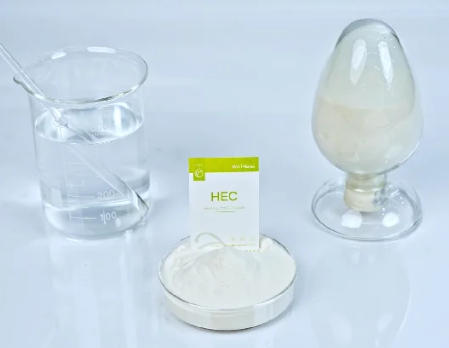
While exact dosage depends on formulation design, HEC in detergents and shampoos is generally used at low percentages to achieve targeted viscosity. Different molecular weight and substitution levels provide a wide range of viscosity options for clear or opaque systems.
Working closely with an experienced cellulose ether supplier allows you to match specific HEC grades to your desired rheology profile and processing conditions.
When formulating with HEC, consider the following process guidelines:
1. Premix HEC with other dry ingredients or humectants to aid dispersion.
2. Disperse HEC into water under moderate shear to avoid lump formation.
3. Allow sufficient hydration time to reach full viscosity before final adjustments.
4. Add surfactants and other actives after HEC is fully hydrated, monitoring pH and salt levels.
Careful control of the hydration step ensures reproducible viscosity from batch to batch.
If the detergent or shampoo is too thin, formulators may:
- Slightly increase HEC dosage
- Use a higher-viscosity HEC grade
- Adjust salt or surfactant concentration within stability limits
If the system is too thick or shows stringiness, options include diluting with water, reformulating with a lower-viscosity HEC grade, or rebalancing the surfactant system.
HEC is widely accepted in home and personal care products and is recognized for its favorable safety profile when used as directed in rinse-off formulations. Its cellulose origin fits well with market demand for more gentle and skin-friendly ingredients in shampoos and detergents.
Transparent communication about key ingredients, including cellulose ethers, can support consumer trust and align with cleaner-label positioning.
As a dedicated cellulose ether manufacturer, Shandong Shengda New Material Co., Ltd. focuses on the research, development, production, and sales of HPMC, HEMC, and HEC for diverse industrial and consumer applications. Professional technical support helps customers optimize viscosity, stability, and cost-performance across detergent, shampoo, and other personal care formulations.
By cooperating with an experienced supplier, formulators gain access to consistent quality, tailored grades, and application guidance from lab scale to full production.
| Aspect | HEC in Liquid Detergents | HEC in Shampoos and Hair Care |
|---|---|---|
| Primary function | Viscosity build, suspension of particles, flow control | Viscosity build, adhesion on hair, foam feel |
| User-perceived benefit | Better surface coverage, controlled dosing, less runoff | Rich texture, creamy lather, easier distribution |
| Key technical requirement | Stability over temperature and storage conditions | Compatibility with surfactants and conditioning agents |
| Visual expectations | Clear or uniformly opaque, no sediment | Clear or pearlescent, smooth and uniform appearance |
| Added value from film-forming | Longer contact time on hard surfaces | Improved cleansing and conditioning time on hair |
If you are developing or upgrading liquid detergents, dishwashing liquids, or shampoos, partnering with a professional cellulose ether producer is an effective way to stabilize product quality and reduce formulation risk. Contact Shandong Shengda New Material Co., Ltd. today to discuss suitable HEC grades, request technical support, or obtain free samples for your next-generation detergent and personal care projects.
Contact us to get more information!
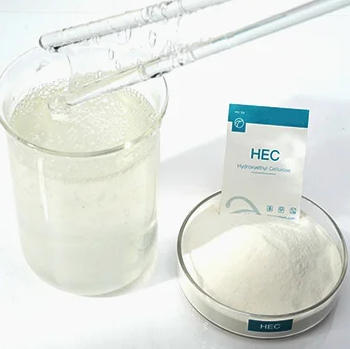
Yes. HEC forms clear aqueous solutions and can be used in transparent systems as well as opaque formulations containing pigments or suspended particles, provided that grade and dosage are optimized for the specific formula.
HEC does not clean by itself, but it supports cleaning performance by maintaining product on the surface longer and helping distribute surfactants more evenly, which can indirectly enhance stain and soil removal.
In many formulations, HEC can be combined with other rheology modifiers to fine-tune flow, stability, and cost, as long as compatibility and processing steps are validated through lab trials.
Because HEC is non-ionic and compatible with a wide range of surfactant types, it can be used in both sulfate-containing and sulfate-free shampoo systems, including mild and sensitive scalp formulations, subject to proper formulation design.
The best choice depends on target viscosity, clarity, processing conditions, and packaging format. Working directly with a cellulose ether manufacturer allows you to evaluate recommendations and sample grades tailored to your detergent or shampoo development needs.


