


close
Choose Your Site
Global
Social Media
Views: 222 Author: Rebecca Publish Time: 2026-01-31 Origin: Site


Content Menu
● What Is Hypromellose (HPMC)?
● Regulatory Status and Safety Assessment
>> FDA, EFSA, and Global Approvals
>> Toxicological Data and Safety Margins
● Hypromellose Applications Across Industries
● Potential Health Effects of Hypromellose
>> Allergic or Hypersensitivity Reactions
>> Eye Irritation and Ophthalmic Use
>> Possible Drug Interaction Considerations
● Recent Advances and Expert Insights
>> Role in Controlled-Release Formulations
>> Sustainable and Biocompatible Material
● Practical Guidance for Manufacturers and Formulators
>> Choosing the Right HPMC Grade
>> Formulation and Processing Tips
● Frequently Asked Questions (FAQ)
>> 1. Is hypromellose safe for consumption?
>> 2. Can hypromellose cause allergic reactions?
>> 3. Is hypromellose suitable for vegans and vegetarians?
>> 4. Does hypromellose interact with medications?
>> 5. What are the latest considerations regarding hypromellose safety?
Hypromellose (hydroxypropyl methylcellulose, HPMC) is a semi-synthetic cellulose ether widely used in pharmaceuticals, food, cosmetics, and industrial applications. This article examines the safety, latest research, regulatory status, and practical considerations for hypromellose, providing authoritative insights for manufacturers, formulators, and consumers.
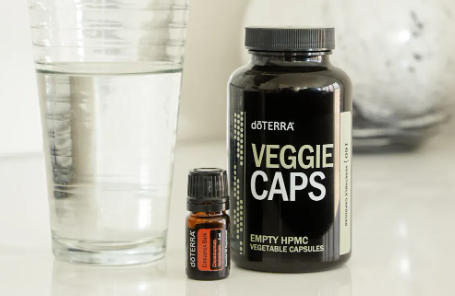
Hypromellose, also known as hydroxypropyl methylcellulose (HPMC), is a water-soluble polymer derived from natural cellulose through etherification. It is used as a thickener, emulsifier, film-forming agent, and excipient in various industries. HPMC is odorless, tasteless, and available as a white to off-white powder, making it suitable for sensitive applications in food, medicine, and cosmetics.
Because it is non-ionic and highly stable, hypromellose maintains its performance across a wide pH range and in many different formulation environments. These characteristics make it a preferred choice where consistency, safety, and reliability are essential.
Hypromellose has been evaluated by multiple international regulatory agencies and is recognized as safe when used within approved limits. The U.S. Food and Drug Administration (FDA) lists hypromellose as a permitted excipient in human and veterinary pharmaceuticals and as a food additive in specific applications. In many countries, HPMC is included in official pharmacopoeias and standards, which ensures that its quality and purity are controlled.
The European Food Safety Authority (EFSA) and the Joint FAO/WHO Expert Committee on Food Additives (JECFA) have assigned hypromellose an Acceptable Daily Intake (ADI) of “not specified.” This designation indicates that, based on available data, typical exposure levels do not present a safety concern for humans. Similar conclusions have been reached by other national and regional authorities.
Toxicological studies show that hypromellose has a very low potential for systemic toxicity. In long-term animal studies, a no-observed-adverse-effect level (NOAEL) of 5000 mg/kg body weight per day has been reported. Typical human intake is far below this level, providing a wide safety margin.
Because hypromellose is not significantly absorbed in the gastrointestinal tract and is largely excreted unchanged, it does not accumulate in the body. Studies on genotoxicity, carcinogenicity, and reproductive toxicity have not revealed evidence of harmful effects at doses relevant to human use.
Hypromellose is valued for its versatility and functional performance. It appears in a wide range of end products that consumers and professionals use every day.
| Industry | Application Examples | Key Properties |
|---|---|---|
| Pharmaceuticals | Tablet binder, film-coating, capsule shells, eye drops | Biocompatible, stable, inert |
| Food | Thickener, stabilizer, vegan gelatin substitute | GRAS, non-toxic, neutral taste |
| Cosmetics | Thickener, stabilizer, gel base in creams and lotions | Non-irritating, forms clear gels |
| Construction | Water retention, workability in cement and plaster | Film-forming, improves adhesion |
| Industrial | Binder and stabilizer in detergents, paints, coatings | Non-ionic, salt and pH stable |
In pharmaceuticals, hypromellose is widely used in tablet and capsule formulations. It can act as a binder to hold tablet ingredients together, as a film-forming polymer for coatings, and as a key material for hard capsule shells. In ophthalmic formulations, it serves as a lubricant and viscosity enhancer in artificial tears and eye drops.
In the food industry, HPMC is used as a stabilizer and texturizer, often as a plant-based alternative to animal-derived gelatin. In cosmetics and personal care, it helps create smooth, stable creams, gels, and lotions without significant irritation to the skin.
Because hypromellose is a high-molecular-weight polymer, it can absorb water and form a viscous gel in the gastrointestinal tract. At the doses used in food and pharmaceutical products, this gel-forming behavior is generally well tolerated. However, in some individuals, especially at higher intakes, it may contribute to:
- Temporary constipation,
- Bloating or a feeling of fullness,
- Mild changes in bowel habits.
These effects are typically mild and reversible. Since hypromellose is not digested or absorbed, it is excreted largely unchanged in the feces.
Allergic or hypersensitivity reactions to hypromellose are considered rare. When they occur, they can resemble other excipient or drug allergies and may include:
- Skin rash or hives,
- Itching or redness,
- Swelling of the lips, face, or throat,
- Breathing difficulty in severe cases.
If such symptoms appear after exposure to products containing hypromellose, users should stop using the product and seek medical attention. Healthcare providers may consider an excipient allergy as part of their assessment.
In ophthalmology, hypromellose is used as a lubricant and viscosity enhancer in artificial tear solutions and other eye preparations. It helps stabilize the tear film and prolongs the residence time of the drops on the eye surface, which can improve comfort in dry eye conditions.
Most people tolerate ophthalmic hypromellose well. Some may experience mild, transient symptoms such as:
- Slight eye irritation,
- Temporary blurred vision immediately after instillation,
- Mild redness or watering.
These effects are usually short-lived. If irritation persists or worsens, users should consult an eye care professional.
Hypromellose can influence the way certain oral medicines dissolve and are released in the gastrointestinal tract. Because it forms a gel layer, it may slow the dissolution of some active ingredients or affect medicines that rely on an acidic environment in the stomach for absorption.
Key practical tips include:
- Patients on critical-dose medications should follow the advice of their healthcare provider when using products that contain high levels of hypromellose.
- Formulators should evaluate the effect of hypromellose on drug release profiles, especially for modified-release or gastro-sensitive drugs.
In properly designed formulations, these properties are an advantage rather than a risk, as they enable controlled and sustained drug release.
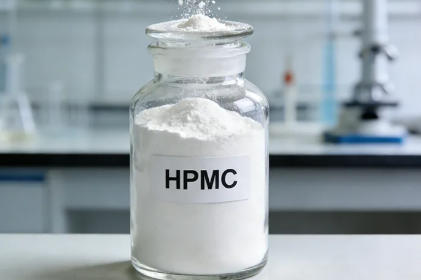
Hypromellose is one of the most important polymers used in controlled-release oral dosage forms. When a tablet containing HPMC comes into contact with gastrointestinal fluids, it hydrates and forms a gel barrier. The active ingredient diffuses through this gel layer, which controls the rate at which the drug leaves the tablet.
The performance of HPMC in these systems depends on:
- Viscosity grade,
- Substitution pattern,
- Molecular weight,
- Concentration in the formulation.
By adjusting these factors, formulators can design tablets that release the active ingredient over several hours, improving patient compliance and therapeutic effectiveness.
Hypromellose is derived from renewable cellulose and is considered biocompatible. It does not release harmful degradation products and is widely accepted for use in contact with the human body. These advantages are driving new research and applications, including:
- Use in biodegradable films and coatings,
- Development of advanced drug delivery systems,
- Incorporation into environmentally friendly materials.
Because of its stability and safety profile, HPMC continues to gain attention as a multifunctional material in modern product development.
Selecting an appropriate hypromellose grade is essential for achieving the desired performance in a formulation. Key parameters include:
- Viscosity: Higher viscosity grades are often used for highly soluble drugs and for strong gel matrices in controlled-release forms, while lower viscosity grades may be better for poorly soluble drugs or when rapid hydration is needed.
- Substitution degree: The ratio of methoxy and hydroxypropoxy groups affects solubility, gel strength, and thermal gelation behavior.
- Particle size and purity: These influence dispersion, dissolution speed, and appearance in the final product.
Manufacturers supply detailed product codes indicating viscosity range, application type (for example, controlled-release or direct compression), and regulatory status such as pharmaceutical or food grade.
Formulators can consider the following practical ranges as general starting points:
- As a binder in tablets: commonly 2–5% w/w of the tablet formulation.
- As a film-coating polymer: often 2–20% w/w of the coating solution, depending on desired film thickness and mechanical strength.
- As a gelling or thickening agent in liquids or semi-solids: typically 1–4% w/w.
Processing recommendations often include:
- Gradually dispersing the powder into cold or room-temperature water while stirring to avoid clumping.
- Allowing sufficient hydration time for full viscosity development.
- Considering the impact of salts, pH, and co-solvents on solution behavior.
Working with a reliable supplier and technical team helps optimize grade selection, processing parameters, and batch-to-batch consistency.
Overall, the available evidence supports the view that hypromellose is safe for use in pharmaceuticals, foods, cosmetics, and many other applications when used within established guidelines. Its main safety advantages include:
- Minimal systemic absorption,
- Very low toxicity in animal and human studies,
- Long history of use in regulated products worldwide.
While rare individuals may experience gastrointestinal discomfort or hypersensitivity, such cases are uncommon compared with the broad population exposure. For most users, hypromellose functions as an inert, reliable component that enhances product performance without introducing significant risk.
If you are looking for a trusted, professional partner to supply high-quality hypromellose and other cellulose ethers for pharmaceuticals, food, cosmetics, or industrial applications, Shandong Shengda New Material Co., Ltd. is ready to support your projects. Our team can help you select the most suitable HPMC, HEMC, and HEC grades for your specific formulations, optimize performance, and maintain stable quality in large-scale production. Contact us today to discuss your requirements, request technical support, or obtain tailored product solutions that match your market and regulatory needs.
Contact us to get more information!
Yes. Hypromellose has been evaluated by multiple international authorities and is considered safe for human consumption at approved levels. It is commonly used as a food additive and pharmaceutical excipient and has a wide safety margin based on toxicological studies. When used as directed in finished products, it does not pose a significant health risk to consumers.
Allergic or hypersensitivity reactions to hypromellose are possible but rare. In sensitive individuals, symptoms may include rash, itching, swelling, or difficulty breathing. If such symptoms occur after using products containing hypromellose, the person should stop using the product and seek medical attention. Healthcare professionals can evaluate whether an excipient such as HPMC may be the trigger.
Hypromellose is derived from cellulose, a plant-based raw material, and does not contain animal-derived components. For this reason, it is widely used in vegan and vegetarian capsule shells and food products as an alternative to gelatin. Many supplement and food brands choose HPMC precisely because it aligns with plant-based and religious dietary preferences.
Hypromellose can influence the rate at which some orally administered drugs are released and absorbed, particularly in high-viscosity or matrix-type formulations. This property is often intentionally used to create controlled-release dosage forms. For patients taking critical-dose medications or multiple therapies, it is important to follow medical advice and product instructions. Formulators should carefully evaluate dissolution and pharmacokinetics when designing products that contain higher levels of HPMC.
Recent research and regulatory evaluations continue to support the safety of hypromellose in its approved uses. Authorities periodically review new data on excipients and food additives, including HPMC, but so far these assessments have not identified significant new safety concerns at normal exposure levels. For manufacturers and brand owners, the main focus is typically on selecting appropriate grades, ensuring quality control, and using hypromellose within established regulatory frameworks.
1. https://www.kimachemical.com/news/is-hypromellose-harmful-to-the-body/
2. https://www.chemicalbook.com/article/is-hydroxypropyl-methyl-cellulose-safe-for-humans.htm
3. https://www.pharmaexcipients.com/news/hpmc-key-excipient/
4. https://www.meskajoinway.com/technical-blogs/are-hypromellose-capsules-safe/
5. https://www.ihpmc.com/news/what-is-hypromellose/


