


close
Choose Your Site
Global
Social Media
Views: 222 Author: Rebecca Publish Time: 2026-01-31 Origin: Site


Content Menu
● What Is Pharmaceutical-Grade HPMC?
>> Core Physicochemical Properties
>> Regulatory and Safety Profile
● Key Functional Roles of HPMC in Pharmaceutical Formulations
>> 1. Binder and Disintegrant in Tablets
>> 2. Hydrophilic Matrix for Controlled and Sustained Release
>> 3. Film Coating and Aesthetic Protection
>> 4. Ophthalmic Lubricant and Viscosity Enhancer
>> 5. Capsules and Gelatin-Free Shells
>> 6. Thickener, Stabilizer, and Suspending Agent
● Advantages and Limitations of HPMC as a Pharmaceutical Excipient
● How Different HPMC Grades Affect Pharmaceutical Performance
>> Viscosity Grades and Typical Uses
● Practical Formulation Tips for Using Pharmaceutical-Grade HPMC
>> 1. Hydration and Dispersion
>> 2. Designing Sustained-Release Matrix Tablets
>> 3. Film-Coating Best Practices
● Emerging Trends and Advanced Applications of HPMC in Drug Delivery
>> Novel Drug-Delivery Systems
>> Sustainability and Patient-Centric Design
● Why Work With Shandong Shengda for Pharma-Related HPMC
● How to Select the Right HPMC Grade for Your Pharmaceutical Project
● Partner With Shandong Shengda for High-Performance HPMC Solutions
● Frequently Asked Questions (FAQ)
>> 1. Is pharmaceutical-grade HPMC safe for long-term use?
>> 2. Can HPMC be used with both hydrophilic and poorly soluble drugs?
>> 3. What is the difference between low- and high-viscosity HPMC grades?
>> 4. Why choose HPMC capsules instead of gelatin capsules?
>> 5. How does HPMC improve patient compliance?
Hydroxypropyl Methylcellulose (HPMC), also called hypromellose, is a multifunctional pharmaceutical excipient widely used as a binder, film-former, viscosity modifier, and controlled-release matrix polymer in modern drug delivery systems. For formulators and buyers, choosing the right pharmaceutical-grade HPMC and reliable manufacturers such as Shandong Shengda New Material Co., Ltd. is critical to ensure quality, compliance, and stable supply.

Pharmaceutical-grade HPMC is a semi-synthetic cellulose ether obtained by chemically modifying natural cellulose with methoxy and hydroxypropyl groups to achieve specific solubility, viscosity, and film-forming properties suitable for drug formulations. This excipient is inert, non-ionic, and biocompatible, making it compatible with a wide range of active pharmaceutical ingredients (APIs) and other excipients.
- Chemical structure: Cellulose backbone where some hydroxyl groups are substituted by methoxy (-OCH3) and hydroxypropyl (-OCH2CHOHCH3) groups; the degree of substitution directly impacts solubility and gel strength.
- Solubility behavior: Soluble in cold water, forming clear or slightly opalescent solutions, and showing thermogelation in hot water, where solutions form a reversible gel on heating.
- Non-ionic character: Exhibits minimal interaction with ionic APIs and buffers, which helps maintain formulation stability over a broad pH range.
- Film-forming ability: Forms strong, flexible, and transparent films that are widely used in tablet and capsule coatings.
- Viscosity grades: Available in a wide range of viscosity levels, allowing formulators to fine-tune release profiles and processing behavior.
- GRAS status and pharmacopeias: HPMC is Generally Recognized as Safe (GRAS) and is listed in major pharmacopeias such as USP, Ph. Eur., and BP as a pharmaceutical excipient.
- Toxicological safety: Studies confirm that HPMC is non-toxic, non-carcinogenic, and non-irritant at typical therapeutic levels.
- Global acceptance: Regulatory agencies and scientific reviews recognize HPMC as a key excipient in oral, ophthalmic, and topical formulations due to its excellent safety and performance record.
HPMC is a multifunctional workhorse excipient that can simultaneously act as binder, matrix former, film-coating polymer, thickener, and stabilizer depending on grade and concentration.
In conventional tablets, HPMC is widely used as a dry or wet-granulation binder to enhance mechanical strength and reduce friability. At optimized levels, its water-retention and swelling behavior also support tablet disintegration and improve dissolution of many APIs.
Typical benefits:
- Improved tablet hardness and reduced dusting.
- Enhanced content uniformity during granulation.
- Tunable disintegration time by adjusting HPMC grade and level.
Pharmaceutical-grade HPMC is one of the most widely used polymers for sustained-release matrix tablets. Upon contact with gastrointestinal fluids, the polymer hydrates, swells, and forms a gel barrier that controls water penetration and drug diffusion.
Key points for formulators:
- High-viscosity grades create strong gels, ideal for once- or twice-daily sustained-release tablets.
- The gel layer thickness and erosion rate govern the release mechanism, depending on formulation design.
- HPMC is suitable for both highly soluble and poorly soluble drugs when viscosity and tablet geometry are carefully selected.
HPMC is a primary film-forming polymer in aqueous and solvent-based tablet coating systems. Its clear, strong films support:
- Protection against moisture, light, and oxygen, improving API stability.
- Taste-masking for bitter drugs.
- Color coating and product identification when combined with pigments and opacifiers.
In ophthalmic preparations and artificial tears, HPMC increases solution viscosity, extends ocular residence time, and provides lubrication for dry-eye relief. Its non-irritant and non-toxic nature is essential in sensitive eye formulations.
HPMC is extensively used to produce vegetarian hard capsules as an alternative to animal-derived gelatin. These capsules offer:
- Good mechanical strength and dimensional stability over a range of humidity conditions.
- Compatibility with both hydrophilic and lipophilic fill materials.
- Labeling advantages for markets demanding plant-based or Halal/Kosher dosage forms.
In liquid and semi-solid pharmaceuticals, HPMC acts as a rheology modifier to improve pourability, prevent sedimentation, and enhance product feel. It is used in oral suspensions, topical gels, mucoadhesive systems, and transdermal drug delivery platforms.
A clear understanding of both strengths and constraints helps formulators design robust, scalable products.
- Excellent safety and tolerability with minimal systemic absorption.
- Broad compatibility due to its non-ionic nature and wide pH stability range.
- Customizable performance through multiple substitution types and viscosity grades.
- Strong regulatory support with global pharmacopeial listings and long market history.
- Plant-derived origin that supports cleaner-label and plant-based dosage forms.
- Slow hydration for certain grades, which may delay initial drug release in immediate-release tablets.
- Temperature sensitivity and thermogelation that can affect manufacturing in hot climates.
- Higher cost compared with some traditional excipients such as starch.
- Potential impact on tablet hardness and compaction at high polymer loading levels.
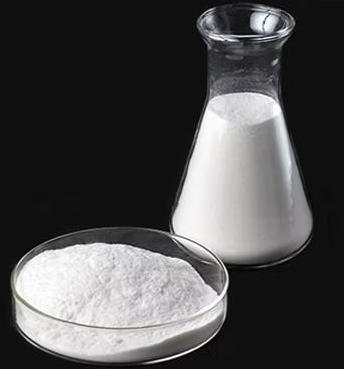
Choosing the correct grade is critical to achieving desired release kinetics, processing characteristics, and mechanical properties.
| HPMC Grade (Example) | Approx. Viscosity (mPa·s) | Typical Pharmaceutical Uses | Key Performance Features |
|---|---|---|---|
| HPMC E5 / E15 | Low to medium | Film coating, low-viscosity solutions, wet-granulation binders | Good sprayability, fast dissolution, thin flexible films |
| HPMC K4M | ~4,000 | Hydrophilic matrix tablets for sustained release, suspensions | Balanced gel strength, suitable for many once-daily tablets |
| HPMC K15M | ~15,000 | Stronger sustained-release matrices, bioadhesive systems | Higher gel viscosity and slower erosion for extended release |
| HPMC K100M | ~100,000 | Highly controlled release, robust matrices | Very strong gel barrier and pronounced control of drug diffusion |
Formulators may blend grades or combine HPMC with other polymers to fine-tune release and tablet robustness.
From a formulation and scale-up perspective, process understanding is as important as grade selection.
1. Pre-dispersion: Slowly add HPMC to vigorously stirred cold water to avoid lumping, or disperse it in hot water followed by cooling to trigger dissolution.
2. Use strategies such as high-shear mixing or pre-blending HPMC with other dry ingredients to improve wetting and dispersion.
3. Allow sufficient standing time for full hydration before further processing, especially for high-viscosity grades.
- Select higher-viscosity grades for highly soluble drugs to prevent dose dumping and maintain stable gel layers.
- Adjust tablet hardness, size, and HPMC level to achieve target release profiles and minimize sensitivity to pH and agitation.
- Conduct dissolution testing under biorelevant conditions to confirm consistent release across fed and fasted states.
- Optimize solid content, plasticizer level, and spray rate to prevent roughness, picking, or cracking in HPMC coatings.
- Monitor inlet and outlet temperatures carefully to avoid compromising thermogelation behavior or film integrity.
Recent research positions HPMC as an advanced excipient beyond traditional tablets.
- Mucoadhesive tablets and films that prolong residence in oral, buccal, and other mucosal sites.
- Amorphous solid dispersions where HPMC helps inhibit drug recrystallization and enhances oral bioavailability of poorly soluble drugs.
- 3D-printed dosage forms that benefit from HPMC's printability and film-forming properties.
- Plant-based origin, excellent safety, and adaptability to controlled-release profiles make HPMC suitable for patient-centric formulations with reduced dosing frequency.
- Vegetarian capsules and cleaner-label tablets support evolving regulatory and market expectations for more sustainable pharmaceutical products.
While many suppliers focus on construction or industrial grades, working with a manufacturer that deeply understands cellulose ether chemistry and quality systems is key for demanding applications.
Shandong Shengda New Material Co., Ltd.:
- Specializes in research, development, production, and sales of water-soluble polymer compounds including HPMC, HEMC, and HEC.
- Operates advanced production lines with automated control to help ensure consistent viscosity, substitution degree, moisture, and ash content for each batch.
- Implements robust quality and environmental management systems that support strict quality control and traceability.
- Supplies cellulose ethers for multiple industries, including pharmaceutical-related and personal-care applications, giving customers cross-sector formulation experience and application support.
Use the following steps as a practical framework for R&D and sourcing teams.
1. Define dosage form and target profile
- Immediate-release, sustained-release, film-coated tablet, eye drops, suspension, or capsule.
2. Assess API properties
- Solubility, dose, pKa, sensitivity to moisture and heat, and potential interactions.
3. Choose viscosity range
- Low to medium viscosity for coatings and binders; high viscosity for controlled-release matrices and mucoadhesive systems.
4. Check regulatory and quality requirements
- Confirm that the selected grade meets relevant pharmacopeial specifications and is supported with CoA, stability data, and regulatory documentation.
5. Collaborate with a technical team
- Work with experts from manufacturers such as Shandong Shengda to adjust grade, viscosity, and particle size to match your process and performance goals.
If you are developing or scaling pharmaceutical-grade HPMC applications, from sustained-release tablets and film-coated products to capsules and specialty dosage forms, choosing a stable and experienced cellulose ether producer is essential. Shandong Shengda New Material Co., Ltd. offers tailor-made HPMC, HEMC, and HEC solutions, consistent quality supported by advanced production and quality control, and technical guidance on grade selection, formulation optimization, and process troubleshooting.
Contact our technical and sales team now to discuss your formulation requirements, request evaluation samples, or schedule a one-to-one consultation for your next pharmaceutical project.
Contact us to get more information!
Yes. Pharmaceutical-grade HPMC has a long record of safe use, is generally recognized as safe, and is listed in major pharmacopeias. Toxicological studies show no significant toxicity, mutagenicity, or carcinogenicity at typical therapeutic exposure levels.
HPMC can be used with a wide variety of APIs. It is especially useful in controlled-release systems and in amorphous solid dispersions, where it helps maintain supersaturation and improves oral bioavailability for poorly soluble drugs.
Low-viscosity HPMC grades are mainly used in coatings, solutions, and as binders in granules and tablets because they dissolve quickly and provide low solution viscosity. High-viscosity grades form strong gels and are preferred in sustained-release matrices, mucoadhesive systems, and other applications where controlled drug diffusion is required.
HPMC capsules are plant-based and suitable for vegetarian, vegan, and certain religious dietary requirements. They typically show good dimensional stability over a wider humidity range and are compatible with many types of fill materials, making them a versatile option for modern dosage forms.
By enabling sustained-release and controlled-release dosage forms, HPMC supports longer dosing intervals and more stable plasma concentrations. This can reduce dosing frequency, simplify treatment regimens, and help patients maintain better adherence over the course of therapy.
1. https://www.kimachemical.com/news/hpmc-for-pharmaceutical-excipient-pharmaceutical-grade-hpmc/
2. https://pmc.ncbi.nlm.nih.gov/articles/PMC12196896/
3. https://www.pharmaexcipients.com/news/hpmc-key-excipient/
4. https://www.hpmc.com/recommend-products/hpmc-uses-in-pharmaceuticals.html
5. https://www.sciencedirect.com/science/article/abs/pii/S0168365920303229
6. https://www.hpmc.com/company-news/understanding-hpmc-and-its-key-properties.html
7. https://www.hpmc.com/hpmc-grades-breakdown/
8. https://www.colorcon.com/education-insights/using-hypromellose-hpmc-in-matrix-tablets-for-controlled-release
9. https://www.meskajoinway.com/technical-blogs/what-are-the-benefits-of-hpmc/
10. https://www.hpmc.com/understanding-the-different-grades-of-hpmc-a-comparison-of-e5-and-e15.html
11. https://en.wikipedia.org/wiki/Hypromellose
12. https://www.hpmc.com/understanding-hpmc-and-its-key-properties.html
13. https://www.shengdahpmc.com
14. https://sdshengda.en.made-in-china.com


