

close
Choose Your Site
Global
Social Media
Views: 222 Author: Rebecca Publish Time: 2026-02-15 Origin: Site


Content Menu
● Key Technical Differences Between HPMC E and K
>> Chemical substitution and molecular weight
>> Solubility and dissolution temperature
>> Gelation temperature and film‑forming
● Application Comparison: Where HPMC E and K Are Used
>> Pharmaceutical applications
● HPMC E vs K: Side‑by‑Side Comparison Table
● How to Choose Between HPMC E and K for Your Formulation
>> Step‑by‑step selection framework
● Expert Tips for Formulating With HPMC E and K
>> Dispersion and dissolution best practices
● Why Work With a Professional Cellulose Ether Manufacturer?
● Call to Action: Work With Us to Optimize Your HPMC E and K Grades
>> 1. Is HPMC E or K better for sustained‑release tablets?
>> 2. Which series should I choose for tile adhesive?
>> 3. Does HPMC K always have higher viscosity than HPMC E?
>> 4. Can I replace HPMC E with K directly in my existing formulation?
>> 5. Are HPMC E and K both acceptable for food and cosmetic use?
Hydroxypropyl methylcellulose (HPMC) E and K are two important cellulose ether series whose key differences lie in viscosity level, substitution structure and dissolution behavior, which directly affect performance in pharmaceuticals, food, cosmetics and construction formulations. Understanding these differences helps formulators and buyers select the right HPMC grade for tablets, coatings, tile adhesives, plasters, sauces and many other applications.

HPMC is a non‑ionic, water‑soluble cellulose ether produced by chemically modifying purified cellulose with methyl and hydroxypropyl groups. E‑type and K‑type series are two families within HPMC that are distinguished mainly by substitution levels and the resulting viscosity and gel behavior.
- HPMC E series
- Typically lower molecular weight and lower viscosity within the same nominal viscosity class.
- Higher methoxy content and lower hydroxypropoxy content compared with K series.
- Better cold‑water solubility and relatively lower gelation temperature.
- HPMC K series
- Higher molecular weight and generally higher viscosity under comparable conditions.
- Lower methoxy and higher hydroxypropoxy content.
- Slightly lower cold‑water solubility and higher gelation temperature in many formulations.
These structural and physical differences explain why E series is often preferred for fast dissolution and efficient film formation, while K series is favored where stronger gels, higher viscosity and higher thermal stability are needed.
The balance of methoxy and hydroxypropoxy groups controls hydrophilicity, gelation temperature and film properties.
- E series typically has higher methoxy and lower hydroxypropoxy content, which gives stronger hydrophobic interaction and lower gel temperature.
- K series typically has lower methoxy and higher hydroxypropoxy content, which increases flexibility and raises gel temperature.
Molecular weight also differs. E series is usually classified as lower molecular weight, while K series is higher, which increases solution viscosity and slows dissolution.
Viscosity is the most visible difference for formulators because it affects flow, pumping, coating and final texture.
- HPMC E series
- Lower solution viscosity at the same concentration.
- Easier to pump, spray and disperse, suitable where good flow is required.
- HPMC K series
- Higher solution viscosity and stronger thickening at the same solids level.
- Provides better structural build, sag resistance and water retention in many systems.
Solubility and dissolution profile influence production efficiency and product stability.
- HPMC E series
- Readily soluble in cold water in most grades.
- Faster wetting and dissolution, convenient for cold‑process systems such as many pharmaceuticals and cosmetics.
- HPMC K series
- Slower to dissolve, often showing better behavior when dispersed in cold water then dissolved with heat or under controlled conditions.
- This slower dissolution can be useful for controlled gel formation and improved process control in some applications.
When heated in water, HPMC forms thermoreversible gels. E and K series differ in gelation temperature and gel strength.
- E series
- Lower gelation temperature and generally high solution viscosity at suitable grades.
- Forms strong, cohesive films, suitable for sustained‑release matrices and coating systems.
- K series
- Higher gelation temperature, which helps delay gel formation in hot environments such as the gastrointestinal tract or cement hydration.
- Useful where limited swelling in acid but stronger gel in neutral or alkaline conditions is required, for example in some protective systems.
In pharmaceuticals, both E and K grades are used as multifunctional excipients, but with different emphasis.
- Typical E series uses
- Film‑coating polymers for tablets and capsules, where strong film‑forming and fast dissolution in cold water are needed.
- Matrix former for sustained‑release tablets due to low gelation temperature and suitable viscosity grades.
- Binder and thickener in syrups, creams and ophthalmic formulations.
- Typical K series uses
- Coating systems and capsule shells requiring higher gelation temperature to limit drug release in gastric fluid in specific designs.
- Binder and film former in certain oral solid dosage forms, especially where a more robust gel or higher thermal stability is required.
In construction, viscosity and water retention are critical for workability, open time and strength development.
- E series
- Often used in cement‑based tile adhesives, grouts and plasters where excellent water retention and workable viscosity are needed.
- Helps improve open time, anti‑sagging and overall surface finish.
- K series
- Selected where higher viscosity or more elastic rheology is desired, for example in some thick‑layer mortars or specially designed systems.
- Can improve cohesion in high‑load formulations or in hot climates due to higher gelation temperature.
Food and personal‑care formulators use HPMC for stabilizing, thickening and film‑forming.
- E series
- Used as a stabilizer and thickener in dairy products, sauces and beverages where rapid dispersion and clear solution are required.
- Common in shampoos, lotions and creams as a rheology modifier and film former offering pleasant flow and skin feel.
- K series
- Applied in some hot‑processed foods, such as certain sauces and fillings, to provide a more robust, heat‑stable viscosity profile.
- Used in cosmetic systems that need thicker gels, such as styling products or masks with a strong structure.
| Aspect | HPMC E Series | HPMC K Series |
|---|---|---|
| Main structural difference | Higher methoxy, lower hydroxypropoxy | Lower methoxy, higher hydroxypropoxy |
| Typical molecular weight | Lower molecular weight range | Higher molecular weight range |
| Viscosity at same solids | Lower viscosity, better flow | Higher viscosity, stronger thickening |
| Cold‑water solubility | Better cold‑water solubility, faster dissolution | Slower dissolution, often needs controlled dispersion |
| Gelation temperature | Lower gelation temperature | Higher gelation temperature |
| Film‑forming behavior | Strong, cohesive films, good for coatings | Robust gels in some systems, used for protective films |
| Typical pharma applications | Coatings, sustained‑release matrices, binders | Capsule shells and tablets needing higher gelation temperature |
| Typical construction uses | Tile adhesives, grouts, plasters with good workability | Mortars needing higher viscosity and thermal stability |
| Typical food/cosmetic uses | Cold‑processed dairy, sauces, shampoos, lotions | Hot‑processed foods, thicker cosmetic gels and masks |
Formulators can follow a simple framework to decide whether HPMC E or K is more appropriate for a given project.
1. Define your application and processing method
- Solid dosage, liquid system, cement‑based product or food or cosmetic emulsion.
- Cold‑process versus hot‑process production, desired mixing speed and available equipment.
2. Specify the target viscosity and rheology
- Decide whether you need low viscosity and easy flow, or a highly structured gel.
- Identify the target viscosity range at actual solids and temperature.
3. Consider dissolution and gelation behavior
- For fast dissolution or cold‑process systems, E series is usually more convenient.
- For higher gelation temperature or more robust gel at elevated temperatures, K series may be preferable.
4. Set performance priorities
- For tablet coating or controlled release, start with E series grades optimized for film and matrix behavior.
- For tile adhesive open time, sag resistance or water retention, test both E and K construction grades but select the series that fits your viscosity target first.
5. Check regulatory and quality requirements
- Ensure the selected HPMC grade meets pharmacopeia or food‑grade standards in your target markets.
- Confirm supplier capabilities for consistent viscosity, substitution and particle size control.
Working with a technical team that understands both series allows you to fine‑tune viscosity, setting behavior and release profile without over‑complicating the formulation.
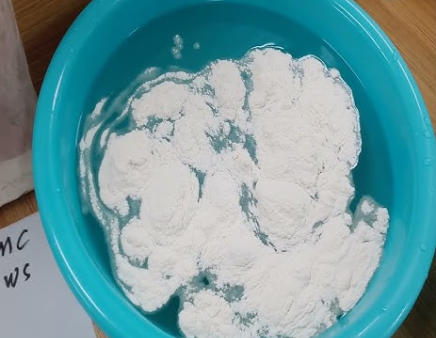
Proper dispersion helps avoid fish‑eyes and ensures uniform viscosity.
- Pre‑disperse powder in part of the water under strong stirring before full hydration.
- For E series, cold‑water dissolution is usually straightforward, but it is better to avoid adding powder directly into very hot water at the start.
- For some K grades, a slurry in cold water followed by gentle warming, or wetting in another liquid phase before hydration, can improve processing.
Using the wrong dosage can cause processing issues or unnecessary costs.
- Construction systems often use low levels of HPMC on a dry‑mix basis, depending on product type and viscosity target.
- Pharmaceutical matrices and coatings may require carefully optimized polymer levels to balance release rate, mechanical strength and disintegration time.
In some advanced formulations, blending E and K series can balance properties.
- A careful combination can tune gelation temperature, viscosity and dissolution profile without changing the basic formulation system.
- This approach is useful in markets with varying climate conditions, where one blend must work reliably in both hot and cold environments.
Because E and K series cover many viscosity levels and substitution patterns, consistent quality and technical support are critical for stable production. A professional manufacturer focusing on cellulose ethers can help match the right grade to your formulation, assist with laboratory trials and scale‑up, and provide documentation for regulatory compliance in different regions.
As a manufacturer specialized in HPMC, HEMC and HEC, our team can support you with strict raw‑material control, advanced etherification technology, batch‑to‑batch viscosity stability and customized grade development for specific industries such as construction, daily chemical and pharmaceuticals. This combination of product portfolio and technical expertise gives buyers confidence in long‑term supply, performance and continuous improvement.
If you are developing or upgrading formulations that use HPMC E or K, now is the right time to evaluate whether your current grade really matches your performance and cost targets. Contact our technical team with your application details, target viscosity and processing conditions. We will help you select the most suitable HPMC E or K grade, provide formulation suggestions, and offer sample support so you can shorten development cycles and achieve stable, repeatable product quality.
Contact us to get more information!
Both E and K series can be used for sustained‑release tablets. In many cases, E series is selected because its gelation temperature and film‑forming behavior support robust matrix systems at practical viscosities. K series may be chosen when a higher gelation temperature or a particular release profile is needed, but it usually requires more detailed formulation work.
Construction‑grade HPMC E series is often the first choice for tile adhesive because it provides excellent water retention, workable viscosity and good open time. However, for very thick‑bed systems, special mortars or hot‑climate markets, K series grades with higher viscosity can offer better anti‑sagging and cohesive strength, so both options should be checked in laboratory tests.
Under comparable molecular weight and concentration, K series typically shows higher viscosity than E series due to its higher molecular weight and different substitution pattern. In practice, viscosity still depends on the specific grade, solution concentration and measurement conditions, so it is essential to review technical datasheets and perform solution viscosity tests during grade selection.
Direct replacement is not recommended, because changing from E to K series usually affects viscosity, gelation temperature and dissolution behavior. If you need to switch series, it is better to run small‑scale trials, adjust polymer dosage and possibly other components, and then verify performance and stability before moving to full production.
Both E and K series are widely used in food and cosmetics, but only when the grade is specifically produced and certified for those applications. Before using any HPMC grade in food or personal‑care products, check that it meets the relevant purity, contaminant limits and regulatory requirements in your target market, and obtain the necessary quality and regulatory documentation from the supplier.
1. https://www.kimachemical.com/news/what-is-the-difference-between-hpmc-e-and-k/
2. https://www.kimachemical.com/news/what-is-the-difference-between-hpmc-k-series-and-e-series/
3. https://www.kimacellulose.com/what-is-the-difference-between-hpmc-e-and-k.html
4. https://www.kimacellulose.com/what-is-the-difference-between-hpmc-e-and-k-1.html
5. https://www.hpmcsupplier.com/news/what-is-the-difference-between-hpmc-e-and-k/
6. https://www.hpmcsupplier.com/news/understanding-hpmc-grades-k-type-vs-e-type-explained/
7. https://www.sellcellulose.com/what-is-the-difference-between-hpmc-e-and-k/
8. https://wotaichem.com/hpmc-grades-breakdown/
9. https://www.kimacellulose.com/what-is-the-difference-between-hpmc-and-hec.html
10. https://en.wikipedia.org/wiki/Hypromellose
11. https://www.pharmaexcipients.com/news/hpmc-key-excipient/
12. https://www.sciencedirect.com/science/article/abs/pii/S0144861723001959


