


close
Choose Your Site
Global
Social Media
Views: 222 Author: Rebecca Publish Time: 2026-02-02 Origin: Site


Content Menu
>> Putty and Paint at a Glance
● Why Correct Wall Putty and Paint Application Matters
● Standard Process From Bare Wall to Finished Paint
● Step by Step Guide to Putty a Wall Before Painting
>> 1. Clean and Inspect the Wall
>> 4. Sand for a Smooth Finish
● How to Apply Putty on Old Painted Walls
● Can You Paint a Wall Without Putty
>> Situations Where Painting Without Putty Is Acceptable
>> Situations Where You Should Not Skip Putty
● What Paint Should You Use on Wall Putty
>> Basic Steps When Painting Over Wall Putty
● Wall Putty and Painting Cost Overview
● How Cellulose Ether Improves Wall Putty and Paint
>> Role of Cellulose Ether in Wall Putty
>> Role of Cellulose Ether in Wall Paint
● Practical Tips to Avoid Common Wall Putty and Paint Failures
● Take the Next Step With a Professional Cellulose Ether Partner
● Frequently Asked Questions About Wall Putty and Paint
>> 1. Is wall putty always necessary before painting
>> 2. How long should wall putty dry before I start painting
>> 3. Can I apply wall putty directly on a damp wall
>> 4. What type of paint is better for interior walls after putty
>> 5. How does cellulose ether improve my wall putty and paint
In modern interior and exterior decoration, wall putty and paint work together to decide whether your wall finish looks premium or starts cracking and peeling within months. When you understand how to choose and apply these materials correctly, you can achieve smooth, durable, and beautiful walls for many years.

Many people use “wall putty paint” as if it were one product, but it actually refers to two different materials used in sequence: putty and paint.
- Wall putty: Base layer that repairs and levels the wall, filling holes, cracks, and uneven areas.
- Wall paint: Top decorative and protective layer that gives color, waterproofing, stain resistance, and UV protection.
When you understand the role of each layer and how they interact, you can select suitable products, use the right sequence, and significantly extend the service life of the wall system.
Although putty and paint are often mentioned together, they differ in function, composition, and performance.
Wall putty is a base treatment material used before painting.
- Main purpose: Fill pores, cracks, and surface defects, creating a smooth, even substrate for paint.
- Typical composition: Gypsum powder or cement, talcum powder, cellulose ether, and redispersible polymer powder.
As a cellulose ether manufacturer, Shandong Shengda New Material provides HPMC, HEMC, and HEC that improve water retention, workability, and adhesion in putty formulations, so contractors can get smoother application and reduced cracking risk.
Wall paint is the decorative and protective layer applied over putty.
- Main purpose: Provide color, texture, and long term protection including waterproofing, stain resistance, and UV resistance.
- Typical composition: Film forming binder, pigments, water or solvent, and functional additives.
Cellulose ethers are also used in water based paints to improve leveling, sag resistance, and overall film uniformity, contributing to a smoother, more consistent surface.
| Aspect | Wall Putty | Wall Paint |
|---|---|---|
| Main role | Levels, repairs, and smooths the wall base | Beautifies and protects the wall surface |
| Typical composition | Gypsum or cement, talc, cellulose ether, redispersible powder | Binder, pigments, water or solvent, additives |
| When applied | Before primer and paint | After putty and usually after primer |
| Main benefits | Better smoothness, improved paint adhesion, reduced cracking | Color, decorative effect, waterproofing, stain and UV resistance |
Correct application is not just about appearance, it directly influences durability, maintenance cost, and user experience.
- A poor base leads to blistering, peeling, or cracks even if you buy premium paint.
- A well designed system gives a dense, strong coating that resists moisture, stains, and daily wear.
For construction companies, this means fewer callbacks and complaints, for homeowners, it means walls that stay clean and stable for many years.
The correct sequence is essential: putty → sanding → primer → paint.
1. Surface inspection and cleaning
Remove dust, oil, loose materials, and old peeling paint. Repair structural cracks and water leakage first.
2. Apply wall putty 1 to 2 coats
Fill defects, level the surface, and let each coat dry fully before the next. Avoid very thick single coats.
3. Sanding and dust removal
Sand the dried putty to a smooth finish and remove dust to ensure good adhesion of the next layers.
4. Primer application
Apply a suitable primer to improve adhesion, uniform absorption, and paint coverage.
5. Topcoat paint 2 to 3 coats
Apply the selected paint in thin, even layers, respecting the recommended drying time between coats.
Following this complete system reduces common failures such as color variation, efflorescence, or flaking.
- Make sure the wall is free of dust, grease, algae, and loose material.
- Check for damp patches or water ingress and fix the source before any new material is applied.
- Follow the manufacturer's recommended water to powder ratio.
- Mix slowly until you get a smooth paste without lumps and with uniform consistency.
- Putty that contains cellulose ether and redispersible polymer powder disperses more evenly and stays workable longer.
A well mixed putty paste helps applicators spread the material in thin, controlled layers for a better final finish.
- Use a stainless steel trowel or putty knife to spread a thin, uniform layer over the wall.
- Press firmly to fill pores and small cracks, but keep the surface flat.
- If the wall is very uneven, apply a second leveling layer after the first one has dried completely.
Uniform thickness reduces the risk of later cracking and makes sanding easier.
- After complete drying, sand with appropriate grit sandpaper until the wall feels smooth and flat.
- Check the surface under side light to see if any ridges or trowel marks remain.
- Remove sanding dust with a soft brush or vacuum before applying primer.
A smooth, dust free surface is critical for achieving even color and good adhesion of the paint.
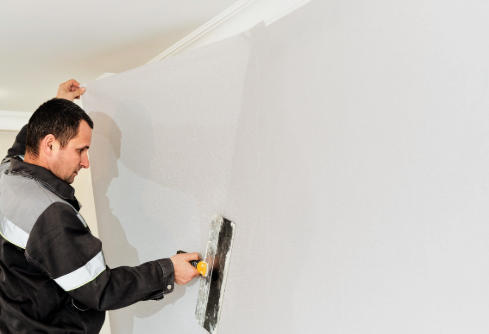
Applying putty directly over old paint is possible, but only if some basic conditions are met.
- Remove all loose, peeling, or chalking paint until you reach a firm substrate.
- Sand the remaining coating to create a slightly rough surface that improves bonding.
- If there are areas with high absorption or repairs, spot prime these areas before applying putty if needed.
By stabilizing the old coating first, you reduce the risk that the new putty and paint will detach together with the old layer.
In some projects, painting without putty is feasible, especially when the wall is already reasonably smooth or when using thicker texture paints.
- The wall is smooth, solid, and free from cracks or visible defects.
- The base is high quality cement plaster or an existing well bonded putty layer.
- The selected texture paint has high solids content and can hide minor imperfections.
In these cases, you can apply primer and paint directly, which can save time and material.
- The wall has obvious cracks, pinholes, or roughness.
- There are patchy absorption areas that could cause uneven color.
- The existing paint is peeling, powdering, or not firmly bonded to the wall.
If you skip putty under these conditions, the final coating often fails early and repair work becomes more complex and expensive.
After applying and sanding wall putty, you can use different types of paint according to project needs.
- Latex paint: Water based, low odor, quick drying, widely used for interior walls.
- Oil based paint: High gloss and high durability, more resistant to wear, but with stronger odor and longer drying times.
Because putty mainly smooths and repairs the surface, the final color and many protective properties come from the paint layer you select.
1. Confirm the putty layer is fully dry, usually 24 to 48 hours under normal conditions.
2. Apply a compatible primer to increase adhesion and reduce paint consumption.
3. Apply 2 to 3 coats of paint, observing the recommended recoat interval.
For more decorative effects, you can combine a smooth putty base with texture paints to create patterns, sand finishes, or embossed surfaces.
Actual cost varies by region, product grade, and wall condition, but the following ranges are a common reference.
- Putty, materials plus labor, around 10 to 20 yuan per square meter.
- Paint, materials plus labor, around 20 to 50 yuan per square meter.
- Complete system, about 30 to 70 yuan per square meter depending on materials and complexity.
Using higher quality putty and paint usually increases the initial cost slightly but often extends the repainting cycle, which lowers the total long term cost.
As a cellulose ether manufacturer, Shandong Shengda New Material supports putty and paint producers with enhanced performance and construction stability.
Cellulose ethers such as HPMC, HEMC, and HEC provide several important functions in putty:
- Improve water retention so that cement or gypsum cures properly and shrinkage cracks are reduced.
- Enhance workability and open time, giving workers more time to adjust and level the surface.
- Help form dense, smooth surfaces that support better adhesion of subsequent primers and paints.
These advantages make it easier for contractors to achieve consistent results under different climate and jobsite conditions.
In water based paints, cellulose ethers also play a key role:
- Control viscosity and leveling so that the coating flows out smoothly without sagging.
- Improve suspension of pigments and fillers to avoid separation during storage and application.
- Support uniform film formation, which leads to an even, continuous coating layer on the wall.
Paint manufacturers benefit from more stable products, while end users get smoother, more uniform painted surfaces.
You can reduce many common problems by following a few practical tips.
- Check the moisture content of the substrate before construction, do not coat over damp or leaking walls.
- Use compatible products for putty, primer, and paint from trusted suppliers.
- Avoid applying very thick layers in one step, build up performance with multiple thin coats.
- Respect all recommended drying and curing times between steps instead of rushing the schedule.
- Protect freshly painted surfaces from dust, rain, and impact until the coating is fully cured.
Combining these good practices with well formulated putty and paint systems gives you more reliable and predictable wall performance.
If you are a wall putty or paint manufacturer, a construction company, or a building materials distributor, choosing a reliable cellulose ether supplier is a key step to upgrading your product performance. Shandong Shengda New Material offers HPMC, HEMC, and HEC grades specifically designed for wall putty and architectural paint, helping you improve workability, consistency, and final surface quality. Contact our technical team today to discuss your formulas, request product recommendations and samples, and start developing higher value wall systems that satisfy demanding project requirements.
Contact us to get more information!

In most projects, especially when the wall is uneven or has cracks, wall putty is strongly recommended. It creates a smooth base and reduces the risk of visible defects and early coating failure.
Under normal temperature and humidity, wall putty usually needs 24 to 48 hours to dry completely. For thicker layers or high humidity environments, a longer drying time may be necessary to ensure stability.
You should not apply putty on damp or leaking walls. Moisture can lead to blistering, peeling, and mold. First find and solve the water source, let the wall dry, then proceed with putty and paint.
High quality water based latex paint is commonly used for interior walls. It has low odor, is easy to apply and clean, and offers a good balance of decorative effect and durability for most residential and commercial spaces.
Cellulose ether enhances water retention, workability, and adhesion in putty, and improves viscosity control, leveling, and pigment suspension in paints. This results in products that are easier to apply, more stable, and able to deliver smoother and more durable wall finishes.


