


close
Choose Your Site
Global
Social Media
Views: 222 Author: Rebecca Publish Time: 2026-02-18 Origin: Site


Content Menu
● Why HPMC Grades Matter More Than the Product Name
● What Does "S" Mean in "HPMC With S"?
● Why You Should Not Assume "S" Has One Universal Definition
● Questions You Should Ask Your Supplier About HPMC "S"
● HPMC With S vs Without S: Practical Differences You Can Observe
>> Dissolution Behavior: Instant vs Slow Soluble
>> Viscosity Target and Viscosity Stability
>> Substitution Profile: Methylation and Hydroxypropyl Content
● HPMC With and Without "S": Buyer-Friendly Comparison Table
● How to Choose the Right HPMC Grade in 5 Steps
>> Step 1: Define the Application Job Clearly
>> Step 2: Set a Viscosity Requirement
>> Step 3: Choose Dissolution Speed According to Your Mixing Process
>> Step 4: Use Substitution Profile to Fine-Tune Performance
>> Step 5: Confirm End-Use Grade and Documentation
● Common Sourcing Mistakes and How to Avoid Them
● Where HEMC (MHEC) and HEC Fit in Your Cellulose Ether Strategy
>> When HEMC (MHEC) Can Be a Strong Option
>> When HEC May Be More Suitable
● FAQ
>> 1) Is "S" in HPMC always a sulfate group?
>> 2) What are the main grade dimensions I should specify when buying HPMC?
>> 3) How do I decide between instant-soluble and slow-soluble HPMC?
>> 4) Why does methoxyl content matter for HPMC performance?
>> 5) What is a typical way viscosity is reported for HPMC grades?
Hydroxypropyl Methylcellulose (HPMC) is widely used as a thickener, water-retention agent, film former, and rheology modifier across construction, coatings, pharmaceuticals, and personal care. In many supplier catalogs, buyers will see "HPMC" and "HPMC with S (or HPMC-S)" and assume the "S" is a universal chemical standard, yet in practice, "S" often acts like a supplier-specific grade tag that must be verified by specification, not guesswork.
If you are sourcing HPMC, HEMC (MHEC), or HEC at scale, the real goal is not to pick the right letter. The real goal is to lock in the dissolution behavior, viscosity window, substitution profile, and application performance that your formulation actually needs. HPMC grade selection is commonly driven by viscosity, methylation degree (methoxyl content), hydroxypropyl content, water solubility and dissolution rate, and the intended end-use grade such as construction, pharmaceutical, food, or industrial.

HPMC is a water-soluble cellulose ether produced by chemically modifying cellulose through methylation and hydroxypropylation. This modification gives HPMC adjustable solubility, viscosity control, and film-forming performance, which makes it suitable for a wide range of formulations.
Because HPMC is used across many industries, manufacturers usually offer multiple grades that behave differently in mixing, hydration, and final rheology. Choosing the correct grade is essential for consistent product quality, processing stability, and performance in end applications.
HPMC grades are often classified by the viscosity of their aqueous solutions, commonly reported in mPa·s at a defined concentration such as 2 percent. This viscosity is closely related to molecular weight and directly impacts flow behavior, sag resistance, build, and handling in production.
Beyond viscosity, two other core parameters significantly influence HPMC performance:
- Methylation degree, often expressed as methoxyl content.
- Hydroxypropyl content, which also affects solubility and film properties.
These parameters determine solubility, rheology, compatibility with other components, and final film characteristics. That is why grade codes and numbers matter more than the product name alone.
In many product descriptions, "HPMC-S" or "HPMC with S" is presented as a modified version of regular HPMC, sometimes described as related to sulfation or enhanced hydrophilicity. In practical purchasing and formulation work, however, the letter "S" is not a legally standardized global designation.
Instead, "S" often functions as a label within a particular supplier's internal grading system. It may indicate a certain modification, a specific dissolution behavior, or a different processing route. The exact meaning can vary between manufacturers.
The safest approach is to treat "HPMC with S" as a signal that there is a grade difference that affects performance, and then confirm precisely what has changed before using the product in a formulation.
Because naming conventions are not unified across all producers, the letter "S" by itself does not guarantee a specific chemical structure or performance profile. One supplier might use "S" to denote a certain derivative or treatment, while another might use the same letter to mark a different feature such as enhanced solubility or special dispersion behavior.
For formulators and buyers, this has an important implication. You should always verify, in writing, what a given supplier means by "HPMC-S" or "HPMC with S", and ensure that this meaning is reflected in the technical data sheet, certificate of analysis, and test methods.
When you see "HPMC with S", ask your supplier to clarify the following points clearly:
- Does "S" indicate a specific chemical modification, such as sulfation, or is it a processing or performance label?
- Which performance differences are expected compared with standard HPMC grades, for example in hydration speed, dispersion, viscosity build, water retention, or storage stability?
- Which grade dimensions are defined for this "S" grade, including viscosity class, methoxyl content, hydroxypropyl content, and solubility type such as instant or slow dissolution?
- Is the "S" grade available and qualified under the same end-use categories such as construction, pharmaceutical, food, industrial, or cosmetic?
When these questions are addressed in your specification and purchasing documentation, the risk of misunderstandings and performance complaints is greatly reduced.
The discussion around "HPMC with S vs without S" often focuses on structure and theoretical explanations. From a plant and quality perspective, however, what matters most are the measurable differences you can observe and control.
HPMC can be grouped by dissolution rate into instant-soluble and slow-soluble types, depending on how quickly it hydrates and develops viscosity in water. Instant-soluble grades are designed for faster wet-out and rapid viscosity development, while slow-soluble grades may hydrate more gradually.
If your "S" grade is promoted as easier to disperse or faster to hydrate than regular HPMC, this should be confirmed through a defined dissolution test. That test should specify water temperature, agitation method, powder addition procedure, and the target time for reaching full hydration or a defined viscosity.
HPMC viscosity grades are commonly grouped into low, medium, and high viscosity categories. The reported viscosity is usually tied to a defined concentration and temperature, and this number is a primary criterion in grade selection.
If an "S" grade changes how quickly viscosity builds or influences viscosity stability over time, it can affect pumpability, mixing behavior, open time, and sag resistance. Therefore, the viscosity of "HPMC with S" and HPMC without "S" should always be compared under the same test conditions.
Methoxyl content, sometimes described as methylation degree, affects solubility, rheological behavior, and compatibility with other components. It is often grouped into broad ranges such as high, medium, and low methoxyl content.
Hydroxypropyl content also has a noticeable impact on solubility and film properties. For example, increased hydroxypropyl content can enhance water solubility, influence viscosity, and modify the film's flexibility and other characteristics. When "HPMC-S" is presented as a modified grade, it is important to understand whether the methoxyl and hydroxypropyl levels differ from those of regular HPMC.
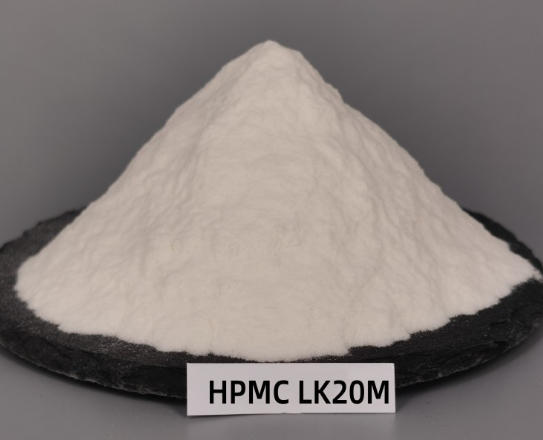
Use the following table as a practical checklist when discussing HPMC grades with your suppliers.
| Decision factor | HPMC without "S" | HPMC with "S" | How to specify it correctly |
|---|---|---|---|
| Meaning of the label | Standard HPMC naming, but actual behavior depends on the specific grade code and data sheet. | "S" indicates a grade or property difference, which may be related to chemistry or processing. | Ask the supplier to define what "S" means and document it in TDS and COA. |
| Dissolution type | May be instant-soluble or slow-soluble depending on the grade family and design. | Often marketed as improved dispersion or faster hydration, but this must be tested. | Specify instant or slow dissolution and agree on the test method and acceptance criteria. |
| Viscosity window | Defined by grade and reported at a certain concentration and temperature. | May have a different viscosity build profile or stability compared with non "S" grades. | Specify the viscosity value, concentration, temperature, and measurement method in the contract. |
| Substitution profile | Methoxyl and hydroxypropyl contents are defined per grade and influence solubility and rheology. | May be adjusted to modify hydrophilicity, solubility, or film behavior. | When performance is sensitive, include target substitution ranges in your specification. |
| End-use grade | Available for construction, pharmaceutical, food, industrial, and cosmetic uses depending on the supplier. | Must still be classified under the same end-use categories to meet compliance needs. | Always indicate the intended application grade and request appropriate compliance documentation. |
Selecting the correct HPMC grade becomes much easier when you break the process into a few clear steps. The following five-step method is practical for both formulators and purchasing teams.
Start by stating exactly what you need HPMC to do in your formulation. Examples include:
- Providing water retention and workability in dry-mix mortar.
- Giving sag resistance and flow control in water-based coatings.
- Acting as a film former in tablet coatings.
- Building viscosity and texture in personal care gels or creams.
Once the functional role is clear, it becomes easier to filter grades that do not fit your needs.
Decide whether you require a low, medium, or high viscosity grade, and pay attention to how the viscosity is measured. Typical HPMC viscosity specifications reference:
- Solution concentration, for example 2 percent by mass in water.
- Measurement temperature.
- Viscosity unit, usually mPa·s.
Specify all of these details in your internal documentation and in your purchase orders, so that different batches and suppliers can be compared consistently.
Evaluate your mixing equipment, process time, and sensitivity to lumping or fisheye formation. If your plant needs fast wet-out and quick viscosity development, instant-soluble grades may be more suitable. If you prefer a more controlled hydration profile, slow-soluble grades might be the better choice.
Clarify whether you are requesting instant-soluble or slow-soluble HPMC, and agree with the supplier on the test procedure used to verify this property.
If your formulation is sensitive to moisture, temperature, or compatibility with other functional additives, consider defining your target methoxyl content and hydroxypropyl content windows. These parameters influence:
- Water solubility and dissolution behavior.
- Rheological profile and viscosity stability.
- Film-forming properties and flexibility.
Discuss with the supplier which substitution ranges are commonly used in your type of application and consider including these ranges in technical agreements when critical.
Finally, ensure that the HPMC grade you choose is appropriate for your application category. Many producers distinguish between:
- Construction grades.
- Pharmaceutical grades.
- Food grades.
- Industrial grades.
- Cosmetic and personal care grades.
Each category can have different purity, regulatory, and documentation requirements. Make sure that certificates, safety data, and regulatory statements are aligned with the end use of your product.
Even experienced buyers sometimes run into issues when HPMC grades do not perform as expected. Many of these problems can be traced back to a few common mistakes.
- Buying by product name only
Relying on the label "HPMC-S" or "HPMC" without checking the detailed grade code, viscosity, and substitution profile often leads to inconsistent performance.
- Ignoring dissolution behavior during qualification
If you only test final viscosity but not the hydration speed and dispersion quality, you may see good lab results yet encounter lumping or process issues in the plant.
- Overlooking substitution parameters
Methoxyl and hydroxypropyl contents can significantly affect solubility and compatibility. If these are not controlled, small changes between batches or suppliers can cause noticeable variation.
- Not aligning end-use grade with regulatory needs
Using a grade that is not designed or documented for your specific end use can create complications in compliance, safety documentation, and customer audits.
By addressing these points systematically when evaluating HPMC with or without "S", you can significantly reduce quality complaints and production disruptions.
Buyers comparing "HPMC with or without S" are often at an earlier stage of selecting the right cellulose ether family for a particular product line. HPMC is only one of several widely used cellulose ethers, and sometimes HEMC (also called MHEC) or HEC may be better aligned with the formulation target.
In dry-mix mortars, tile adhesives, and skim coats, HEMC is frequently used alongside or instead of HPMC because of its performance in water retention, open time, and workability. If your focus is on these construction applications, it may be worth benchmarking HEMC-based solutions in parallel with HPMC grades, especially when your current formulation is sensitive to temperature or mixing conditions.
In water-based coatings, detergents, and some personal care products, Hydroxyethyl Cellulose (HEC) is widely adopted for its thickening efficiency and relatively straightforward handling. HEC can provide stable viscosity and good compatibility with many surfactant systems, which is important in these applications.
Understanding how HPMC, HEMC, and HEC compare helps you design a more robust cellulose ether strategy for your product portfolio, rather than focusing only on small variations within one family.
If you need reliable HPMC, HEMC, or HEC grades for construction, coatings, or industrial formulations and want to be sure you are choosing the right parameters, contact Shandong Shengda New Material Co., Ltd. with your application details, target viscosity, and preferred dissolution behavior. Our technical team can recommend suitable grades, provide tailored samples, and supply full technical documentation to support stable, long-term production. Reach out to us today to discuss your formulation needs and secure a trusted cellulose ether partner.
Contact us to get more information!
No, "S" in HPMC is not guaranteed to be a universal symbol for a sulfate group. Some descriptions may associate "S" with certain modified structures, but different suppliers can use this letter for different grade features. It should always be confirmed through the technical data sheet and direct communication with the manufacturer.
The main grade dimensions are typically:
- Viscosity, expressed in mPa·s at a defined concentration and temperature.
- Dissolution behavior, such as instant-soluble or slow-soluble.
- Methoxyl content or methylation degree.
- Hydroxypropyl content.
- End-use grade, such as construction, pharmaceutical, food, industrial, or cosmetic.
When these parameters are clearly specified, you can compare grades objectively and maintain consistent performance.
The best choice depends on your plant equipment and process conditions. Instant-soluble grades are helpful when quick hydration and fast viscosity build are needed, and when you want to reduce the risk of lumps. Slow-soluble grades may be preferred when controlled hydration or longer working times are more important. Evaluating both options in your actual mixing process is often the most reliable way to decide.
Methoxyl content influences HPMC solubility, rheological behavior, and interaction with other ingredients. Different methoxyl levels can change how the polymer behaves in water and under temperature variations, which impacts viscosity stability, film formation, and compatibility. For formulations that are highly sensitive, controlling methoxyl content can be critical to achieving reproducible results.
Viscosity is normally reported as the viscosity of a water solution at a specified concentration, often 2 percent by mass, measured at a defined temperature. The value is given in mPa·s. This combination of concentration, temperature, and unit should always be checked and matched when comparing grades from different suppliers or when qualifying new batches.
1. https://www.kimachemical.com/news/what-is-the-difference-between-hydroxypropyl-methylcellulose-hpmc-with-or-without-s/
2. https://www.kimachemical.com/news/what-grades-of-hydroxypropyl-methylcellulose-are-there
3. https://www.kimacellulose.com/the-difference-between-hpmc-and-mhec.html


