


close
Choose Your Site
Global
Social Media
Views: 222 Author: Rebecca Publish Time: 2026-02-11 Origin: Site


Content Menu
● What Is Hydroxypropyl Methylcellulose (HPMC)?
● Key Chemical and Physical Properties of HPMC
>> HPMC in Food and Personal Care
● HPMC vs. HEMC vs. HEC: What Is the Difference?
>> Overview of the Three Main Cellulose Ethers
● How HPMC Works in Dry-Mix Mortars
>> Hydration and Viscosity Development
>> Water Retention and Open Time
>> Anti-Sagging and Slip Resistance
● How to Choose the Right HPMC Grade for Construction
>> Typical Grade Selection by Application
● Case Example: HPMC in Tile Adhesive Formulation
>> Practical Benefits for Installers
● Why Work with a Professional HPMC, HEMC, and HEC Manufacturer
>> Technical Support and Customization
● Practical Tips for Using HPMC in Your Plant
● Take the Next Step with Shandong Shengda New Material Co., Ltd.
>> 1. Is HPMC safe for use in food and pharmaceuticals?
>> 2. Why is my mortar forming lumps when using HPMC?
>> 3. How does HPMC dosage affect tile adhesive performance?
>> 4. What is the difference between pharmaceutical-grade and construction-grade HPMC?
>> 5. Can I replace HPMC with HEC or HEMC in my formulation?
Hydroxypropyl methylcellulose (HPMC), also known as hypromellose, is a non-ionic, water-soluble cellulose ether derived from natural cellulose such as wood pulp or cotton linters. Through chemical modification with methyl and hydroxypropyl groups, HPMC becomes water-soluble, film-forming, and highly versatile for industrial and consumer applications. It is widely used in construction mortars, tile adhesives, skim coats, putty powders, pharmaceuticals, food, cosmetics, coatings, and detergents.
HPMC retains the biodegradability and low-toxicity of natural cellulose while providing excellent thickening, water retention, adhesion, and stabilization in many systems. For building materials manufacturers, HPMC is one of the most critical performance additives to ensure workability, open time, and final strength of dry-mix mortars.

HPMC production starts from purified natural cellulose, usually sourced from wood pulp or cotton, which is then chemically modified to introduce methyl and hydroxypropyl groups. The goal is to achieve precise substitution levels that determine solubility, viscosity, and gelation behavior in end-use applications.
1. Alkalization
Natural cellulose reacts with sodium hydroxide to form alkali cellulose, opening the structure and activating hydroxyl groups for etherification.
2. Etherification
Methyl chloride and propylene oxide react with alkali cellulose under controlled temperature and pressure. Methyl groups and hydroxypropyl groups are introduced, transforming cellulose into hydroxypropyl methylcellulose.
3. Neutralization and Purification
The reaction mass is neutralized, washed, and purified to remove salts and by-products, ensuring low residuals for construction, food, and pharma applications.
4. Drying, Milling, and Sieving
The purified HPMC is dried, milled, and sieved to a controlled particle size distribution for consistent dispersion and hydration in dry-mix formulations.
The performance of HPMC in concrete, mortar, and other systems largely depends on its chemical structure and physical characteristics.
HPMC is a semisynthetic polymer where some hydroxyl groups on the anhydroglucose units of cellulose are replaced by methyl and hydroxypropyl substituents.
Key structural parameters include:
- Degree of substitution (DS): Describes the average number of methyl groups per glucose unit.
- Molar substitution (MS): Indicates the average number of hydroxypropyl groups per glucose unit.
These substitution parameters influence solubility, gel temperature, and rheology in final applications.
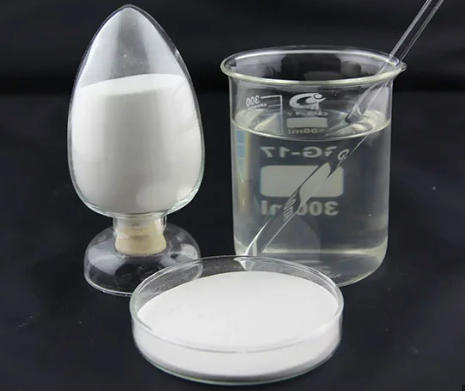
- Appearance: White or off-white, odorless powder.
- Solubility: Soluble in cold water, forming clear or slightly opalescent solutions; insoluble in hot water and most organic solvents.
- pH stability: Stable in a wide pH range around neutral, suitable for cement-based and gypsum-based systems.
- Thermo-gelation: Exhibits reversible gel formation upon heating and liquefaction upon cooling, important for controlling slump and sag resistance.
- Thickening: Increases viscosity and improves body in mortars, paints, and cosmetic formulations.
- Water retention: Reduces water loss into substrates and the environment, extending open time and improving hydration of cement and gypsum.
- Film formation: Forms flexible, transparent films that enhance adhesion and surface strength.
- Stabilization: Helps suspend aggregates and fillers, preventing segregation and bleeding.
HPMC is a multi-industry ingredient with strong demand from construction, pharmaceuticals, food, cosmetics, coatings, and detergents.
In modern dry-mix building materials, HPMC is widely used in:
- Cement-based tile adhesives.
- External and internal wall putty.
- Self-leveling compounds.
- Gypsum-based plasters and spray plasters.
- EIFS/ETICS adhesives and base coats.
- Masonry and render mortars.
In construction, HPMC provides:
- Improved water retention for complete cement hydration and higher early strength.
- Extended open time, allowing installers more flexibility in laying tiles or finishing surfaces.
- Enhanced workability and lubricity, making mortars easier to trowel with smoother surfaces.
- Better sag resistance, especially in vertical tile adhesive applications.
In pharmaceuticals, HPMC (hypromellose) is used as:
- Tablet binder and film-coating polymer.
- Controlled-release matrix former.
- Capsule shell material, including vegetarian capsules.
- Thickener in ophthalmic and oral liquid formulations.
Its biocompatibility, low toxicity, and controlled gel formation make it suitable for advanced drug delivery systems.
As a food additive, HPMC is used as a thickener, emulsifier, and stabilizer and is registered as E464 in many regulations. In cosmetics and personal care, it improves rheology, texture, and stability in creams, lotions, shampoos, and toothpastes. It fits the clean label and vegan positioning by replacing animal-based gelatin in some systems.
HPMC also plays roles in:
- Paints and coatings as a protective colloid and thickener.
- Detergents for viscosity control.
- Agriculture and textiles as adhesive and film-forming agents.
For a cellulose ether producer such as Shandong Shengda New Material Co., Ltd., it is important to clarify the differences between HPMC, HEMC, and HEC so that customers can select the right product for each formulation.
| Property / Aspect | HPMC (Hydroxypropyl Methylcellulose) | HEMC (Hydroxyethyl Methylcellulose) | HEC (Hydroxyethyl Cellulose) |
|---|---|---|---|
| Main substituents | Methyl, hydroxypropyl | Methyl, hydroxyethyl | Hydroxyethyl only |
| Ionic character | Non-ionic | Non-ionic | Non-ionic |
| Solubility | Cold water soluble | Cold water soluble | Cold water soluble |
| Key uses | Cement and gypsum mortars, tile adhesive, pharma, food | Construction mortars, especially for higher water retention and open time | Paints, detergents, water-based systems |
| Gel temperature | Medium, tunable by substitution | Typically higher vs. HPMC at similar viscosity | No clear gel point, more solution-like |
| Typical industries | Construction, pharma, food, cosmetics | Construction, EIFS/ETICS systems | Coatings, cleaners, oilfield fluids |
In practice, HPMC and HEMC are most commonly used in cement and gypsum-based construction materials, while HEC is more widely applied in paints, coatings, and household cleaners.
Understanding how HPMC behaves inside a mortar helps technicians optimize formulations and troubleshoot on-site problems.
When dry-mix mortar containing HPMC is mixed with water:
1. HPMC particles disperse and gradually hydrate in the aqueous phase.
2. Hydrated polymer chains build viscosity, creating a continuous water-retaining network.
3. This network slows down water loss to porous substrates and evaporation.
The resulting rheology makes mortars smoother, creamier, and easier to apply, while also improving resistance to segregation and bleeding.
The water-retaining network formed by HPMC ensures that cement or gypsum has enough water for proper hydration, especially under hot or windy conditions. This:
- Reduces plastic shrinkage and cracking.
- Improves adhesion strength between the mortar and substrate.
- Extends open time, so workers can adjust tiles or finish surfaces without premature skin formation.
In vertical tile adhesive and render applications, properly selected HPMC grades help prevent tiles from sliding or mortars from sagging. By optimizing viscosity and gel behavior, mortars maintain their shape on the wall while still being easy to comb and trowel.
Selecting the correct HPMC specification is critical to achieving consistent performance in different mortar systems and climate conditions.
When choosing an HPMC grade, formulators typically evaluate:
- Viscosity (at given solution concentration): Low, medium, or high viscosity grades affect workability, sag resistance, and water retention.
- Substitution levels (DS and MS): Influence gel temperature, solubility, and compatibility with cement and gypsum.
- Particle size: Controls dispersion rate and lump formation in dry-mix systems.
- Surface treatment: Modified (delayed hydration) grades disperse quickly and hydrate in a controlled manner, reducing clumping during mixing.
- Tile adhesive: Medium-to-high viscosity HPMC for strong anti-slip, good open time, and superior water retention.
- Wall putty or skim coat: Low-to-medium viscosity for smooth troweling and fine surface finish.
- Plaster and render: Medium viscosity to balance pumpability, sag resistance, and finish quality.
- Self-leveling compounds: Lower viscosity, highly flowable grades for good leveling and minimal air entrapment.
A professional manufacturer can help match viscosity level, substitution type, and particle size to your raw materials and local climatic conditions.
In cement-based tile adhesives, properly selected HPMC significantly improves application performance and final bonding strength.
- Easier mixing with water and fewer lumps.
- Smooth, creamy consistency that spreads easily on substrates.
- Extended open time, allowing tile adjustment after placement.
- Reduced tile slip on vertical surfaces.
- Improved wetting of tiles and substrates for durable adhesion.
To maximize HPMC benefits in tile adhesives:
1. Choose a construction-grade HPMC with suitable viscosity and substitution for your cement and filler system.
2. Combine HPMC with redispersible polymer powder (RDP) to enhance flexibility, adhesion, and impact resistance.
3. Adjust dosage according to local climate; hot and dry regions often require slightly higher HPMC content for water retention and open time.
For global construction and industrial customers, choosing a reliable cellulose ether partner is as important as selecting the right grade. Shandong Shengda New Material Co., Ltd. focuses on the research, development, production, and sales of water-soluble polymer compounds, including HPMC, HEMC, and HEC.
A professional manufacturer offers:
- Tailor-made HPMC, HEMC, and HEC grades for different cement, gypsum, and polymer systems.
- Technical guidance on formulation design and optimization.
- Consistent quality based on modern production lines and strict quality control.
Working closely with experienced technical teams helps customers reduce formulation trial time, improve on-site performance, and maintain stable quality across batches and regions.
To get the most value from HPMC in your dry-mix production:
1. Ensure uniform dispersion
Pre-mix HPMC thoroughly with other dry components before adding water, and use appropriate mixing equipment to avoid lumps and ensure homogeneous hydration.
2. Control water demand
HPMC can increase water demand; adjust water content to achieve target consistency and workability.
3. Adapt to climate conditions
In hot, dry, or windy environments, slightly higher HPMC dosage can be necessary for sufficient water retention and open time.
4. Monitor setting and curing
Verify that extended open time does not excessively delay strength development, and optimize dosage in combination with RDP, air-entraining agents, and retarders.
If you are developing or upgrading cement-based tile adhesives, wall putty, plasters, self-leveling compounds, or other dry-mix mortars, choosing the right cellulose ether is crucial to your product performance and brand reputation. Contact Shandong Shengda New Material Co., Ltd. today to discuss your raw materials, climate conditions, and performance targets, and get a customized HPMC, HEMC, or HEC solution engineered for your specific market and application.
Contact us to get more information!
Yes. HPMC is widely used as an excipient in tablets, capsules, and ophthalmic solutions, and is accepted as a food additive in many regulatory systems due to its low toxicity and good biocompatibility.
Lumps often result from insufficient dry mixing or using non-surface-treated HPMC that hydrates too quickly. Using modified grades and improving dry blending can significantly reduce agglomeration.
Higher HPMC dosage generally improves water retention, open time, and anti-slip performance, but excessive dosage can increase water demand and may slow early strength development. It is important to optimize dosage through laboratory and field testing.
Pharmaceutical-grade HPMC has tighter controls on purity, viscosity, and residuals for safety in oral and ophthalmic products. Construction-grade HPMC focuses on rheology, water retention, and cost-efficiency for mortars and other building materials.
Partial substitution is sometimes possible, but HPMC, HEC, and HEMC have different gel temperatures, water retention, and rheological profiles. Any change should be carefully evaluated through formulation trials and on-site validation.


