


close
Choose Your Site
Global
Social Media
Views: 222 Author: Rebecca Publish Time: 2026-02-01 Origin: Site


Content Menu
>> Interior vs Exterior Wall Putty
● Key Benefits: Why Wall Putty Matters Before Painting
● How To Use Wall Putty Correctly: 7 Common Mistakes To Avoid
>> 1. Using Low-Quality Wall Putty
>> 2. Applying Layers Too Thick
>> 3. Ignoring Primer Or Wrong Sequence
>> 4. Unnecessary Putty Under Special Coatings
>> 5. Poor Matching In Two-Component Putty
>> 6. Inferior Or Unbalanced Formulas
>> 7. Misleading “Powdered Flexible Putty” Claims
● The Role Of Cellulose Ethers HPMC, HEMC, And HEC In Wall Putty
>> How Cellulose Ethers Improve Putty Performance
>> HPMC vs HEMC vs HEC In Wall Putty
● How To Prepare Wall Putty: Tools, Materials, And Site Conditions
>> Essential Tools And Materials
>> Recommended Site Conditions
● Wall Putty Application Procedure: Step-By-Step
>> 5. Second Layer Application
>> 6. Optional Third Layer For Premium Finish
>> 8. Final Coating With Paint Or Wallpaper
● Expert Tips For Perfect Wall Putty Finishes
● Troubleshooting: Common Wall Putty Problems And Solutions
● Where To Use HPMC, HEMC, And HEC-Based Putty Additives
● Take The Next Step: Improve Your Wall Putty With Advanced Cellulose Ethers
>> 1) How many coats of wall putty are ideal before painting
>> 2) How long should I wait before sanding wall putty
>> 3) Can I use the same putty for interior and exterior walls
>> 4) Why does my wall putty peel during the rainy season
>> 5) What is the ideal thickness of wall putty per coat
Knowing how to use wall putty correctly is the difference between a flawless, long-lasting wall and a finish that cracks, powders, or peels within months. This guide walks you through everything from wall putty basics and additives (HPMC, HEMC, HEC) to a step-by-step application process and expert troubleshooting.

Wall putty is a fine, cement- or polymer-based material used to fill cracks, repair surface defects, and create a smooth, paint-ready substrate on interior and exterior walls. It forms a dense, uniform base that helps paint or wallpaper adhere better and last longer.
- Interior wall putty focuses on smoothness, low VOCs, and environmental safety, with relatively lower mechanical strength requirements.
- Exterior wall putty must resist cracking, rainwater, UV radiation, and temperature cycles, so it usually relies on cement plus high-performance polymers and additives.
For exterior facades, many manufacturers recommend cement-based putty modified with redispersible polymer powder (VAE or RDP) and cellulose ethers to improve flexibility, adhesion, and weather resistance.
Using high-quality wall putty is not an optional step if you want professional-grade finishes. Properly formulated and applied putty offers multiple benefits:
- Fills hairline cracks, pinholes, and surface undulations to deliver a flat, uniform wall.
- Improves paint adhesion and reduces the risk of blistering, flaking, and early chalking.
- Extends coating life by protecting the substrate from moisture ingress and micro-cracking.
- Reduces paint consumption because a dense, smooth surface absorbs less paint.
- When modified with water-retentive additives like HPMC, HEMC, or HEC, it cures more evenly and resists shrinkage and dusting.
Mistakes at the putty stage often only appear after painting, when rework is expensive. Below are typical pitfalls and how to avoid them.
Cheap putty often has poor raw materials, under-dosed binders, or unbalanced formulations, leading to peeling, hollow sounds, chalking, and cracks.
- Choose putty from manufacturers who disclose binder type, recommended thickness, and test data.
- For exteriors, ensure adequate white cement content and water-resistant polymers.
Applying wall putty in thick passes to “save time” weakens adhesion and increases cracking risk.
- Keep each coat about 1–2 mm thick, and ensure total build generally does not exceed 3–4 mm.
- For deep defects, fill with repair mortar first, then skim with putty.
Skipping primer or reversing the order leads to poor bonding and moisture problems, especially on highly absorbent plaster or old chalky substrates.
Correct sequence:
1. Substrate cleaning and repairs
2. Primer (as specified by the system)
3. One to three putty layers
4. Sanding and dust removal
5. Topcoat (paint or wallpaper)
Heavy textured coatings, thick decorative plasters, or some spray finishes are designed to build thickness and hide imperfections themselves.
- Adding an extra putty layer can reduce intercoat adhesion and change the designed visual effect.
- Always follow the coating manufacturer's system recommendations.
Two-component flexible putties rely on carefully matched powder and liquid; using generic powder with a minimal liquid component can compromise performance.
- Check that powder and liquid are from the same system and supplier.
- Verify open time, flexibility, and adhesion data, especially for exterior and high-movement areas.
To reduce cost, some products cut back on cement, polymers, or cellulose ethers, resulting in powdering, low bonding strength, and poor water resistance.
- Look for formulations that balance technical performance and cost, meeting physical, mechanical, and application standards.
Most “powdered flexible waterproof putty” products on the market cannot meet modern flexibility standards because true flexibility requires higher polymer content and precise formulation control.
- Prefer paste-type or genuine two-component flexible systems where flexibility and waterproofing are critical, such as bathrooms, balconies, and exteriors.
For professional users and formulators, understanding cellulose ether additives is essential to controlling workability and final performance.
In cement-based wall putty, HPMC, HEMC, and HEC typically deliver:
- Water retention, which keeps sufficient moisture around cement particles, promoting full hydration and reducing early drying and cracks.
- Rheology and thickening, which provide the right viscosity so putty spreads smoothly, resists sagging, and holds on vertical surfaces.
- Extended open time, which slows water loss and gives applicators more time to work and finish without tearing or drag marks.
- Improved adhesion, which enhances wetting of substrates like concrete, blockwork, and old plaster.
| Additive | Typical role in wall putty | Key advantages | Notes |
|---|---|---|---|
| HPMC | Water retention, thickening, workability | Extends open time, smooth application, sag resistance | Widely used in cement-based wall putty. |
| HEMC | Similar to HPMC with different substitution | Good water retention and consistency | Often selected for specific climate or cost profiles. |
| HEC | Thickening in water-based systems | Good for polymer-rich or paint-like putty | Common in non-cement or high-polymer systems. |
A correctly optimized combination of these cellulose ethers helps achieve smooth application, reduced cracking, and consistent quality across seasons.
Good preparation is half the job. The following checklist works for both DIY users and contractors.
- Wall putty powder or ready-mixed paste appropriate for interior or exterior use
- Additives for formulators, including HPMC, HEMC, HEC, redispersible polymer powder, wood fiber, water repellents, and fibers as required
- Putty knives, scrapers, and plastering trowels for spreading and smoothing
- Clean mixing buckets and a mixing stick or mechanical mixer for larger jobs
- Sandpaper, starting with medium grit and finishing with fine, plus sanding blocks
- Brushes and brooms for cleaning surfaces and dust removal
- Ladder or step stool for higher areas, plus gloves, goggles, and dust mask for safety
- The substrate should be structurally sound, dry, and free from loose material, grease, or dust.
- Avoid application under heavy rain, condensation, or extreme humidity; for many systems, 25–35 °C with moderate humidity is ideal.
- Provide good ventilation during drying, but avoid strong, direct drafts that can cause rapid surface drying.
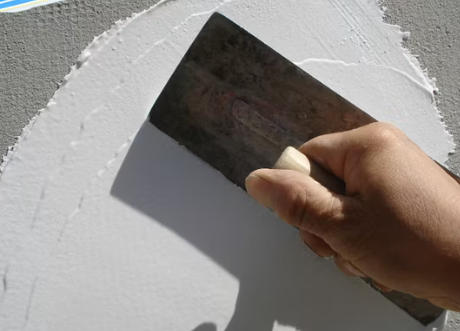
This is a practical sequence that works for most cement-based interior and exterior wall putties. Always follow the specific product datasheet.
- Remove dust, loose paint, efflorescence, oil, and any friable plaster with a brush, scraper, or mechanical sanding.
- Repair structural cracks and large holes using appropriate repair mortar or filler, and let them cure.
- For very smooth or glossy substrates, lightly roughen the surface to improve the mechanical key.
- On very absorbent or chalky surfaces, apply a compatible primer or sealer to stabilize the substrate and control absorption.
- Allow the primer to dry as specified before applying wall putty.
- Pour the measured amount of clean water into a mixing bucket, then slowly add wall putty powder while stirring.
- Continue mixing until a smooth, lump-free paste forms, and use a mechanical mixer for large volumes.
- Let the mixture rest for 5–10 minutes, then remix briefly to remove air and fully activate cellulose ethers.
For formulators, this is where proper dispersion of HPMC, HEMC, or HEC ensures the desired viscosity and water retention.
- Using a putty knife or trowel, apply a thin 1–2 mm coat from bottom to top in smooth strokes.
- Focus on filling pinholes and fine cracks, and avoid building too much thickness in a single pass.
- Remove excess material immediately and feather edges for easier sanding.
- After the first coat is completely dry, inspect the surface and lightly sand if needed.
- Apply a second thin coat to improve flatness and eliminate remaining imperfections, while keeping total thickness within recommended limits.
- For high-end interiors or critical light angles such as long corridors with grazing light, apply a fine third skim to achieve a near-perfect surface.
- Allow full drying before any sanding.
- Once the final coat is dry, use medium and then fine sandpaper to smooth the surface and remove trowel marks.
- Check with a raking light held at a low angle to highlight defects, and touch up where necessary.
- Clean all dust from the surface using a brush or vacuum, since residual dust severely reduces paint adhesion.
- Apply primer and topcoats strictly following the paint manufacturer's specification for number of coats and drying intervals.
- Do not expose fresh putty to heavy moisture or mechanical impact, and always allow complete drying before painting.
- Maintain good ventilation and stable room conditions to support proper curing.
Even experienced applicators benefit from a few habits that raise quality and reduce rework.
- Maintain the correct mixing ratio, because putty that is too thick is hard to spread and may not wet the substrate, while putty that is too thin can sag and shrink.
- Control humidity and drying time; in very hot or windy conditions, lightly pre-dampen absorbent walls and avoid direct sun to reduce rapid surface drying.
- Use clean tools and water, because contamination can cause lumps, color variation, or adhesion problems.
- Work in manageable areas, and plan work so you can finish each section within the recommended open time.
| Problem | Likely cause | Suggested solution |
|---|---|---|
| Peeling or debonding | Weak substrate, poor surface cleaning, low cement or binder content | Improve surface preparation, use primer, and choose higher-quality putty with adequate cement and polymers. |
| Cracking | Excessive layer thickness, rapid drying, low flexibility | Apply thinner coats, protect from extreme conditions, and use polymer-modified putty and optimized cellulose ethers. |
| Powdering or chalking | Poor raw materials, low binder content, insufficient water retention | Upgrade formulation, optimize HPMC, HEMC, or HEC dosage, and ensure proper curing. |
| Sagging on vertical surfaces | Over-watered mix, low viscosity, lack of rheology control | Adjust water ratio, increase appropriate cellulose ether grade, and avoid over-working. |
| Bubbles and pinholes | Over-mixing air, applying over wet layers, excessive water | Respect drying times, remix gently, and use antifoaming agents in the formulation when necessary. |
If you are a distributor, formulator, or large contractor, selecting the right cellulose ether grade for each scenario adds clear value.
- Interior wall putty focuses on smoothness, open time, and easy sanding, so mid-to-high viscosity HPMC or HEMC is often preferred.
- Exterior wall putty emphasizes water retention, crack resistance, and sag resistance under higher film thicknesses.
- High-humidity areas benefit from water-resistant putty containing redispersible polymer powder and optimized HPMC or HEMC dosage to reduce blistering and peeling.
Professional manufacturers can provide multiple viscosity ranges and substitution types to fine-tune these properties according to climate, substrate type, and local construction habits.
If you are producing or using wall putty and want smoother application, fewer cracks, and longer-lasting coatings, now is the right time to upgrade your formulation with high-quality HPMC, HEMC, and HEC. Get in touch with our technical team to discuss your current products, request tailored cellulose ether recommendations for interior and exterior systems, and arrange sample testing that fits your local raw materials and construction conditions. By partnering with a professional cellulose ether manufacturer, you can significantly enhance the performance and stability of your wall putty products and deliver a more reliable finish to every project.
Contact us to get more information!
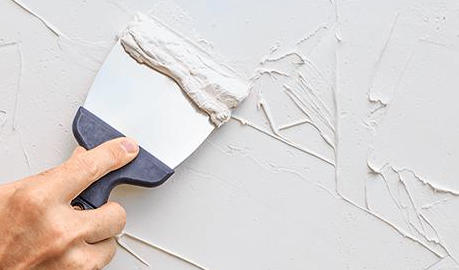
Most residential projects use two thin coats, and a third finishing coat may be added in premium interiors or where light reveals small imperfections.
You should only sand after the coat is completely dry. Depending on thickness, temperature, and humidity, this can range from a few hours to overnight.
Not always. Exterior walls face rain, UV exposure, and temperature swings, so they normally need cement-based, polymer-modified putty with better crack and water resistance.
Common reasons include insufficient cement content, non-water-resistant binders, incorrect formulation, and poor surface preparation. These issues reduce water resistance and bond strength, which leads to peeling.
Each layer is usually kept within 1–2 mm, and the total thickness should not exceed the maximum recommended by the manufacturer to avoid cracking and debonding.
1. https://wotaichem.com/how-to-use-wall-putty/
2. https://wotaichem.com/hpmc-wall-putty/
3. https://www.wikihow.com/Apply-Putty-on-Walls
4. https://walplast.com/blog/step-by-step-guide-on-applying-wall-putty/
5. https://lntsufin.com/blog/step-by-step-guide-to-using-wall-putty/
6. https://hlhpmc.com/hpmc-improving-the-workability-of-cement-based-putty/
7. https://geoblocks.co.in/wall-putty-application-process-step-by-step-guide/
8. https://mozaicchemical.com/wall-putty-essential-tips-for-a-smooth-finish/
9. https://trimurtiproducts.com/blog/step-by-step-guide-to-apply-putty-on-walls/
10. https://www.hpmc-hec.com/application/putty-powder.html


